
The right toy at the right time — that’s the Montessori way.
Your child’s development doesn’t follow a checklist, and neither should their toys. We organized our wooden Montessori collection by age — matched to the developmental milestones from birth to 6 — so you can skip the guesswork — every piece reviewed by our AMI-certified Montessori educators to match real milestones rooted in the Montessori method.


0-12 Months: Sensory Discovery
Montessori toys for 0-12 months focus on visual tracking (following moving objects), grasping development (from palmar to pincer), and early object permanence—understanding that objects exist even when hidden. According to CDC developmental milestones, babies begin tracking objects by 2-3 months and develop object permanence around 6-9 months.
Key Developmental Focus: Visual focus & tracking • Hand-eye coordination • Cause-and-effect • Tactile exploration • Object permanence (6+ months)
▼ Learn the Science
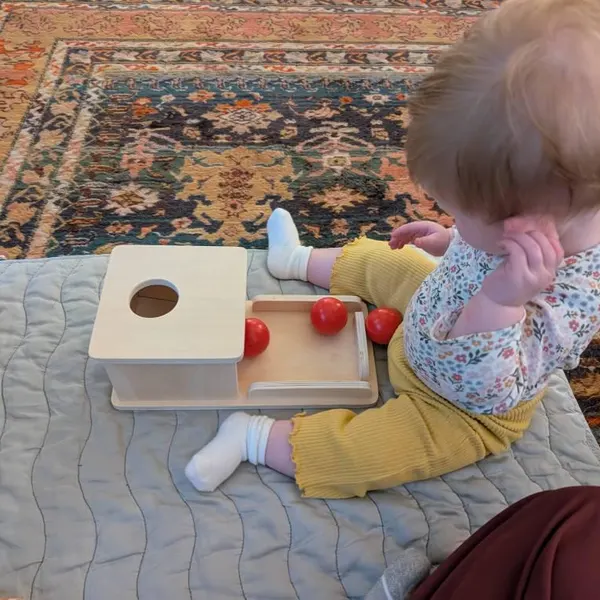
During the first year, your baby’s brain forms over 1 million neural connections per second (Zero to Three research). Dr. Montessori identified this as the Sensitive Period for Sensory Experiences. The classic Munari Mobile (black/white geometric shapes) is designed for newborn visual tracking at 10-12 inches—the distance babies can focus. By 3-4 months, the Gobbi Mobile introduces color gradation. The object permanence box teaches babies that objects continue to exist when hidden — a cognitive milestone first studied by Jean Piaget. The activities that serve each sub-stage from birth to 12 months follow the same developmental sequence as the materials above.
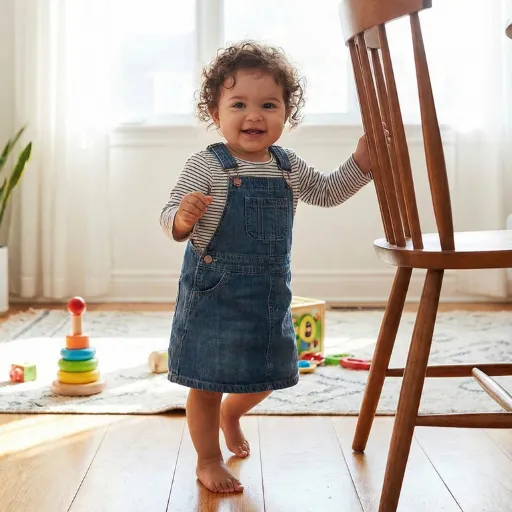
1 Year Old: Movement & Problem-Solving
Montessori toys for 1-year-olds support the Sensitive Period for Movement and early problem-solving. At this age, children are driven by Maximum Effort—they love carrying heavy objects and repeating challenging tasks. The best toys feature Control of Error: they self-correct, so your child learns through doing, not being told. This approach builds independence and concentration that lasts a lifetime.
Key developmental focus: Walking/balance • Pincer grasp refinement • Shape recognition • Stacking/sequencing • Language foundation • Maximum Effort (carrying, pushing)
▼ Learn the Science
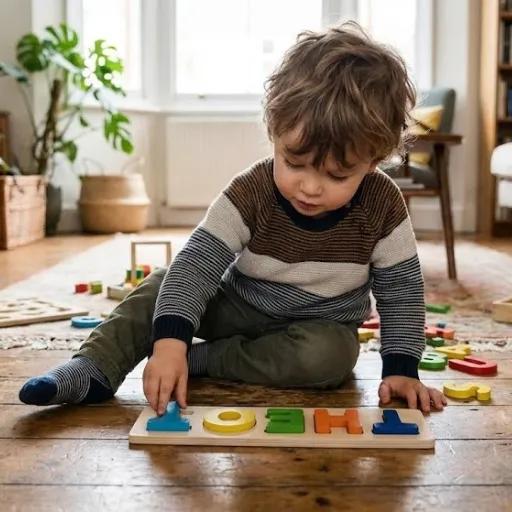
“Maximum Effort” describes children’s urge to push physical limits—this isn’t misbehavior, it’s proprioceptive development. Our Shape Sorter & Hammer Toy channels this energy: pounding builds strength while shape-matching develops spatial reasoning. The pincer grasp (thumb + forefinger) refines at this age, preparing hands for writing—Name Puzzles isolate and strengthen this grip with every letter lifted. Busy Boards satisfy the Sensitive Period for Small Objects through real-world latches and gears, while Rainbow Stackers introduce size gradation through self-correcting design – and the activities that activate these materials at 12–24 months follow the same sequence.
2 Years Old: Independence & Practical Life
Montessori toys for 2-year-olds support the famous “I do it myself!” stage. Children at this age are in the Sensitive Period for Order—they thrive with routine, organization, and completing full work cycles. Toys that mimic real-life Practical Life activities channel their drive for independence into meaningful skill-building.
Key developmental focus: Gross motor (climbing, balance) • Fine motor (latches, threading) • Language explosion • Practical life skills • Order & routine
▼ Learn the Science
The Sensitive Period for Order (ages 1.5-3) explains why 2-year-olds insist on routine—their brain is building logical frameworks. Busy Boards channel this through sequential tasks: unlatch, open, close, re-latch. The language explosion at this age needs concrete anchors—Name Puzzles with animals and objects build vocabulary, while the Emotions Wheel introduces feeling words. Balance Stacking Toys develop spatial reasoning through hands-on problem solving — the same principles that run through the practical life and fine motor activities matched to this age window.
3-6 Years: Logic, Letters & Numbers
Montessori toys for 3-6 year olds support the peak of the Sensitive Period for Sensory Experiences and the emerging Sensitive Periods for Numbers and Letters. Children refine their ability to distinguish subtle differences in size, color, and weight through Sensorial materials. As they approach 5-6, they transition to abstract thinking—Montessori’s concrete-to-abstract approach means children manipulate physical quantities before learning symbols, building deep understanding over rote memorization.
Key developmental focus: Sensory grading (size, weight, color) • Pre-writing preparation • Counting & place value • Word building & early reading • Social cooperation • Scientific exploration
▼ Learn the Science
Sensorial materials like the Pink Tower aren’t just stacking toys—they isolate size gradation and prepare the mathematical mind for geometry. The Sensitive Period for Numbers peaks around ages 4-5; the Abacus with Number Cards lets children manipulate concrete quantities before symbols, building lasting number sense. Cooking Sets develop sequencing and practical life skills, while the Car Garage introduces sorting, categorization, and spatial organization — and each year within this range serves a different capacity — writing readiness peaks at 4, the reading explosion arrives at 5, and the reasoning mind emerges at 6 as the First Plane closes.
📸 Moments from Our Community
Real families. Real play. See how Kukoo toys come to life in homes around the world.
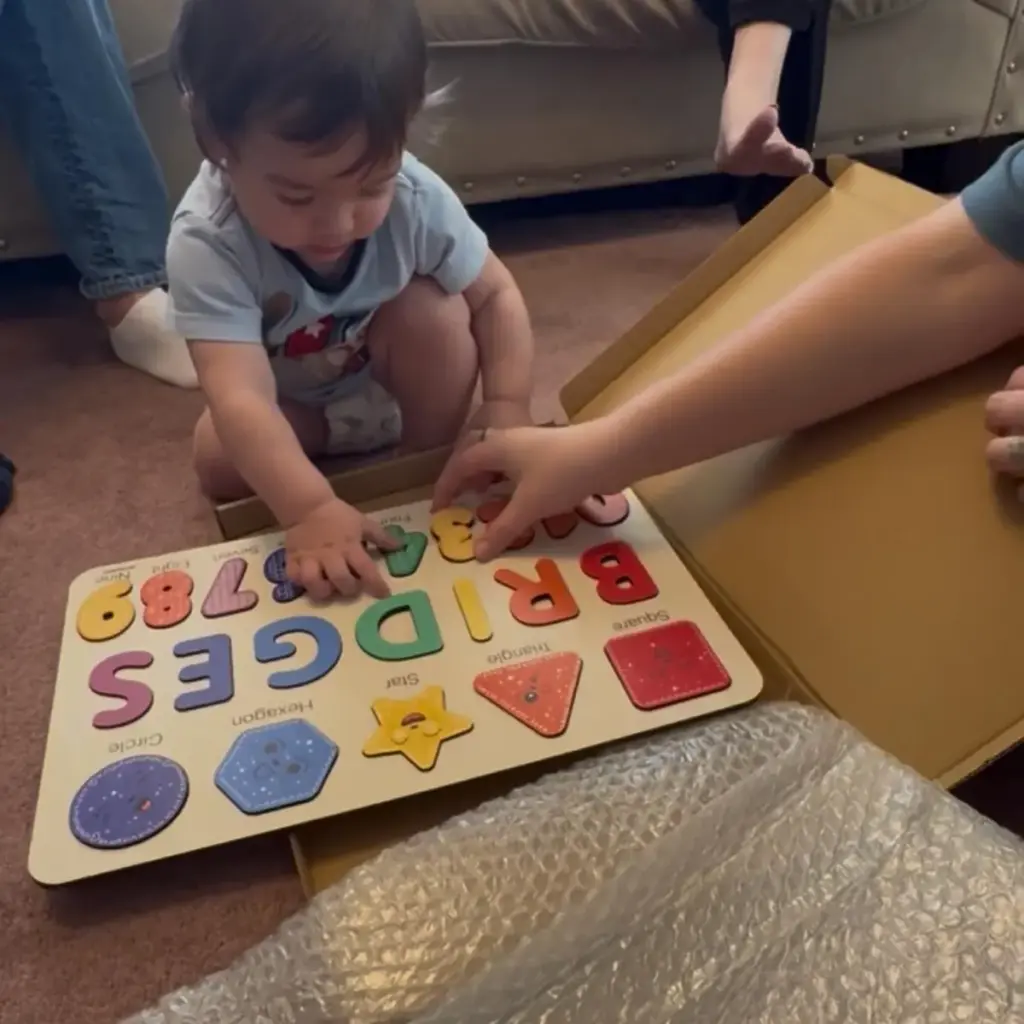
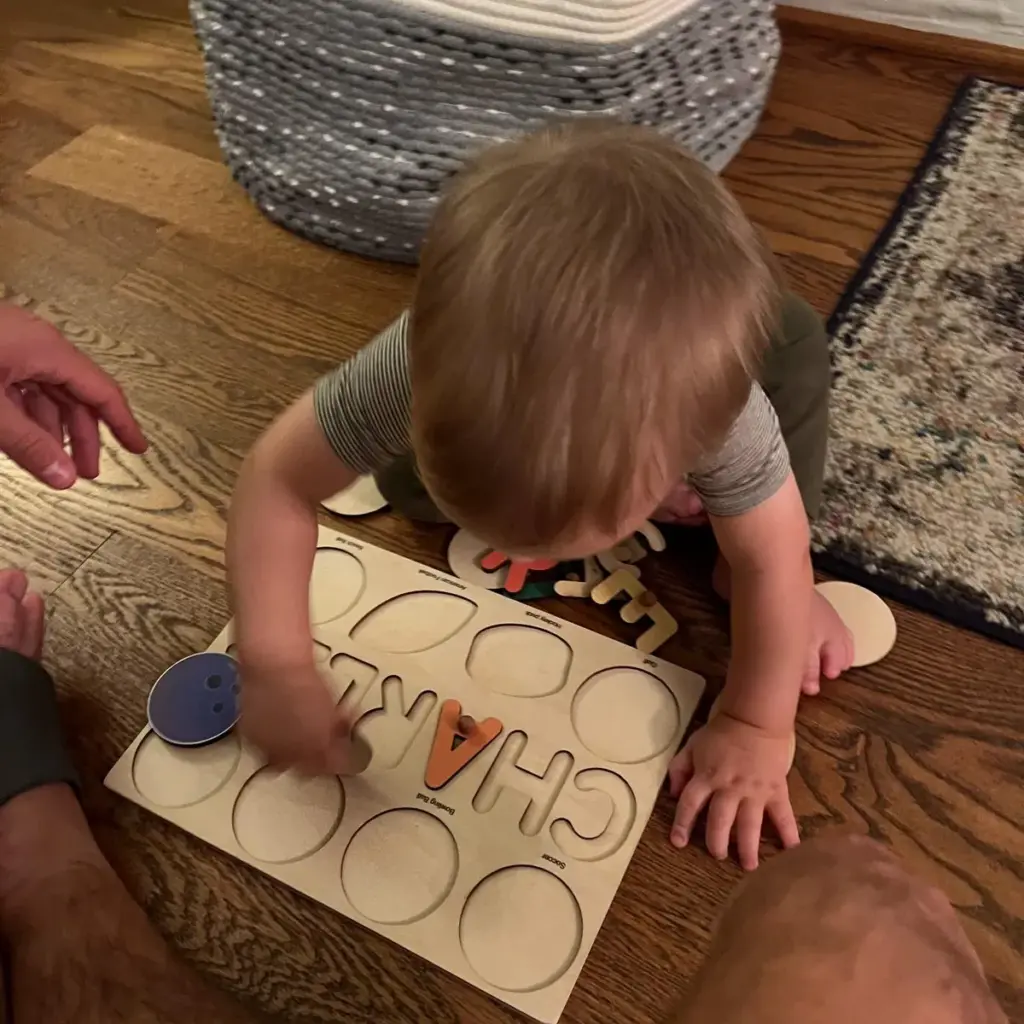
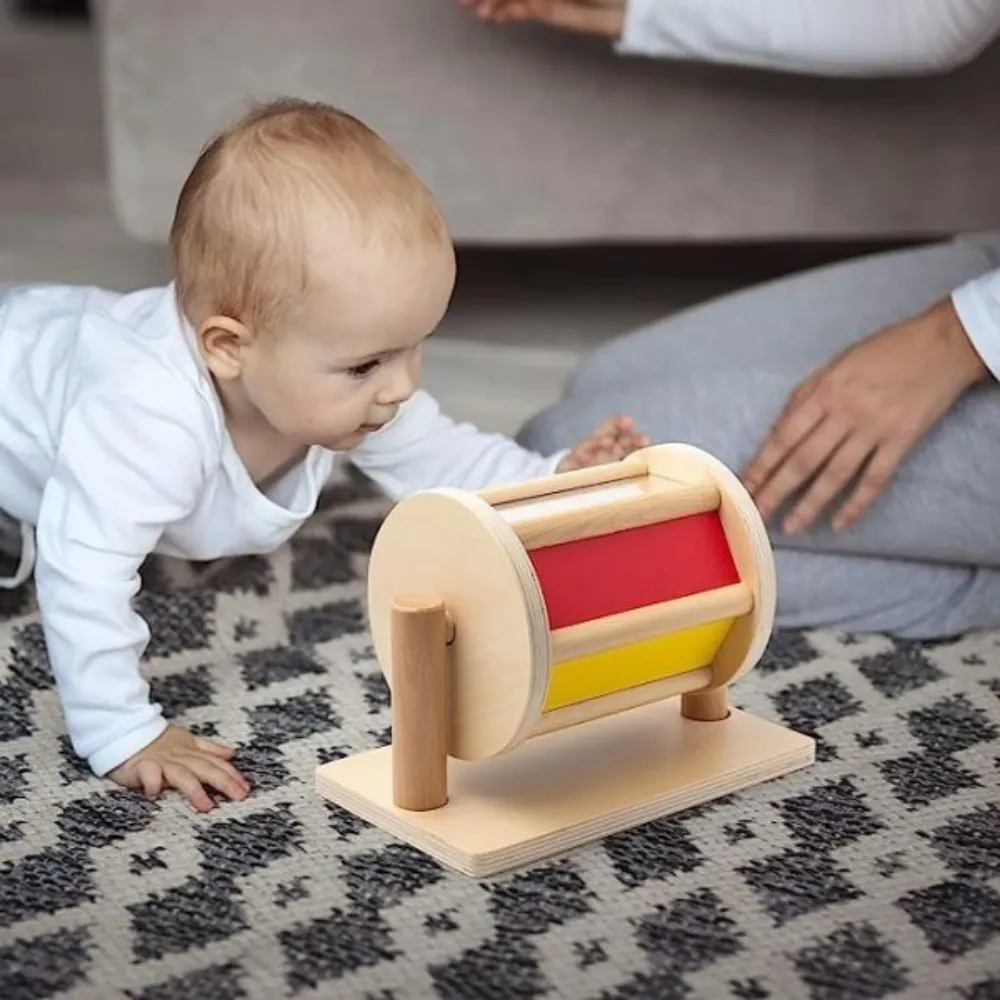
Share your moments with #KukooMontessori for a chance to be featured!

Certificated Sustainable

100% Natural Wood

Free Ship $80+

30-Day Returns
Not Sure About Age?
Every child is unique. Age ranges are guidelines, not rules. If your little one is advanced in some areas or still developing in others, try shopping by developmental skill or browse by toy category to find toys grouped by purpose.
Quick Guide
Not all toys labeled ‘Montessori’ are truly Montessori. Before you buy, learn how to identify Montessori materials from this guide:
| ✅ LOOK FOR | ❌ RED FLAGS |
|---|---|
| ✔ Simple design – one skill focus | ✖ Battery-powered lights & sounds |
| ✔ Self-correcting feedback | ✖ Overstimulating colors or features |
| ✔ Based in reality | ✖ Toys that “do” things for the child |
| ✔ Child-sized, accessible | ✖ Fantasy / cartoon characters |
| ✔ Natural materials (wood, metal, fabric) | ✖ Too many learning claims in one toy |
Common Questions
What if my child is between two age ranges? Which collection should I choose?
Choose based on observable skills, not the calendar. In Montessori, we follow the child—watch which Sensitive Period they’re currently in. A child who’s mastered stacking but struggles with latches needs fine motor challenge, not “harder” toys. When in doubt, start with the lower age range; success builds confidence, while repeated frustration breaks concentration.
Do I need to buy every toy recommended for my child’s age?
No—Montessori values depth over breadth. Many guides suggest that a prepared environment includes 6–8 carefully chosen starter materials that are rotated based on your child’s current interests.
What if my child isn’t interested in a toy that matches their age?
Interest follows readiness—not the other way around. The child may be in a different Sensitive Period than expected, or simply needs time. Try a silent presentation: demonstrate the toy slowly, without words, then step back. If interest still doesn’t spark, shelve it for 2-3 weeks. Sensitive Periods open and close on the child’s timeline, not ours.
When should I transition my child to the next age group?
Watch for mastery followed by repetition, then disinterest—this signals the Work Cycle is complete. A child who once spent 20 minutes on a puzzle but now finishes in seconds without engagement has absorbed what they needed. Conversely, if frustration or avoidance appears, the challenge exceeds their current Sensitive Period. There’s no race; move at their pace.
How long should my child play with Montessori toys each day?
Forget the clock—watch for Concentration. Dr. Montessori observed that deep, uninterrupted focus (even 3-5 minutes in toddlers) builds the foundation for lifelong learning. Short bursts of genuine engagement matter more than forced hours. Protect their concentration: avoid interrupting mid-task, and let them repeat activities as often as they choose. Repetition is not boredom—it’s mastery in progress.