
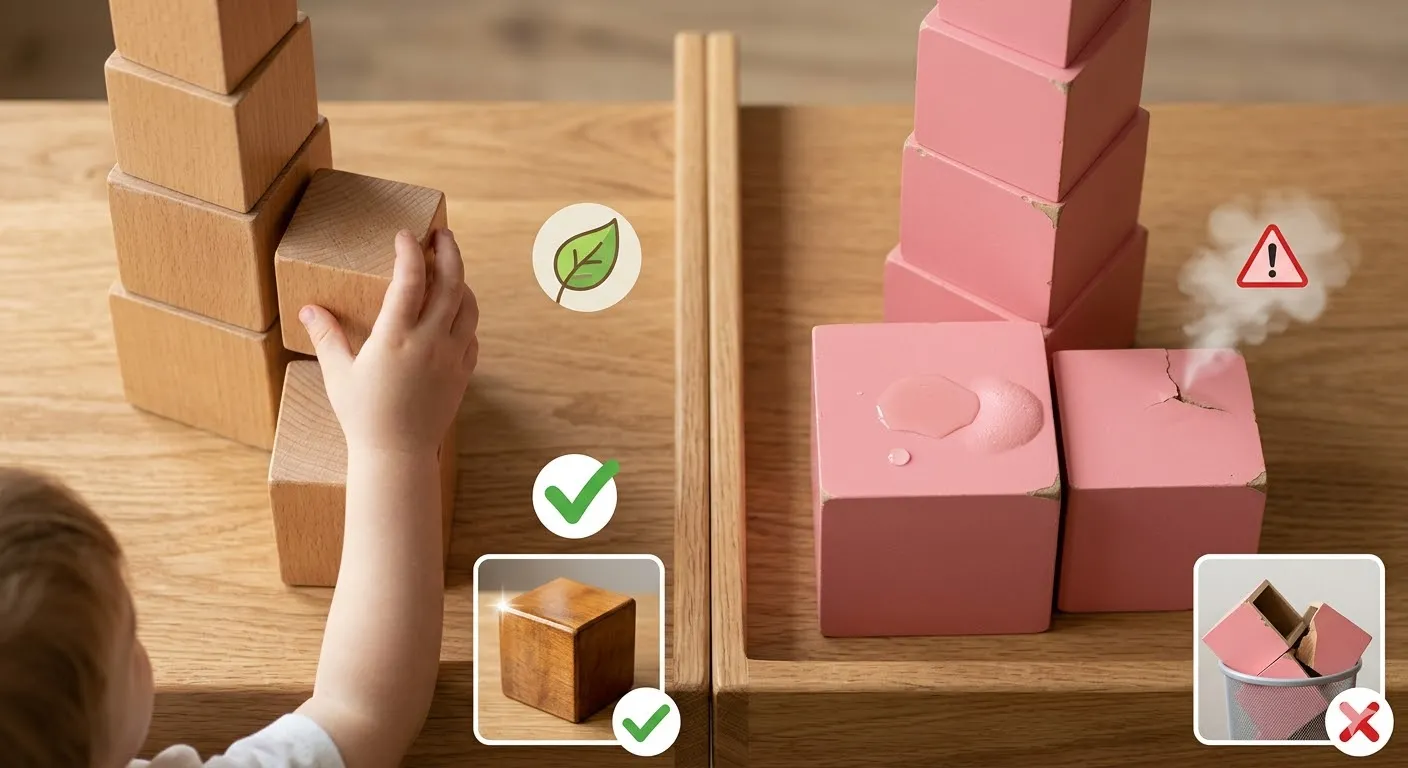
We avoid MDF in Montessori toys because it contains chemical adhesives that may release formaldehyde, deteriorates quickly under moisture and impact, and lacks the natural texture children need for sensory development. We use solid wood and quality plywood instead—safer, more durable, and true to Montessori philosophy.
Parents want toys that are safe, durable, and genuinely good for development. But here’s something many don’t realize: not all “wooden toys” are actually made from quality wood. Many are made from MDF—and the difference matters more than you’d think.
What Is MDF? (And Why Many Toy Manufacturers Use It)
MDF stands for Medium Density Fiberboard, an engineered wood made from wood fibers (sawdust and wood particles), wax, and resin adhesives. These components are compressed under intense heat and pressure to form flat, uniform panels. The result looks smooth and consistent—perfect for painting.
Why Manufacturers Use MDF?
Many toy manufacturers choose MDF because it is inexpensive compared to solid hardwood, easy to cut with CNC machines, and smooth for painted surfaces without visible grain.
For a factory producing thousands of toys, these advantages translate to lower costs and faster production. The price difference between MDF and solid beech wood can be substantial—sometimes 3 to 4 times less expensive. This cost gap is one of several reasons solid wood toys are priced higher than they first appear.
However, the low cost often comes with trade-offs in safety and durability that aren’t immediately visible on the shelf.
Why MDF Is Common in Children’s Toys
- Lower Manufacturing Costs
MDF is significantly cheaper than hardwood. When you’re manufacturing at scale—producing 10,000 puzzle sets or 50,000 toy cars—that cost difference adds up quickly. Factories can reduce production costs dramatically, which allows them to offer lower retail prices.
- Efficient for Mass Production
MDF sheets can be cut easily using CNC machines, allowing manufacturers to produce thousands of identical toy parts with minimal waste. The material is uniform throughout, so every piece cuts the same way. No knots. No grain variation. No irregularities.
- Smooth Surface for Paint
Because MDF has a completely uniform surface, it works exceptionally well for bright paint application, printed graphics, and laminated surfaces with designs. The finished product can look polished and colorful.
However, appearance does not necessarily reflect material quality or safety. What’s underneath that paint matters enormously.
The 3 Core Reasons Why We Avoid MDF in Montessori Toys
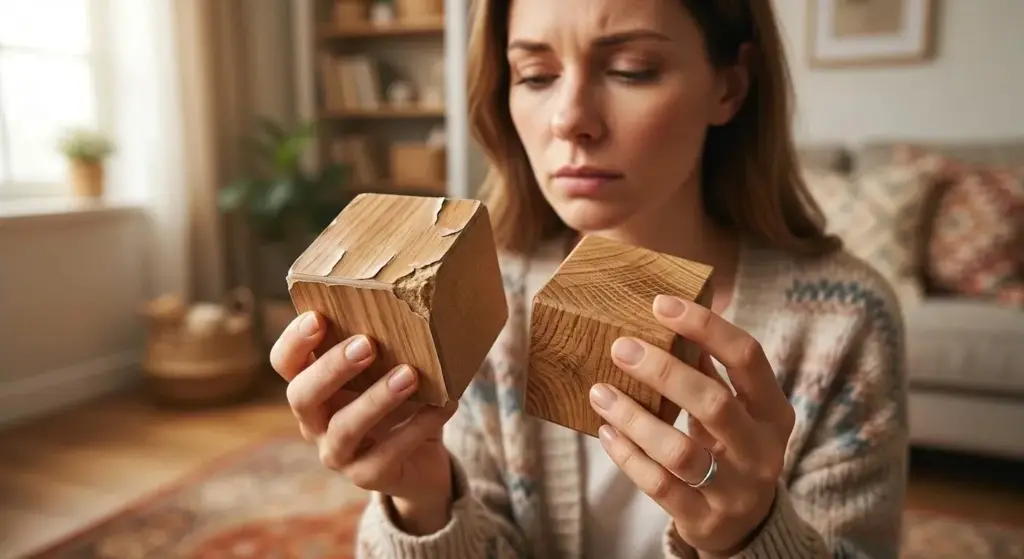
1. Potential Chemical Exposure
MDF is bonded using resin adhesives, which may contain formaldehyde—a chemical associated with volatile organic compounds (VOCs) that can affect indoor air quality. Modern regulations have reduced formaldehyde levels in many products, but the chemical is still often present in engineered wood materials. The EPA’s assessment of formaldehyde and its associated health risks classifies it as a known human carcinogen at high exposure levels — relevant context when evaluating materials that contain urea-formaldehyde resins.
Research published in Building and Environment has documented measurable formaldehyde emissions from MDF panels under typical indoor conditions — with emission rates highest in the first months after production and declining over time.
. Most MDF toys on the market today meet safety standards. But here’s what concerns us as parents: young children interact with toys differently than adults interact with furniture. They touch toys constantly throughout the day, put toys in their mouths, and sleep near toys in their rooms. Material safety becomes extremely important—not just regulatory compliance, but actual everyday exposure over months and years. If you’re wondering whether wooden toys are genuinely safe for babies, the answer depends heavily on what the toy is actually made from.
2. Poor Durability and Moisture Sensitivity
Compared to solid wood or quality plywood, MDF is more likely to chip along edges, prone to swelling when exposed to moisture, and weaker under impact.
For toddlers who play actively—dropping toys, throwing them, dragging them across floors—durability matters. A lot. MDF doesn’t handle moisture well at all. A little drool? A spilled cup of water? The board begins to swell and weaken. The edges become rough. The surface integrity breaks down.
Montessori materials are designed to last for many years, not just a few months. They’re meant to serve multiple children, sometimes across generations. MDF simply can’t deliver that longevity.
3. Not Aligned With Montessori Philosophy
AMI’s principles for authentic Montessori materials emphasize natural substances that provide real sensory experiences — wood, metal, glass, fabric. This isn’t about aesthetics or trends — it’s about how children build accurate understanding of the physical world through direct contact with real materials.
Solid wood and quality plywood offer natural grain textures, varied weight that reflects the tree species, and warmth and an organic feel in the hand. MDF, by contrast, has a uniform and artificial texture. Every spot feels the same. The surface temperature doesn’t respond the way real wood does.
When a child holds a solid wooden block, they’re experiencing a material that grew over decades. The grain tells a story. The subtle imperfections—tiny knots, slight color shifts—make each piece unique. Authentic Montessori toys therefore prioritize natural wood materials and their developmental benefits for both sensory learning and long-term durability.
Authentic Montessori toys therefore prioritize natural wood materials and their developmental benefits for both sensory learning and long-term durability.
Solid Wood vs Plywood vs MDF (Quick Comparison)
| Feature | MDF Toys | Plywood Toys | Solid Wood Toys |
|---|---|---|---|
| Material | Compressed fibers + glue | Layered wood veneers | Natural hardwood |
| Durability | Low | High | High |
| Moisture resistance | Poor | Good | Good |
| Sensory feedback | Minimal | Natural texture | Rich natural texture |
| Lifespan | Short | Long | Long |
| Chemical concerns | Formaldehyde in adhesives | Minimal (quality grades) | Depends on finish only |
Both solid wood and quality plywood outlast MDF significantly and provide far better sensory experiences for young children.
Best Types of Wood for Montessori Toys
High-quality Montessori toys are usually made from durable hardwoods and quality plywoods—not because they’re expensive, but because they work.
- Beech Wood
Beech is common in Montessori materials due to its exceptional durability under repeated use, smooth tight grain that sands beautifully, and resistance to wear and impact damage. European beech has been used for educational materials for over a century.
- Maple Wood
Maple is a dense hardwood known for superior strength that withstands years of play, a long lifespan that often outlasts the childhood it serves, and a smooth surface finish that feels warm to the touch.
- Birch Wood & Birch Plywood
Birch is used both as solid wood and as plywood in children’s toys. It is strong yet lightweight enough for small hands, smooth with minimal grain irregularity, and durable across temperature and humidity changes. Quality birch plywood—made from thin layers of real birch veneer—retains the natural feel and structural strength of solid wood while offering additional stability for larger, flatter components like puzzle boards and play trays. This makes it a practical and appropriate choice in Montessori toy design when used in the right applications.
How We Choose Materials at Kukoo Montessori
We use both solid wood and quality plywood depending on what serves each toy best. For small grasping pieces, stacking blocks, and items children frequently mouth, we use solid hardwood. For larger flat components—puzzle bases, activity boards, and trays—quality birch plywood offers excellent stability and durability while maintaining the natural wood feel that Montessori philosophy values.
What we never compromise on: no MDF, child-safe finishes using water-based paints and food-grade oils, and construction that lasts through multiple children. Every toy in our collection is built to this spec — you can filter by category or by age to find pieces matched to your child’s current stage.
A toy that breaks after three months doesn’t serve a child’s need for mastery and repetition. A material that feels artificial doesn’t support sensory development. Our material choices aren’t about marketing—they’re about alignment with what actually serves children.
How Parents Can Identify MDF Toys
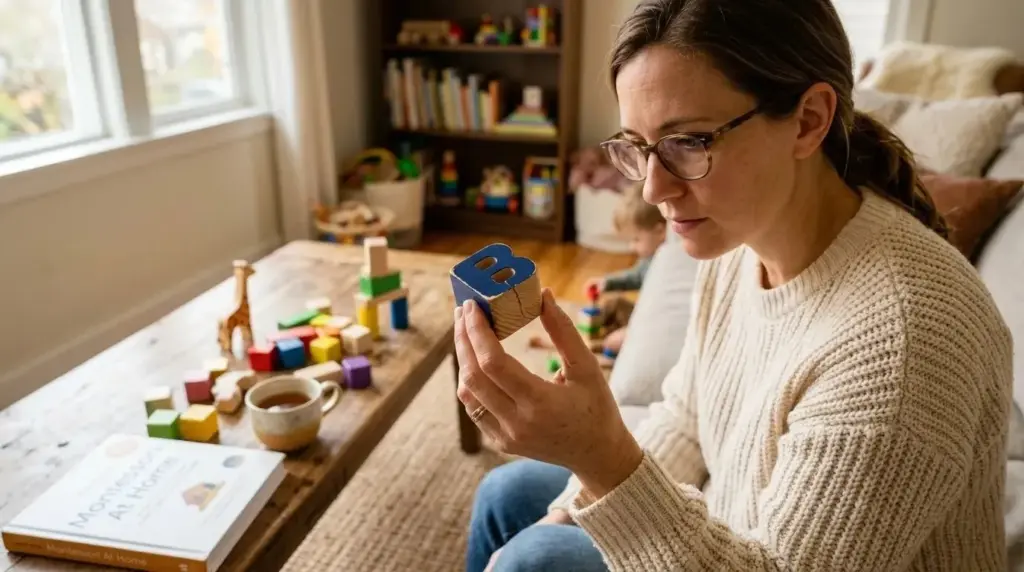
- Check the Edges
MDF edges often reveal compressed wood fibers that look almost fuzzy or particulate when examined closely—no continuous grain lines. Solid wood shows natural grain that flows through the edge. Quality plywood shows distinct layered veneers along the edge.
- Check the Weight
Pick up the toy. Solid wood and plywood toys usually feel heavier and more substantial than MDF, which can feel oddly uniform and lighter — and that weight difference isn’t just about feel. It directly affects how much toddlers learn from handling the toy.
- Look for Laminated Surfaces
Many MDF toys use laminated or printed surfaces because the underlying material isn’t attractive on its own. If the surface looks like a photograph or printed design rather than painted wood, you’re likely looking at laminate over MDF.
- Read the Material Description
Look for terms such as solid wood, hardwood, FSC-certified wood, plywood, or specific wood species like beech, maple, or birch. Be cautious of vague descriptions like “engineered wood,” “composite wood,” “wood product,” or simply “wooden” without specifying the type. If the product description isn’t clear, ask before buying. Reputable companies answer this question readily.
Frequently Asked Questions
- Is MDF safe for children’s toys?
MDF may meet certain safety regulations, but many parents prefer toys made from natural materials because they avoid the resin adhesives used in engineered wood products. Solid wood and quality plywood eliminate this concern.
- Are all wooden toys made from solid wood?
No. Some toys marketed as “wooden” are actually made from MDF or particleboard. Always check the material description or ask the manufacturer directly.
- Is plywood a good material for Montessori toys?
Quality plywood—particularly birch plywood—is an excellent material for Montessori toys when used appropriately. It retains the natural look and feel of real wood, offers strong structural integrity, and handles moisture far better than MDF. It’s a practical choice for larger flat components.
- What wood is best for Montessori toys?
Hardwoods such as beech, maple, and birch are ideal for pieces that require strength and tactile richness. Quality birch plywood works well for flat structural components. Both are far superior to MDF.
- How can I tell if a toy is made from MDF?
Check the edges for compressed fibers rather than continuous grain or visible layers, examine the weight, and read product descriptions carefully. If it doesn’t say “solid wood” or “plywood,” it probably isn’t.
Conclusion
Not all wooden toys are the same. That simple fact changes how we shop.
MDF is widely used in toy manufacturing because it’s affordable and efficient. But it has real limitations—potential chemical exposure from adhesives, poor durability under moisture and impact, and a uniform texture that doesn’t provide the sensory richness children benefit from.
Solid wood and quality plywood offer better long-term durability, authentic sensory experiences, and alignment with Montessori’s emphasis on natural materials. These aren’t luxury considerations. They’re practical ones.
Choosing toys made from natural materials supports both child development and long-term durability. You buy once. Your child plays for years. That’s the investment that actually makes sense.