
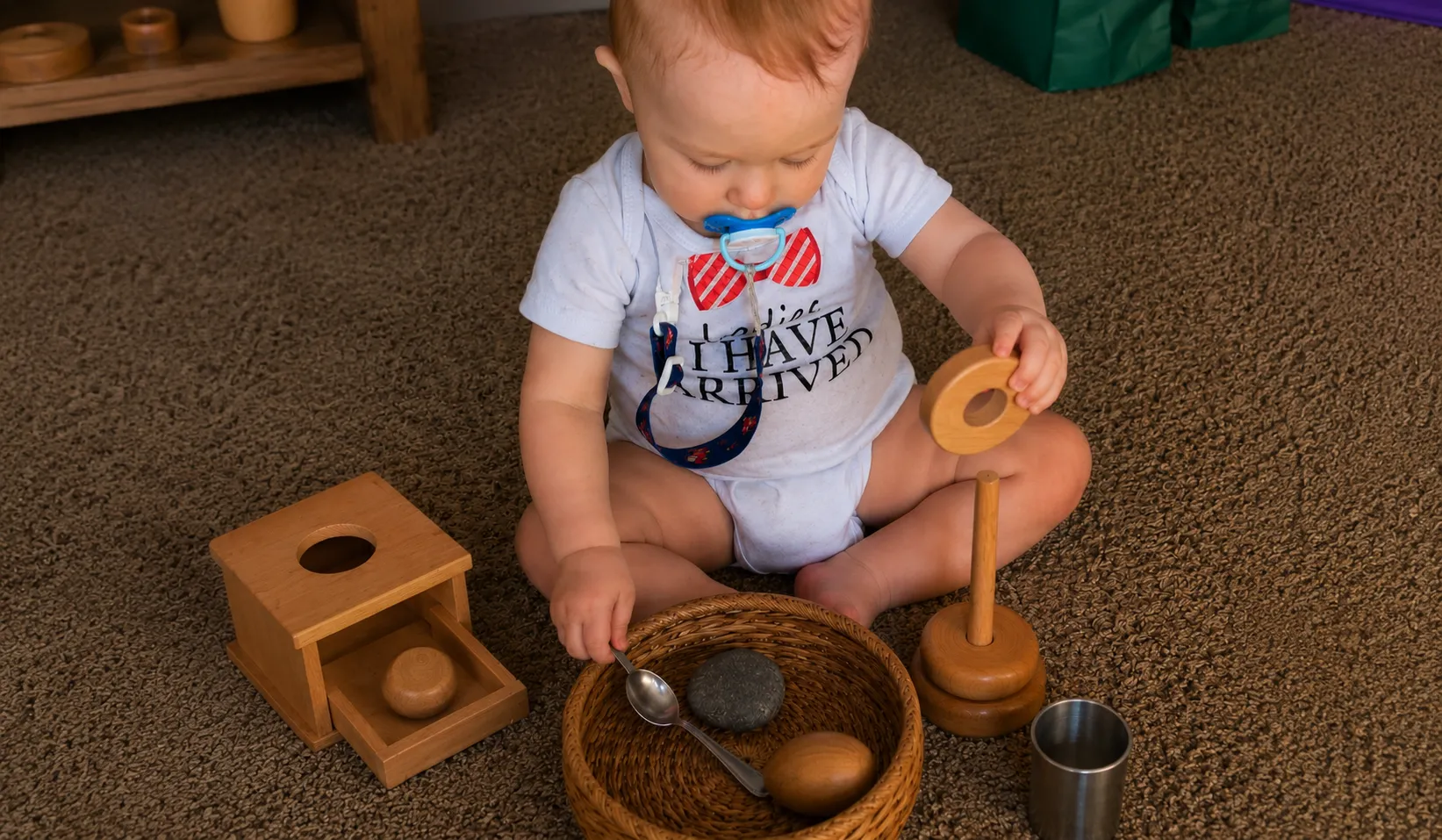
Your 7-month-old just ignored the expensive toy set and spent 15 minutes opening and closing a small wooden box. That’s not a distraction — that’s your baby choosing their own work. And it’s exactly what their brain needs right now.
Most guides for this age give you a list of things to buy. This one is different. It’s an activity guide — which means we cover exactly what to do, how to set it up, what your role is, and how to read your baby’s engagement as they grow through three distinct developmental stages.
There’s also one category most baby guides skip entirely: practical life. Maria Montessori considered it more important than any toy on a shelf — and once you understand why, you’ll start seeing it everywhere in your daily routine. The best Montessori activities for Babies 6–12 Months aren’t things you purchase. They’re things you set up — and often, the setup takes less than five minutes.
Best Montessori activities for 6–12 months (by stage):
- 6–8 months: Treasure baskets, ball baskets, spinning drum, first open cup, outdoor sensory exploration
- 8–10 months: Object permanence box, in-and-out work, stacking rings, posting activities, finger food self-feeding, pulling to stand
- 10–12 months: Simple shape puzzles, nesting cups, music-making, container opening/closing, dressing participation, first steps
Why “Activities” — Not Just “Toys” — Matter at This Age
In Montessori, a toy becomes an activity when a parent understands how to present it, what purpose it serves, and how to step back. The setup and the observation are as important as the material itself.
This matters practically: knowing the ACTIVITY means you can create Montessori moments with household items. A muffin tin and wooden spoons become a sorting activity. Measuring cups become nesting work. A tissue box and silk scarves become posting practice. This guide covers both purpose-built materials and free household alternatives for every activity.
| The shift I see most often is when a parent stops thinking about toys and starts thinking about activities. A wooden stacking ring on a shelf is a toy. That same ring, placed on a low tray during an alert period, with one slow demonstration and then stepping back — that’s an activity. The difference isn’t the object. It’s the intention behind how you present it. — Zoe Paul, AMI Teacher Trainer (0-3) |
What’s Happening Developmentally Between 6 and 12 Months?
Between 6 and 12 months, your baby moves from sitting with support to possibly walking — and their hands evolve from a full-fist palmar grasp to the precise pincer grip that lets them pick up a single Cheerio.
| Stage | Hands | Body | Matched Activities |
| 6–8 months | Palmar grasp refining; beginning voluntary release | Sitting independently; early crawling; everything to mouth | Treasure baskets, ball play, spinning drum, first cup, outdoor sensory |
| 8–10 months | Pincer grasp emerging; pointing; banging objects together | Crawling confidently; pulling to stand; cruising | Object permanence box, in-and-out work, stacking, posting, finger food |
| 10–12 months | Pincer refining; controlled release; beginning to stack | Standing independently; first steps possible | Puzzles, nesting, music instruments, container play, dressing, walking |
Montessori Activities for 6–8 Months — Exploring With All Senses
Between 6 and 12 months, your baby moves from sitting with support to possibly walking — and their hands evolve from a full-fist palmar grasp to the precise pincer grip that lets them pick up a single Cheerio.

Treasure Basket Exploration
- What it is: A low basket filled with 5–8 real-world objects of different textures — wooden egg, metal spoon, natural bristle brush, leather coaster, smooth stone. No plastic. All must pass the toilet-roll-tube choking test. At 6 months: picks up one object, mouths extensively, drops, picks up another (10–15 minutes). At 7–8 months: begins comparing — holding one in each hand, banging together, choosing favorites. Same basket, three developmental stages.
- Cost: free.
Ball Basket and Rolling Play
- What it is: 3–4 balls of different sizes in a low basket. At 6 months: reaches, grasps, mouths. At 7–8 months: pushes ball, watches it roll, crawls after it — the roll-away ball becomes a crawling motivator.
- Your role: Resist retrieving the ball. The effort IS the activity. Use balls larger than baby’s fist.
Spinning Drum and Cause-and-Effect Play
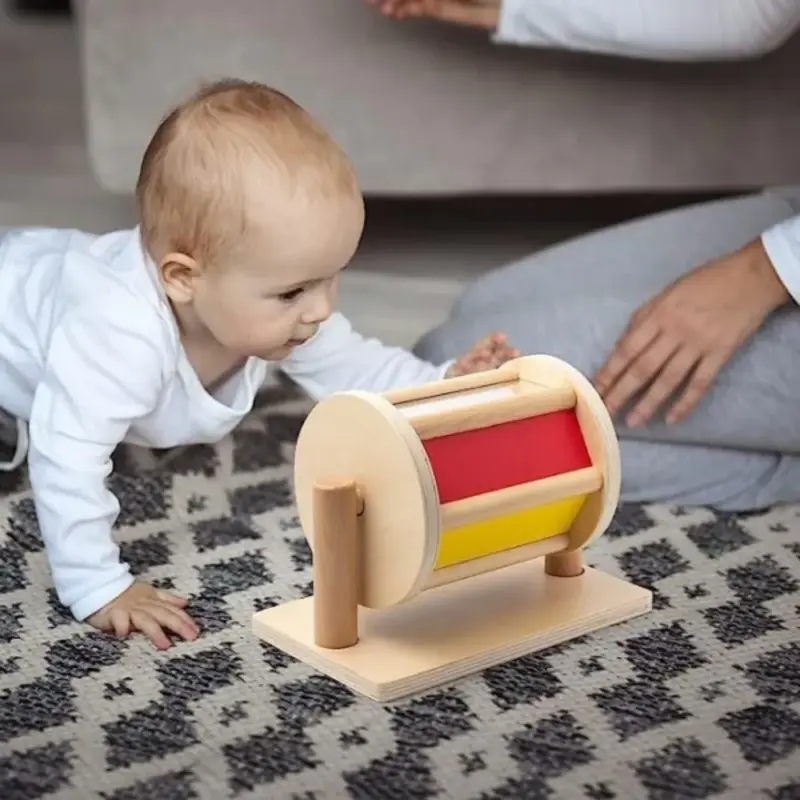
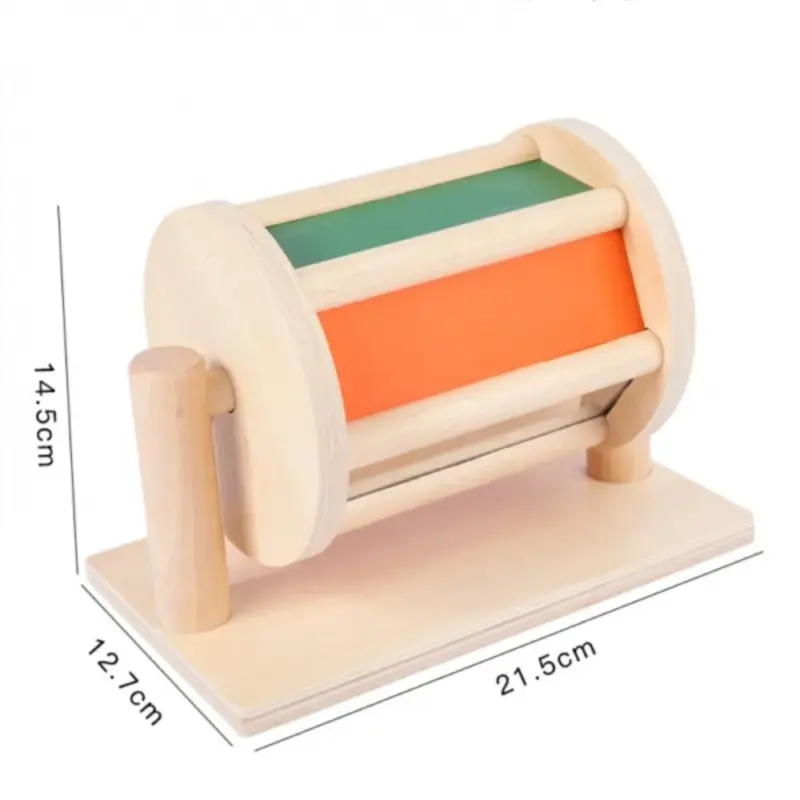
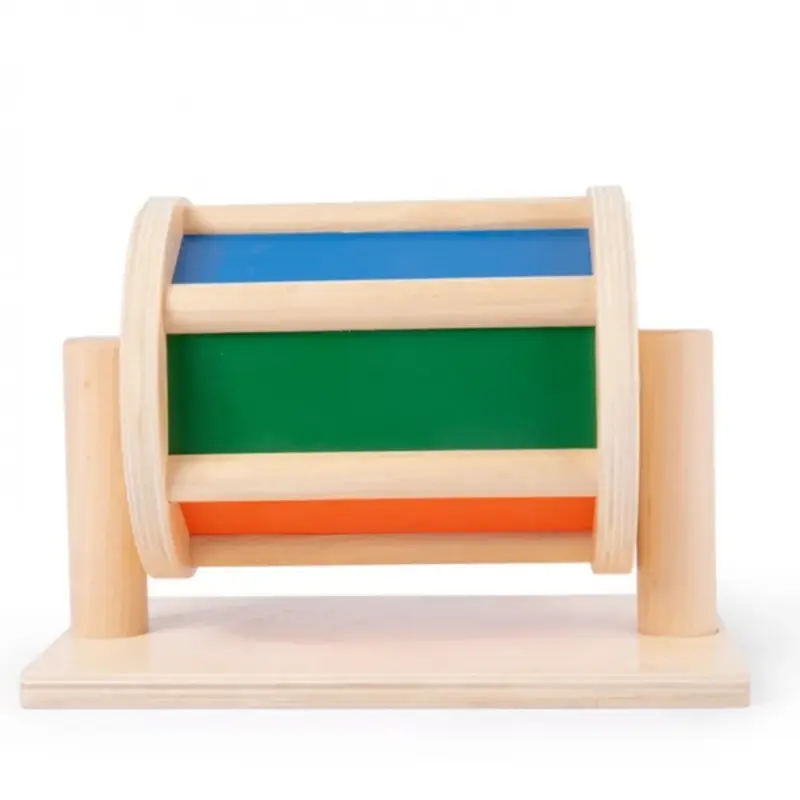
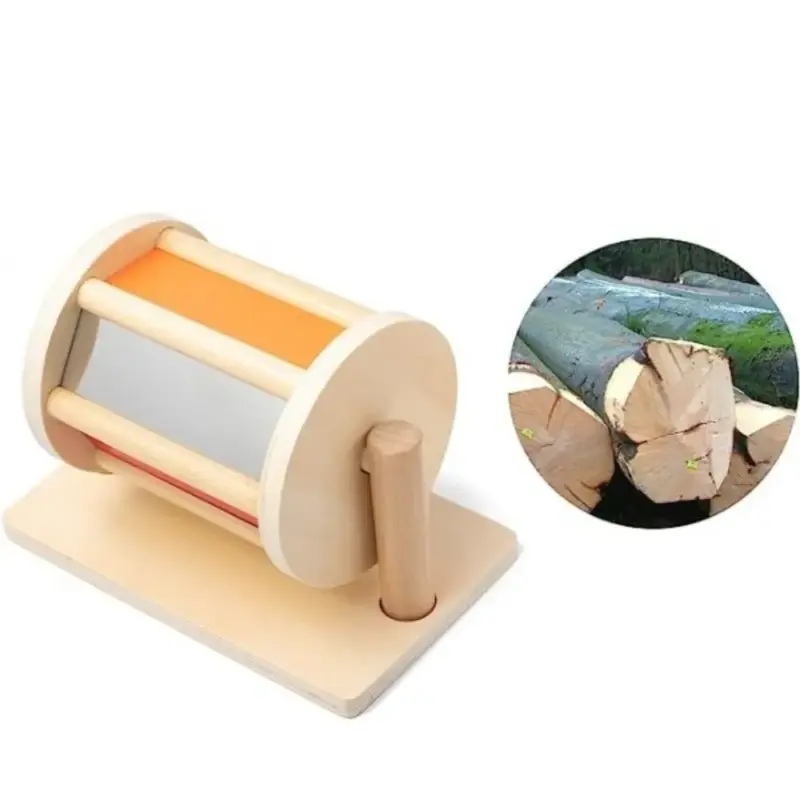
- What it is: Wooden rotating drum on the floor during tummy time. Demonstrate one slow spin. At 6 months: bats at drum. At 7–8 months: discovers proportional response (gentle tap = slow spin, harder push = faster spin). First activity where your baby learns “my action directly causes a specific result.”
First Open Cup — The Practical Life Activity You’re Probably Not Doing
- What it is: Small, child-sized open cup (shot-glass sized) during meals. The open cup is a core Montessori practical life material — it respects your baby’s capacity for independence and builds oral motor skills supporting speech. Use glass or stainless steel (not plastic — real weight teaches careful handling). Fill 1/4 full. At 6 months: you hold and tilt. At 7–8 months: baby reaches, attempts to hold with both hands. Spilling is learning, not misbehavior.
| The first time a baby lifts their own cup and takes a sip, there’s this flash of pure pride across their face. It’s one of the most powerful moments in a Montessori infant classroom — and it can happen at home just as easily. — Zoe Paul, AMI Teacher Trainer (0-3) |
Outdoor Sensory Walk
- What it is: Baby outside touching natural textures — grass, leaves, bark, sand, water. Sit baby on a blanket, place 2–3 natural objects nearby. Narrate: “That’s rough bark. This is soft grass.” Real-world sensory experience always beats any manufactured sensory toy. Check objects for sharp edges and pesticide exposure.
Montessori Activities for 8–10 Months — Purposeful Hands and Moving Bodies
Your baby’s hands have shifted from “grab everything” to “do something specific with it.” Safety note: Your baby is mobile now. Before every session: scan for cords, outlets, sharp corners, and anything pullable from standing height.

Object Permanence Box
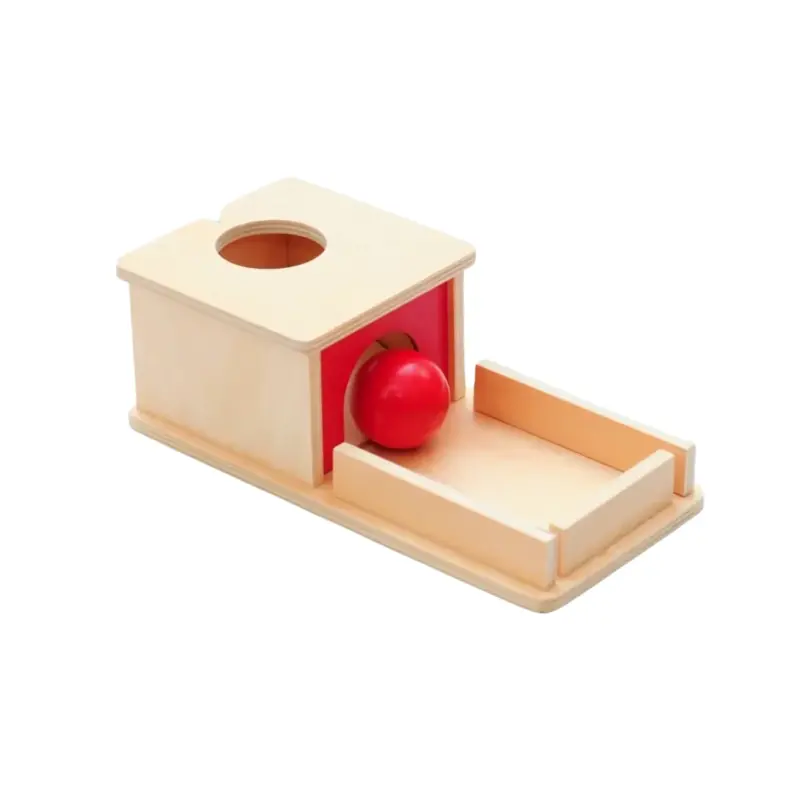
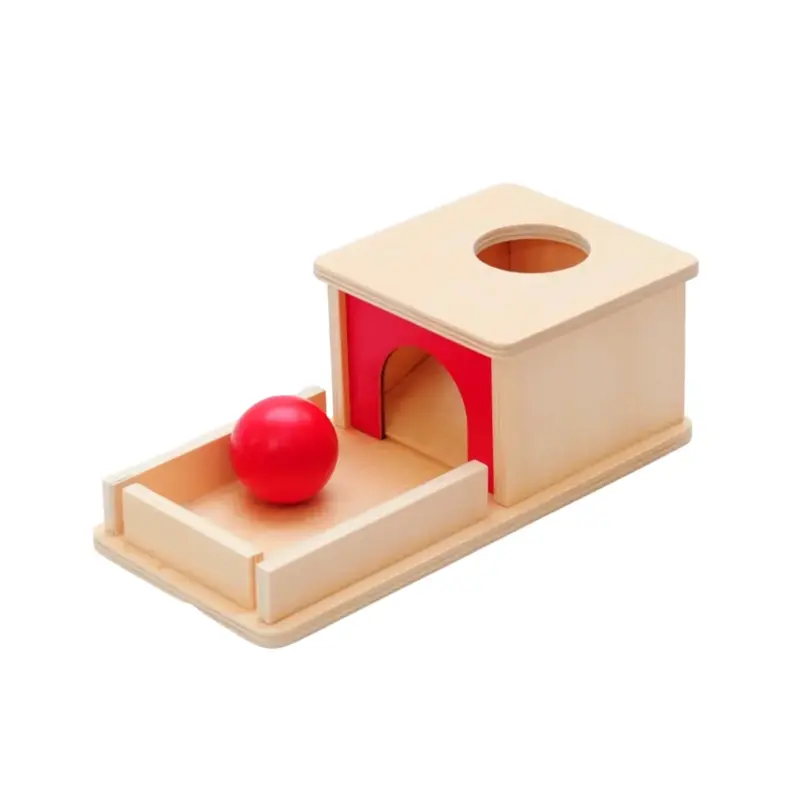
- What it is: Wooden box with a hole on top and a tray on the side. Demonstrate slowly: pick up ball, drop through hole, open tray, show ball. Step back. At 8 months: fascinated by disappearance — opens tray with guidance, repeats 5–10 times. At 9–10 months: opens tray independently, retrieves, drops again immediately. This is a work cycle in action. At 8 months = object permanence (things exist when hidden). By 10 months = cause-and-effect sequencing. Same material, deeper cognition.
In-and-Out Work (Container Play)
- What it is: Container with 3–5 objects. At 8 months: takes everything OUT (that IS the activity). At 9–10 months: begins putting BACK IN — voluntary release is a major fine motor milestone. Household version: empty tissue box + silk scarves. Muffin tin + large pom-poms. Free.
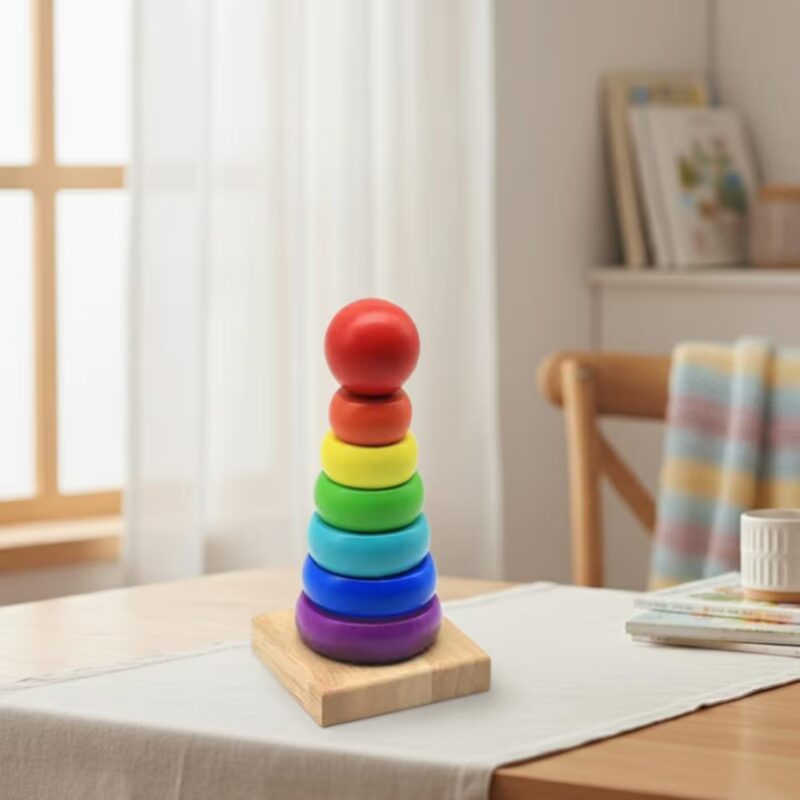
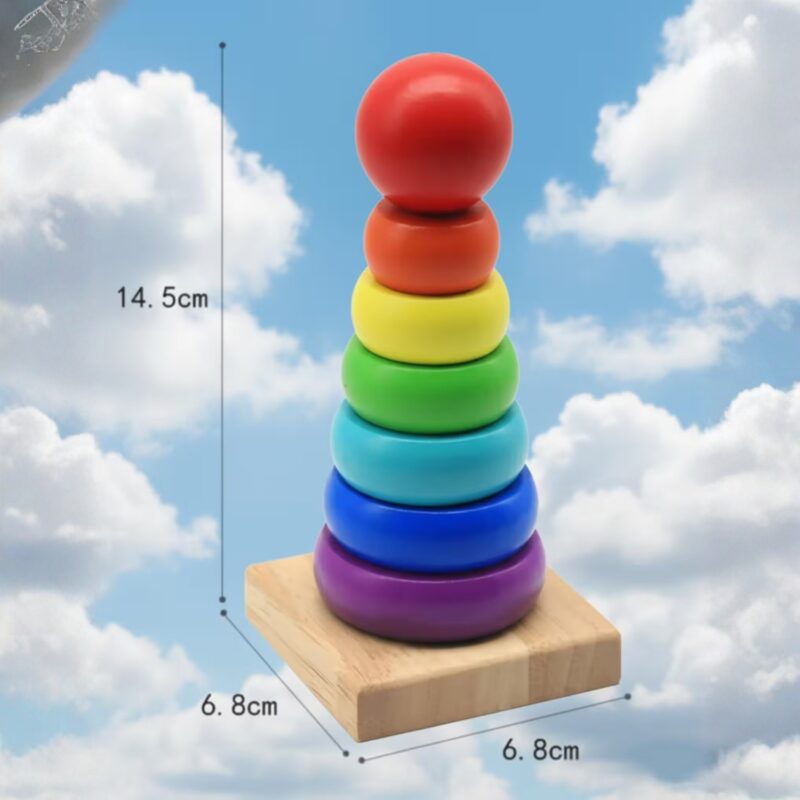
Stacking Rings on a Dowel
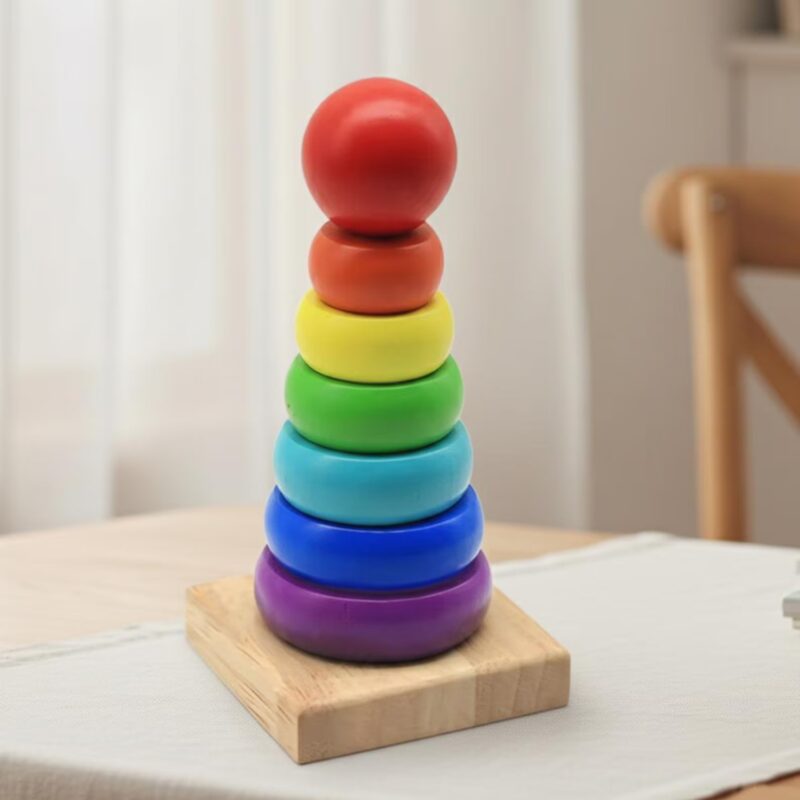
- What it is: Vertical dowel with graduated wooden rings. At 8 months: removes only — mouths, bangs, rolls. At 9–10 months: attempts placing ON the dowel — order doesn’t matter yet. Start with 2–3 of the largest rings. Same toy, three stages: remove (8mo) → place randomly (10mo) → order by size (14–18mo).
Posting Activities
- What it is: Pushing an object through a defined opening. At 8–9 months: ball through large hole with palmar grasp. At 10 months: smaller openings, pincer grip for thinner objects. DIY: shoebox with a fist-sized hole + 2–3 balls. Instant Montessori activity, zero cost. Openings must be large enough that baby’s fingers can’t get stuck.
Self-Feeding and Finger Foods
- What it is: Offering soft finger foods — this IS a Montessori activity. Self-feeding develops pincer grasp, hand-eye coordination, and independence simultaneously. At 8 months: raking food with whole hand, most on floor. At 9–10 months: pincer emerging — picks up individual peas. Setup: low weaning table, real (small) plate, 2–3 food options. Safety: Cut round foods in quarters lengthwise. No hard raw vegetables, whole nuts.
| The mess is the learning. Every time your baby squishes a banana, they’re calibrating grip pressure. Every time they miss their mouth, they’re refining hand-eye coordination. If mealtimes are clean, your baby isn’t doing enough of the work themselves. — Zoe Paul, AMI Teacher Trainer (0-3) |
Pulling to Stand
- What it is: Stable surfaces (low shelf, sturdy furniture) for pulling to standing. No baby walkers — they alter natural gait and the American Academy of Pediatrics recommends against them. Anchor furniture to walls. Place motivating objects on shelf surfaces (stacking rings on a low shelf = pull-to-stand + fine motor combined). Let them fall — falling → getting up is how balance develops. Barefoot indoors whenever possible.
Montessori Activities for 10–12 Months — Problem-Solving and First Independence

Your baby begins solving problems — figuring out how to get the block through the right hole, how to stack without toppling.
Safety note: Re-evaluate from STANDING height — countertop edges, stove knobs, hanging cords all enter the danger zone.
Simple Shape Puzzles
- What it is: Wooden puzzle board with 1–3 large shapes and chunky knobs. Start with just the circle. At 10 months: removes easily, struggles to replace. At 11–12 months: begins rotating piece to fit — genuine satisfaction when it clicks. May repeat 10+ times. Don’t guide their hand. The puzzle is self-correcting — it either fits or it doesn’t.
Nesting and Stacking Cups
- What it is: Graduated cups that nest and stack. At 10 months: takes apart, bangs, uses as drum. At 11–12 months: stacks 2–3, attempts nesting. Builds → knocks down → rebuilds — the knocking down is as important as the building. Household version: measuring cups. Teaches size comparison, spatial reasoning, and early mathematical concepts.
Music-Making With Wooden Instruments
- What it is: One instrument at a time — drum, tambourine, maracas, xylophone. Demonstrate once. At 10 months: whole-arm banging. At 11–12 months: beginning rhythmic patterns. Why one at a time: isolation of quality. Music and language share neural pathways — rhythm recognition supports speech development. Kukoo’s wooden music toys are sized and weighted for this age window — each instrument introduced individually, the way Montessori recommends.
Container Opening and Closing
- What it is: 3–5 safe containers with different mechanisms — twist lid, flip lid, pull lid. Put one small object inside each. Open → find → close → repeat. Household version: Tupperware, small wooden boxes. Free. No glass; ensure lids can’t pinch fingers.
Dressing Participation
- What it is: Involving baby in dressing — not faster, but more participatory. Narrate: “I’m putting your shirt on now.” Hold sleeve open and wait — baby pushes arm through. At 10 months: lifts arms for shirt. At 11–12 months: pulls socks off, pushes arms through sleeves.
- Your role: Slow down. Wait 3–5 seconds for baby to attempt before doing it for them.
First Walking Encouragement
- What it is: Weighted push cart (low handle, stable base), furniture cruising, motivating objects at cruising distance. NOT baby walkers (AAP recommends against). Offer one finger if baby reaches (not two hands above head). Clear floor of obstacles. Barefoot indoors — better proprioceptive feedback than shoes.
Practical Life Activities Most Guides Forget
Maria Montessori placed practical life at the foundation of her method — yet most guides skip it. Practical life activities happen 3–5 times daily. The total developmental time FAR exceeds toy time.
| Activity | 6–8 Months | 8–10 Months | 10–12 Months |
| Drinking | Adult holds open cup to lips | Baby begins holding cup, guided | Baby lifts cup independently (with spills) |
| Eating | Soft solids; explores with hands | Finger food self-feeding; loaded spoon | Self-feeding most of meal; beginning spoon |
| Dressing | Passive; you narrate each step | Lifts arms for shirt; feet into shoes | Pulls socks off; pushes arms through sleeves |
| Washing | You wipe; baby watches | Baby holds washcloth, rubs face with guidance | Baby wipes own hands after meals (roughly) |
| Diapering | Passive; you narrate + eye contact | Lifts legs when asked; holds clean diaper | May walk to changing area; lifts legs |
How to Set Up Montessori Activities for Babies at Home
A Montessori environment for 6–12 months has three zones: a low shelf with 3–5 rotating activities, a movement area with safe furniture for cruising, and a practical life station set up for independence.
- The activity shelf: Low, open, stable (anchored to wall). 3–5 activities displayed. Each in its own tray or basket so baby can choose, carry to floor, and return.
- Rotation rhythm: Every 7–14 days based on observation. Fewer toys with clearer purpose produces longer engagement (Dauch et al., 2018).
- Movement area: Clear floor for crawling, cruising furniture for pulling to stand, wall mirror at baby’s standing height.
- What to remove: Electronic toys, toy boxes (replace with open shelves), anything pullable from standing height.
How the Same Activity Changes as Your Baby Grows
One of the most powerful Montessori principles: the SAME activity serves different purposes at different months.
- Stacking rings: 6–7mo = mouths individual rings (sensory). 8–9mo = removes from dowel (controlled grasp). 10–11mo = attempts placing ON (spatial reasoning). 12+mo = begins ordering by size (mathematical serialization).
- Open cup: 6–7mo = adult-guided sipping. 8–9mo = two-handed holding with spills. 10–11mo = independent sipping and setting down. 12+mo = pouring from small pitcher.
- The insight: You don’t need a new toy every month. Observe what your baby does DIFFERENTLY with the same material — and adjust how you present it. This pattern of activities evolving with the child repeats across every stage from birth through age 6.
Frequently Asked Questions
How many Montessori activities should I offer at a time?
Three to five on the shelf, plus practical life at every meal and care routine. More than five creates overwhelm. Rotate every 7–14 days based on interest, not a calendar.
What if my baby just mouths everything?
Mouthing IS the activity. Between 6 and 10 months, your baby’s mouth is their primary research tool — more sensitive than their fingertips. When they mouth a wooden ring, they’re gathering information about temperature, texture, shape, and weight. This peaks around 8–9 months and shifts toward hand-based exploration by 11–12 months.
Do I need Montessori-specific materials or can I use household items?
Many of the best activities use household items — measuring cups for nesting, wooden spoons for treasure baskets, tissue boxes for posting. Purpose-built materials like an object permanence box add developmental precision, but they’re additions to what you already have, not replacements.
How long should a 6–12 month old focus on one activity?
At 6–7 months, sustained focus may last 2–5 minutes. By 10–12 months, a deeply engaged baby can focus for 10–20 minutes on a matched activity. Moving away after 30 seconds means the activity may be too easy, too hard, or just not what they need right now.
Should I show my baby how to use each activity?
Demonstrate once — slowly, silently, with exaggerated movements. Then step back. After the one demonstration, let your baby experiment freely. Avoid correcting or guiding their hands. Their exploration — even the “wrong” ways — is building neural pathways.
When should I introduce the object permanence box?
Most babies are ready between 8 and 9 months, when they sit independently and understand objects continue to exist when hidden. The readiness sign: your baby looks for a toy you partially cover with a cloth instead of forgetting about it.
The Best Montessori Classroom for a Baby Under One Is the One You Already Live In
Between 6 and 12 months, your baby is not waiting for you to teach them. They are already investigating — reaching, mouthing, dropping, repeating. The adult’s job is simpler than most parenting advice suggests: put five good materials on a low shelf, step back, and watch what happens.
That’s the whole method. The research advantage comes from doing it consistently, during this window, while the sensitive periods are open. Six months goes faster than you expect.
As your baby approaches twelve months, the shelf shifts toward object permanence, practical life, and beginning language work — and what belongs on the shelf at 12 months looks noticeably different from what served them at 6. Kukoo’s wooden toys for the 6–12 month window are matched to the specific capacities opening at this stage — FSC-certified solid wood, ASTM F963 and EN71 certified. Shop now!