
Montessori Toys For 0-12 Months
Screen-free wooden Montessori toys for baby’s first year—supporting grasping, stacking, and cause-and-effect. Sustainable wood with non-toxic finishes meeting ASTM F963/EN71 standards.
Showing all 12 results


Showing all 12 results
Chosen by 5,000+ families · Aligned with infant development research
Quick Buying Guide
- 0–3 months — Visual contrast and gentle sound. Wooden rattles introduce cause and effect before grasping develops.
- 3–6 months — Reaching and gripping. Look for smooth wooden rings and lightweight graspers that fit a small fist.
- 6–9 months — Cause and effect, sitting play. Object permanence toys are perfect for this window.
- 9–12 months — Early problem solving. Stackers, drop boxes, and put-in toys match your baby’s developing pincer grip and curiosity. Already thinking ahead? Browse our toys for 1-year-olds to plan the next stage.
Always supervise play and check each product page for recommended age details.
🌿 Sustainable wood · 🎨 Water-based paint · ✅ Screen-free play · 🔄 30-day returns
What You’ll Find in This Collection
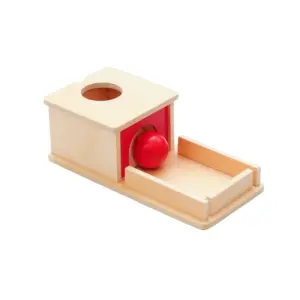
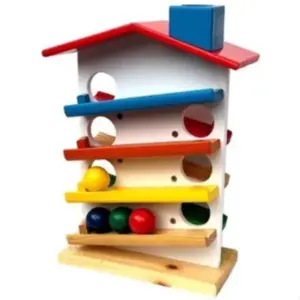
Object Permanence Toys When your baby watches a ball disappear into a box and searches for it, that’s the foundation of memory and logical reasoning. One of the most important cognitive milestones of the first year.
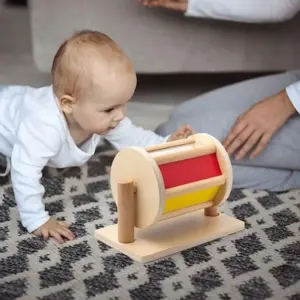
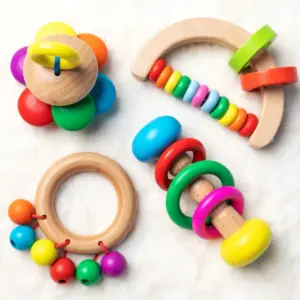
Sensory Toys Natural wood delivers texture, weight, and warmth that plastic can’t replicate. These toys support the sensory skill development that underpins all later learning.
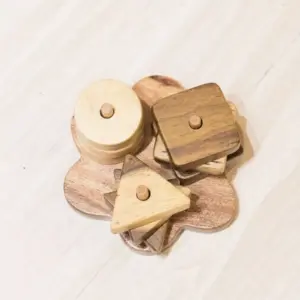
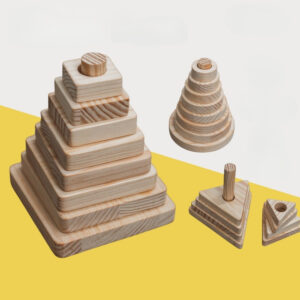
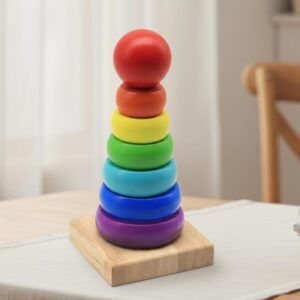
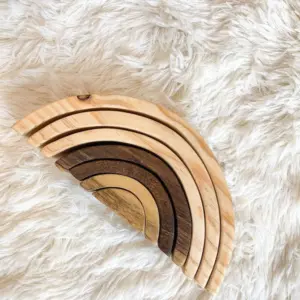
Stacking Toys Alignment, balance, sequencing, persistence — stacking toys quietly build all of these in a format babies find completely absorbing.
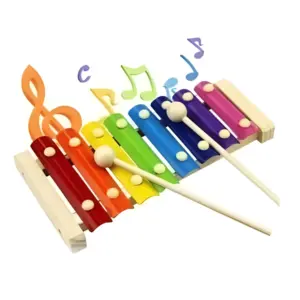
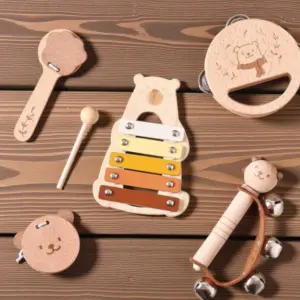
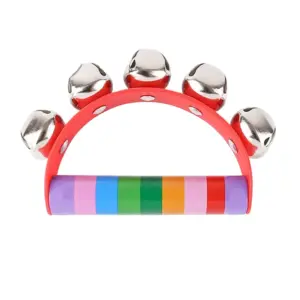
Music Toys Rhythm and intentional sound-making support early language acquisition and pattern recognition from the first months.
Why Parents Choose Kukoo
- 100% natural wood — sustainably sourced, food-grade non-toxic finish, safe for mouthing
- ASTM & EN71 certified — every toy tested for babies under 12 months
- Honest age recommendations — grounded in actual developmental milestones, not marketing
- Reviewed by Sarah Chen, AMI-certified Montessori educator
When your child is ready to move on, explore our Montessori toys by age guide makes the transition easy.
FAQ
- What makes a toy genuinely Montessori for this age?
It does one thing well — invites a specific action your baby can almost solve, then master. A wooden rattle invites grasping and shaking. An object permanence box invites searching and retrieving. What it doesn’t do is flash, sing, or entertain passively. If the toy is more interesting to watch than to hold, it’s not doing Montessori work.
- Are wooden toys safe for babies who mouth everything?
Yes — when properly made. All Kukoo toys use food-grade, non-toxic finishes and are sanded smooth with no rough edges or splinters. Every piece is tested to meet ASTM and EN71 safety standards for babies under 12 months. As with any toy at this age, adult supervision is always recommended.
- How many toys does my baby actually need?
Fewer than you think. Montessori environments deliberately limit choice — one or two toys available at a time, rotated every week or two. A baby surrounded by ten options engages deeply with none of them. Fewer, better toys produce more sustained focus and more genuine developmental progress. Quality over quantity isn’t just a preference here — it’s the method.
- Which toy is best for a baby who seems bored easily?
Boredom often signals a mismatch — the toy is either too easy or too hard. For the 6–9 month window, object permanence toys tend to hold attention longest because they combine a physical challenge with a cognitive mystery. Supporting early cognitive skills with the right material at the right moment is the most reliable way to sustain genuine engagement.
- My baby is almost 12 months — should I look at the next stage?
Yes, and don’t wait until the birthday. The 12–18 month window brings sharper fine motor control, faster language comprehension, and more intentional problem-solving. Introducing one or two pieces from our 1-year-olds toy collection slightly early gives your child a healthy stretch challenge rather than an abrupt transition.