
Wooden Montessori Social-Emotional Toys
Wooden Montessori emotion toys build emotional intelligence through matching, naming, and expressing feelings in hands-on play. Sustainable FSC-certified wood with non-toxic, water-based finishes meeting ASTM F963/EN71 safety standards.
Showing all 7 results


Showing all 7 results
Recommended by 5,000+ Montessori families · Aligned with social-emotional learning (SEL) principles
Quick Buying Guide by Play Type
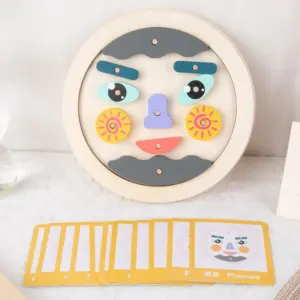
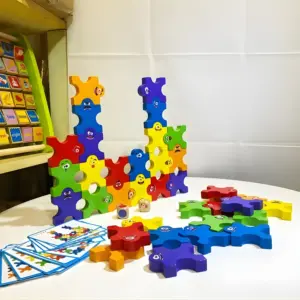
- Matching & face puzzles — for building emotion recognition Emotion Matching Face Puzzle, Emotion Faces Wooden Puzzle Blocks, and Cube Face Change Building Blocks all work on the same core skill: identifying emotions through facial expressions. Children match halves, rotate blocks, and sort faces — the cognitive work of reading other people’s emotions, practiced repeatedly in a calm, low-stakes format. Best for ages 2–4 as a first entry point into emotional literacy.
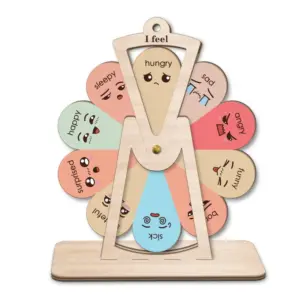
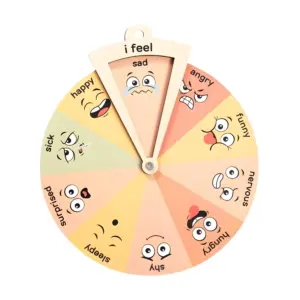
- Feelings wheels & charts — for self-awareness and daily regulation Montessori Emotions Feelings Chart Wheel and Wooden Emotion Wheel for Kids shift the focus inward. Instead of reading emotions in others, children point to how they’re feeling right now. These are the most practical tools in the collection — used before school, after a difficult moment, or as part of a regular check-in routine. Most effective from age 3 onward, when children can begin connecting internal states to external labels.
- Sensory-expression tools — for multi-modal engagement Color & Emotion Recognition Toys links colors to emotional states, adding a sensory dimension to emotion vocabulary. Facial Expressions Eggs offer a tactile, open-ended format where children explore and construct expressions through egg halves. Both formats are particularly effective for children who engage more readily through hands-on manipulation than verbal instruction.
- Best age fit: This collection sits most naturally within the Montessori 3–6 year range, when emotional complexity increases rapidly and children begin navigating peer relationships, conflict, and cooperation in earnest.
Always supervise play and check each product page for recommended age details.
🌿 Sustainable wood · 🎨 Water-based paint · ✅ Screen-free play · 🔄 30-day returns
Inside the Kukoo Social-Emotional Collection
All 7 products in this collection share a common purpose: making abstract emotions visible and tangible. What differs is the format — matching, spinning, rotating, sorting — so that children with different engagement styles all have a natural entry point.
- Emotion Matching Face Puzzle — split-face design requires matching top and bottom halves of an emotion. Simple enough for 2-year-olds; engaging enough for 4-year-olds who can name and discuss each expression.
- Emotion Faces Wooden Puzzle Blocks — interchangeable block faces let children construct and mix expressions. Open-ended enough to invite storytelling alongside recognition practice.
- Montessori Emotions Feelings Chart Wheel — a rotating wheel covering a broad range of emotions with visual labels. Functions as both a toy and a daily classroom or household reference tool.
- Wooden Emotion Wheel for Kids — a more focused spinning tool for identifying current emotional states. Best used as a check-in prompt in family or classroom routines.
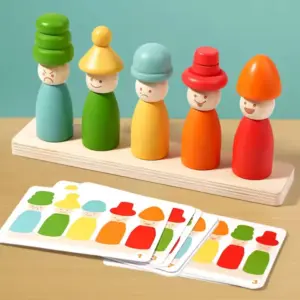
- Color & Emotion Recognition Toys — connects colors to emotional associations, widening the vocabulary and sensory channels through which children process feelings.
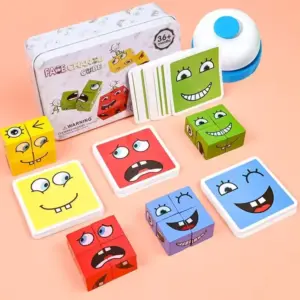
- Cube Face Change Building Blocks — rotating face segments allow children to create composite expressions, exploring how small facial changes shift the emotion conveyed.
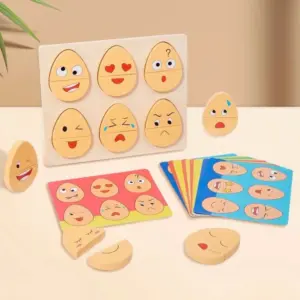
- Facial Expressions Eggs — egg halves with printed facial features that children match and manipulate. A tactile, portable format that works well alongside pretend play.
Together, these tools cover the core capacities that supporting children’s social and emotional skills requires at this stage: recognizing emotions in others, naming their own internal states, and beginning to understand the connection between feelings and behavior.
Why Kukoo Montessori Is the Best Choice
- Emotions made concrete — abstract internal states become physical objects children can hold, sort, and discuss. That tangibility is what makes the learning stick at this age
- Vocabulary built during calm — the skills practiced here — naming feelings, reading faces, connecting emotions to situations — are built during relaxed play, so they’re accessible when it actually matters
- Formats for different learners — matching, spinning, rotating, constructing, sorting. Children who don’t engage with one format will often engage immediately with another
- Used by educators and therapists — emotion wheels and matching tools are standard in Montessori classrooms, speech therapy sessions, and SEL curricula. These are professional-grade tools in a home-friendly format
- FSC-certified wood, non-toxic finishes, ASTM & EN71 certified — every piece built to the same safety standard as the rest of the Kukoo range
- 30-day returns
Not sure this is the right category? Browse our all Montessori toy categories to find what matches your child’s current developmental stage. For children who are also ready for open-ended imaginative play alongside emotional work, our wooden car toys collection pairs well with this range at the 3–6 year stage.
FAQ
- What age are these toys best suited for?
The core range is 2–6 years. At 2–3, children focus on recognizing basic emotions — happy, sad, angry, scared — in faces. From 3–4 onward, they begin connecting emotions to causes and consequences, using feelings wheels for self-identification, and engaging with more nuanced distinctions between similar states. At 5–6, the same tools support vocabulary for emotional complexity and early conflict resolution skills.
- Which product is the best starting point?
For most families, the Emotion Matching Face Puzzle or Facial Expressions Eggs are the best entry point. The matching format is cognitively accessible from age 2, requires no explanation, and generates natural conversation. Once a child can reliably name the basic six emotions — happy, sad, angry, scared, surprised, tired — a feelings wheel is a natural next step.
- Are these toys useful for children with autism or speech delays?
Many speech-language pathologists and behavioral therapists use emotion matching tools as visual supports for children who struggle to verbalize internal states. The concrete, visual format reduces the language demand — pointing replaces verbal expression — and the structured matching mechanics provide predictability that reduces anxiety. Always consult your child’s therapist for guidance specific to their needs.
- When should I use these tools — during a meltdown or during calm time?
During calm time, always. In the middle of a meltdown, children are not in a state where cognitive learning is accessible. Use emotion toys as preventive work: regular, relaxed practice during play builds the vocabulary and self-awareness children need to access those tools during difficult moments. After a difficult episode has passed, revisiting the emotion wheel together can open a productive conversation.
- How do I make emotion play a natural part of our routine without it feeling like a lesson?
Keep it conversational and pressure-free. “Which face do you think looks like how you feel this morning?” before school. “Can you find the face that matches how you felt when that happened?” after a difficult moment has passed. The goal is building emotional vocabulary as a natural part of daily language — not testing knowledge or correcting answers.
- How long will my child stay interested in these toys?
Longer than most parents expect. The Feelings Chart Wheel in particular tends to remain in use for years — the emotional complexity it can support grows as your child does. A 3-year-old uses it to identify happy vs. sad. A 5-year-old uses it to distinguish between frustrated and disappointed. The same tool, different developmental work.