
One toy, one purpose — real learning starts with focus.
Not sure where to begin? Start with what your child loves doing. Our wooden Montessori toys are sorted by category — busy boards, sensory toys, stacking, music, math, and more — each one hand-picked by Sarah Chen, AMI Assistants to Infancy (0–3), M.Ed, not marketing trends.
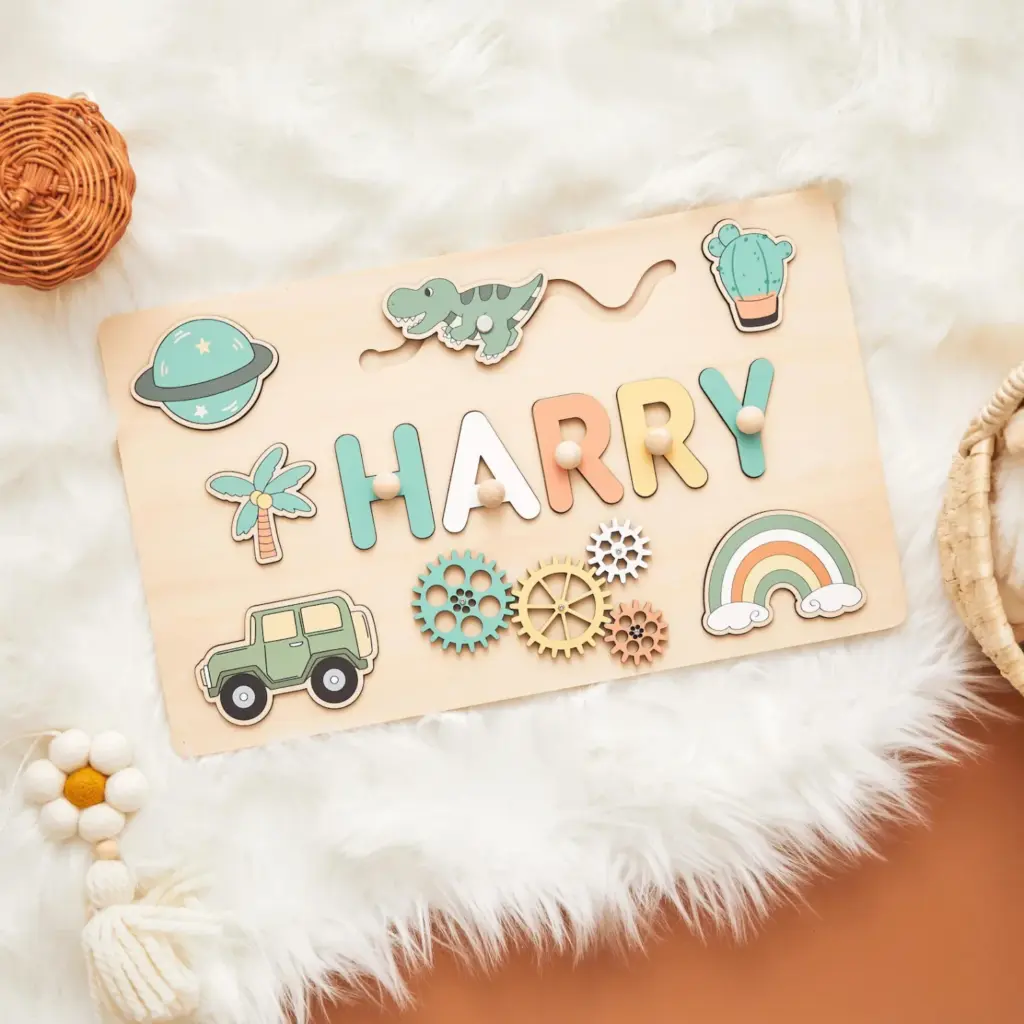
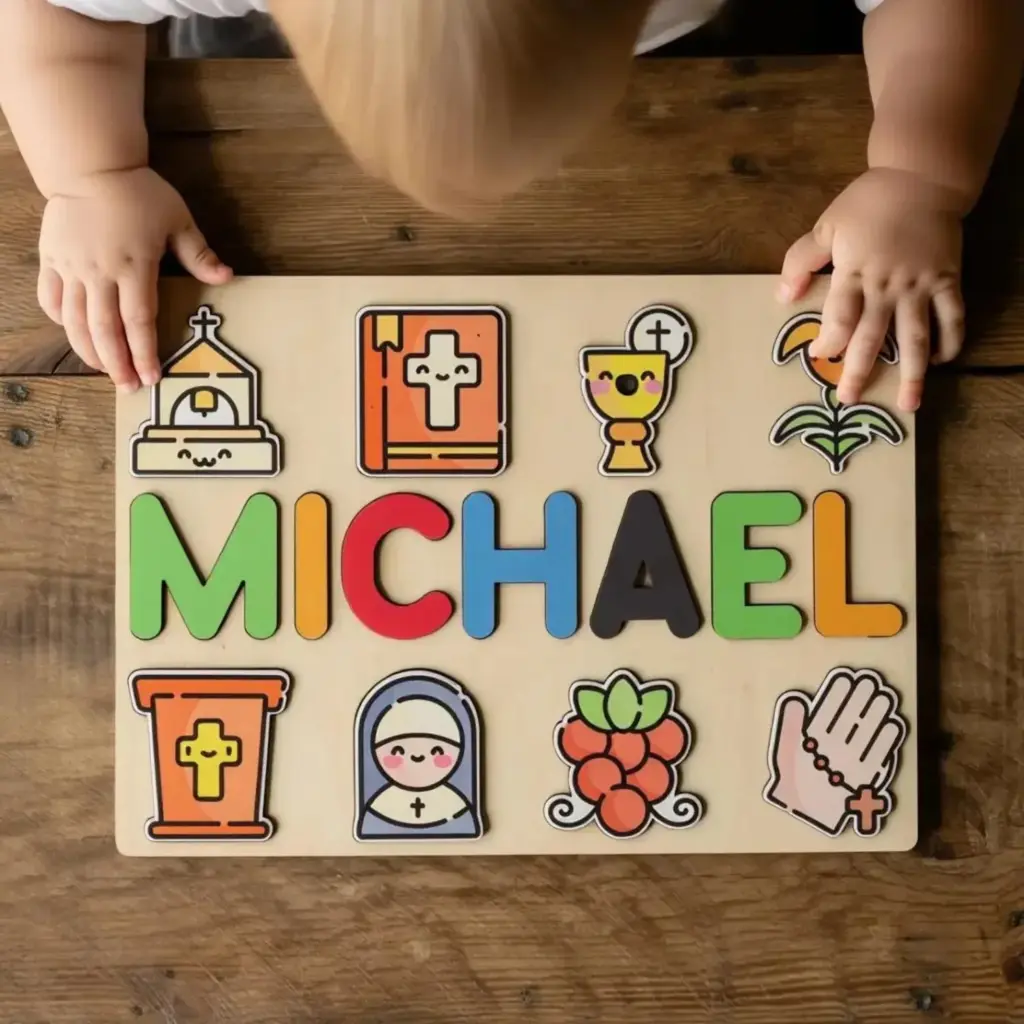
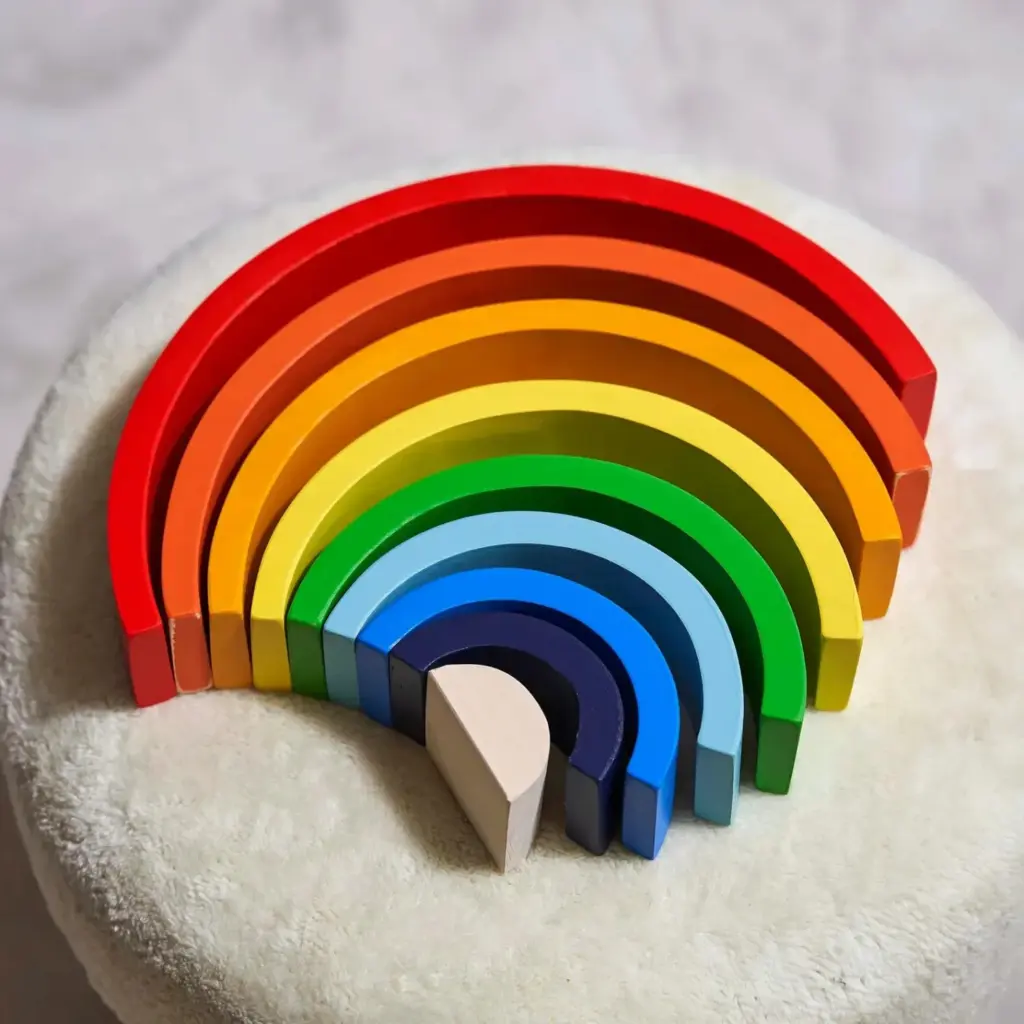
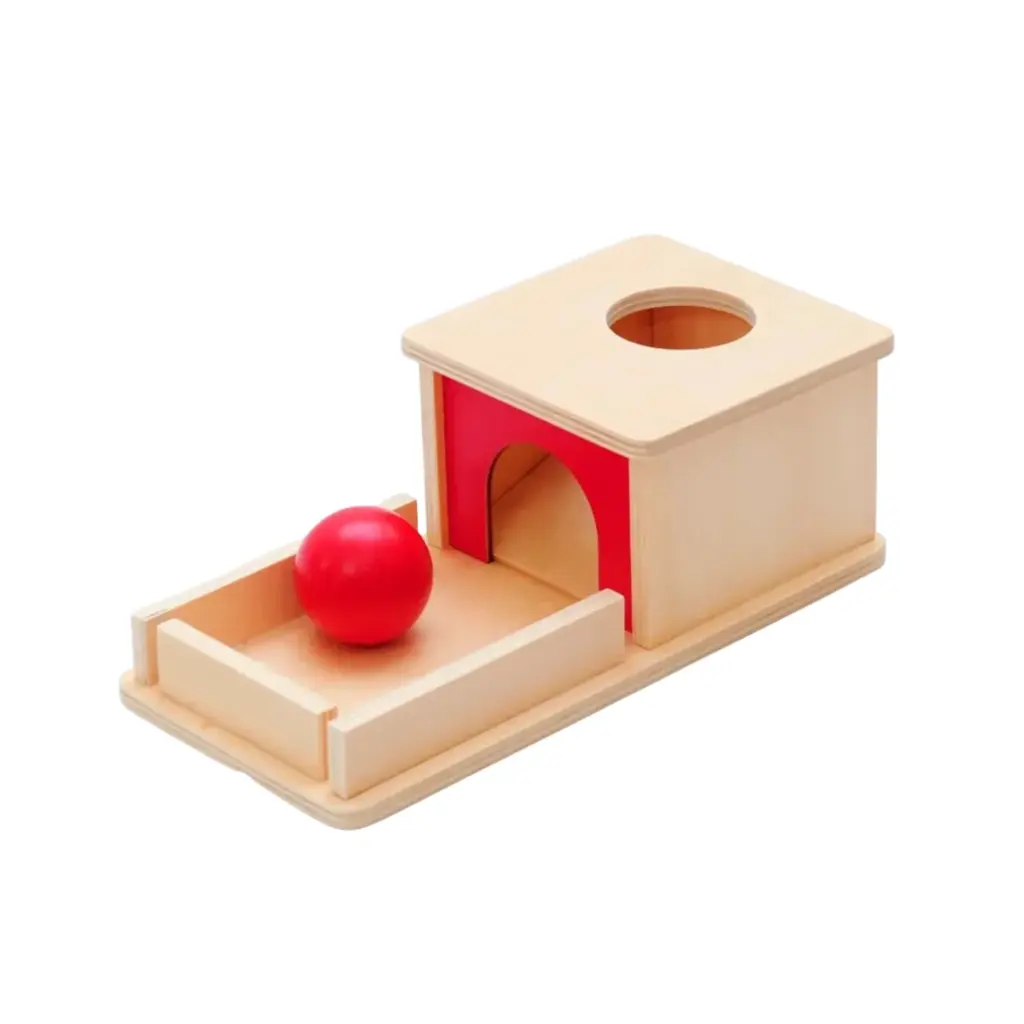
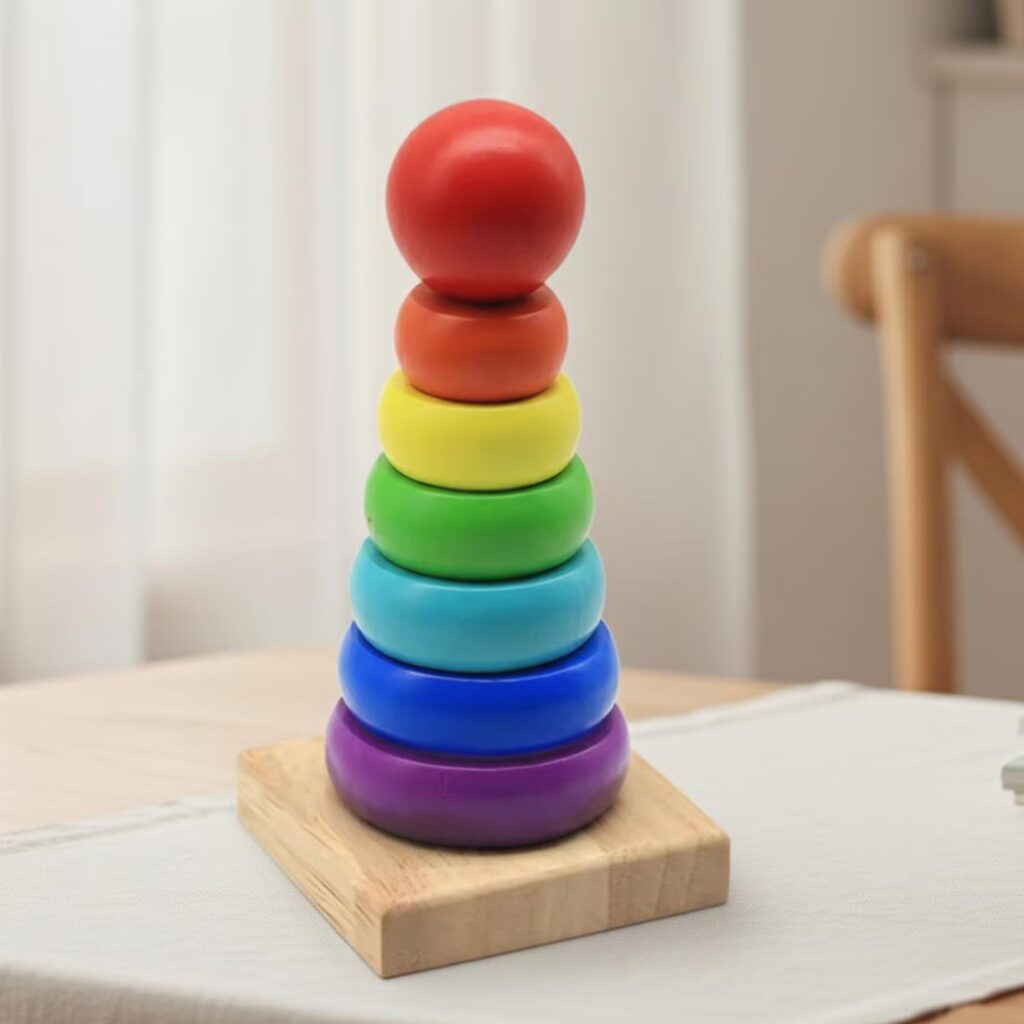
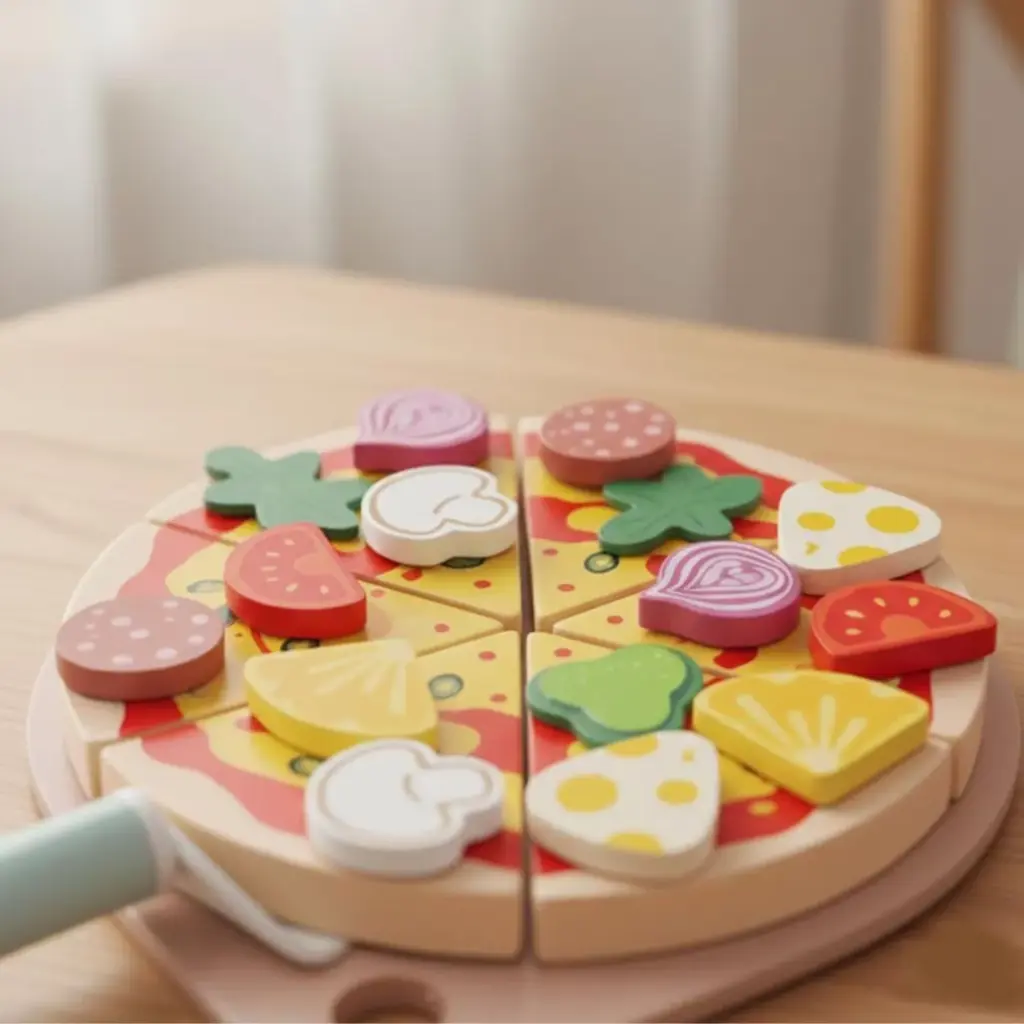
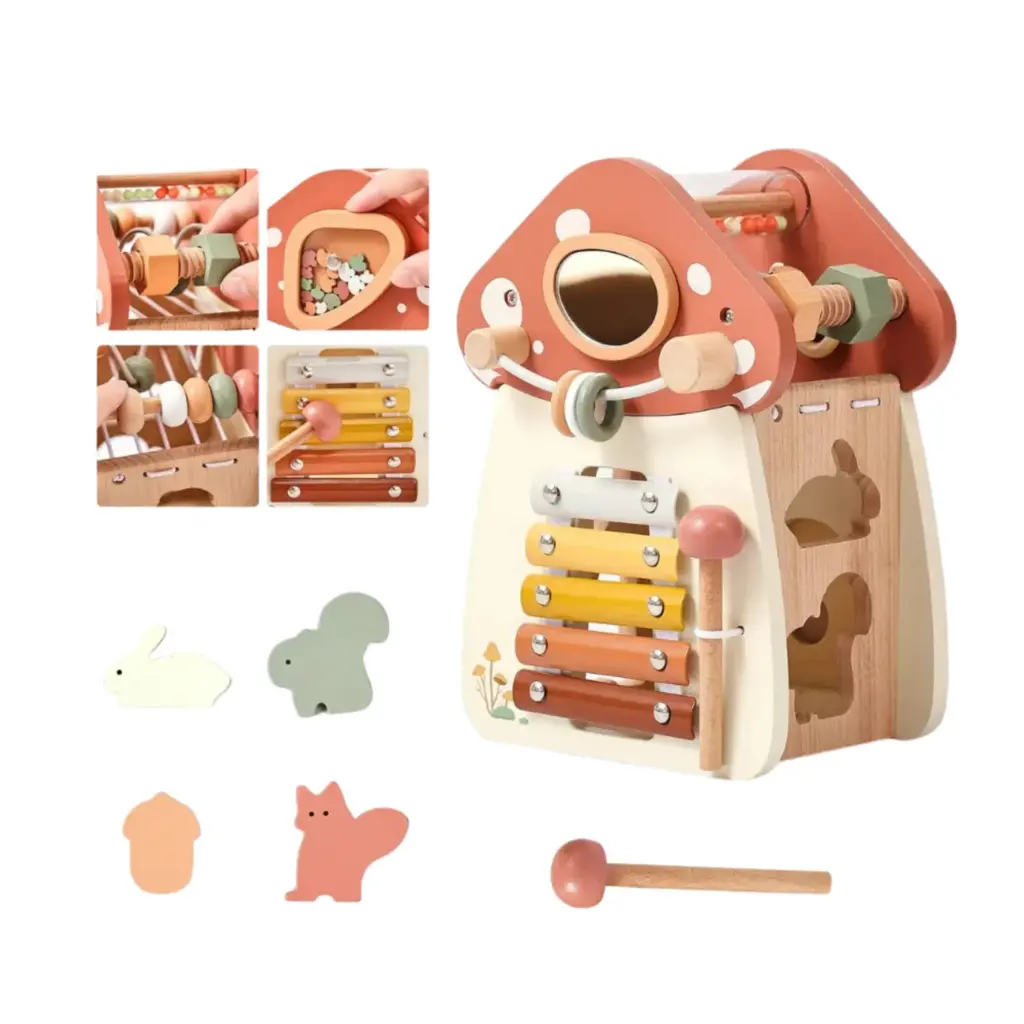
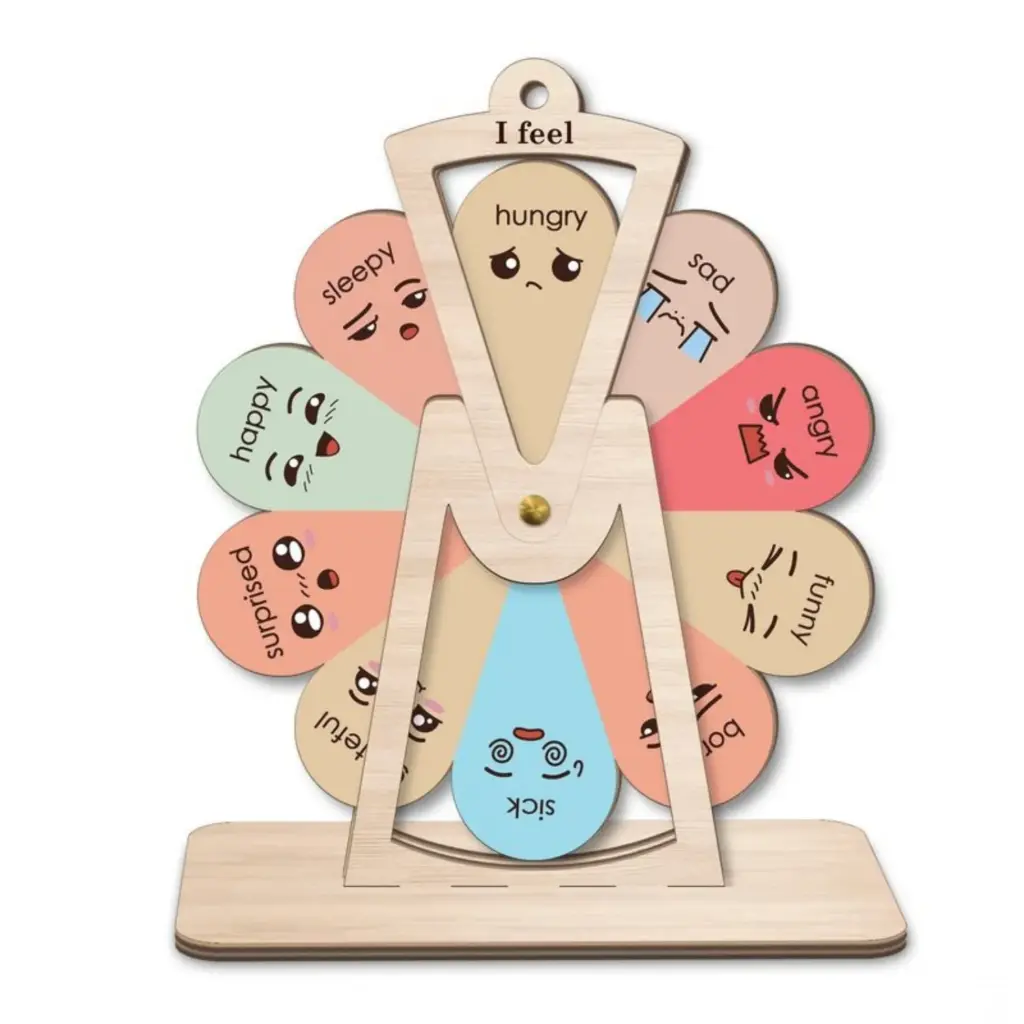
Which is why we select only toys with built-in Control of Error: designs that let your child self-correct without adult intervention.
Each toy is crafted from primarily sustainable wood chosen for its weight, texture, and durability.
What Makes Each Category Special?
💪 Movement & Physical — Busy Boards, Stacking, Balance
Montessori movement toys develop fine motor control (pincer grasp, wrist rotation) and gross motor strength (core stability, vestibular system) through purposeful, repetitive actions. Unlike passive entertainment, these tools require the child to physically engage—building neural pathways through hands-on manipulation.
▼ Learn the Science
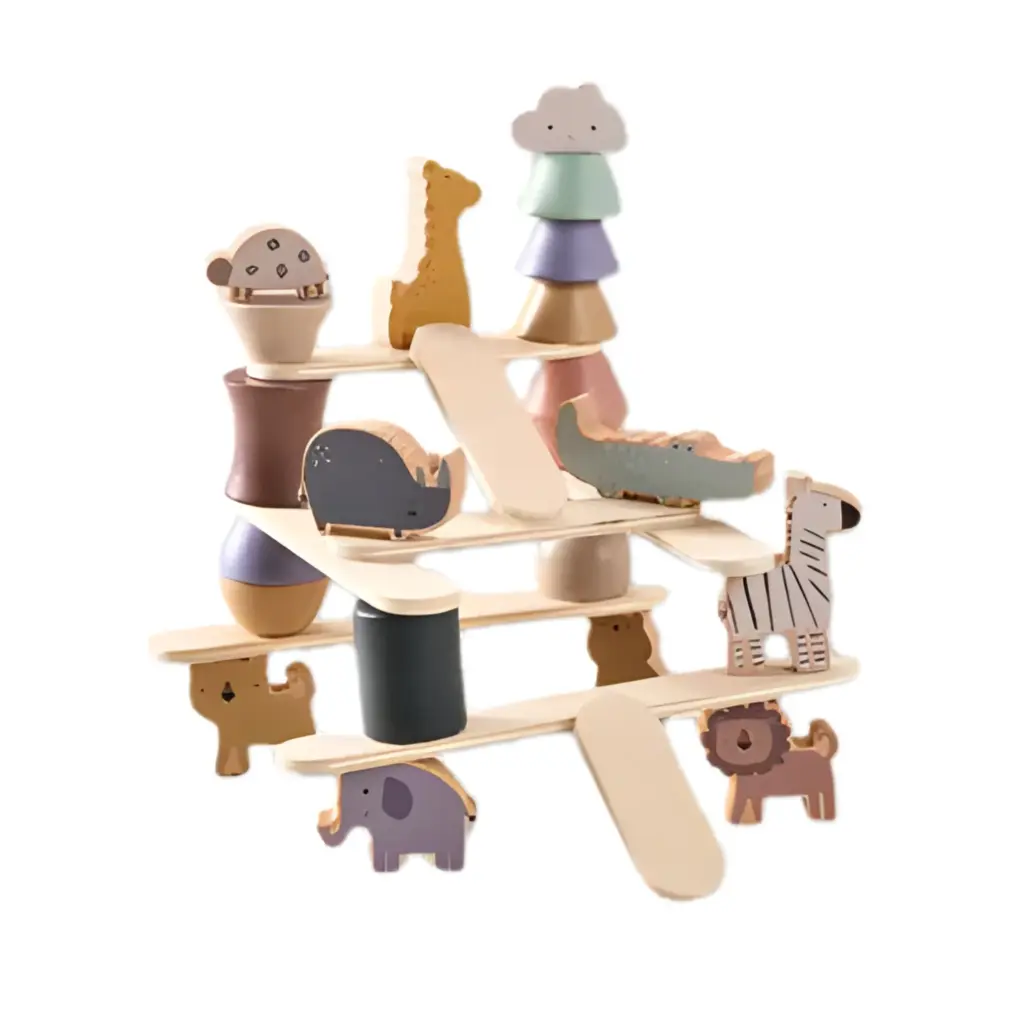
Dr. Maria Montessori observed that children aged 0-4 are in a “Sensitive Period for Movement”—a window where the brain is primed to develop motor coordination. Busy Boards with real latches strengthen the small muscles of the hand needed for writing. Balance boards stimulate the vestibular system in the inner ear, improving focus and spatial awareness. Stacking toys teach visual discrimination (big vs. small) and the physics of gravity.
Related concepts: Sensitive Period for Movement • Pincer Grasp Development • Vestibular System
🧠 Cognitive & Logic — Object Permanence, Math, Car Garage
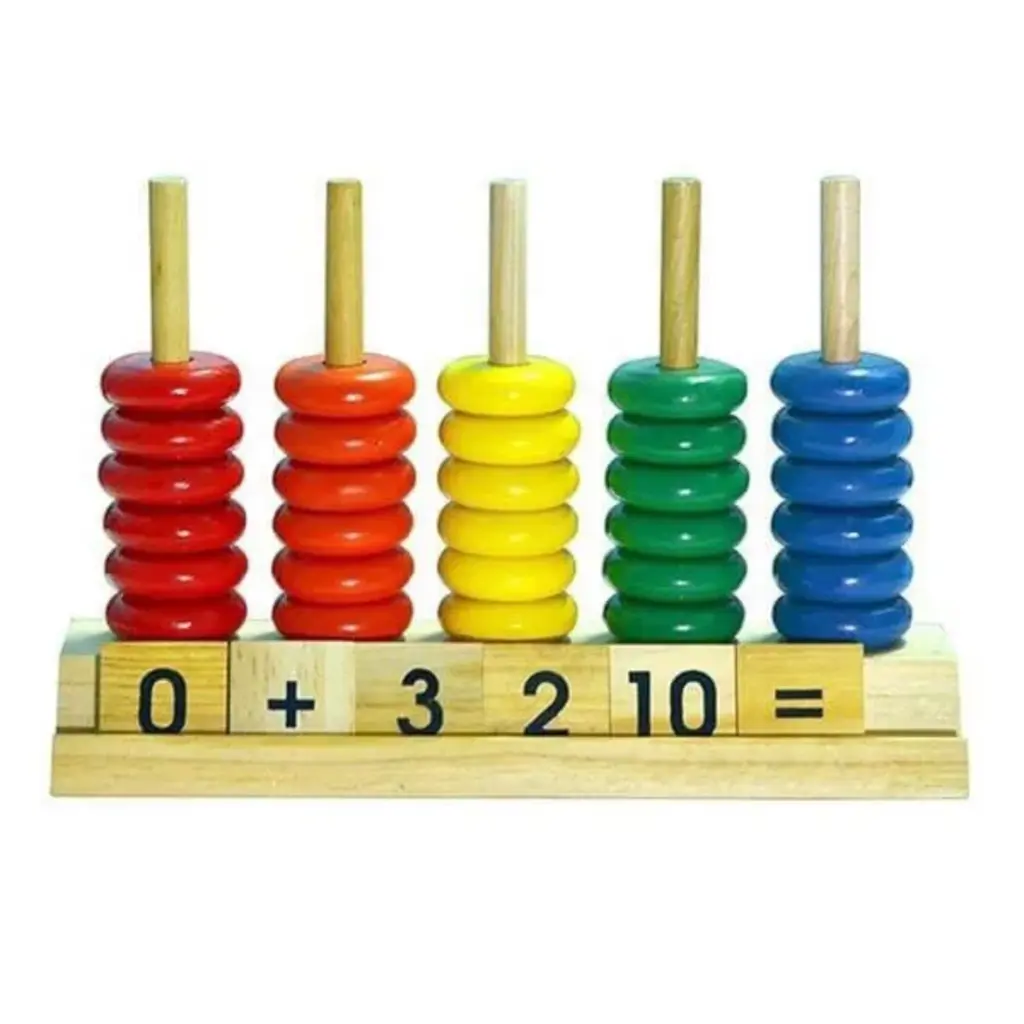
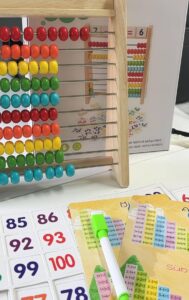
Montessori cognitive toys follow the principle of “concrete to abstract”—children manipulate real objects (holding 3 beads) before learning symbols (the number “3”). Each toy features Control of Error: built-in feedback that shows the child when they’ve made a mistake, without adult correction.
▼ Learn the Science
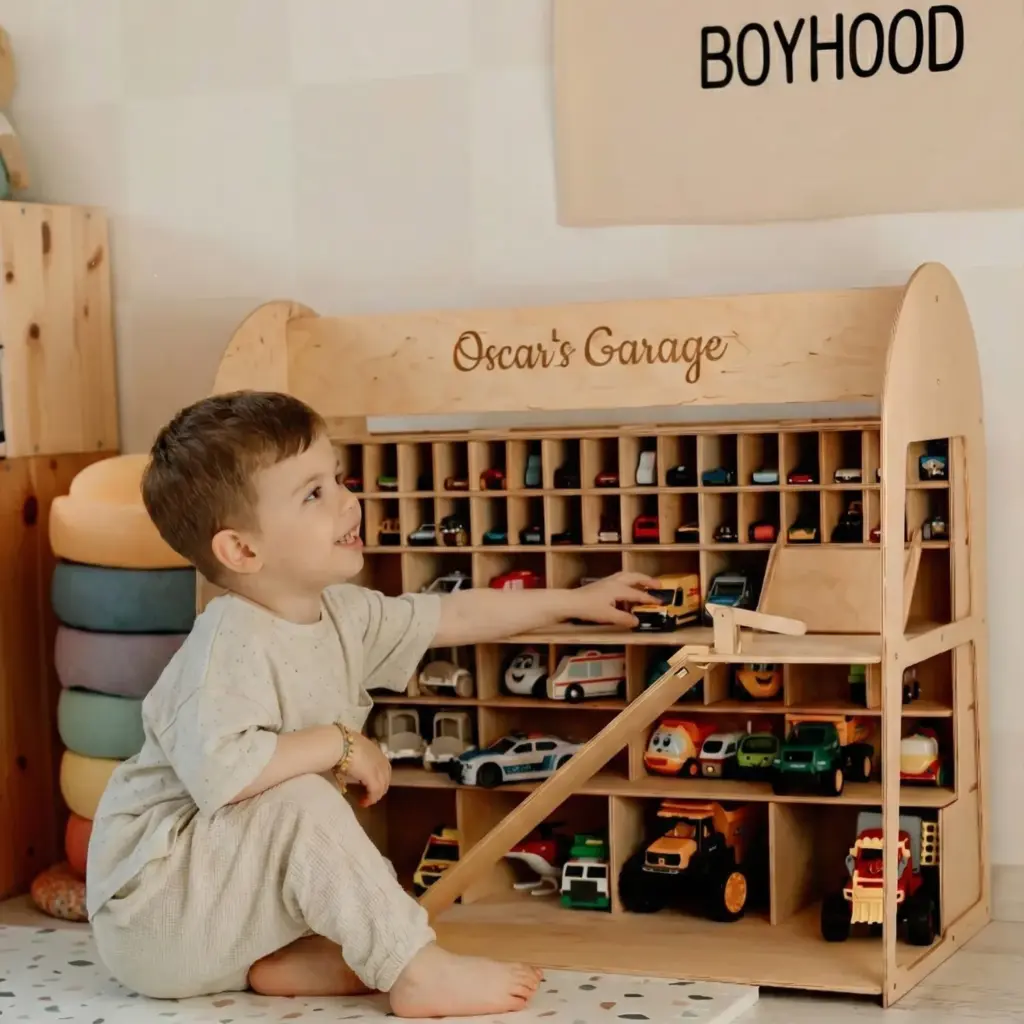
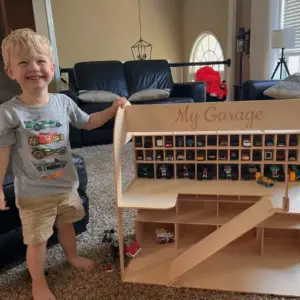
The Object Permanence Box is classic Montessori material for infants 6-12 months. When the ball “disappears” into the hole and “reappears” in the tray, it teaches Piaget’s concept of object permanence—understanding that objects exist even when hidden. Car Toys support the Transporting Schema—children who repeatedly carry objects from A to B are building spatial reasoning and cause-effect understanding (gravity makes the car roll down).
Related concepts: Control of Error • Concrete to Abstract • Transporting Schema
🎨 Sensory & Emotional — Sensory, Music, Emotions
Montessori Sensory toys apply the principle of “Isolation of Quality”—each toy isolates ONE sensory attribute (only texture, or only sound, or only weight) to prevent overwhelm and sharpen perception. Unlike flashy electronic toys, these “quiet toys create active children.”
▼ Learn the Science
Musical instruments must produce real tones—a wooden xylophone with accurate pitch, not electronic beeps. This develops auditory discrimination. Emotion tools (feeling stones, mood mirrors) support Montessori’s “Grace and Courtesy” curriculum—children learn to name their feelings (“I feel frustrated”) instead of acting them out (tantrums). This is foundational for Social-Emotional Learning (SEL).
Related concepts: Isolation of Quality • Grace and Courtesy • Auditory Discrimination
🏠 Practical Life & Personalized — Kitchen, Name Puzzles
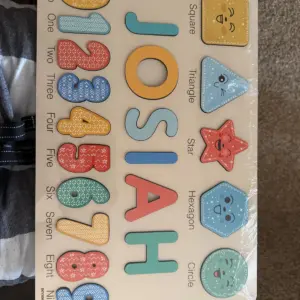
Practical Life is the most distinctive Montessori category—it’s not “pretend play” but “functional play” with real tools (child-safe knives that actually cut, pitchers that actually pour). Name Puzzles support identity development and early literacy—children recognize their own name before any other word.
▼ Learn the Science
In a Montessori classroom, Practical Life is the first area children work in—it builds concentration, independence, and care for the environment. Kitchen tools with real functionality (running water, working utensils) nurture the child’s desire to contribute to family life. 2026 trend: “Functional play kitchens” with actual working elements are replacing purely decorative ones.
Related concepts: Practical Life Exercises • Care of Self • Care of Environment
Quick Category Comparison
| Category | Best For | Age | Play Schema | Montessori Principle |
|---|---|---|---|---|
| Busy Boards | Pincer grasp, focus | 12-36 mo | Connecting | Isolation of Movement |
| Stacking | Spatial, sequencing | 10-36 mo | Positioning | Visual Discrimination |
| Balance | Core, vestibular | 18 mo - 8 yr | Rotation | Freedom of Movement |
| Object Permanence | Cause-effect | 6-18 mo | Enveloping | Control of Error |
| Math | Counting, logic | 2-6 yr | — | Concrete to Abstract |
| Car | Spatial, gravity | 12-48 mo | Transporting | Freedom of Movement |
| Sensory | Perception refinement | 0-36 mo | Enveloping | Isolation of Quality |
| Music | Auditory, rhythm | 6 mo - 6 yr | — | Auditory Discrimination |
| Social-Emotional | EQ, self-regulation | 2-6 yr | — | Grace and Courtesy |
| Kitchen | Independence | 18 mo - 6 yr | Transforming | Practical Life |
| Name Puzzles | Letters, identity | 12 mo - 4 yr | Positioning | Language Development |
Not sure this category is the right fit?
That’s totally normal—kids don’t all develop the same skills at the same pace, and their interests can change quickly. This category groups toys by a shared purpose, but the “right” choice depends on what your child is working on right now.
If you’ve noticed a specific focus—like fine motor control, language building, concentration, sensory exploration, or practical life independence—see our toys grouped by developmental skill to match that goal more closely. Prefer a quicker path? See our toys grouped by age range for options that typically fit your child’s current stage.

100% Natural Wood

Certified Sustainable

Free Ship $80+

30-Day Returns
Frequently Asked Questions
What's the difference between "Montessori" and "Montessori-inspired" toys?
Authentic Montessori materials (object permanence boxes, pink towers, spindle boxes) were designed by Dr. Montessori for classroom use. “Montessori-inspired” toys (busy boards, balance boards) follow the same principles—natural materials, self-correction, purposeful design—but aren’t traditional classroom materials. Both are valuable for home learning.
What are Play Schemas and why do they matter?
Play Schemas are repetitive behavior patterns children use to understand the world: Transporting (moving objects from A to B), Enveloping (hiding/wrapping things), Rotation (spinning, rolling), Positioning (lining objects up). Matching toys to your child’s current schema increases engagement. A child who constantly carries things is in the Transporting Schema—they’d love a Car Toys.
How do I choose the right category for my child’s age (and avoid buying too much)?
Start with your child’s current skill, not the age label. Pick one “core” category that matches what they’re practicing now (e.g., Object Permanence for early problem-solving, Stacking/Balance for coordination, Practical Life/Kitchen for independence), then add one “support” category for variety. Keep only a few options accessible, rotate weekly, and choose toys with clear purpose and Control of Error so your child can self-correct and stay engaged.
When should I move up to a harder category or “level up” the toys?
Look for these signs: your child completes the activity quickly, repeats it without focus, or no longer needs to self-correct. That usually means they’ve mastered the current challenge. Move up by adding one new step (bigger range of sizes, more pieces, more sequencing) or switching to a nearby category that builds on the same skill—e.g., Stacking → Balance, Object Permanence → Logic/Cause–Effect, or Name Puzzle → Early Math/Sorting. Keep the old material available sometimes for confidence and review.
How many toys should I offer at one time for Montessori-style play?
Less is more. Offer 4–8 choices on low shelves (or in baskets), each with a clear purpose, and rotate based on what your child is practicing. If your child seems overwhelmed or bounces between toys, reduce the options and keep one toy per category visible at a time—this supports focus, independence, and deeper play.
📸 Real Play, Real Families
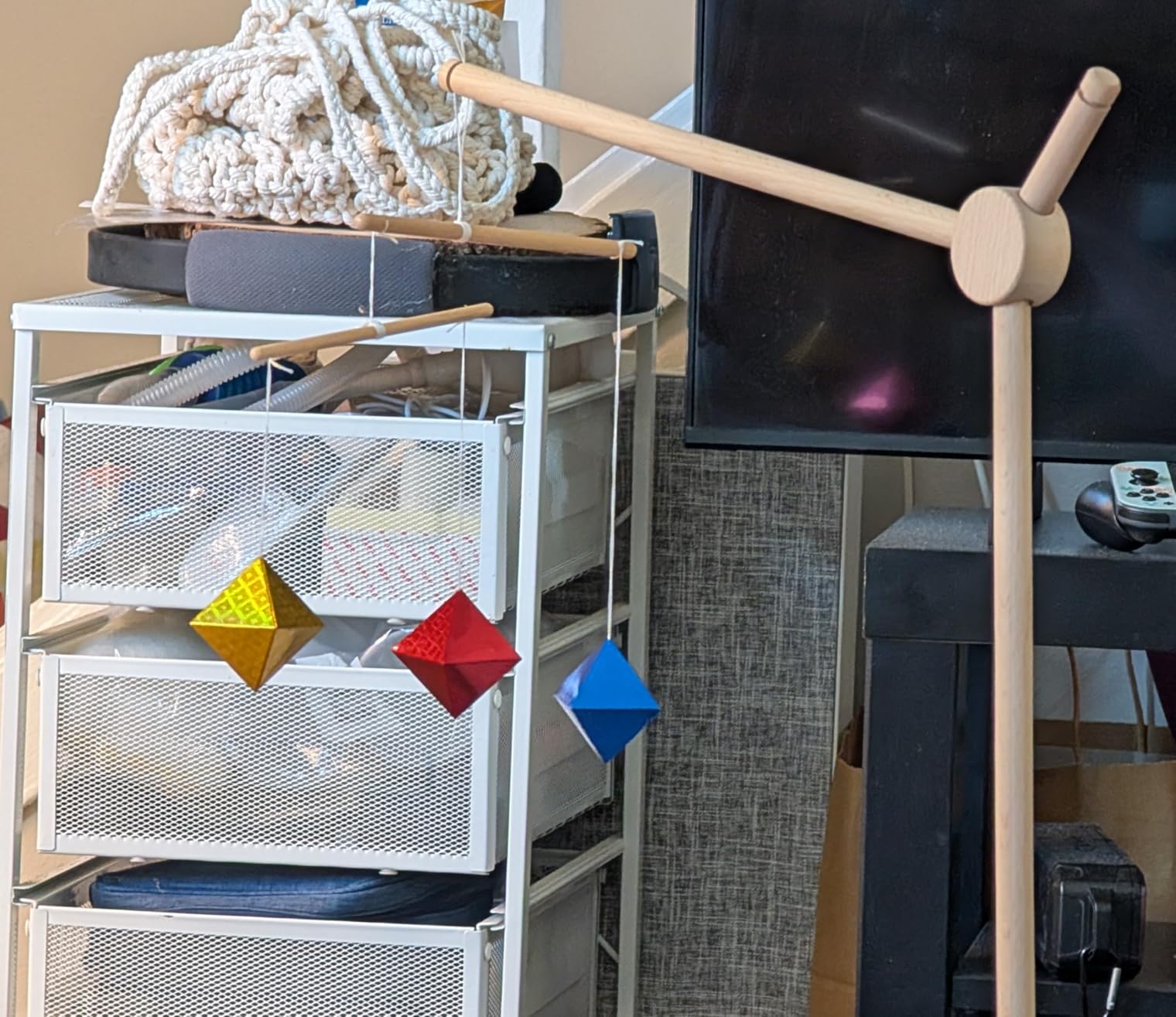
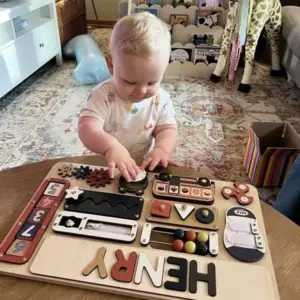
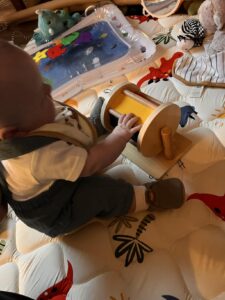
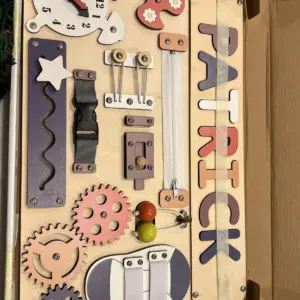
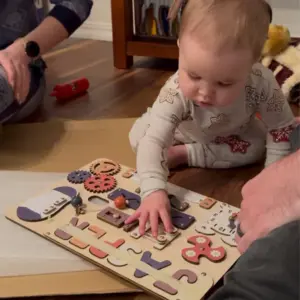
Share your moments: #KukooMontessori
👩🏫 Reviewed By