
Numbers. Name. Shapes. Everything She Needs to Learn First — On One Board.
Most learning toys teach one thing. Flash cards teach numbers. Shape sorters teach shapes. Name puzzles teach names. The Kukoo™ Personalized Learning Name Puzzle for Girls teaches all three — at the same time, on the same board, with her name running through the center of every lesson.
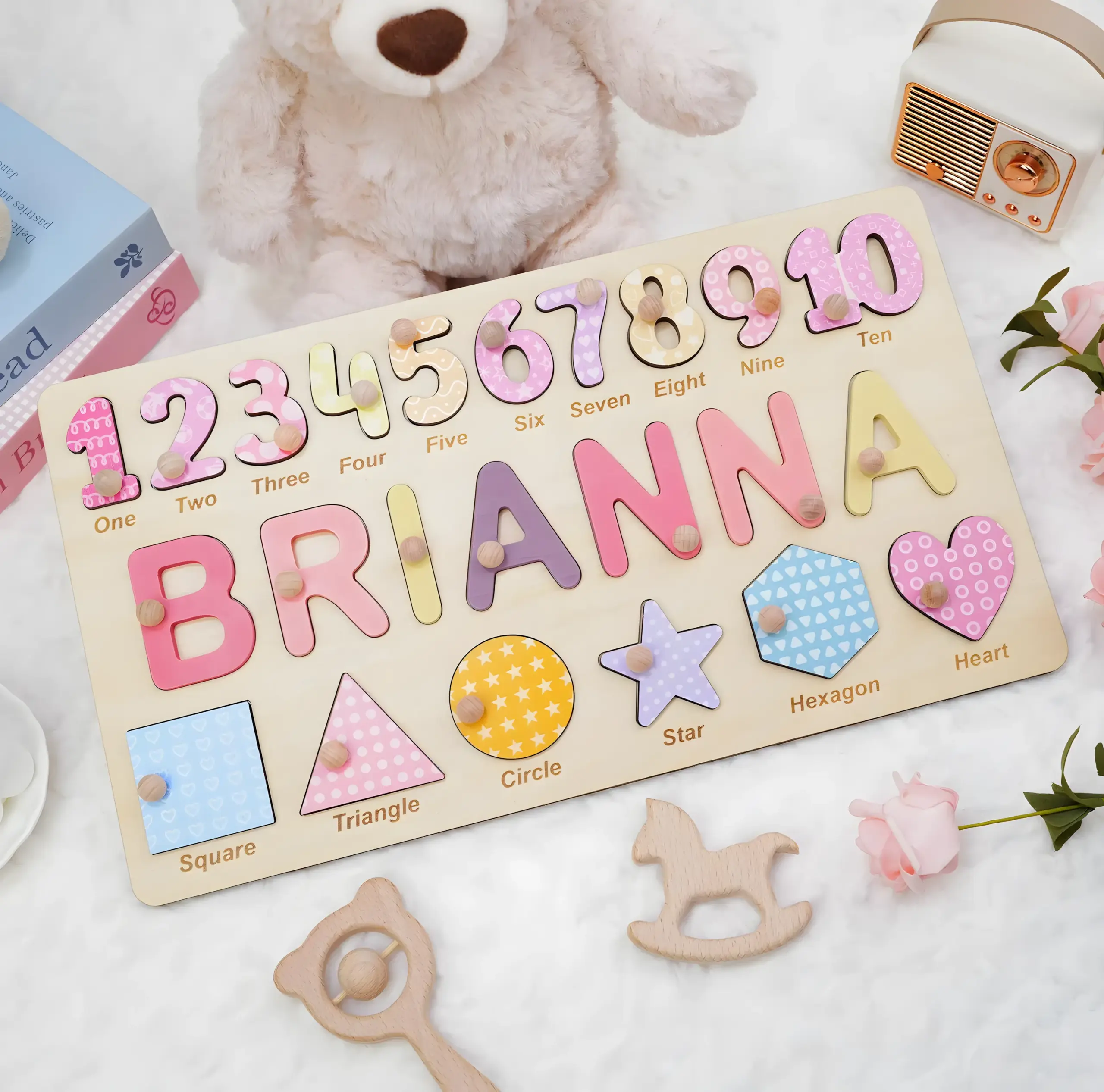
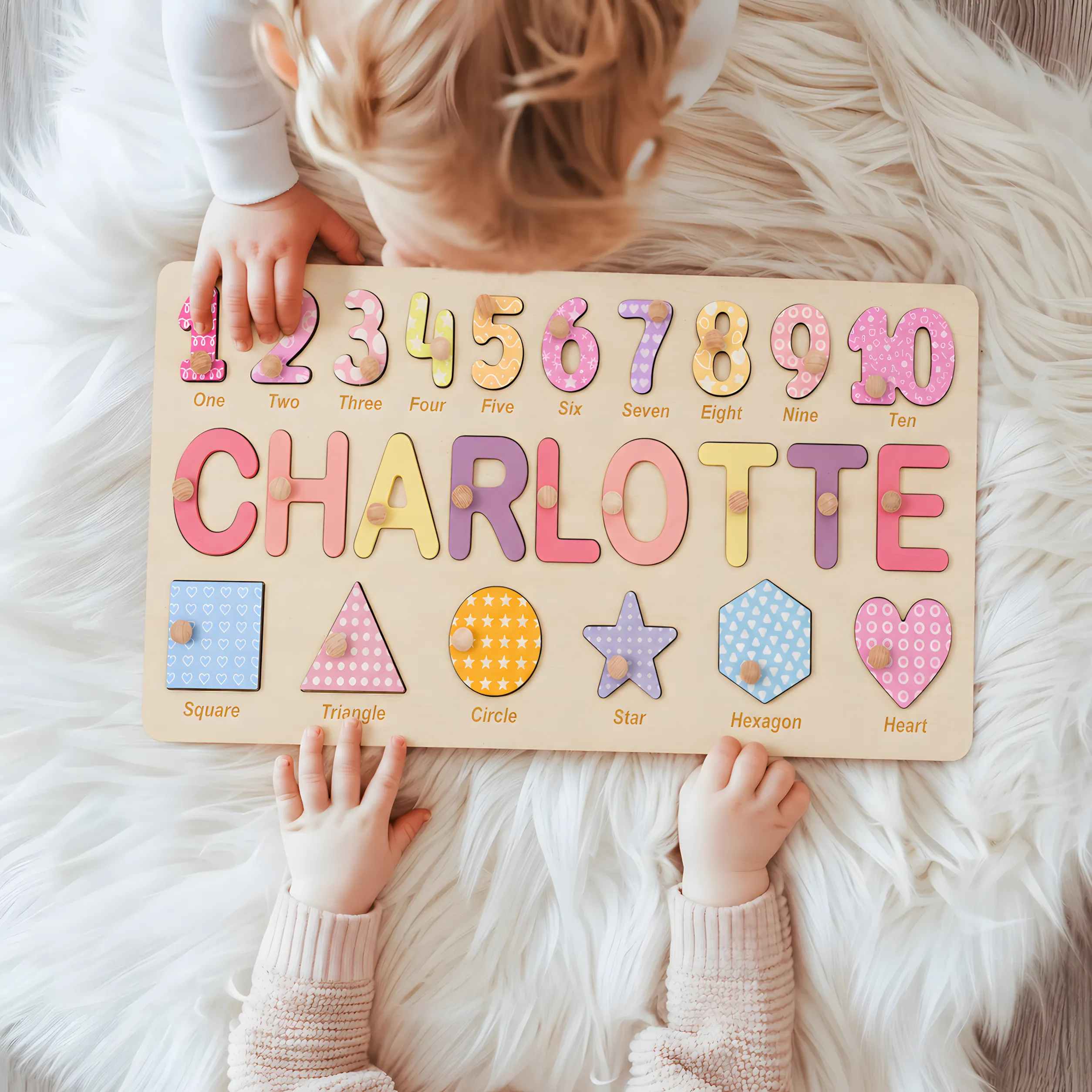
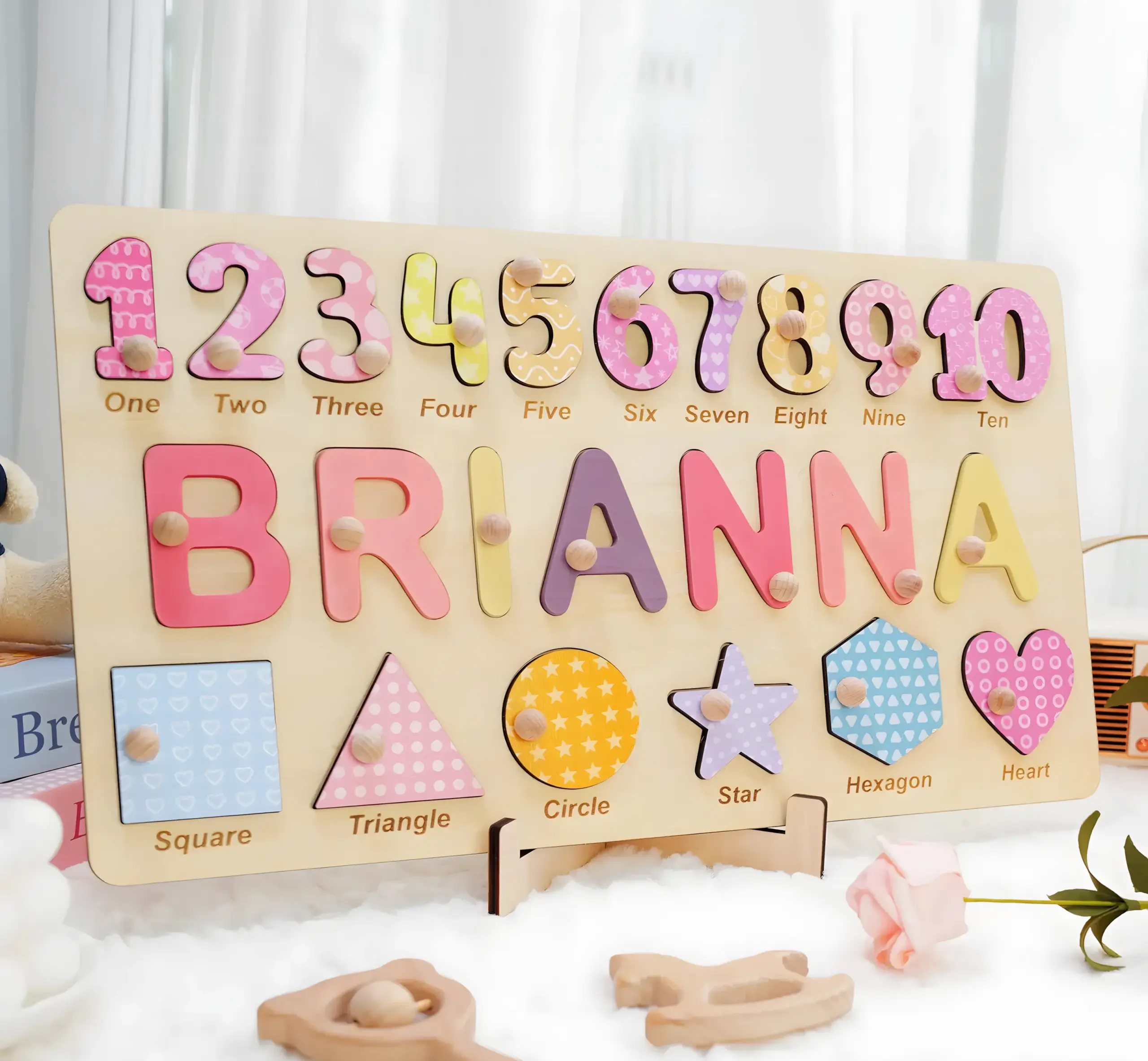
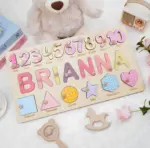
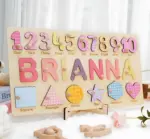
Numbers 1 through 10, labeled in full — One, Two, Three all the way to Ten. Her name in oversized pastel letters she can grip and count and spell. Six labeled shapes below — Square, Triangle, Circle, Star, Hexagon, Heart — each one a piece she’ll know by word and by touch before she sets foot in a preschool classroom.
This isn’t a toy that grows with her. It’s a toy that teaches her. And the difference shows up in ways you’ll notice at the dinner table, in the car, in every small moment she points to something and tells you exactly what it’s called.
Order now — and give her the head start that looks like playtime.
Anatomy of Quality
Why this is the most complete early learning gift for a girl aged 1–3:
- 🔢 Numbers 1–10, Labeled and Liftable: The entire top row is a complete counting curriculum — ten number pieces, each labeled with its written word directly beneath: “One.” “Two.” “Three.” All the way to “Ten.” This dual format — numeral above, word below — is exactly how Montessori sandpaper numbers work: the child learns the symbol and the language simultaneously, not sequentially. Most preschools spend the first semester on this. She’ll arrive already knowing it.
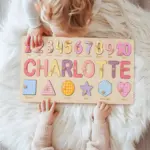
- 💜 Her Name — The Most Important Word She’ll Ever Learn to Spell: The oversized name letters in the center aren’t just personalization. They’re her first spelling lesson, her first phonics lesson, and her first experience of seeing herself represented in language. Each letter has a smooth wooden peg for the pincer grasp practice Montessori educators identify as the critical pre-writing motor milestone — and the letters are large enough for even the youngest hands to grip confidently from 12 months.
- 🔷 Six Shapes, Including the One Most Toys Skip: Square. Triangle. Circle. Star. Heart. Most shape toys stop there. This board adds the Hexagon — the shape that appears in honeycombs, tiles, and nature everywhere — labeled and liftable alongside the rest. When she learns hexagon at two, she’ll be the child who recognizes it on the bathroom floor at three. These are the details that compound.
- 🎨 Pink Pastel Pattern Palette — Beautiful Enough to Be Decor: Every piece features a different surface pattern — dots, stars, hearts, geometric prints — all in a coordinated pink, lavender, peach, and yellow palette. This isn’t a learning toy that looks like a learning toy. It’s a piece of art that happens to teach counting, spelling, and geometry. It belongs on a shelf as much as in a toy bin — and it will be in both.
- 📐 Three Rows, Three Lessons, One Flow: Numbers on top. Name in the middle. Shapes on the bottom. The layout isn’t random — it mirrors the natural reading direction of the English eye: top to bottom, left to right. Every time she sits down with this board, she’s practicing the spatial orientation that reading requires, without either of you knowing it.
Specifications
| Dimensions | Approx. 11.8in × 7.87in (30cm × 20cm) |
|---|---|
| Material | Sustainable Plywood |
| Age | 12 months+ (supervision recommended under 3 years) |
| Safety Standard | ASTM F963 and EN 71 |
| Paint & Finish | Child-safe, water-based ink (certified non-toxic) |
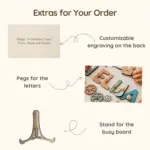
- Piece Count: Up to 25 individual pieces depending on name length — numbers (10), name letters (varies), shapes (6). All pieces have smooth wooden pegs.
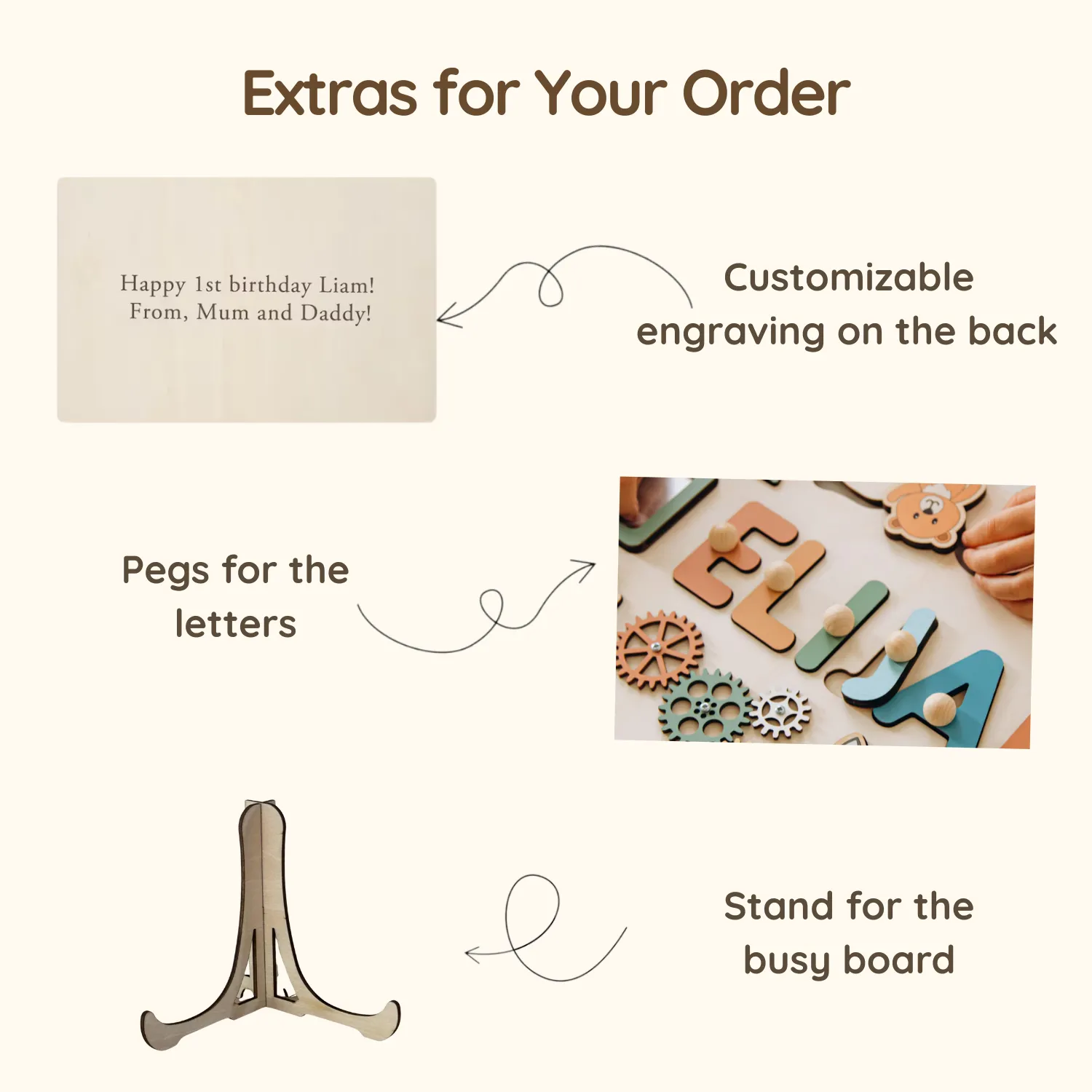
- Pegs: Choose “No Pegs” for a flat display. For active play, pegs are strongly recommended — especially under 2.
How to Play: Three Lessons, One Afternoon
Let her set the pace. Every row is a complete activity on its own — or run all three in sequence when she’s ready:
- Start With the Numbers — One at a Time: Point to each number piece from left to right and count together: “One — two — three —” all the way to ten. Then pop out just the first three — 1, 2, 3 — and place them in front of her. Ask her to put them back where they belong. The labeled cutouts make this self-correcting: if the piece doesn’t fit, she already knows to try the next spot. Build up one number at a time across days. By the end of the week, she’ll count to ten on her own — and she’ll do it while sliding wooden pieces into place, which means her hands remember it too.
- The Name Row — Letter by Letter, Loud as You Want: Pop out each name letter one at a time and call it out together — as loud as the room allows. Then hand each letter back and let her find its spot. For toddlers who already know their name, this row produces a particular kind of delighted focus — that’s my name, those are my letters. For younger babies, it’s pure sensory exploration: big pieces, bright colors, satisfying pegs. Both are the right way to play.
- Shapes — Name It Before You Place It: The rule for the shape row: say the name of the shape out loud before it goes back in. “Triangle.” In it goes. “Hexagon.” In it goes. “Heart.” Done. This one small ritual — name it, then place it — is the entire Montessori three-part card lesson compressed into a two-second interaction. Do it enough times and the words stop being things she has to remember. They become things she just knows.
- The Full Board Challenge — When She’s Ready: When all three rows feel easy, run the board in full sequence: count the numbers, spell the name, name the shapes — without any help from you. Time it if she’ll enjoy the game. Celebrate every single piece. The first time she completes the whole board independently is a moment worth remembering — because what she just did, in the language of early childhood education, is called mastery. In the language of a parent watching from across the room, it’s called something else entirely.


Reviews
There are no reviews yet.