
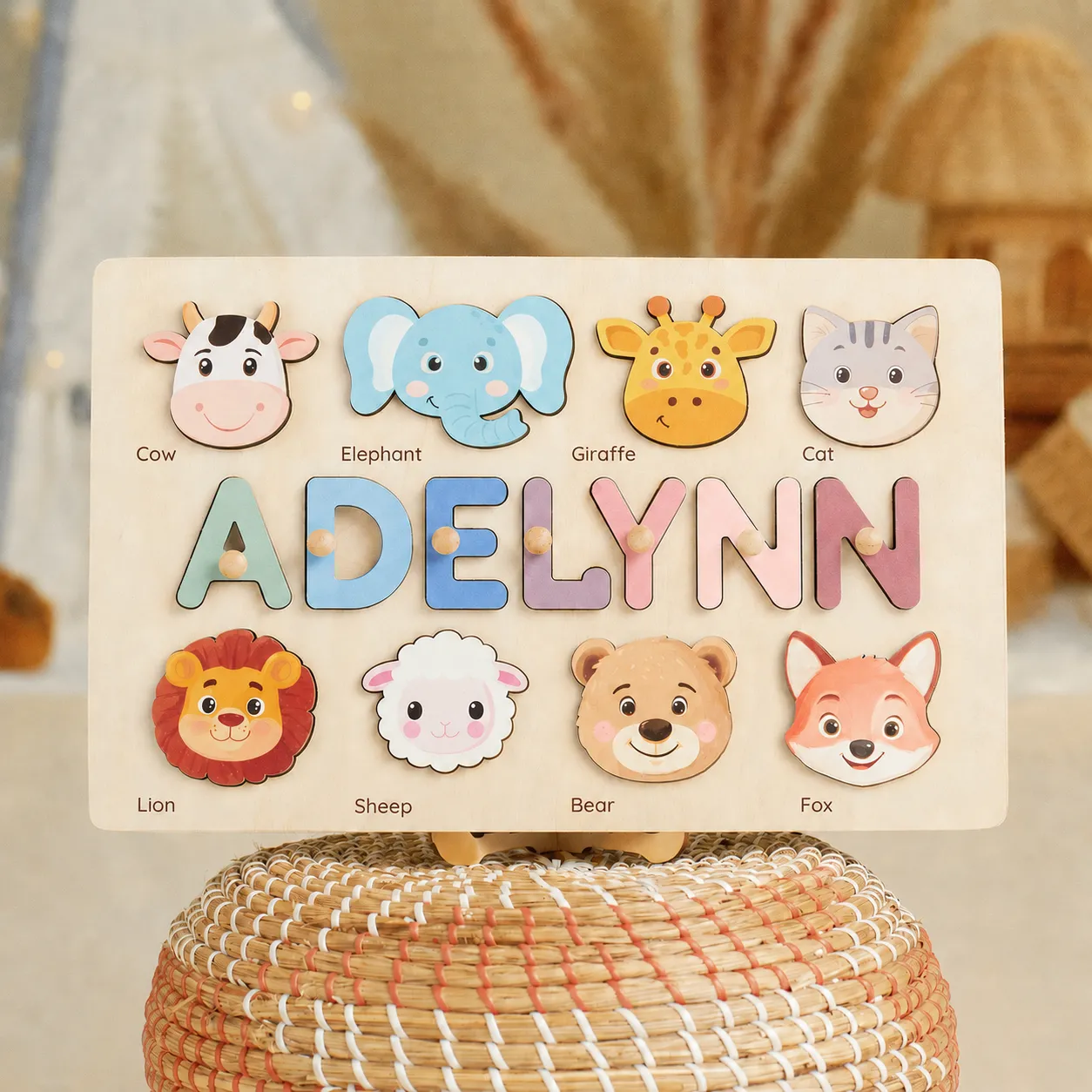
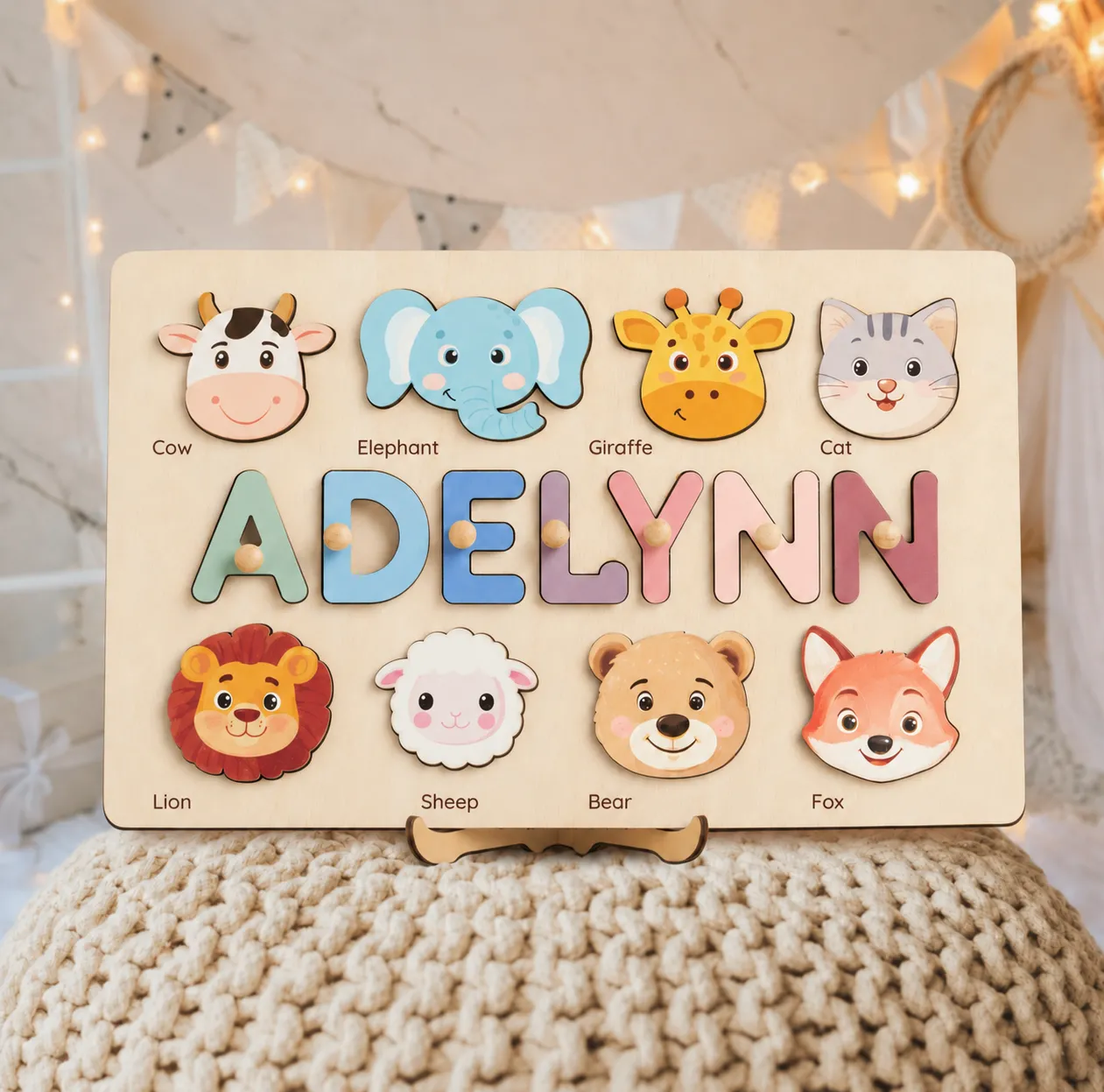
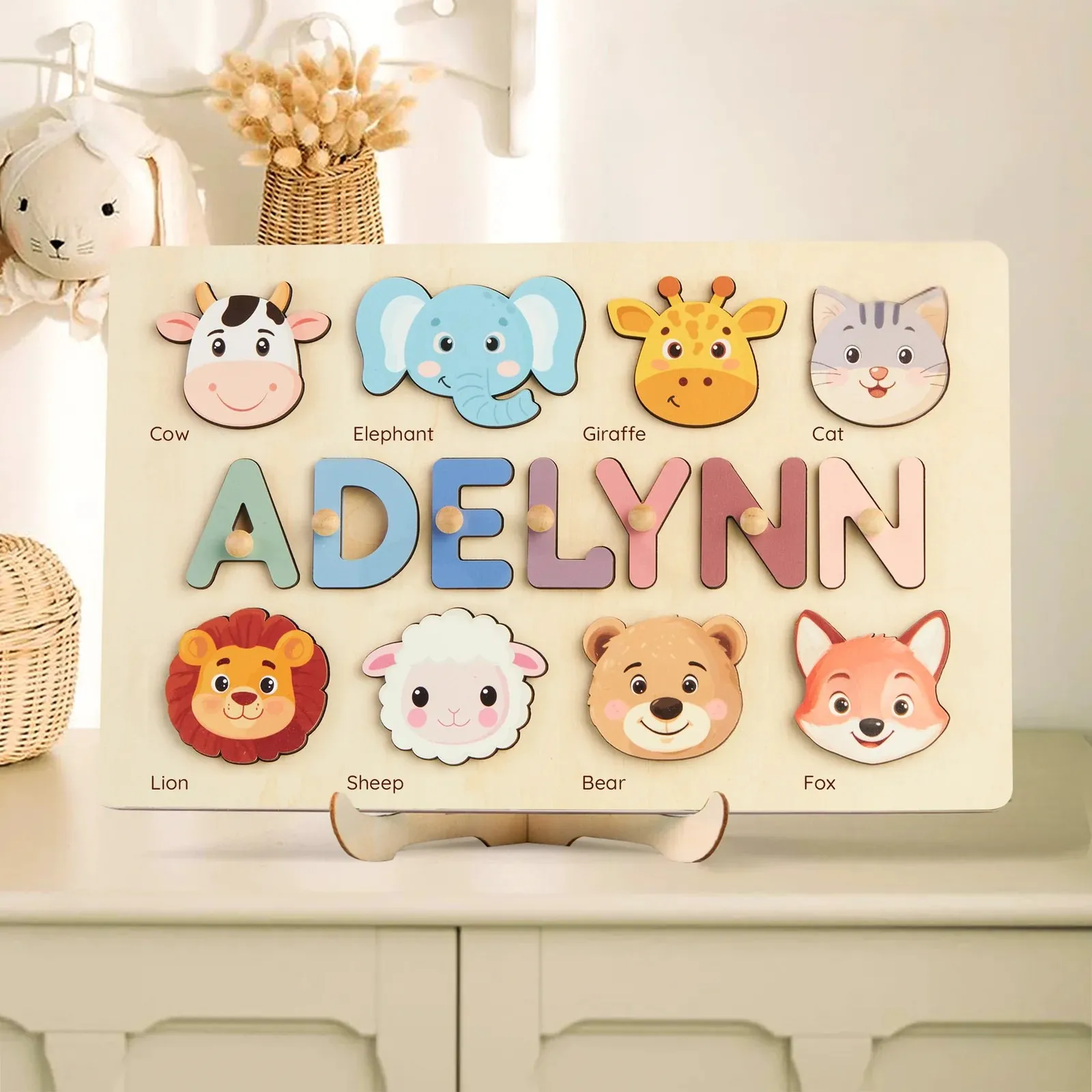
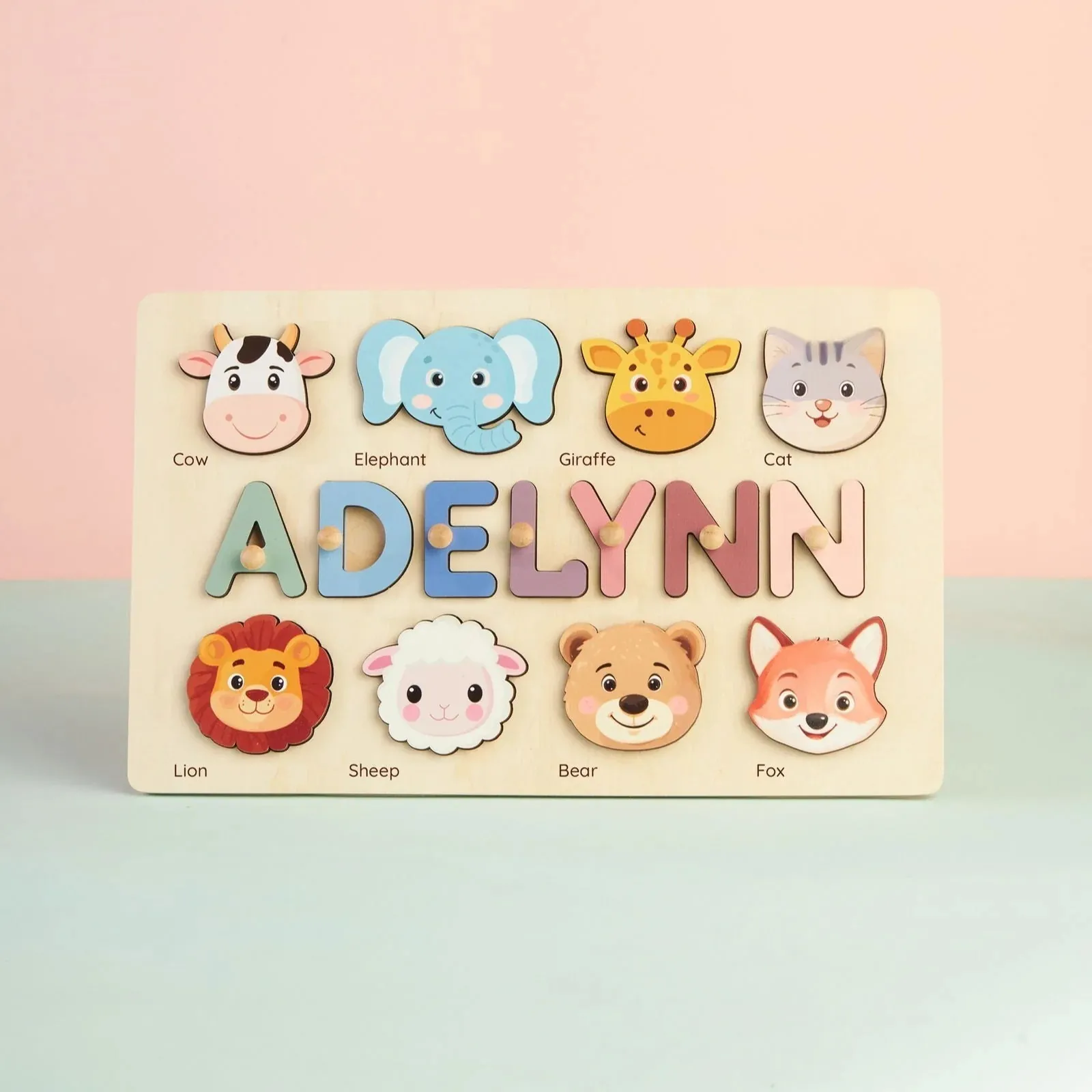
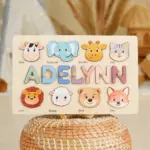
Eight Faces. Eight First Words. One Board They’ll Talk To.
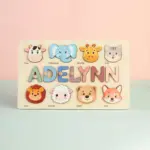
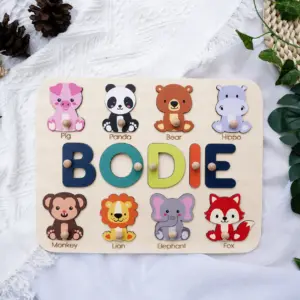
Toddlers don’t play with animals the way they play with shapes. They make eye contact. They say hello. They give them names that are not the names on the label, and then use the label names anyway because they heard them enough times that they stuck. The Kukoo™ Whimsical Animal Name Puzzle is built around that truth — eight animal faces, each one labeled, each one expressive enough to have a personality, surrounding the child’s name in a pastel rainbow that feels like it was mixed specifically for this board and no other.
Cow. Elephant. Giraffe. Cat. Lion. Sheep. Bear. Fox. Eight animals from four different worlds — farm, safari, forest, home — all on one board, all looking directly at the child holding them.
Order now — and give them eight new friends and eight new words at the same time.
Anatomy of Quality
Eight faces, eight labels, four animal worlds — the most expressive name puzzle we make:
- 👀 Faces, Not Bodies — The Detail That Changes Everything: Every animal puzzle shows full bodies. This one shows faces only — and that single decision changes how a child relates to every piece on the board. Full-body animals are things to identify. Faces are things to talk to. The Cow’s pink-cheeked grin, the Elephant’s gentle eyes, the Fox’s alert expression, the Sheep’s soft blink — each face is illustrated with enough personality that a toddler assigns it a mood, a voice, and eventually a name of its own. This is imaginative play emerging from a vocabulary exercise. That combination is rare. This board has it.
- 🌍 Four Animal Worlds, One Board: The eight animals span four distinct habitats — Farm (Cow, Sheep), Safari (Elephant, Giraffe, Lion), Forest (Bear, Fox), Home (Cat). No other name puzzle in the Kukoo collection covers this much animal geography in a single board. A child who masters all eight animals has vocabulary that crosses continents — from the barn to the savanna to the woods to the living room. That breadth, built through daily play, is what shows up in preschool reading comprehension before anyone understands why.
- 🏷️ Eight Labels — The Fastest Animal Vocabulary a Toddler Can Build: Below each face, engraved permanently: “Cow. Elephant. Giraffe. Cat. Lion. Sheep. Bear. Fox.” Eight words, in context, available every session. This is word-to-object association at its most efficient — the label is always beside the face, the face is always expressive enough to be memorable, and the combination means the word attaches to the image faster than flashcards, faster than picture books, faster than almost any other early vocabulary method. By the time they start preschool, these eight animals are not things they are learning. They are things they already know.
- 🦁 The Lion — The Piece That Commands the Room: Of all eight faces, the Lion — orange mane, round face, red nose, eyes that look like they’ve decided something — is the one that gets picked up first by children who have never seen this board before. There is something in the lion’s expression that reads as authority without being frightening, as confidence without being aggressive. Toddlers hold this piece differently from the others. A little more carefully. A little more seriously. Let them. The lion has that effect on everyone.
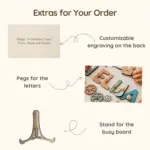
- 🎨 Boho Pastel Rainbow — Beautiful for Any Child, Any Room: Mint, sky blue, lavender, dusty pink, mauve — the name letters move through a pastel rainbow gradient that works for a boy’s room, a girl’s room, a shared room, a playroom, a nursery. The natural wood board surface lets the animal faces read clearly without competition. The display stand means it belongs upright — on a shelf, on a desk, in a spot where it can be seen and reached and played with every day without being put away first.
- 🐑 The Sheep — The Piece That Surprises Everyone: Parents consistently report that the Sheep — white, fluffy, pink-cheeked, with the expression of someone who is completely content with everything — is the piece that makes adults laugh the moment they see it. Something about the face. It is impossible to look at the Sheep piece on this board and remain in a bad mood. This is not a design accident. A board that makes the adults in the room feel something is a board that stays in the room. And a board that stays in the room gets played with.
Specifications
| Dimensions | Approx. 11.8in × 7.87in (30cm × 20cm) |
|---|---|
| Material | Sustainable Plywood |
| Age | 12 months+ (supervision recommended under 3 years) |
| Safety Standard | ASTM F963 and EN 71 |
| Paint & Finish | Child-safe, water-based ink (certified non-toxic) |
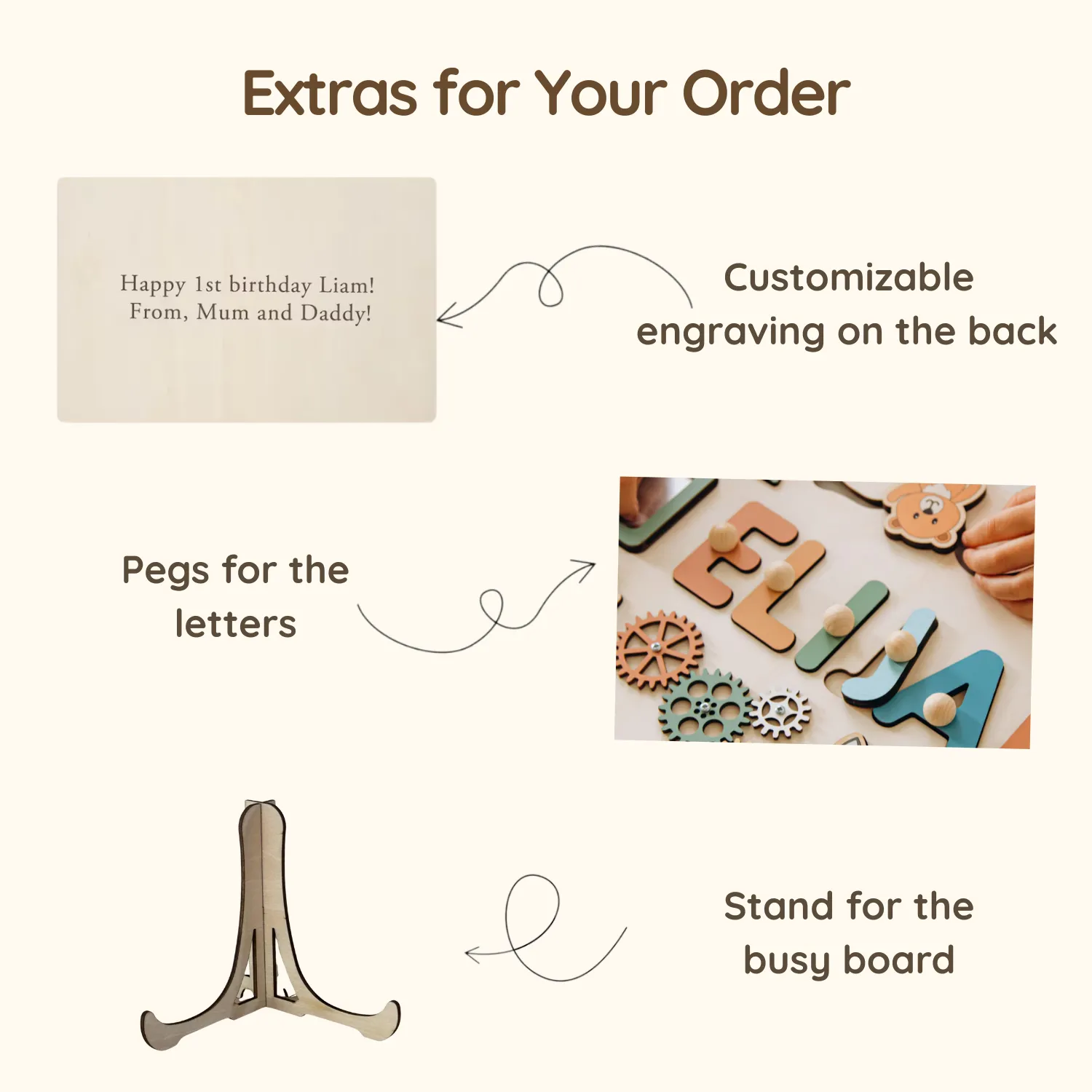
- Display Stand: Wooden easel stand included — board displays upright on any flat surface, no additional purchase required.
- Animal Format: Face pieces only — circular/oval shapes, each with smooth wooden peg for easy gripping from 12 months.
- Pegs: Choose “No Pegs” for a clean display look. For children actively playing, pegs are strongly recommended.
- Personalization: Name is custom-engraved and hand-painted per order.
How to Play: Eight Animals, Eight Worlds, Every Session a Safari
No wrong order. No wrong pace. Let them lead — and follow wherever the faces take them:
- Read the Labels First — Every Session, Same Sequence: Before any piece comes out, point to each label in turn — “Cow. Elephant. Giraffe. Cat. Lion. Sheep. Bear. Fox.” Top row left to right, bottom row left to right. Eight words in eight seconds. Do this every session, without variation, and watch what happens over three weeks: they start saying the next word before your finger reaches it. That anticipation — that moment of being ahead of the adult — is one of the most motivating experiences in early language acquisition. The label ritual is the engine that drives it.
- Farm Animals First — Start With What They Know: Pop out Cow and Sheep together — the two farm animals, the ones most likely to already be in their world through books, songs, and maybe real life. “Cow says moo. Sheep says baa.” Make the sounds. Wait for them to make the sounds back. The label-sound connection — “Cow” on the board, moo in the air — is how language becomes three-dimensional. Now add the label: “Cow. C-O-W. Cow.” They won’t remember the spelling. They will remember the word. That’s the right order.
- Safari Animals — The Big Three: Elephant, Giraffe, Lion — the three pieces most likely to produce immediate excitement. Pull all three out at once and set them in a line. “These animals live far away — in Africa, where it’s hot and the grass is tall and the sky goes on forever.” You are not teaching geography. You are giving the animals a home — a context that makes them more memorable than a label ever could. Ask: “Which one is biggest in real life?” Let them point. Let them be wrong. Let them find out. This conversation, not the label, is what they’ll remember when they see an elephant at the zoo.
- Cat and Fox — The Ones That Live Close: The Cat and the Fox belong to the same visual world — pointed features, alert eyes, the look of something that notices everything. “The cat lives at home. The fox lives in the forest — but sometimes, very early in the morning, you might see one.” The distinction between domestic and wild, familiar and surprising, is one of the first ecological concepts a child can hold. These two pieces, placed side by side, make it visible.
- Bear and the Name — Close Every Session Here: After all eight animals have been explored, work through the name letters left to right — pop each one out, call it clearly, place it back — and save the Bear for last. “The bear goes back last — because the bear is the keeper of the board.” This is not zoology. It is ritual. The bear’s warm, unhurried expression makes it the right piece to end with — the one that settles the session, completes the board, and signals that playtime is finding its natural close. When the bear is in place and the name is spelled and all eight animals are home, the board is done. Until tomorrow.


Reviews
There are no reviews yet.