
Play with purpose — because every stage of development matters.
Built around the Montessori method, our wooden toys are organized by skill to match what your child is working on — from fine motor and sensory play to language, logic, and early math. Each piece is hand-picked by Sarah Chen, AMI Assistants to Infancy (0–3), M.Ed, not just looks the part.
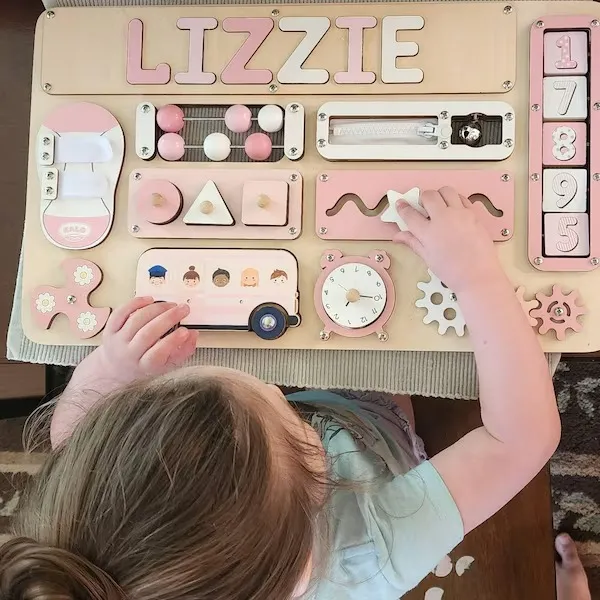
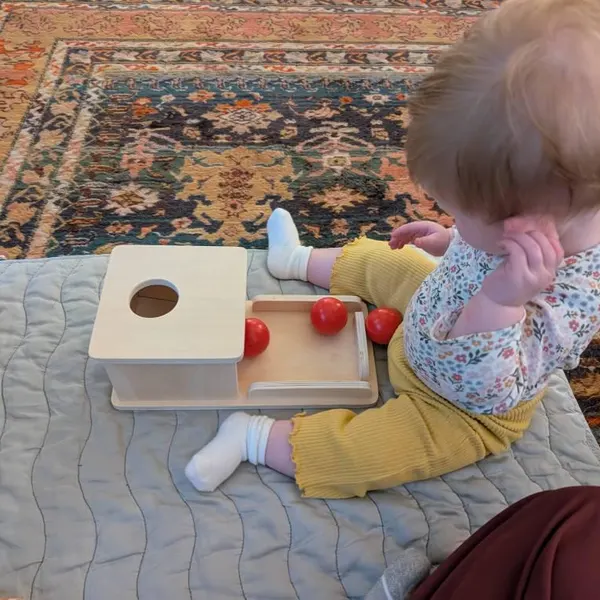
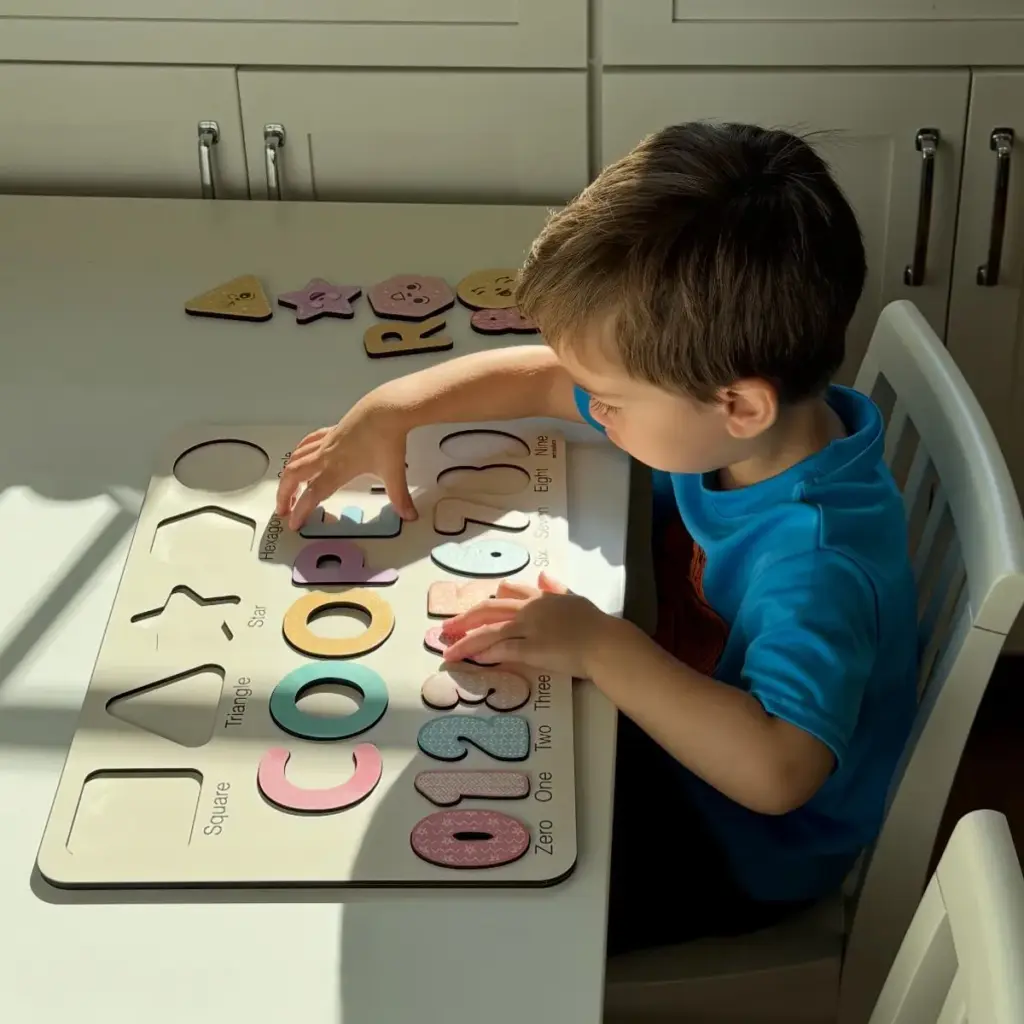
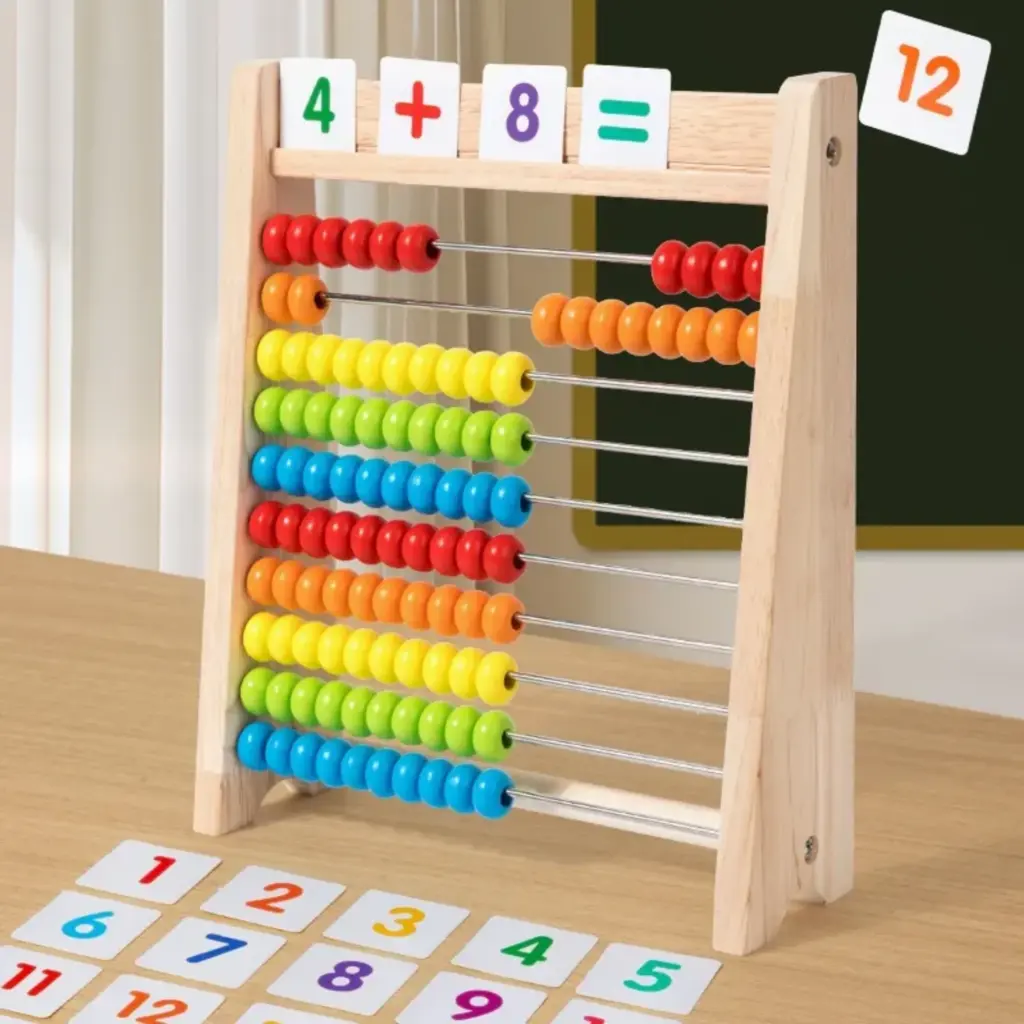
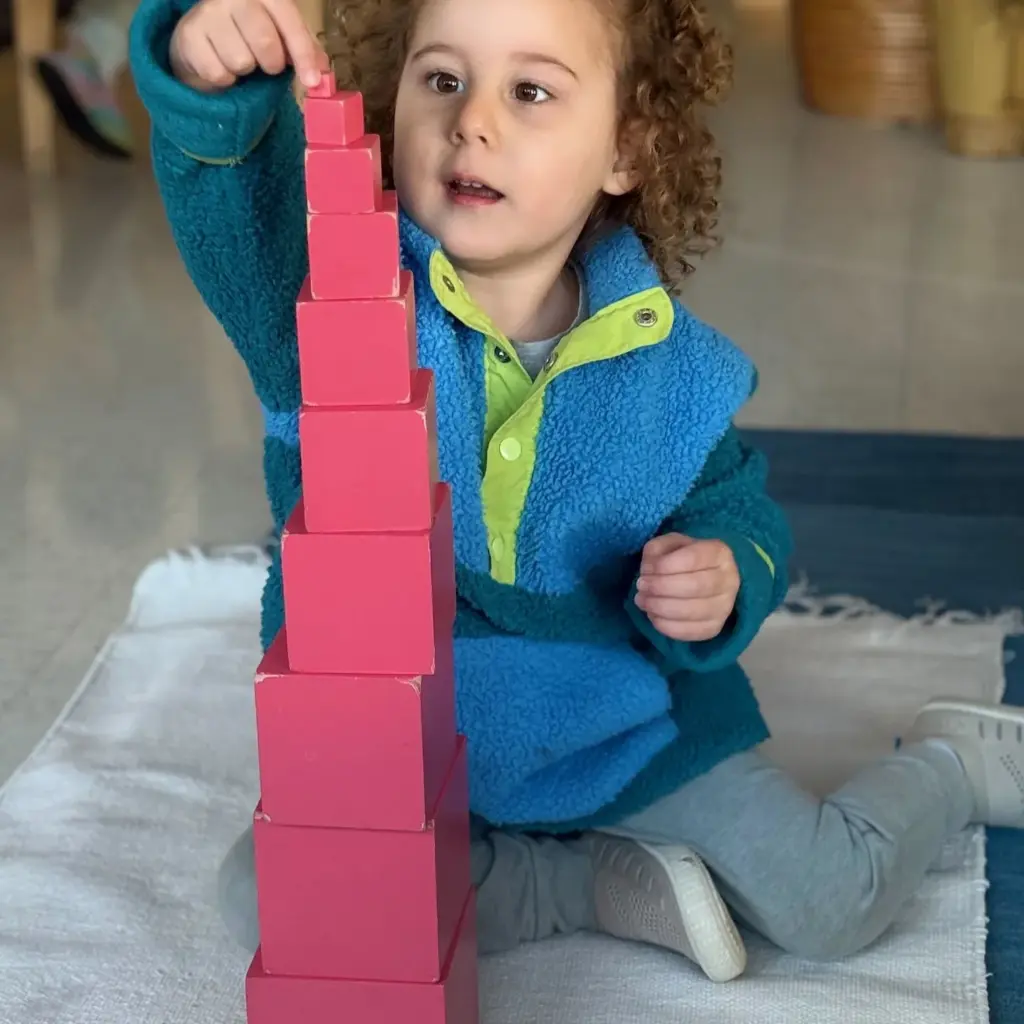
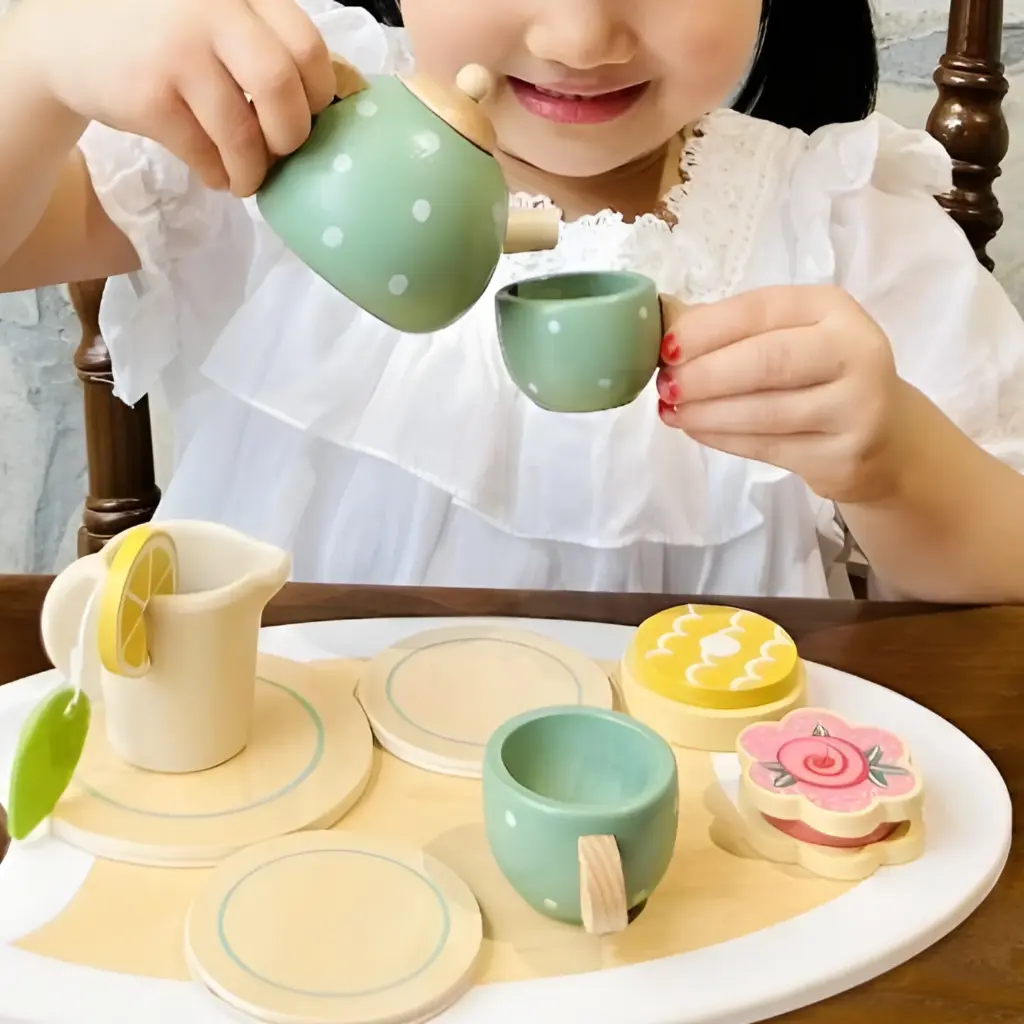
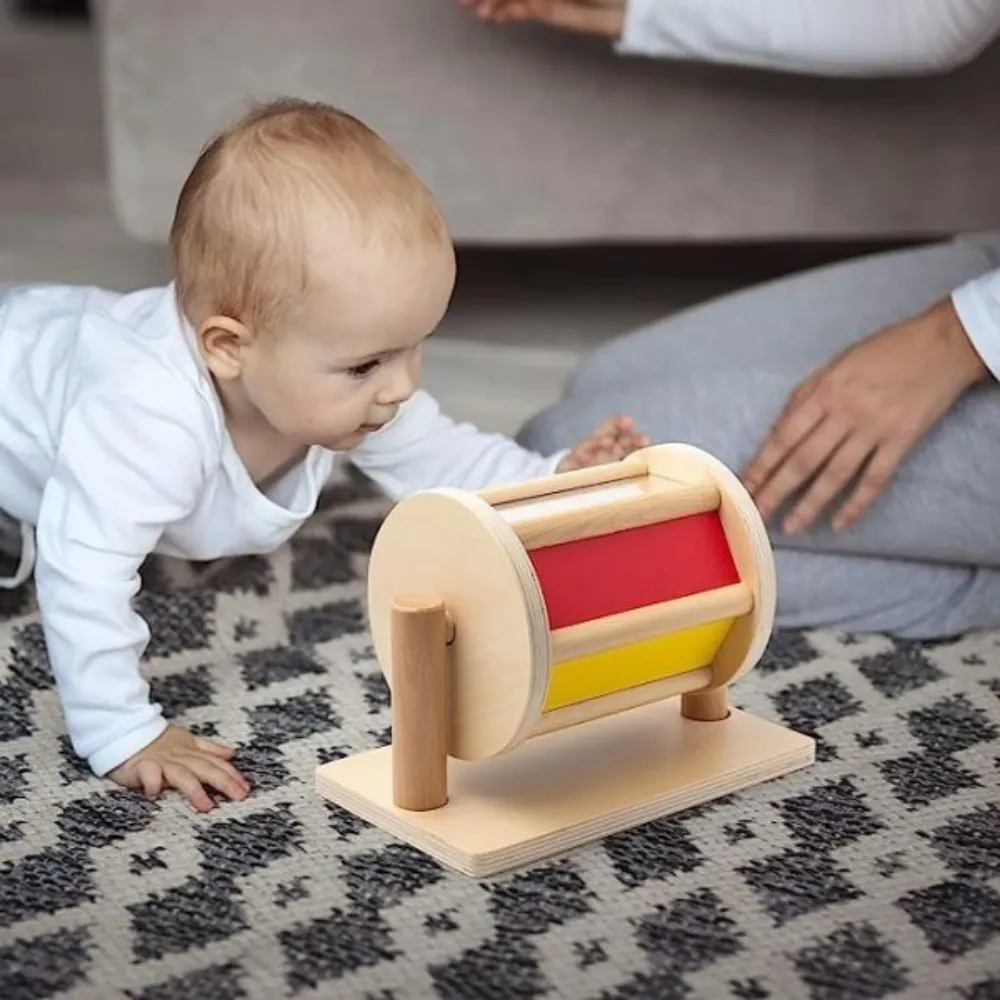
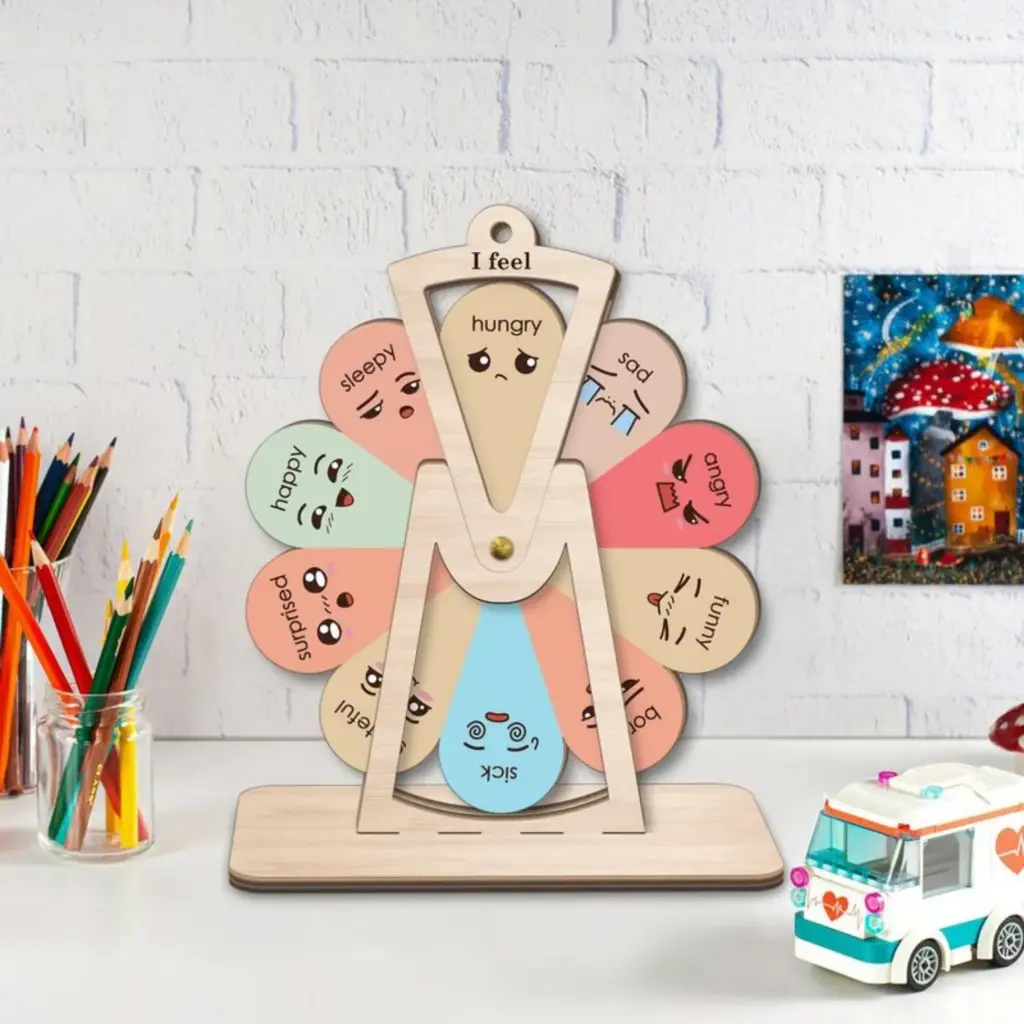
Skill Map: 8 Ways Montessori Toys Support Development
1. Fine Motor Skills
Fine motor skills — controlling small muscles in hands and fingers — are essential for writing, dressing, eating, and daily tasks. Key areas include pincer grasp, hand-eye coordination, wrist control, and bilateral coordination.
- Toy examples: Posting/drop activities, knob puzzles, lacing and beading, peg boards, transfer sets (spoons → tongs → tweezers), nuts & bolts boards.
- Progression: Large knobs and simple posting (12–18 months) → basic threading with large beads (18–30 months) → tweezers, small beads, complex lacing (2.5–6 years).
2.Gross Motor Skills
Gross motor skills — controlling large muscles in the arms, legs, and core — are essential for walking, climbing, balancing, and coordinating whole-body movement. Key areas include balance, spatial awareness, core strength, bilateral coordination, and proprioception (the body’s sense of its own position in space).
- Toy examples: Balance boards, push/pull walkers, low climbing structures, tunnels, large balls, ride-on toys, stepping stones, wheelbarrows, ramps and inclines.
- Progression: Pulling to stand, cruising furniture, push walkers (9–18 months) → walking on uneven surfaces, kicking balls, low climbing (18–30 months) → balance boards, jumping, catching, pedaling, obstacle courses (2.5–6 years).
3. Cognitive Development (Problem-Solving & Focus)
Montessori toys invite sustained, focused engagement — what psychologists call “flow.” One clear challenge with self-correcting feedback builds concentration, working memory, and executive function.
- Toy examples: Object permanence box, stacking towers, nesting boxes, shape sorters, matching sets.
- 5 tips to grow focus: Limit choices (6–10 activities), resist interrupting, create quiet play time, model focus yourself, rotate intentionally.
4. Emotional and Social Development
When children accomplish tasks independently — completing a puzzle, pouring water, dressing themselves — they build intrinsic confidence from real competence, not empty praise. Key skills include frustration tolerance, patience, turn-taking, and self-regulation.
- Toy/activity examples: Self-correcting puzzles, open-ended blocks, practical life tasks (snack prep, plant care), role-play materials.
- Try this language: “You kept trying until it worked” instead of “Good job!” — “Do you want to try first or watch once?” instead of “Let me do it.”
5. Sensory Development
Young children make sense of the world through their senses. Sensory discrimination — noticing differences in texture, sound, size, weight, temperature — refines perception and supports cognitive growth.
- Toy examples: Texture boards, sound matching cylinders, size grading sets, color tablets, sensory trays.
- Key principle: One sensory experience at a time. Use natural materials. Keep activities simple — fewer elements, deeper engagement.
6. Language and Communication
Montessori language development starts concrete. Children touch real objects, hear precise vocabulary, and build foundations for reading, writing, and storytelling.
- Toy examples: Object-to-picture matching, 3-part cards, realistic figurines, story sequence cards, sandpaper letters (age-appropriate).
- How to play for language growth: Name → Describe → Action. “This is a horse. The horse has a long mane. The horse gallops.” Then expand with questions: “What sound does the horse make?”
7. Early Math and Logic
In Montessori, children experience quantity before learning abstract numbers. They touch, count, and manipulate objects — building concrete understanding before symbols mean anything.
- Toy examples: Counting boards, number tiles + counters, sorting trays, geometric solids, pattern blocks.
- By age: Sorting large objects by color (1–2 years) → one-to-one matching, simple patterns (2–3 years) → counting to 10 with objects, matching quantity to symbol (3-6 years).
8. Practical Life Skills
Practical life activities — pouring, sorting, transferring, food prep, cleaning — build coordination, sequencing, and independence. Wooden kitchen toys mirror real adult tasks children observe daily.
- Activity examples: Kitchen play sets (wash → chop → cook → serve), pouring (rice → water), transferring (hand → spoon → tongs → tweezers), sorting, dressing frames, child-sized tools.
- Progression: Transfer large objects by hand → transfer with spoon or tongs → pour dry materials → pour water with small pitcher.
Choosing the Right Toy by Age
Not sure which skill to focus on? You can also browse by age for stage-appropriate options, or explore our toys organized by category if you’re looking for a specific type like busy boards, name puzzles, or stacking toys.
0–12 Months: Sensory + Movement Foundations
Grasping toys, simple rattles, high-contrast cards, object permanence box, floor play materials. Focus on large, sturdy, single-purpose pieces.
1–2 Years: Cause-and-Effect + Sorting + Early Independence
Posting activities, simple shape sorters, stacking toys, size grading sets, basic practical life (spoon transfer, wiping), language baskets. One clear skill per toy — expect repetition.
2–3 Years: Refined Motor + Sequencing + Practical Life
Tongs/tweezers transfer, lacing and threading, 6–12 piece puzzles, pouring activities, sorting by two attributes, early counting (1–5), dressing frames. Set up activities so children can complete them start to finish alone.
3-6 Years: Longer Work Cycles + Early Academics
Advanced practical life (food prep, plant care), early math and patterns, storytelling and phonics materials, STEM challenges, complex construction. Support 20–45 minute work cycles and encourage peer collaboration.
Starter shelf idea (ages 3–6): Open-ended blocks, counting board with counters, 3-part vocabulary cards, lacing set, water pouring activity.
Montessori Toy Rotation
Toy rotation means curating a small set of activities on the shelf and periodically swapping them. Fewer choices lead to deeper focus, fresh interest without buying more, and mastery through intentional repetition.
How many: 6–10 activities on shelf at once.
- When to rotate: When activities are ignored for several days, mastered too easily, causing persistent frustration, or the shelf feels cluttered. Swap 1–3 activities at a time — never everything.
- How often: Every 1–2 weeks (ages 1–2), every 2–3 weeks (ages 2–3), every 3–4 weeks (ages 3-6).
- Common mistakes: Rotating too often (no mastery time), too many choices on shelf, removing core favorites too soon, changing everything at once.
- Rotation ideas by skill area:
Fine motor: Tongs → tweezers; large beads → small beads.
Practical life: Dry pouring → water pouring. Math: 1-to-1 matching → simple patterns.
Language: Theme baskets (farm → kitchen → transport).
Sensory: Texture matching → sound matching → size grading.
Mary’s Note: I used to rotate Jason’s toys every few days — thinking I was keeping things “fresh.” But he never mastered anything. When I slowed to every 2–3 weeks, he actually completed puzzles instead of abandoning them. Mastery needs time, not novelty.
FAQ
- What if my child uses the toy “wrong”?
If they’re safe and engaged, let them explore. A child stacking puzzle pieces instead of placing them in slots is experimenting with balance and spatial reasoning — that’s valuable learning.
- How do I know if a toy is too easy or too hard?
Too easy: completed once and abandoned. Too hard: immediate frustration and giving up. Just right: some struggle, adjustment, and eventual success. That’s productive struggle — the sweet spot.
- What are the best Montessori toys by age?
1-year-old: Object permanence box, stacking rings, knob puzzles, busy board.
2-year-old: Name puzzles, shape sorters, threading toys, wooden kitchen set.
3-year-old: Complex puzzles, building blocks, early math materials, advanced practical life.
More Than Just Play
Montessori toys for skill development aren’t entertainment — they’re tools for independence, focus, and real competence. Choose toys by skill goal, keep the shelf simple, and rotate intentionally. The 8 skill areas overlap and reinforce each other through hands-on, child-led exploration.
“When play is purposeful and child-led, learning happens naturally — one repetition at a time.”
You don’t need 50 toys. You need a few well-chosen activities that match your child’s stage, invite repetition, and support independence.