
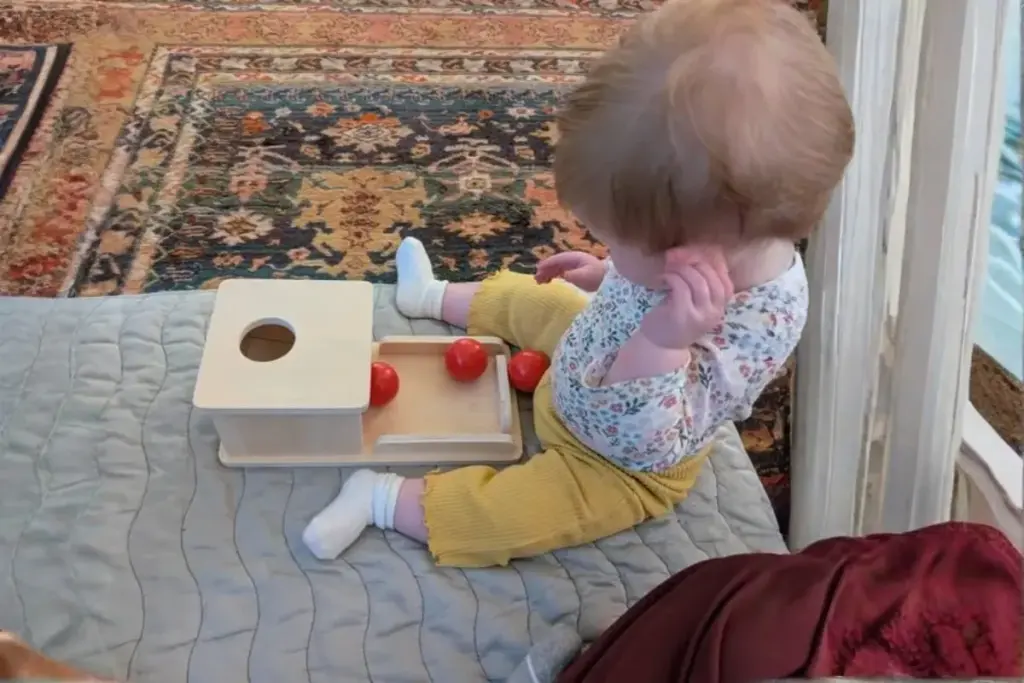
A 10-month-old drops a ball into a box, watches it disappear, then reaches into the drawer to find it. Pauses. Does it again. That loop — act, observe, reason, repeat — is cognitive development in its purest form.
Cognitive skills are how children learn to think, not just what they know. Attention, memory, logical reasoning, problem solving, planning. These are the skills that predict school readiness better than early academic knowledge alone. And they develop through doing — working with hands on materials that give honest, immediate feedback.
What Cognitive Skills Actually Are
The five core cognitive skills in early childhood:
- Attention and sustained focus — staying engaged long enough to complete a task.
- Working memory — holding information in mind while using it.
- Logical reasoning — testing cause-effect through trial and error.
- Cognitive flexibility — switching strategies when one approach fails.
- Inhibitory control — slowing down, thinking before acting.
Together these form executive function — the brain’s management system. Research consistently shows strong executive function in early childhood predicts learning outcomes better than IQ alone.
Cognitive development doesn’t happen in isolation. It’s inseparable from sensory processing, fine motor control, and language. Recognizing a number, sorting shapes, comparing quantities, finding a pattern — all are cognitive operations, and all are the foundation of early math thinking that Montessori builds from the ground up. through purposeful work, repetition, self-correction, and gradual challenge.
What Makes Montessori Toys Build Cognitive Skills
- Isolation of difficulty. Montessori materials isolate one primary cognitive challenge. A shape sorter focuses on spatial reasoning and problem solving, nothing else. That clarity accelerates learning and strengthens retention.
- Control of error. The puzzle piece fits or it doesn’t. The tower stands or topples. The child sees the result immediately — no adult correction needed. This builds persistence, logical reasoning, and genuine independence simultaneously. When materials self-correct, children learn to trust their own problem-solving rather than waiting for adult approval.
- Gradual challenge. Cognitive growth happens at the edge of current ability. Montessori materials are designed to be revisited at increasing difficulty — the child controls the pace, so the challenge is always matched to their actual readiness.
Cognitive Milestones & Activities by Age
0–12 Months: Cause and Effect + Object Permanence
- What’s happening: The infant brain is building its most fundamental cognitive model: actions have predictable results, and objects continue to exist when out of sight. Object permanence — understanding that a hidden thing still exists — is the defining cognitive milestone of this stage and the foundation for all memory-based reasoning.
- Key milestones by 12 months: Intentionally repeating actions that produce interesting results, searching for hidden objects, showing anticipation before a familiar event.
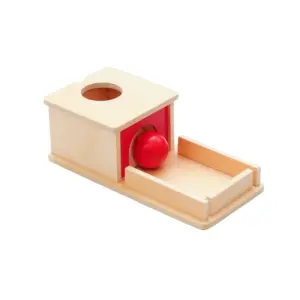
- Montessori activities: Cause-effect toys with consistent responses, in-and-out container play, object permanence boxes.
This is the highest-growth cognitive window of childhood — infants under one form more neural connections per second than at any other point in life. The right toy at this stage does one thing: provides a clear, repeatable cause-effect loop. Drop the ball, it disappears. Open the drawer, it returns. Each repetition strengthens the cognitive pathway connecting action to memory to expectation — working memory in its first form.
- Red flags: Not searching for a hidden object by 10–11 months. Not repeating actions that produced an interesting result.
12–24 Months: Spatial Reasoning + First Problem Solving
- What’s happening: Intentional problem solving emerges. Children begin testing hypotheses — “Will the triangle fit here? No. Here? Yes.” — and adjusting based on what they observe. Spatial reasoning develops rapidly: how objects relate in space, what fits where, how shapes can be rotated.
- Key milestones by 24 months: Completing simple shape sorters independently, stacking rings in size order after trial and error, sustaining focused play for 5–10 minutes.
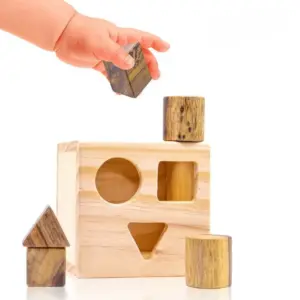
- Montessori activities: Shape sorting boxes, simple knob puzzles, stacking rings, nesting cups, transfer work.
The cognitive work here is hypothesis testing: predict, test physically, observe, revise. This loop is the scientific method in miniature and the core of all later logical reasoning. The right toy provides a clear correct/incorrect result so the child gets honest feedback every time without adult interpretation. Wooden stacking and sorting toys force this loop repeatedly — which ring goes here, which nests inside which, does this shape fit that hole.
- Red flags: Not attempting shape sorters by 18 months. Not adjusting strategy after repeated failed attempts.
2–3 Years: Executive Function + Classification
- What’s happening: Executive function begins developing visibly. Children can hold a rule in mind, follow multi-step sequences, and begin inhibiting impulse. Classification — grouping objects by shared properties — emerges as a core cognitive operation.
- Key milestones at 3 years: Sorting by one clear attribute, following two-step instructions, sustaining focused work for 10–15 minutes, beginning to plan before acting.
- Montessori activities: Sorting sets, classification work, balance activities, busy boards.
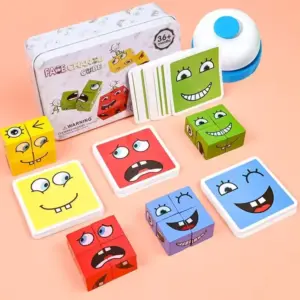
Inhibitory control develops through activities that physically require it. Balance toys are particularly effective: rush the placement and the structure falls. The physical consequence directly teaches the cognitive skill. Sorting the same objects by different rules — first by color, then by size, then by shape — trains cognitive flexibility and directly connects to early mathematical reasoning: same materials, switching mental framework.
Red flags: Cannot sort by any single attribute by age 3. Cannot sustain any focused activity for more than 2–3 minutes.
Red flags: Cannot sort by any single attribute by age 3. Cannot sustain any focused activity for more than 2–3 minutes.
3–6 Years: Strategic Thinking + Abstract Reasoning
- What’s happening: Cognitive flexibility matures — children hold multiple rules in mind simultaneously. Work cycles lengthen to 20–45 minutes. Abstract thinking emerges: symbols represent real quantities and relationships.
- Key milestones at 4–5 years: Multi-step problem solving, planning before acting, counting with one-to-one correspondence, recognizing and extending patterns, sustained independent work completion.
- Montessori activities: Multi-piece puzzles, pattern blocks, advanced sorting with multiple attributes, math materials, building sets, board games.
Children who have practiced the cognitive loop thousands of times — choose a challenge, work independently, self-correct, complete, reset — can sit, receive a task, work through difficulty, and finish. That’s executive function built through years of purposeful play, not instruction. The object permanence toys of infancy have given way to sorting sets and building materials that apply the same cognitive operations to increasingly abstract relationships.



- Red flags: Cannot follow two-step instructions by age 4. Extreme difficulty shifting between activities consistently.
Activities by Cognitive Skill
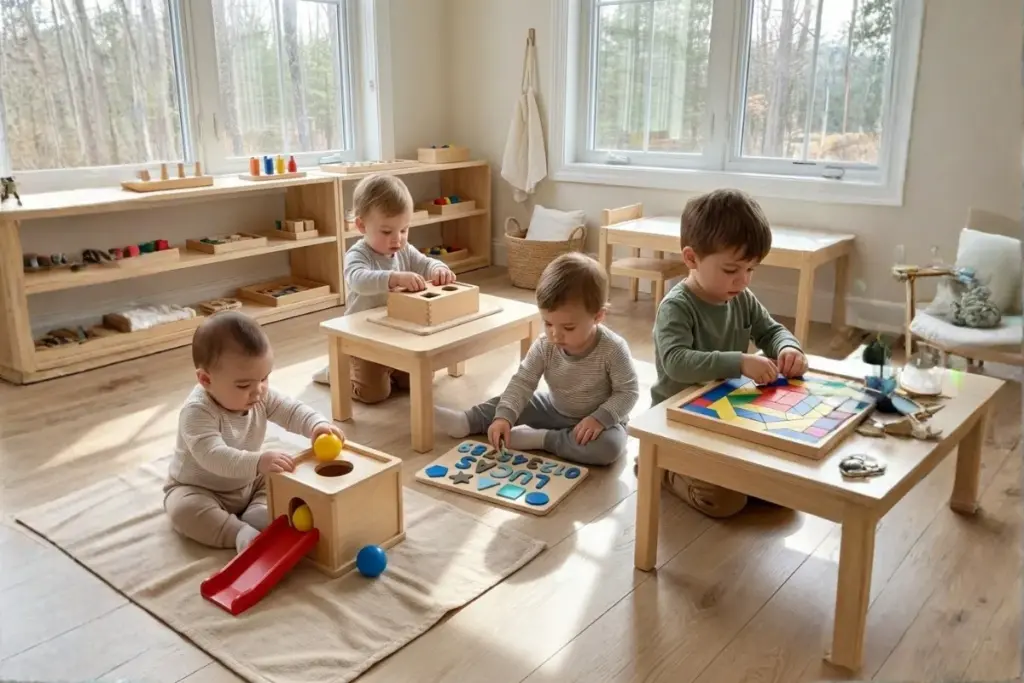
- Problem solving: Shape sorters, knob puzzles, object permanence boxes, balance challenges — any activity with a correct solution and immediate self-correcting feedback.
- Working memory: Pattern copying with pegboards, “fetch missions” (retrieve a specific object from another room), sequencing cards in logical order.
- Inhibitory control: Slow precision transfer (spooning water without spilling), balance stacking, turn-taking games, busy board mechanisms requiring controlled movement.
- Cognitive flexibility: Sorting the same objects by different rules. Tangram and pattern block work with and without reference cards.
Classification and early math: Sorting sets, size gradation towers, counting boards. These cognitive foundations make formal math skills intuitive rather than mechanical.
Toy Rotation
Display 2–3 cognitively focused activities alongside a total shelf of 6–10. More fragments attention rather than deepening it.
Rotate on observation: easy completion without return = outgrown. Repeated attempts with strategy adjustment = still productive — don’t rotate out. Increase difficulty by one variable at a time: three-piece puzzle before eight-piece, sort by one attribute before two.
Common Mistakes
- Rescuing too quickly. Productive struggle is where cognitive growth happens. Wait until a child is stuck in repetitive failure without any adjustment. Before that, observe.
- Too many choices. A 2018 study found toddlers with fewer toys engaged in longer, higher-quality play. The brain shifts from “explore deeply” to “scan for novelty” when options overwhelm.
- Correcting instead of observing. When adults provide answers, children learn to wait rather than reason. Let the material correct. Present, step back, observe.
- Passive entertainment. A toy where batteries do the work teaches nothing about cause and effect — because the child didn’t cause anything.
Red Flags and When to Seek Support
- By ~12 months: Not searching for hidden objects. Not repeating actions that produced an interesting result.
- By ~18 months: Not attempting any simple problem-solving toy. Not adjusting strategy after repeated failure.
- By ~3 years: Cannot sort by any attribute. Cannot sustain any focused activity.
- By ~4 years: Cannot follow two-step instructions. Extreme consistent difficulty shifting between activities.
A pattern across several weeks — not a single missed milestone — is worth discussing with your pediatrician.
FAQ
- What are cognitive skills in early childhood?
How children learn to think: attention, working memory, logical reasoning, cognitive flexibility, and inhibitory control — together forming executive function, the brain’s management system.
- How do Montessori toys build cognitive skills?
Through isolation of difficulty (one cognitive challenge at a time), control of error (immediate self-correcting feedback), and gradual challenge (difficulty matched to readiness). All three produce children who trust their own problem-solving.
- How many cognitive toys on the shelf at once?
2–3 within a total of 6–10 activities. More produces scanning behavior rather than deep engagement.
- When should I worry about cognitive delays?
When you see patterns: persistent inability to engage with cause-effect toys, extreme frustration with all problem-solving, significant difficulty compared to same-age peers across multiple areas.
Curious about how your child learns best? Our Montessori skill hub cover every area of development — fine motor, language, cognitive, math, STEM, practical life, and social-emotional.