
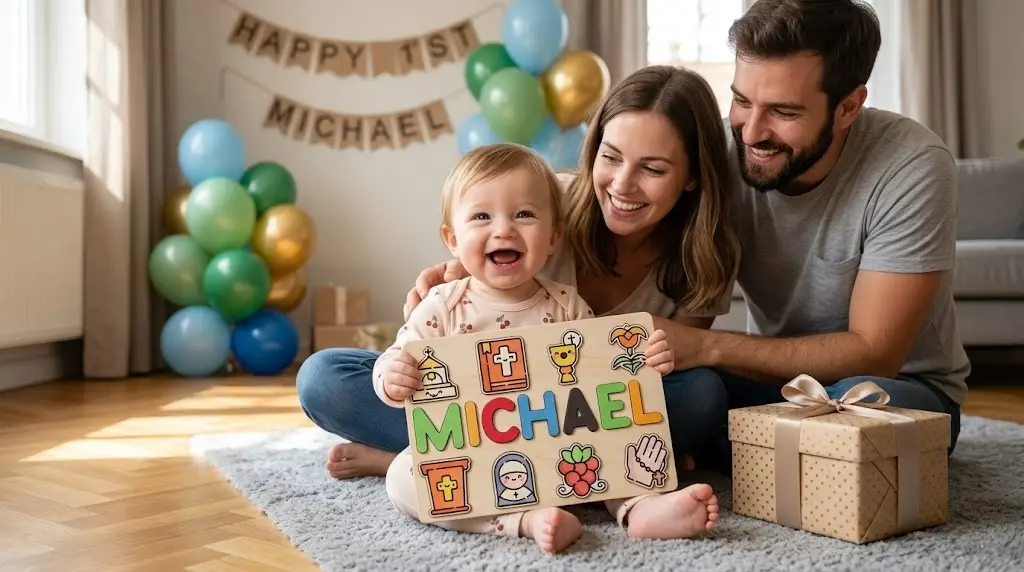
The best gifts for a 1-year-old are simple, hands-on, and self-correcting — toys the child can figure out alone, without batteries or adult help. At 12 months, babies are actively working on understanding that hidden things still exist, developing precise finger control, and figuring out cause and effect. The 8 picks below are matched to exactly that window — not "0–3 years" generically, but this specific stage.
Last spring, I visited a family for a home consultation. Their 13-month-old son had been working a single latch on a wooden busy board for 25 minutes — hadn't looked up when I walked in, hadn't looked up when his mother offered a snack. When he finally got it open, he looked at her with an expression I've been trying to describe ever since. Not excitement. Something quieter. Something that looked a lot like "I knew I could do that."
That's what a well-matched gift does at this age. Not entertain — give the child a problem that's exactly solvable. The picks below are chosen around what the 1-year-old brain is actively building right now.
Start anywhere on this list. You won't go wrong.
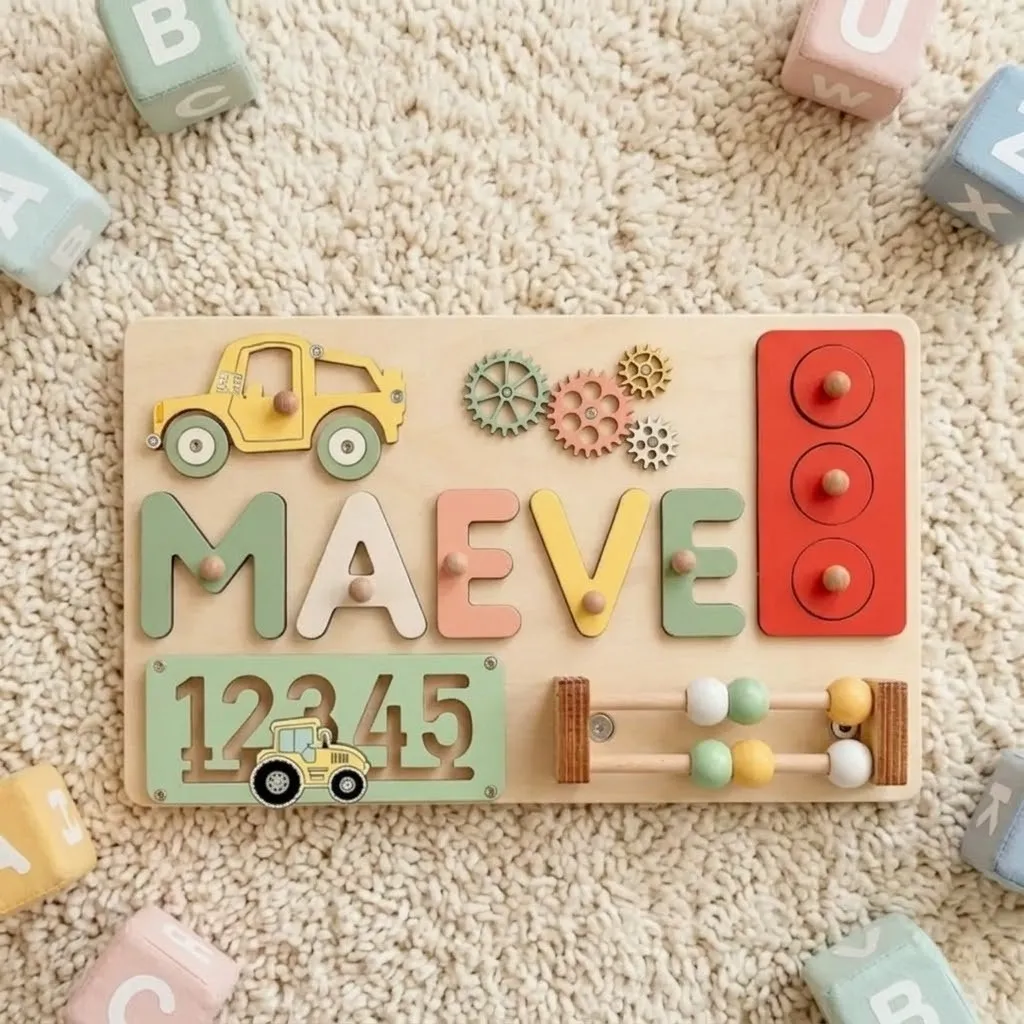
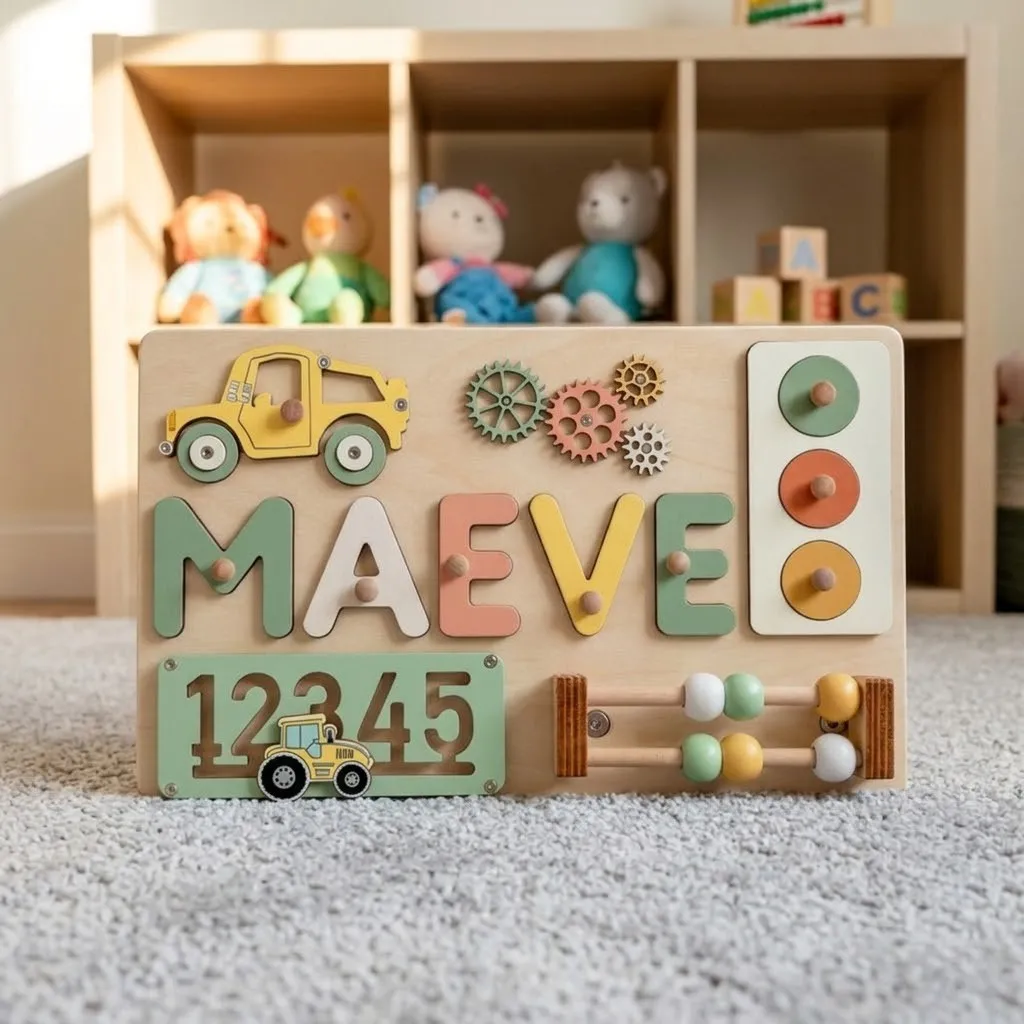
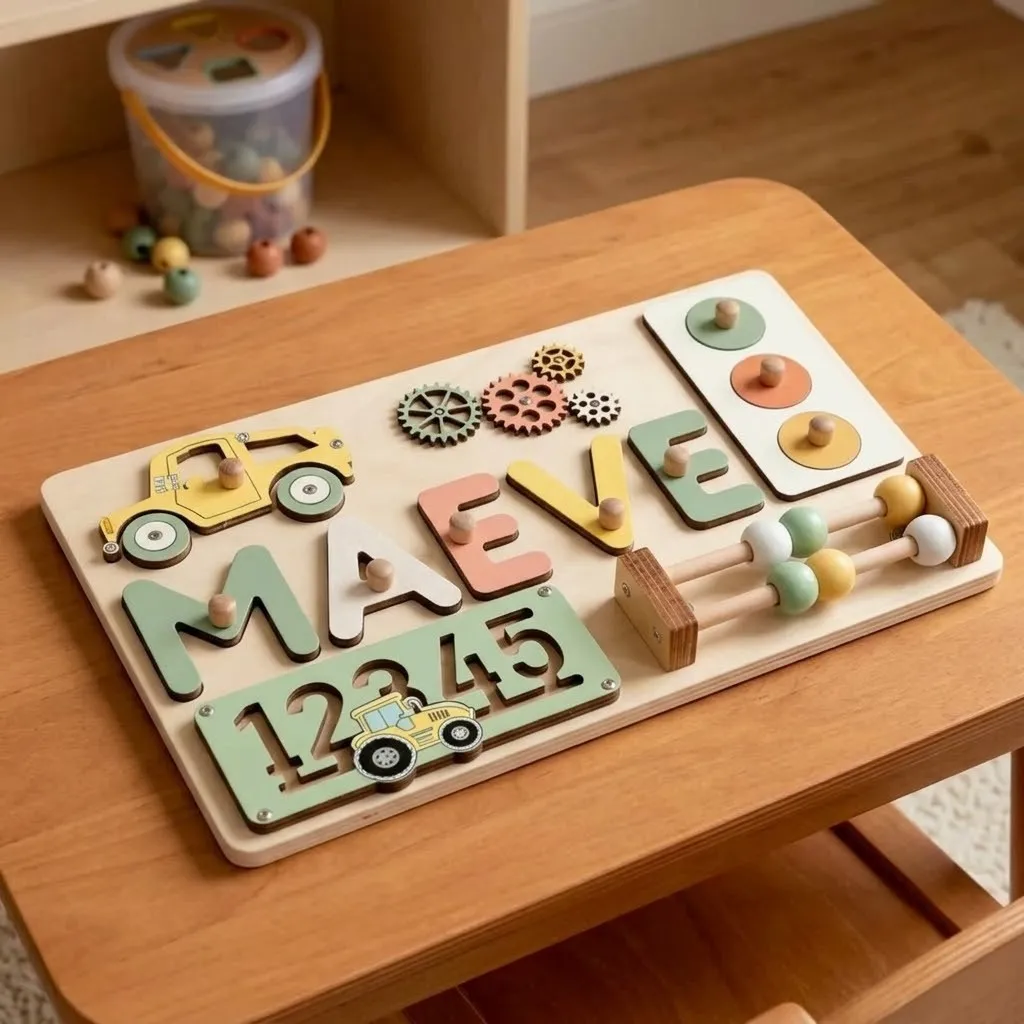
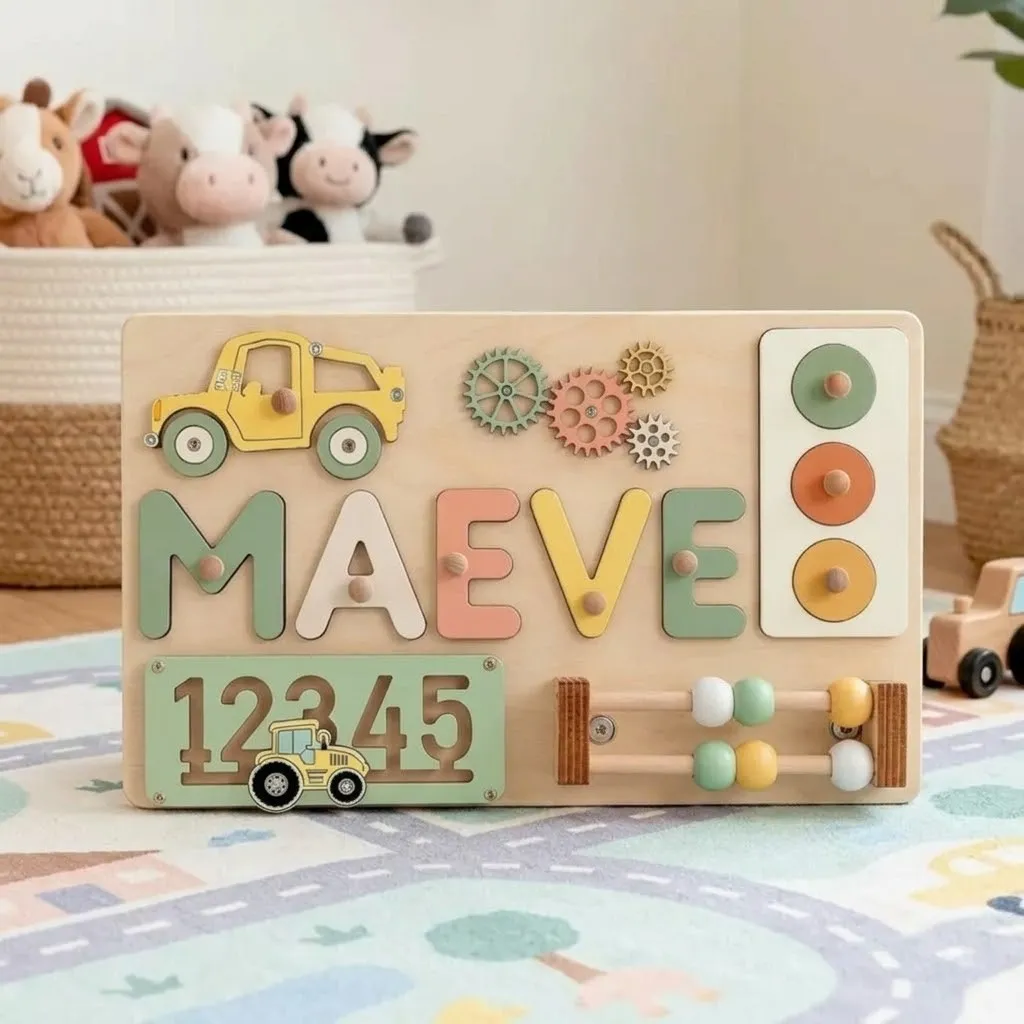
Gift #1 — Vehicles & Numbers Wooden Montessori Busy Board
BEST FOR: Practical life fine motor + mechanisms + early number exposure | Ages: 12–30 months
BEST FOR
Building hand skills through real switches, latches, and dials — and an introduction to numbers through play.
WHY IT MADE MY LIST
- Around 12 months, children become fixated on operating things — light switches, cabinet latches, zippers on your bag while you’re still wearing it. This isn’t misbehavior. Fine motor development confirms this is a critical window when the hands are primed to build precision through real mechanical feedback — latches that actually latch, switches that actually flip.
- Most busy boards miss the opportunity by cramming 20 unrelated elements together. This one is designed differently: each element targets one distinct hand skill, sequenced so the child works through them progressively. The vehicles and numbers theme isn't decoration — it anchors each motor challenge to objects the child already knows exist in the world.
(I've recommended this board across the full 12–30 month range. At 12 months, a child works one latch and walks away. At 18 months, they work three. At 2.5 years, they quiz visiting adults on which element does what. That growth across 2+ years in a single gift is unusual.)
THE HONEST PART
Some 12-month-olds will engage with one element for a minute and move on. That's perfectly normal — the child took what they could handle and left the rest for later. Give it a week without prompting. The return visits are consistent.
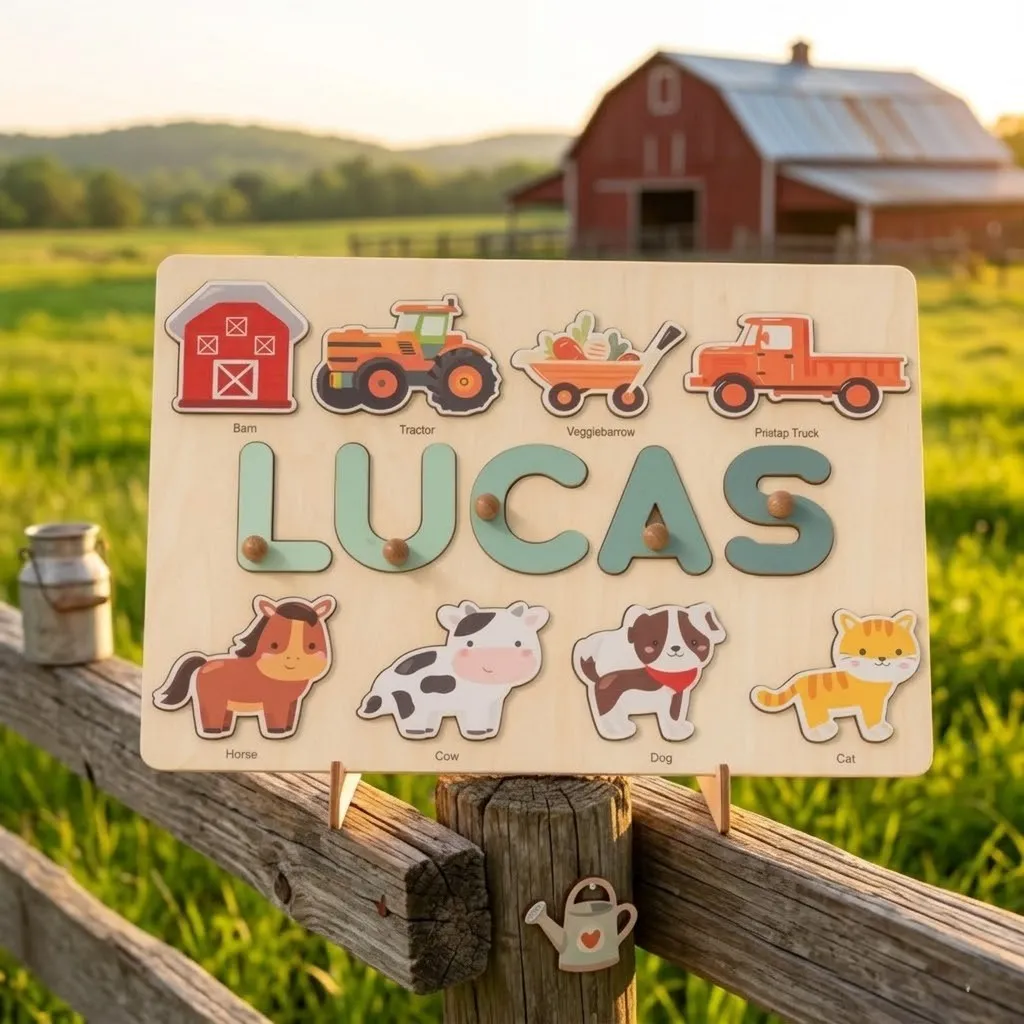
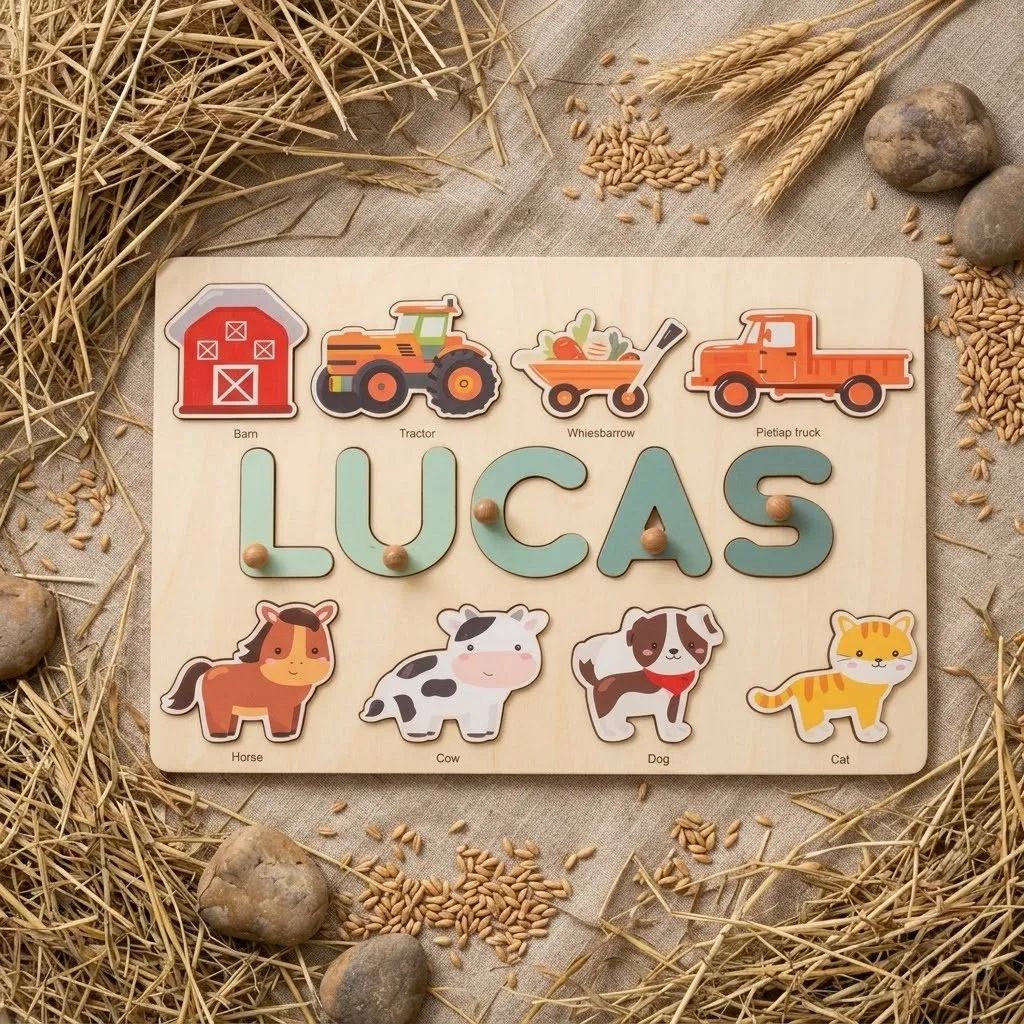
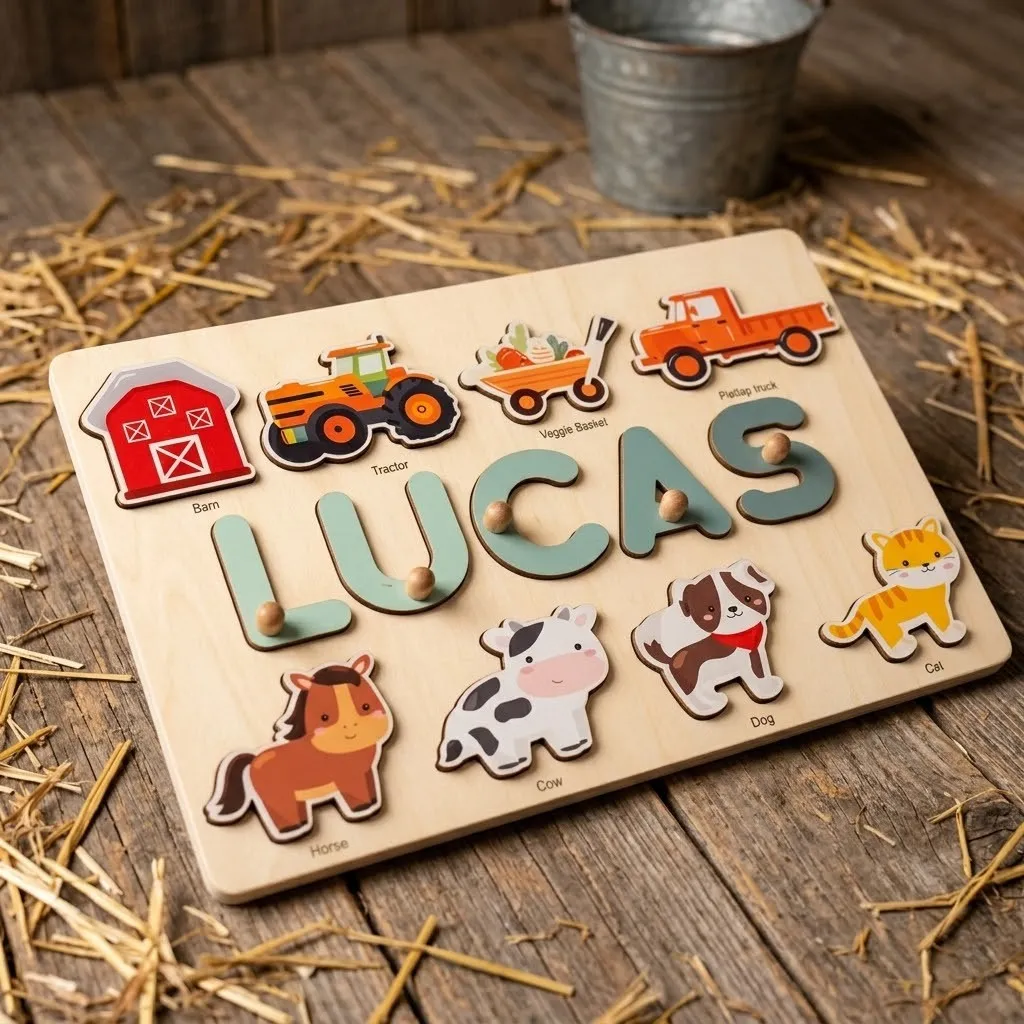
Gift #2 — Farm Theme Name Puzzle
BEST FOR: Practical life fine motor + mechanisms + early number exposure | Ages: 12–30 months
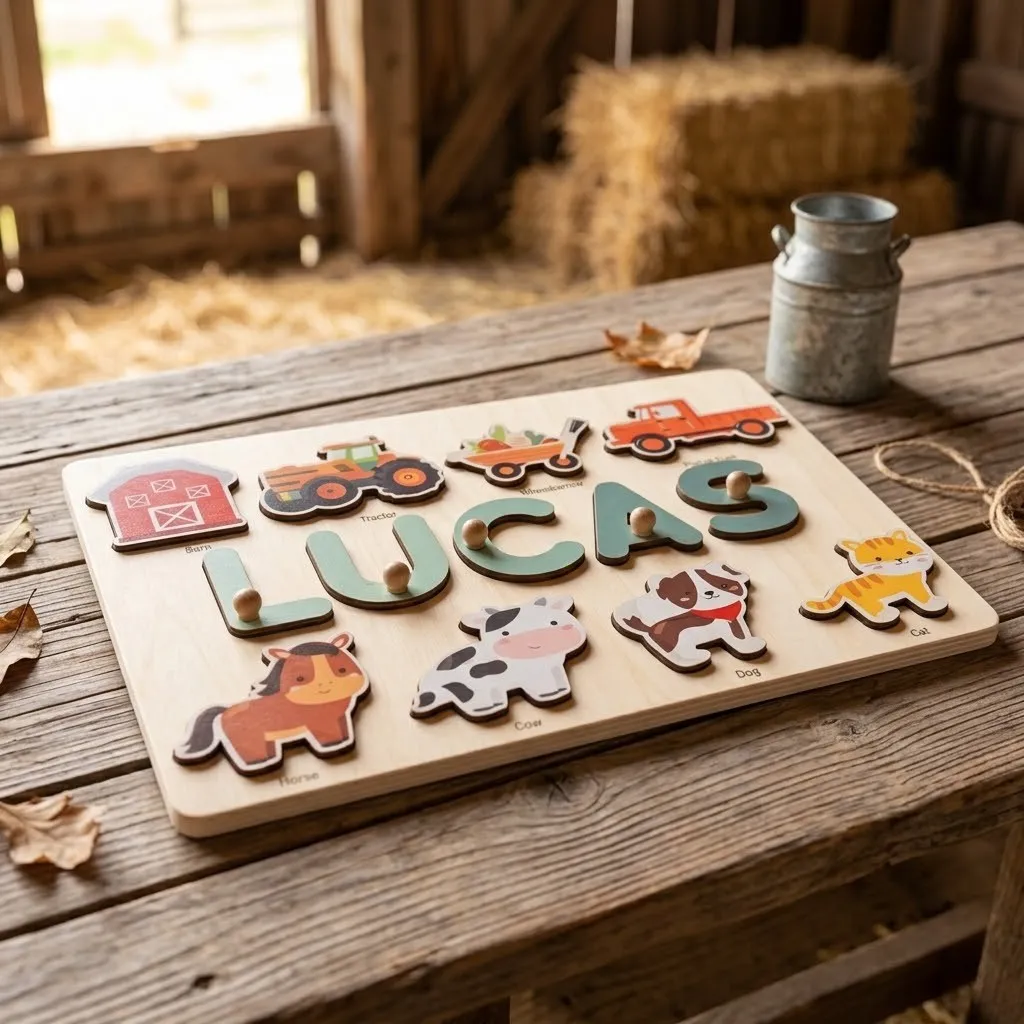
WHY IT MADE MY LIST
- Here's something I've observed across hundreds of families that rarely appears in parenting guides: children who've worked regularly with a name puzzle tend to approach their printed name in school with recognition rather than blankness. Not because they've memorized the letters — but because the physical shapes feel familiar. The muscle memory of picking up those knobs hundreds of times builds a familiarity with the letter shapes before school ever teaches them.
- The knob diameter is not accidental. It’s sized to require a 3-finger grip — thumb, index, middle finger — which is exactly how you hold a pencil. A child who has used this puzzle for 18 months arrives at their first writing session with the grip already established.
- Farm imagery gives each letter an emotional anchor — a world the child already loves. Vocabulary acquisition research shows that emotional context is one of the strongest encoding signals: a letter that belongs to a beloved world sticks longer than a letter learned in isolation. Best for animal-loving children and nature-oriented families.
THE HONEST PART
Personalised items require more time to ship out. Set expectations correctly: at 12 months, the first session often looks like banging rather than placing. That's fine — the hands are learning before the brain catches up. By around 15 months, most children start placing the pieces with intention.
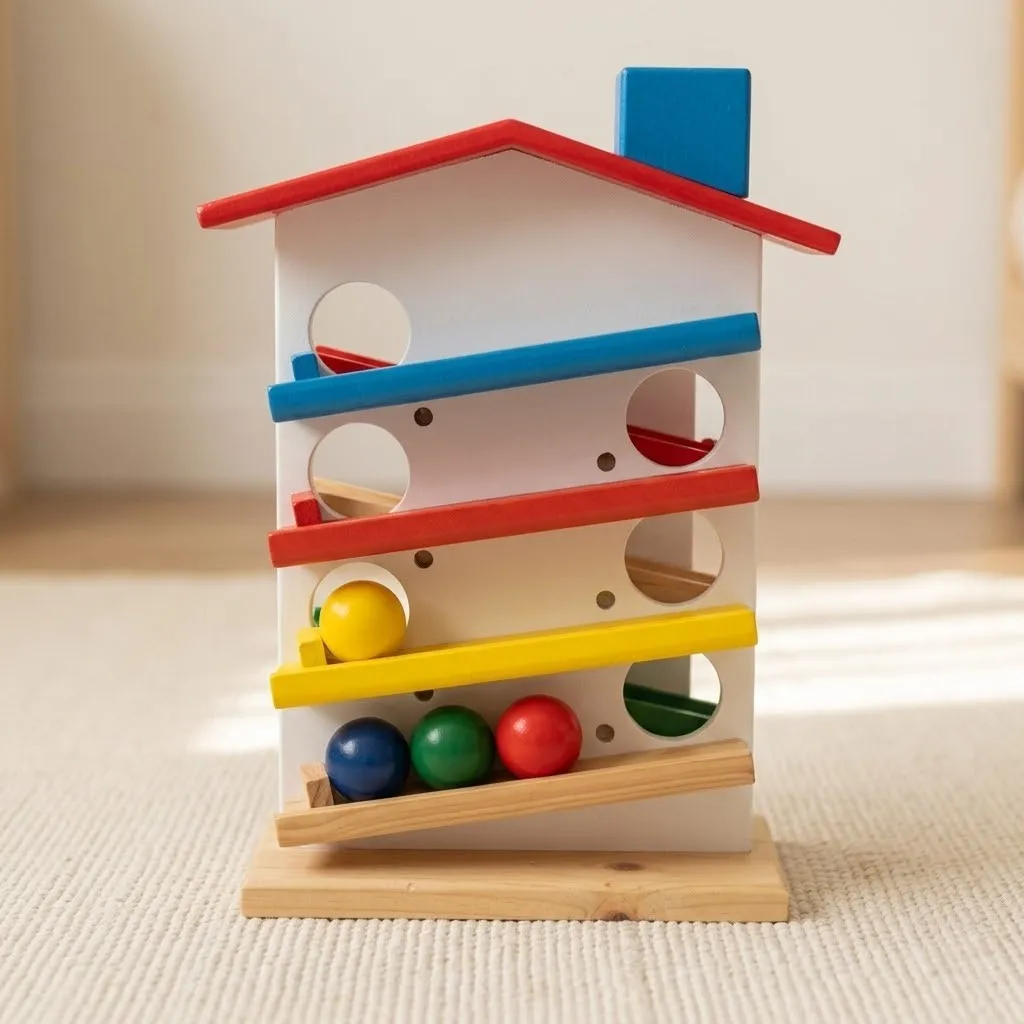
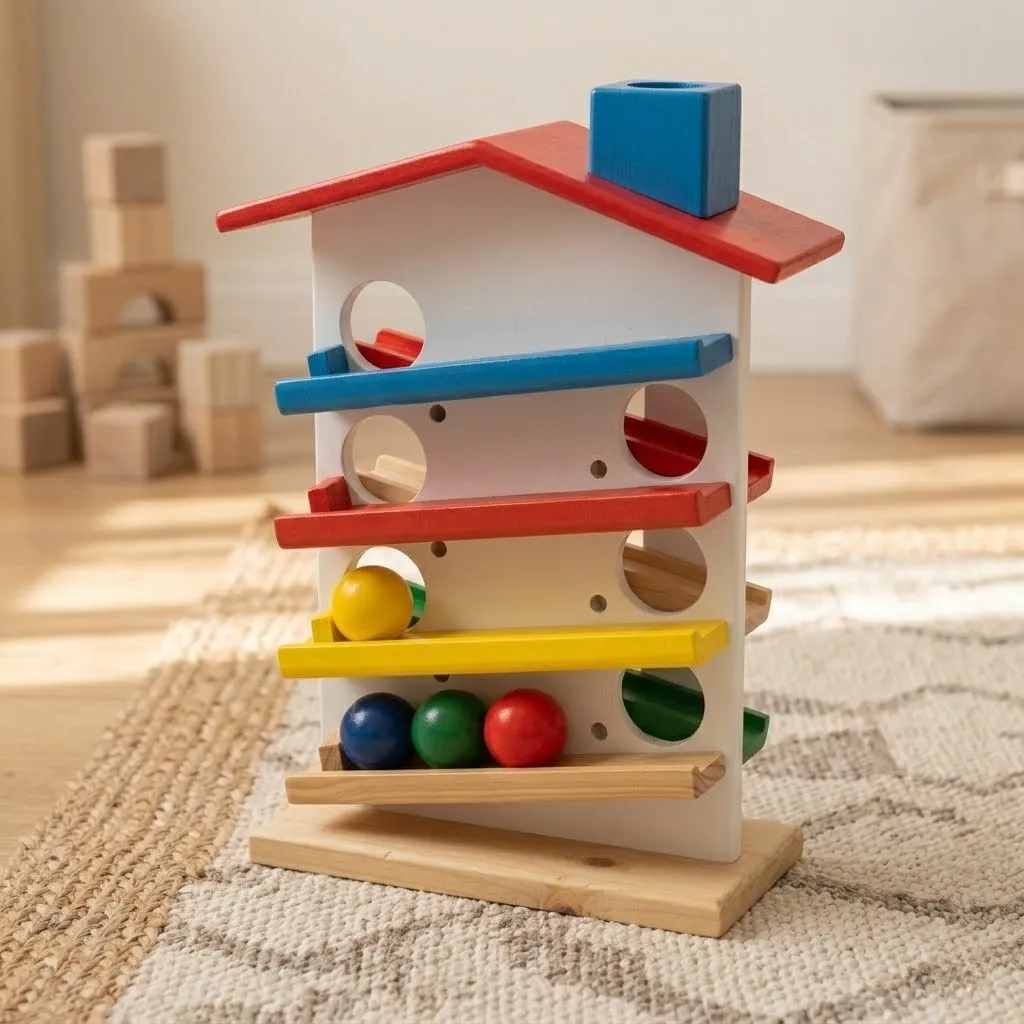
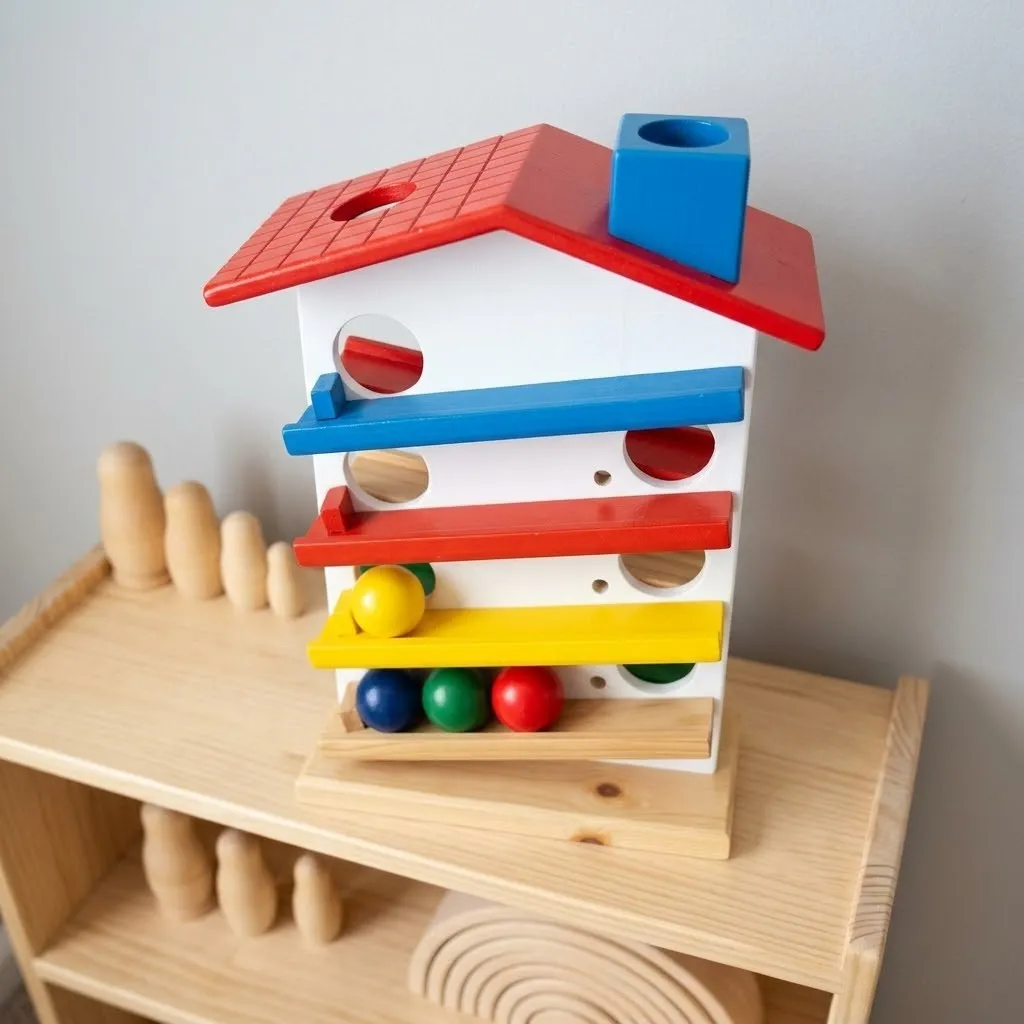
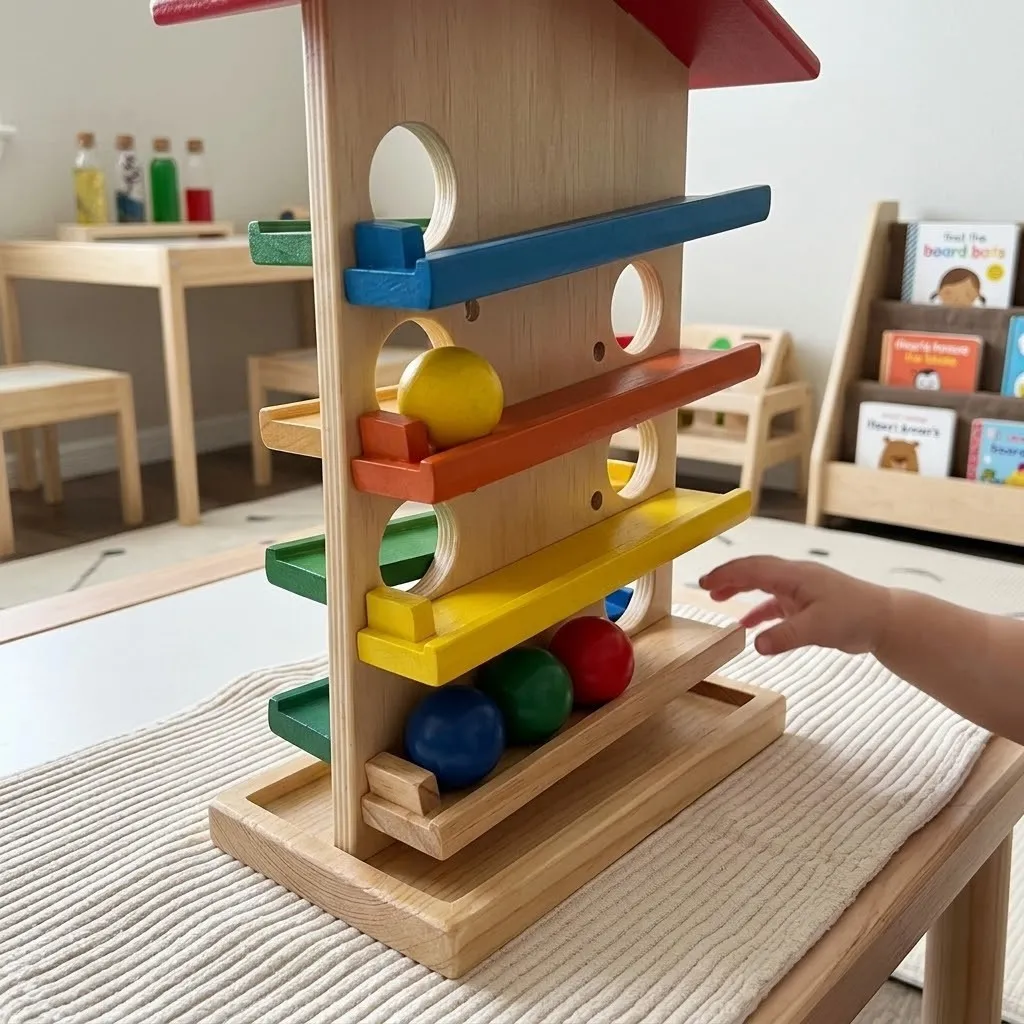
Gift #3 — Ball Drop Toy
BEST FOR: Object permanence + cause and effect + pincer grasp | Ages: 10–24 months
BEST FOR
Learning peek-a-boo logic, finger precision development, self-directed cause-and-effect learning.
WHY IT MADE MY LIST
- I use this diagnostically. When a baby comes in for their 12-month consultation, I set this on the mat while I talk with the parents. In ten minutes I can see how their fingers are developing, whether they're making the cause-and-effect connection, and how long they can focus — all without a formal test. Parents think the baby is just playing.
- Here's the developmental connection most gift guides miss: babies who've learned that things still exist when they disappear — what researchers call object permanence — handle separation significantly more easily. The same cognitive framework that tells a baby "the ball still exists inside the box" also tells them "my grandparent still exists when they leave the room." Research from Bretherton consistently links this understanding (which typically develops between 8 and 12 months) to reduce separation anxiety.
- The ability to pick up small things precisely — using the thumb and two fingers — emerges around 9–12 months and needs thousands of practice repetitions to become reliable. This toy wraps that repetition inside a cause-and-effect loop the child finds intrinsically motivating. The grip improves as a side effect of something that feels like play, not practice.
THE HONEST PART
Show once, then step back. If a parent directs — "now put the ball in the hole" — the natural drive to figure it out disappears. The child needs to feel like they discovered it. Also: the ball will go under furniture. Consider buying a spare.
Gift #4 — Stacking Tower Set
BEST FOR: Object permanence + cause and effect + pincer grasp | Ages: 10–24 months
WHY IT MADE MY LIST
- A uniform stacking tower loses a 14-month-old in minutes. A graduated one pulls them back across days and weeks — frustrated, then satisfied, then back again. That cycle isn't struggle. It's the developmental engine running exactly as it should.
- Most people focus on the stacking. The more important moment is the pulling off. Between 7 and 10 months, babies disassemble towers compulsively — not randomly, but because deconstruction teaches the inverse of every spatial concept that assembly will later require. I tell parents to stop redirecting this. There is no wrong direction of play at this stage.
- One moment I've watched repeat itself over many years: around 9–10 months, a child pulls a ring off and extends it outward — toward you. That gesture is the first unprompted act of sharing. Not imitation, not a response to a request. An offering. It's one of the smallest and most significant things that happens in the first year.
THE HONEST PART
Single-variable design matters more than most people realize: if the rings vary in both color and size, the child's visual system splits its attention between two variables, and neither size discrimination nor color discrimination gets trained cleanly. Opt for one variable only.
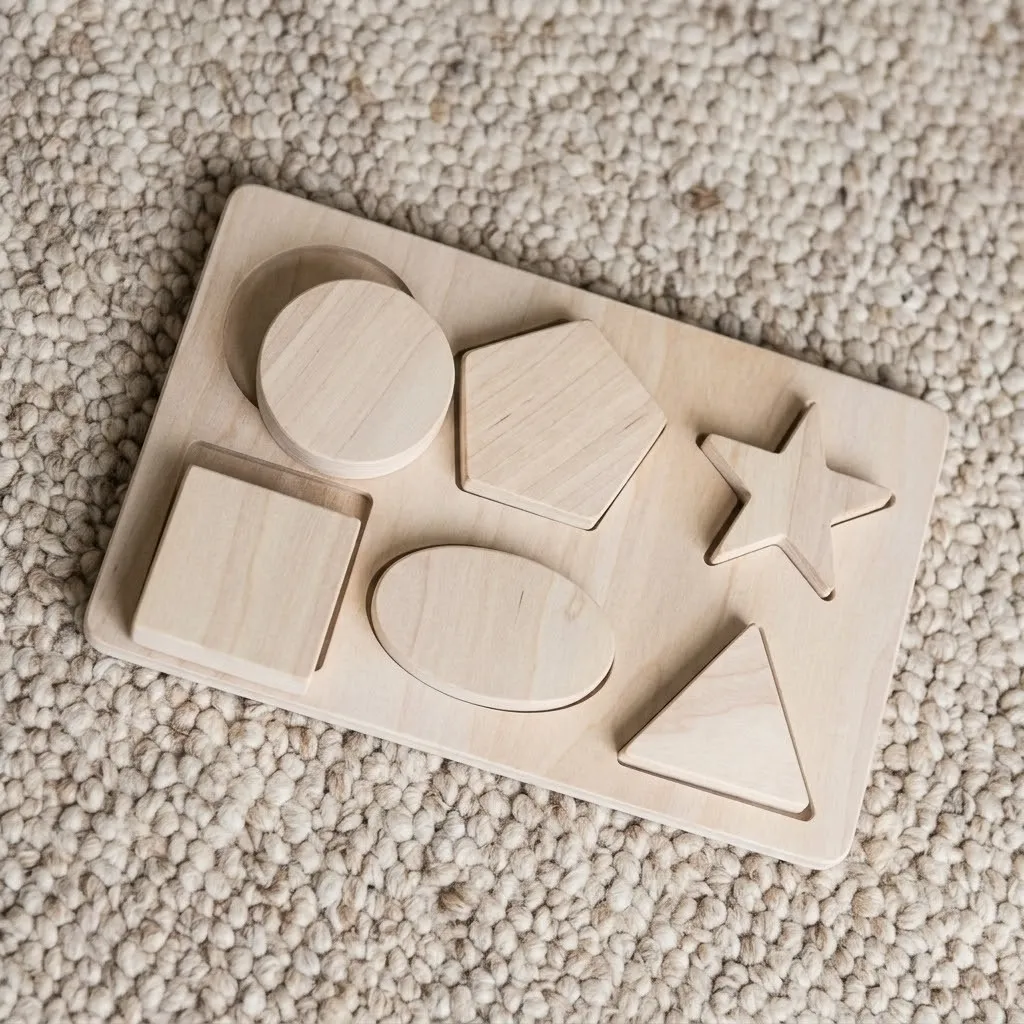
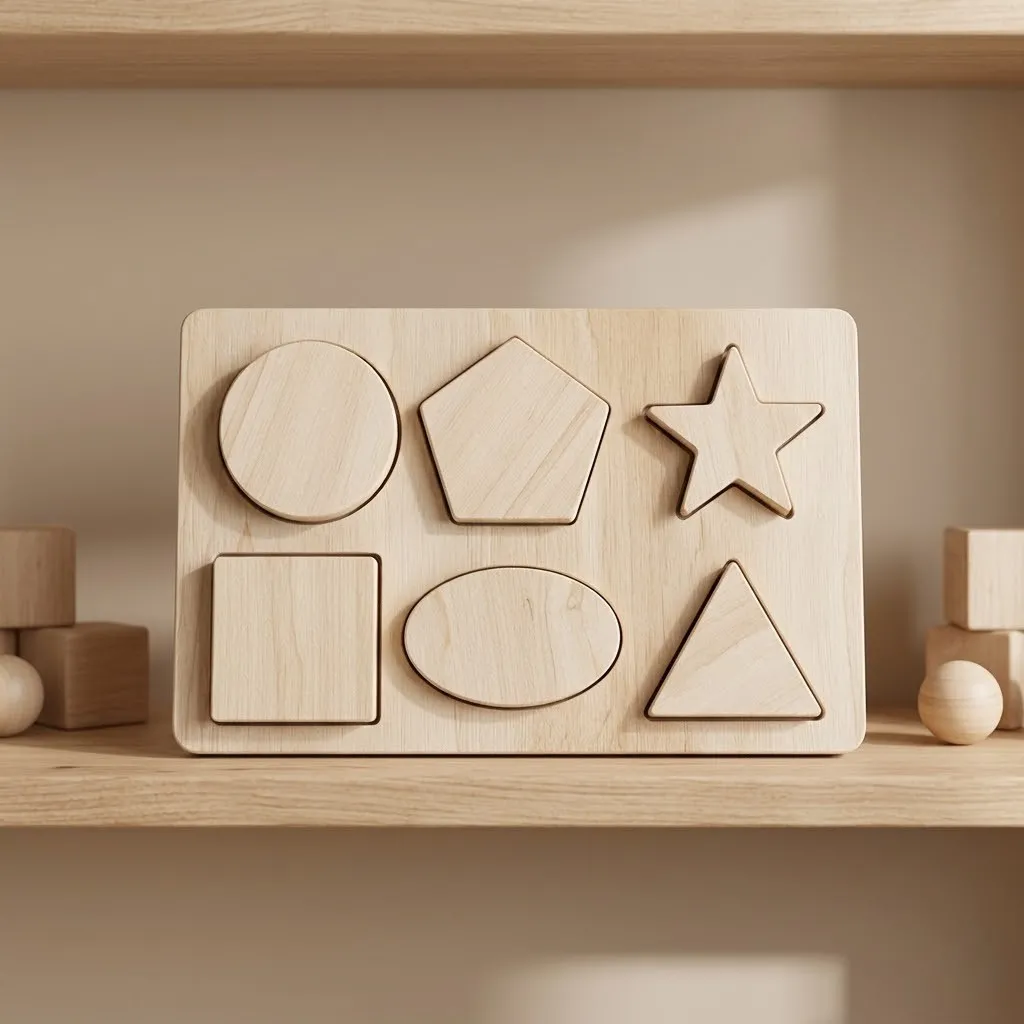
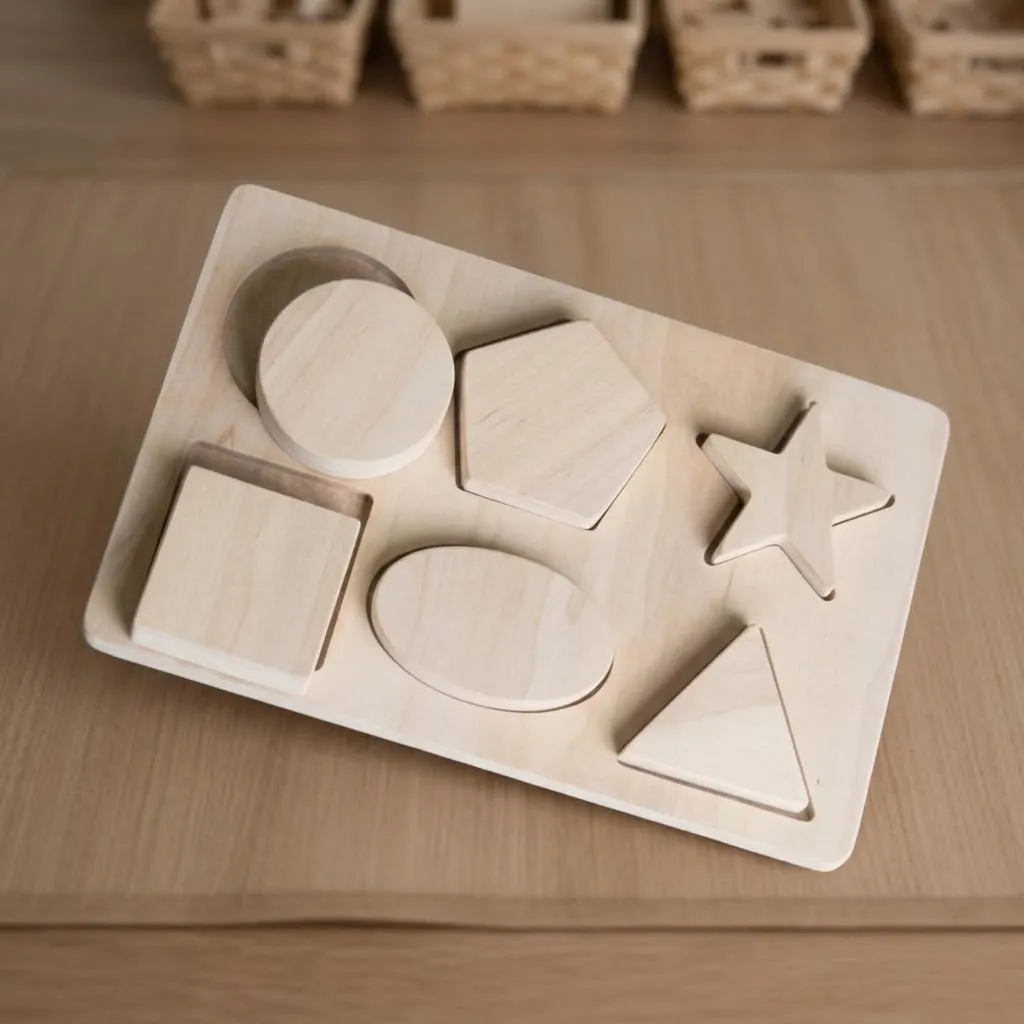
Gift #5 — Shapes Educational Toy
BEST FOR: Visual discrimination + shape recognition + fine motor precision | Ages: 12–18 months
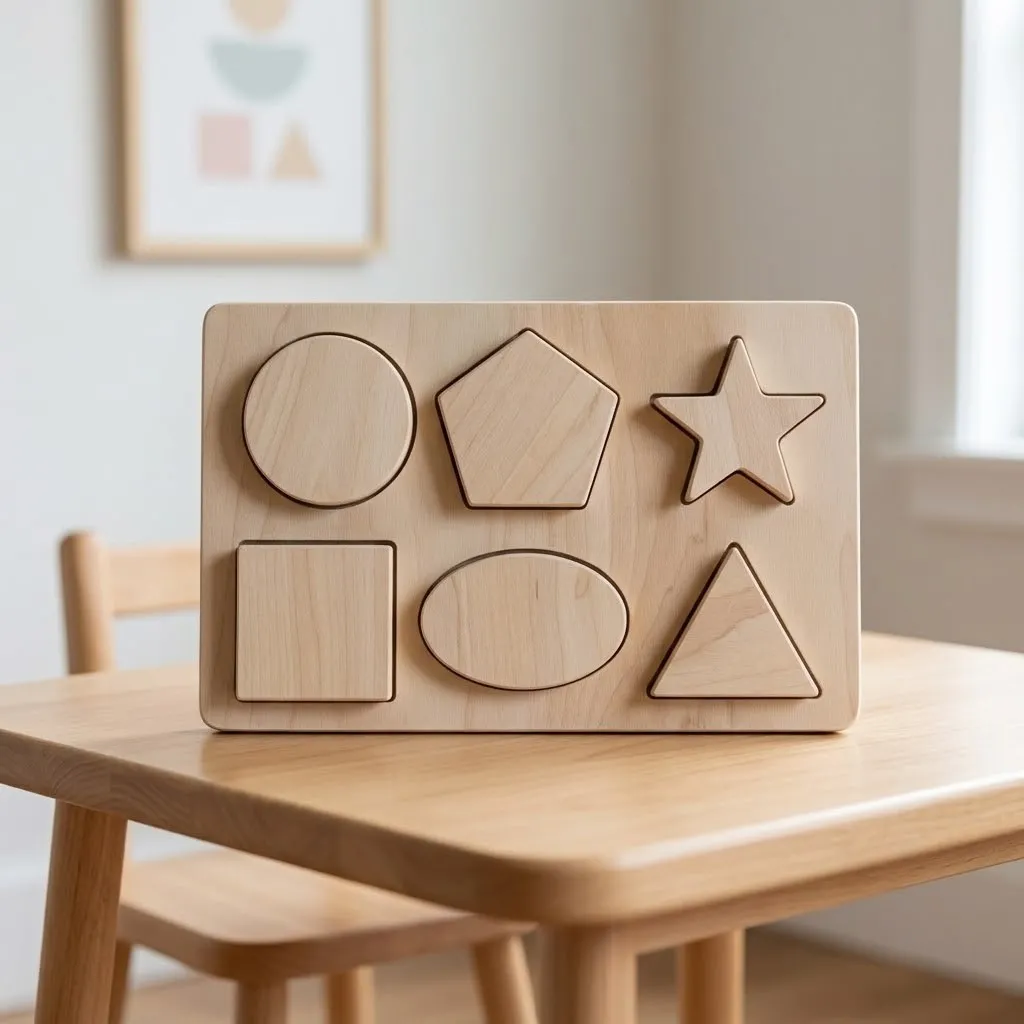
WHY IT MADE MY LIST
- Reading difficulties often trace back earlier than anyone expects. Not to age 5 or 6, but to 18 months — the window when visual discrimination for shape is either developing cleanly or not getting sufficient practice. A child who can tell a square from a circle by feel and by sight at 18 months has a sensory-motor head start on the visual processing that distinguishes "p" from "q" at age 6.
- This is what I mean when I tell parents that shape sorting is pre-reading work. Not metaphorically — mechanically. The same visual processing system that recognizes a circle as distinct from a square will later recognize letterforms as distinct from one another. The practice isn't abstract. It's direct preparation.
- The self-correction mechanism is the key thing I look for in any shape sorter. If the wrong shape can be forced into the wrong hole, the toy is actually undermining the learning. The child gets false feedback: "that was right" when it wasn't. A well-designed shape sorter makes the correct answer physically impossible to fake.
THE HONEST PART
Expect failure at 12 months. Expect partial success at 14 months. Expect independent mastery somewhere between 16 and 20 months, depending on the child. The relevant question is not "can my child do this yet" but "is my child engaging with it" — engagement at the edge of ability is exactly right.
Gift #6 — Shape Sorting Truck
BEST FOR: Shape recognition + object control + early imaginative play | Ages: 12–18 months
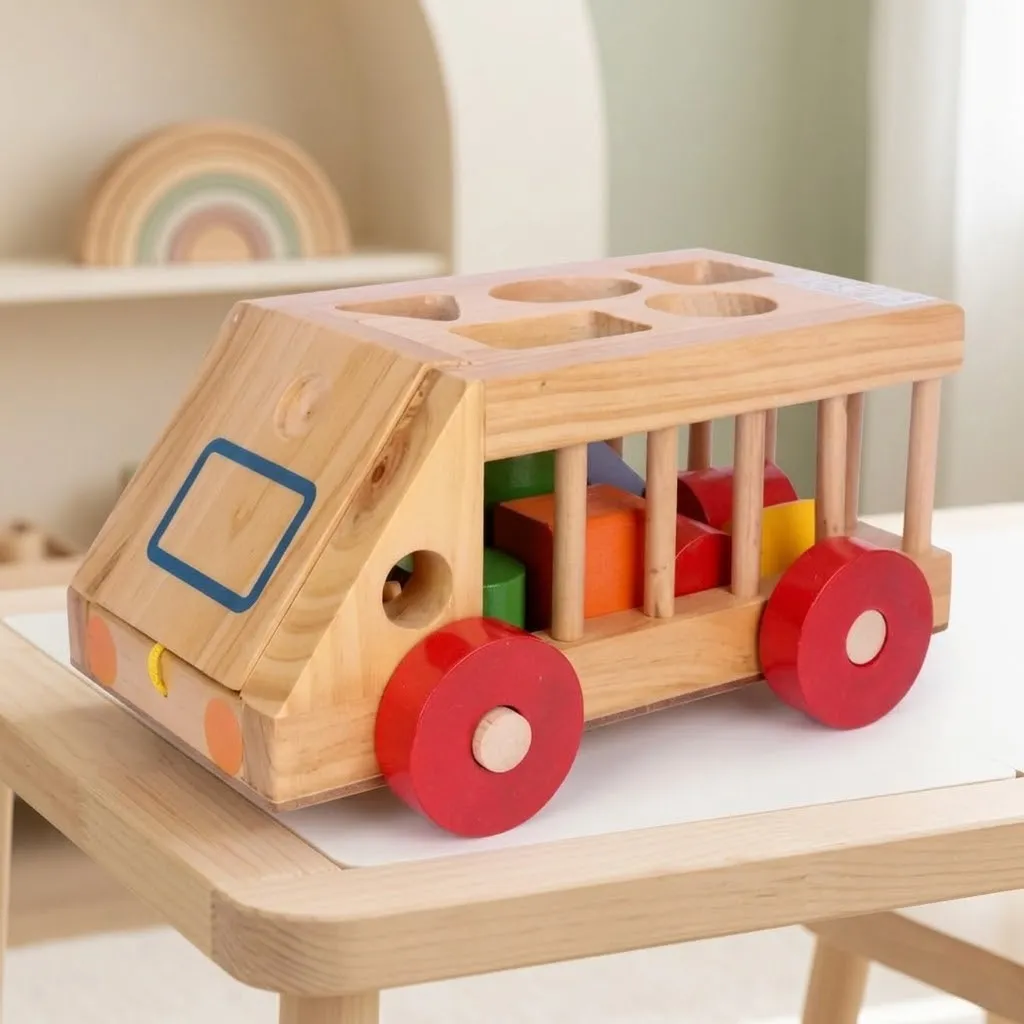
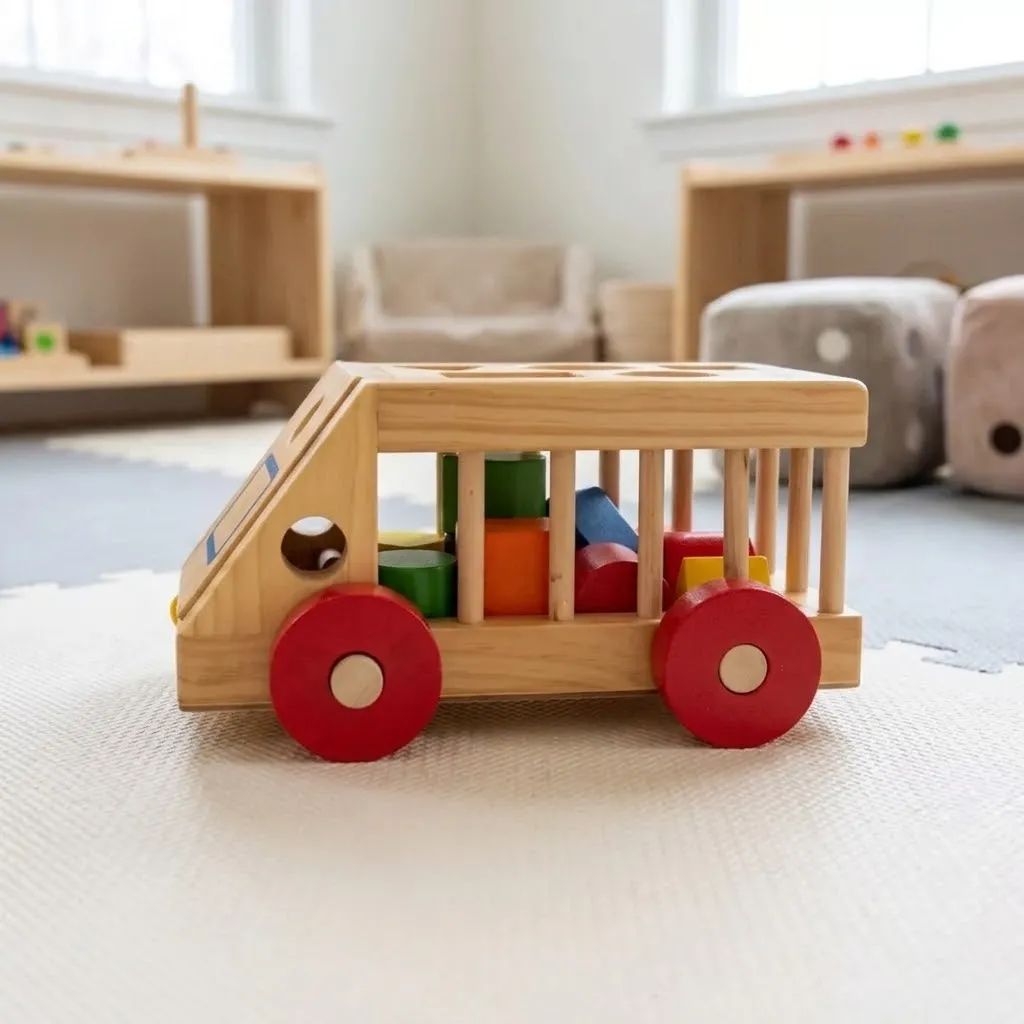
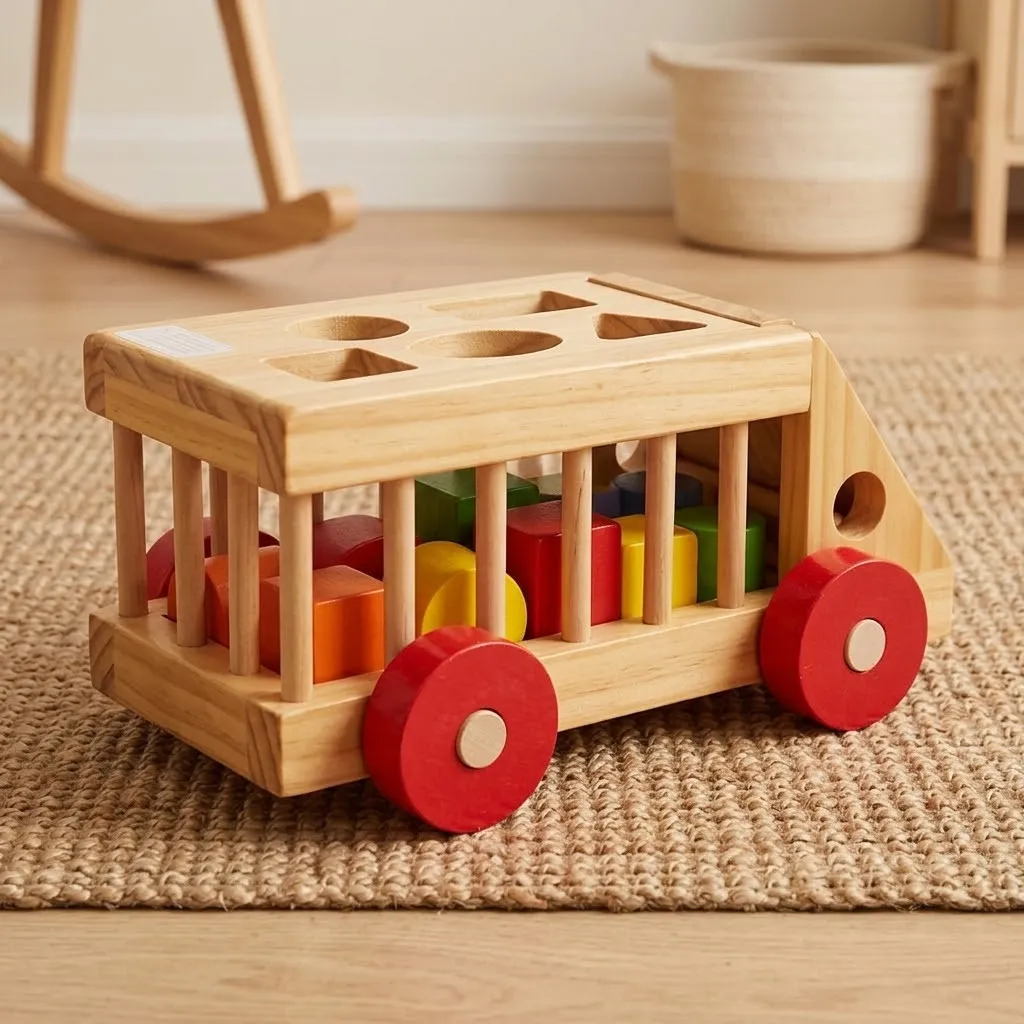
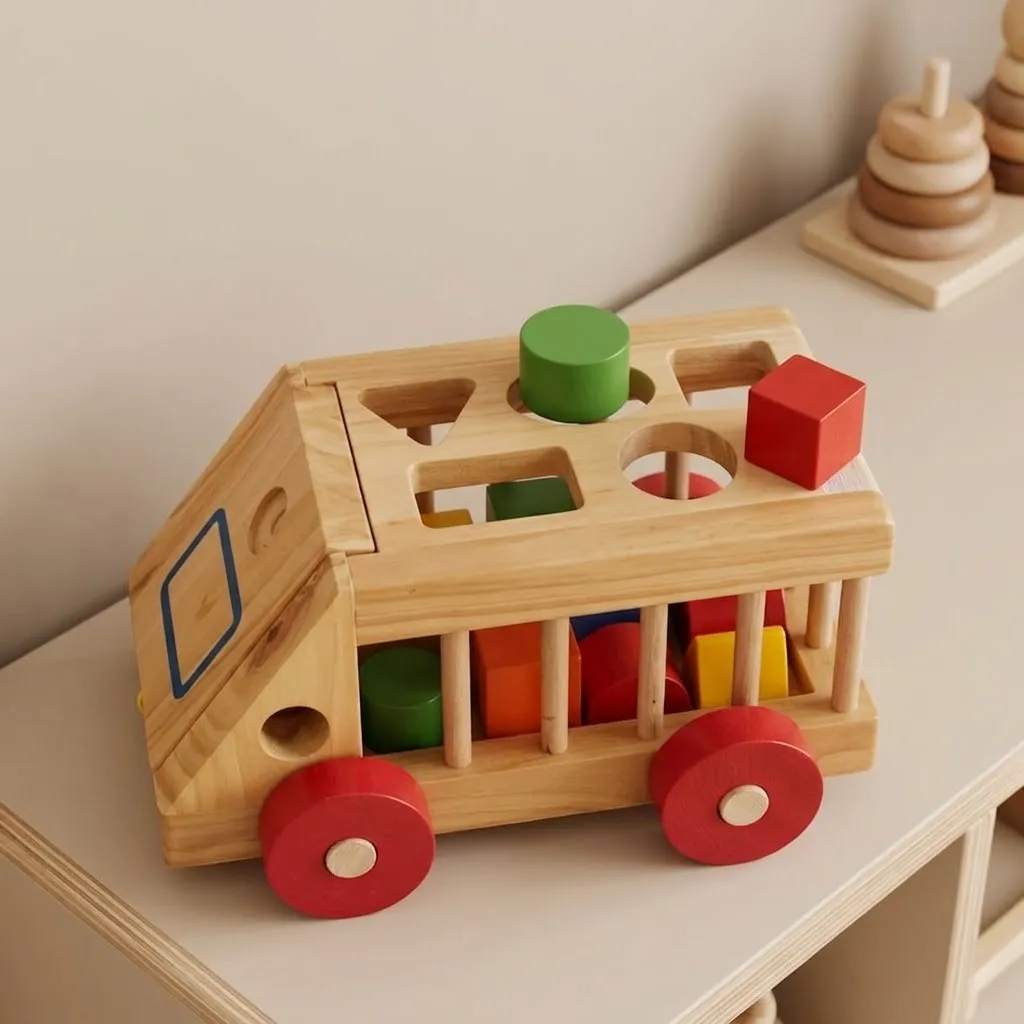
WHY IT MADE MY LIST
- Between 12 and 15 months, many children enter what I think of as the "transportation schema" — a period when play revolves around moving objects from place to place. Loading a container, then unloading it. Carrying something across the room, then bringing it back. I note it in the family record when I see it, because it reliably precedes language development around movement and direction by a few months.
- This toy is built for that window. The truck isn't decoration — it's a schema match. A child who's been loading and unloading a bowl for weeks will pick up this truck and immediately understand the assignment. The shape sorting clicks into place because it fits the play pattern already running.
- The weight matters too. A hollow plastic truck offers no resistance — it slides without feedback. A solid wooden truck has mass the child's muscles have to negotiate: how hard to push, when to steer, how to stop. That calibration is proprioceptive development happening inside what looks like pretend play.
THE HONEST PART
The shape sorting component won't be the main event at 12 months. Expect the first month to be mostly pushing and carrying. The sorting arrives at its own pace. Don't try to redirect a child who's pushing the truck around the floor to "try putting a shape in" — you'll interrupt the schema that's actually running.
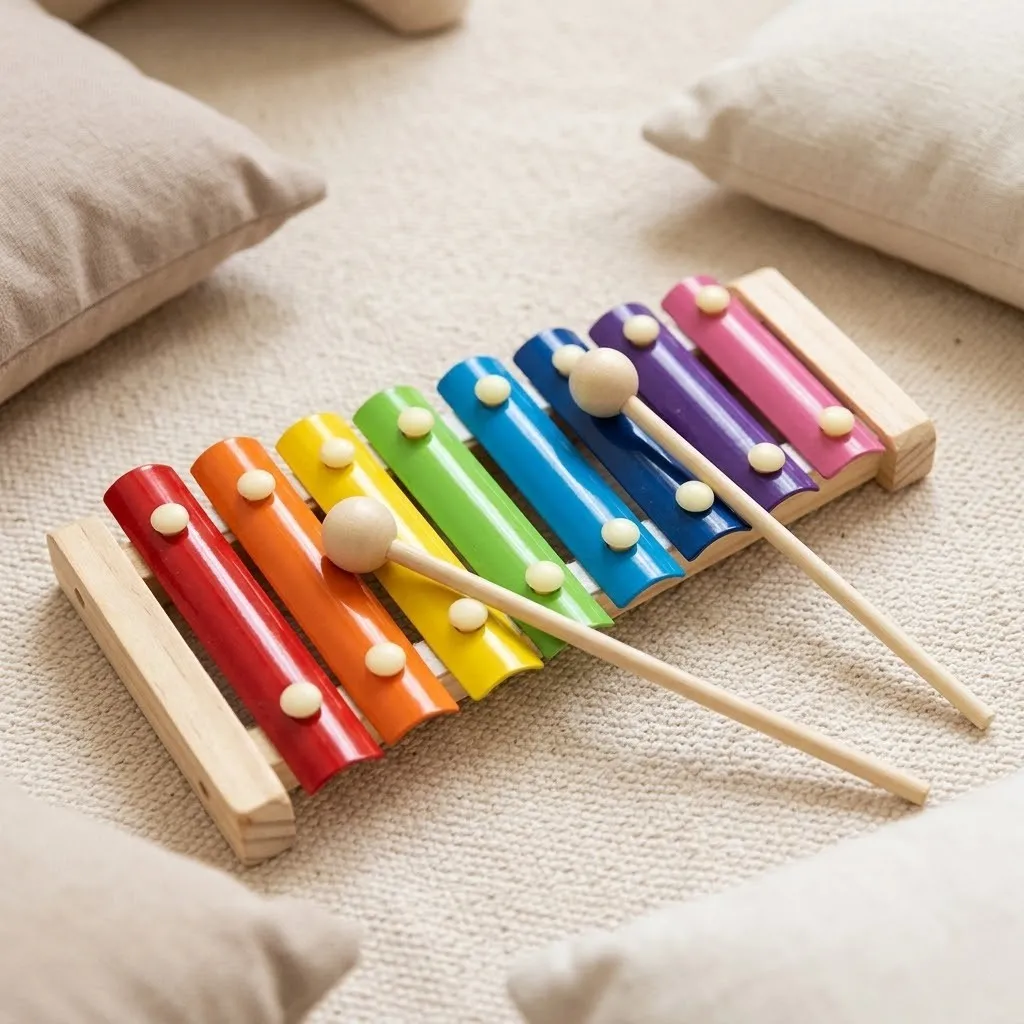
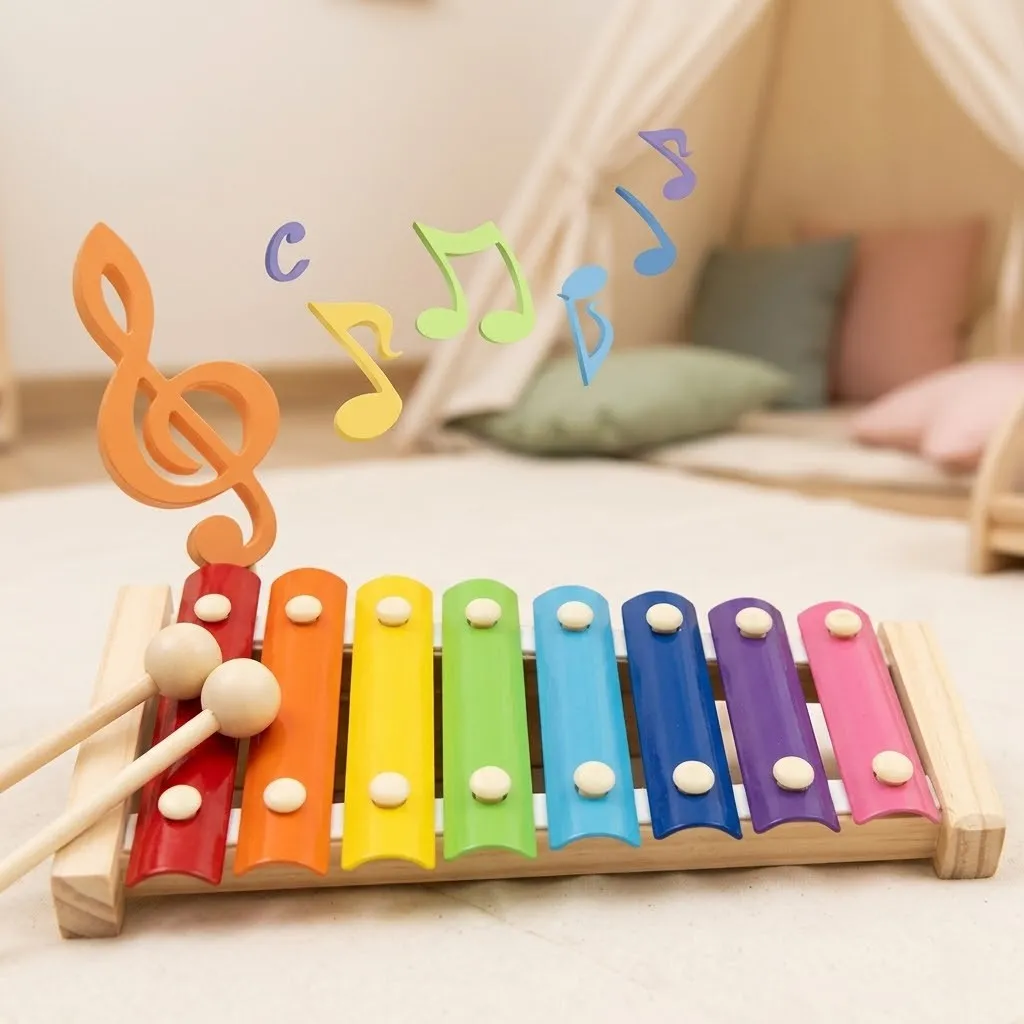
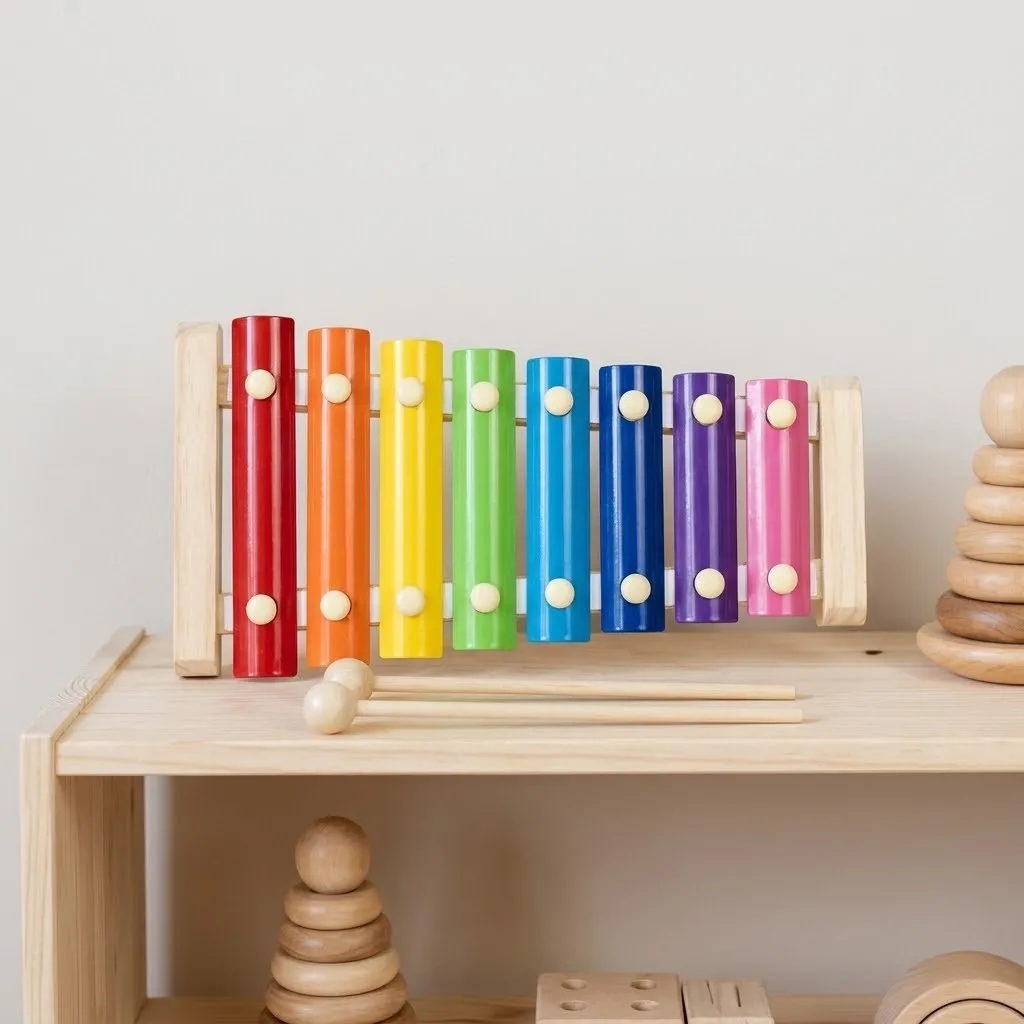
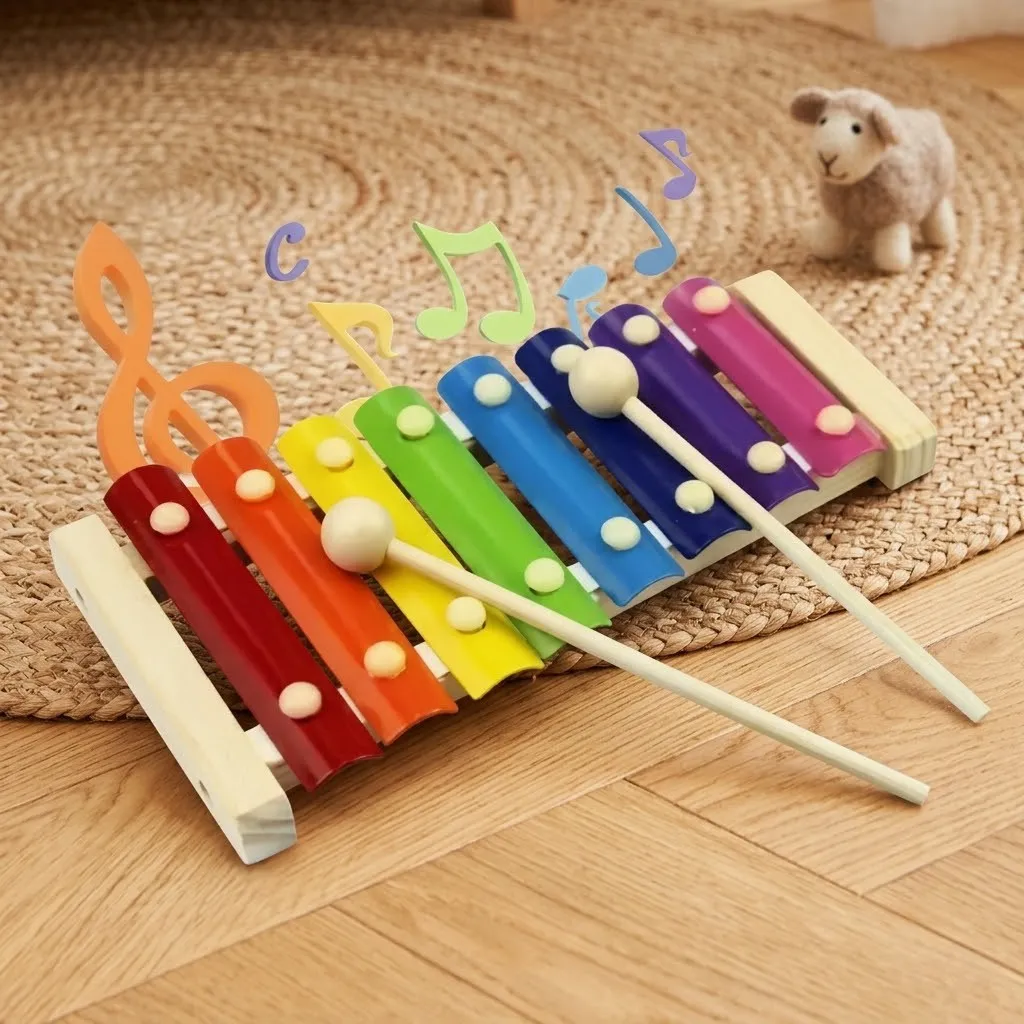
Gift #7 — Musical Hammer & Xylophone Toy
BEST FOR: Whole-arm gross motor coordination + auditory cause-and-effect + bilateral hand use. | Ages 12–30 month
WHY IT MADE MY LIST
- Every other gift here develops fine motor — the fingers and hands. But 12-month-olds are simultaneously building whole-arm coordination: swinging, striking, calibrating force. A hammer-and-xylophone gives the arms the same purposeful practice a busy board gives the fingers.
-The dual function matters. Hammer pegs deliver immediate auditory cause-and-effect. The xylophone adds a graduated scale — higher note for shorter bar — creating a spatial-auditory connection that activates multiple sensory systems at once. And unlike electronic toys, which Sosa (2016, JAMA Pediatrics) found reduce parent-child conversation, a real acoustic instrument does the opposite: you and your child naturally talk through and about the sounds together.
THE HONEST PART
At 12 months, it's all enthusiastic banging. By 15–18 months, your child starts targeting specific bars. That shift is the gross motor refinement this toy trains.
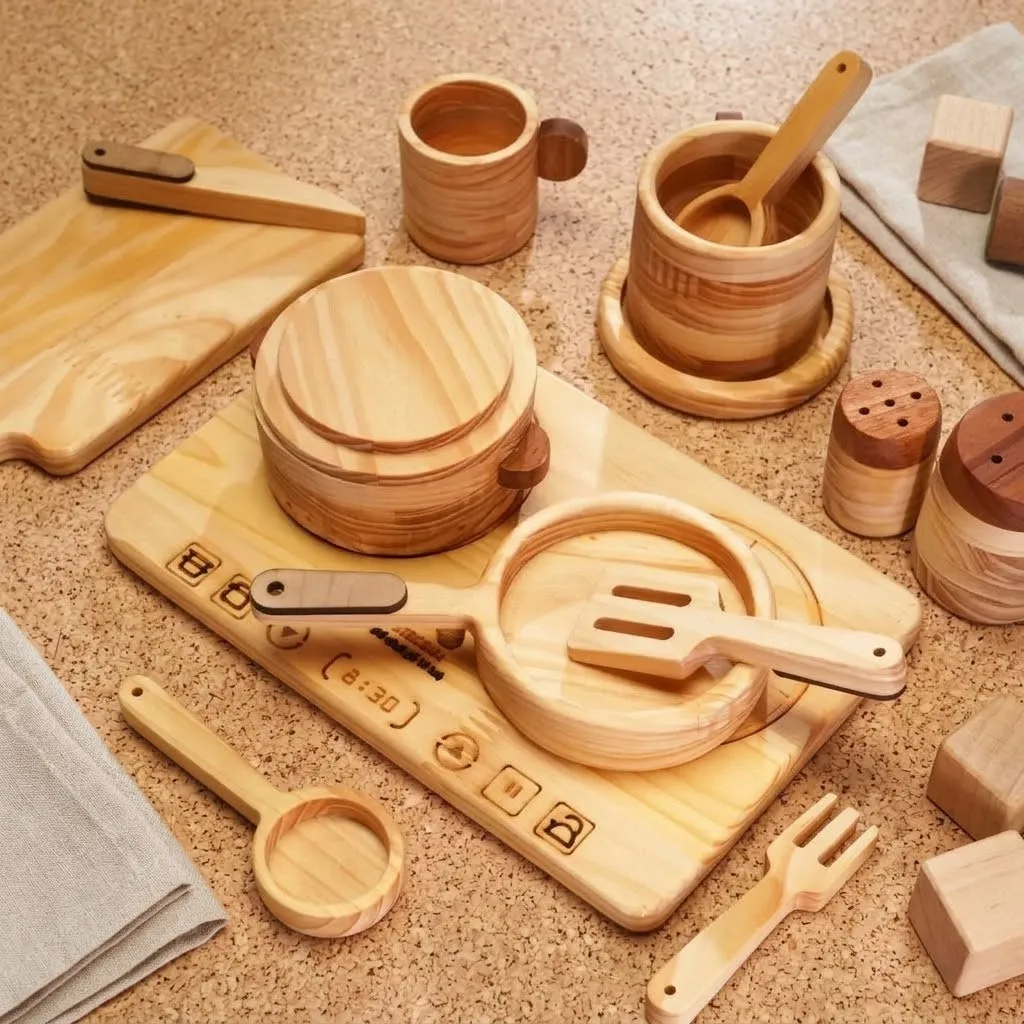
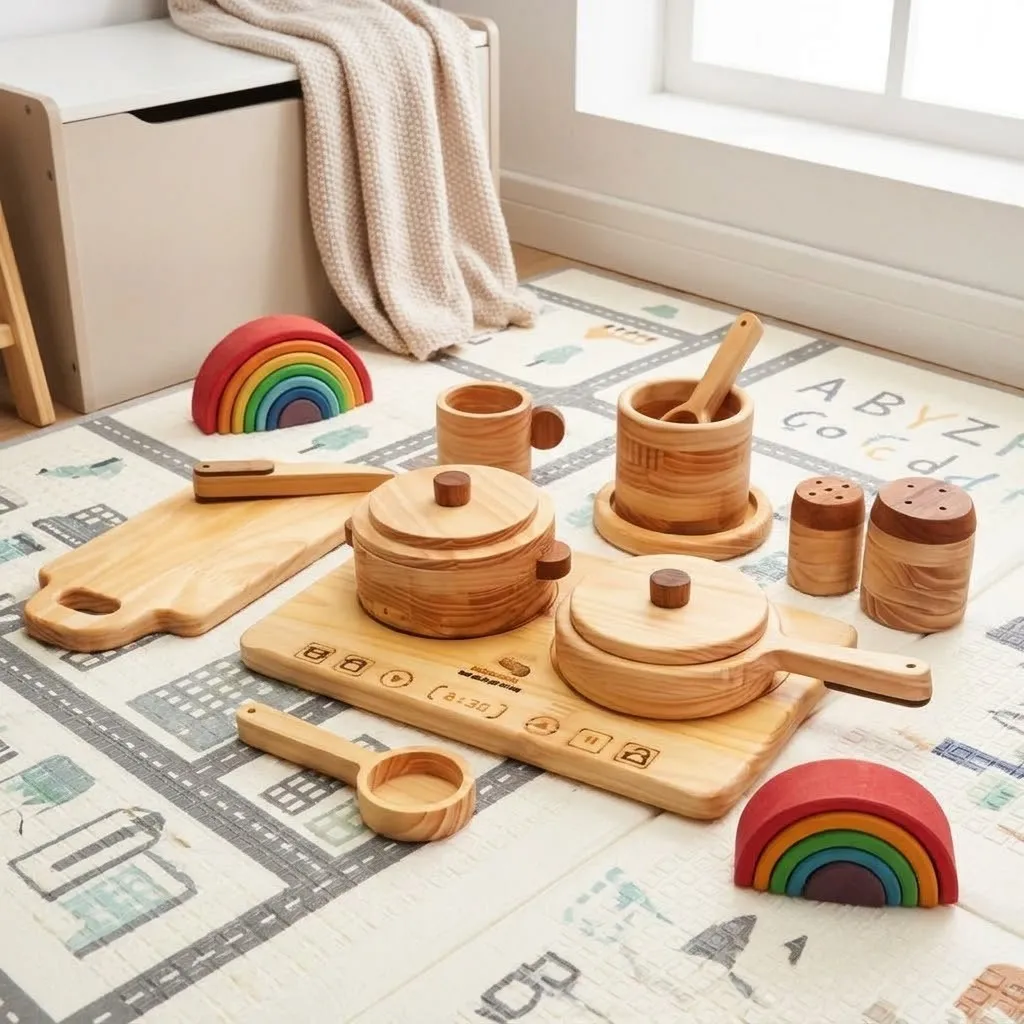
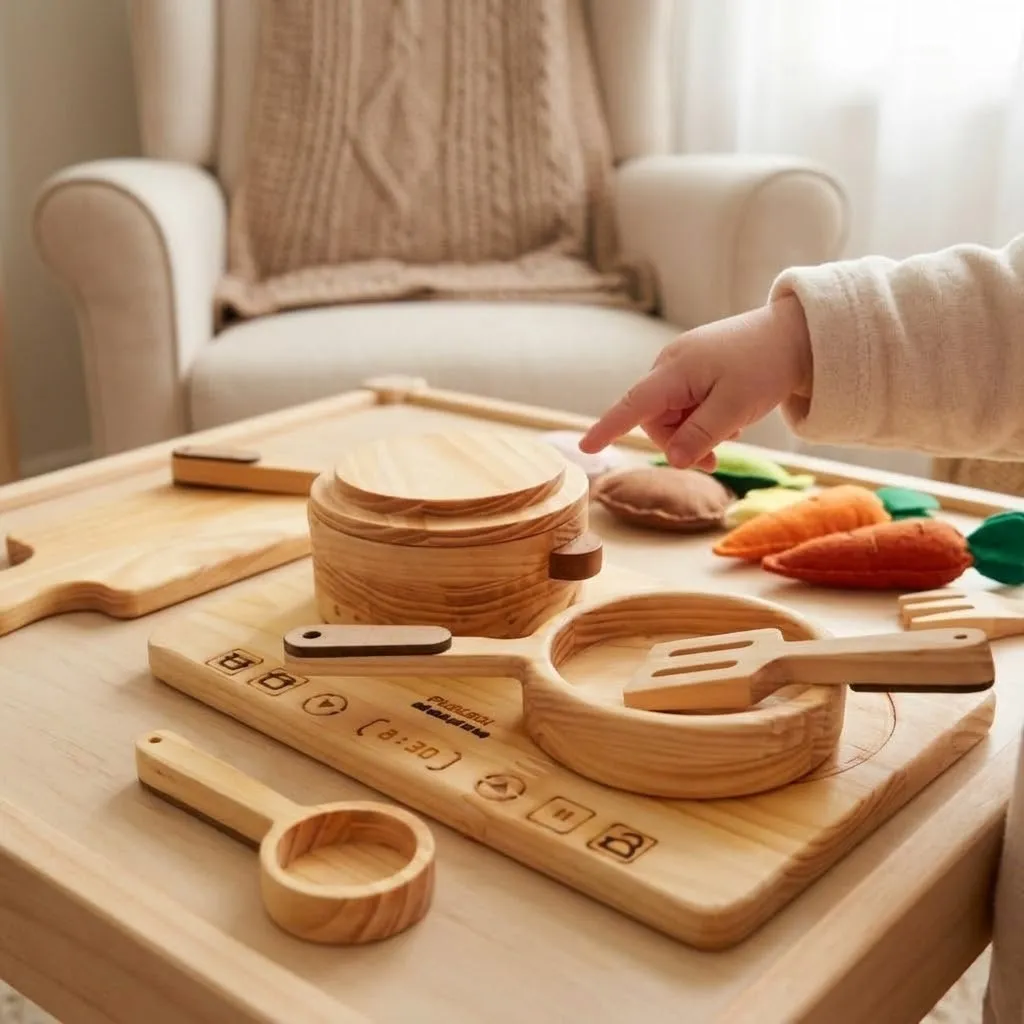
Gift #8 — Cooking Toy Set
BEST FOR: Early practical life skills + vocabulary expansion | Ages 36+ months
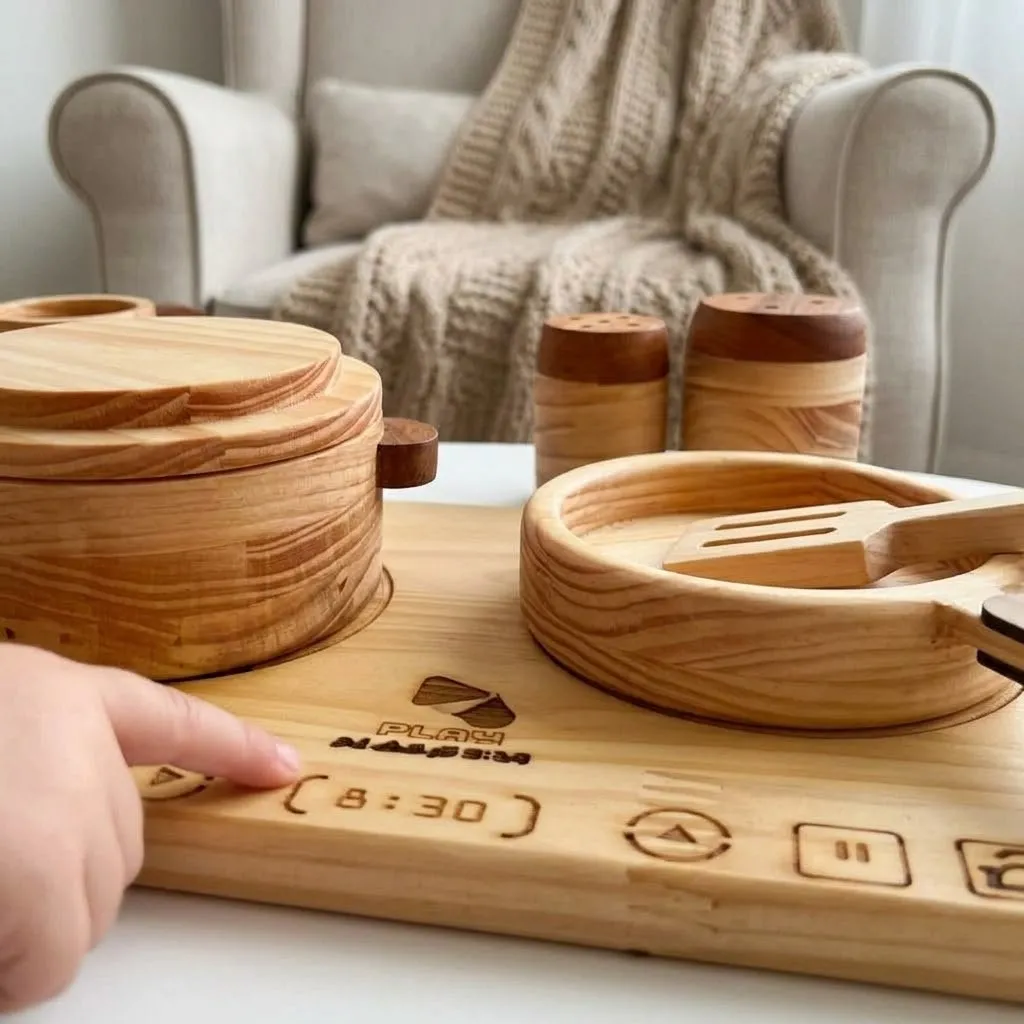
WHY IT MADE MY LIST
- Around 12 months, your child becomes fixated on what you do with your hands — stirring, wiping, holding a spoon. This is the Sensitive Period for Practical Life at its strongest. A cooking set channels that drive directly into purposeful play.
- The wooden pieces carry real weight, so your child's muscles negotiate genuine resistance with every stir and pour. That circular wrist motion with a wooden spoon inside a wooden pot is bilateral coordination and grip strengthening — wrapped in play they find irresistibly motivating. And the vocabulary lands immediately: "stir," "pour," "hot," "yummy" become meaningful because the physical context makes them stick.
THE HONEST PART
At 12 months, it's banging and carrying — that's exactly right. By 18–24 months, the same set becomes cooking for you, serving, sharing. A 2+ year arc from one gift.
Why a 1-Year-Old Needs a Different Kind of Gift
The first birthday is a parenting milestone more than a child milestone. The child doesn't know they've completed a year. What they know — what their nervous system is currently processing — is a set of very specific developmental tasks that are active right now and won't be quite this active again.
The child who reaches for a wooden object and works it with full concentration is showing you something specific: the material is giving real sensory feedback, the challenge sits at exactly the right level, and nothing is commanding their attention before they get the chance to figure it out themselves. Real weight, real texture, real consequence when something tips over — these aren’t aesthetic details. What they know — what their nervous system is currently processing — is a set of very specific developmental tasks that are active right now and won't be quite this active again. The activities a 1-year-old brain is actually ready for are narrower than most gift lists acknowledge — and that precision is what makes the difference between a toy used for weeks and one used for months.
Which Gift Is Right for This Child?
My most-recommended combination: Busy Board + any Name Puzzle. The board covers the longest developmental window; the puzzle covers the most personal.
Not sure where to start?
For birthday gifts: put 2–3 out now, stage the rest over the following months. By the time each new toy comes out, the child's developmental capacity will have shifted just enough that it lands at exactly the right level — which is also why the Kukoo gift guide organizes picks across the full 0–6 range rather than by occasion alone.
4 Questions to Ask About Any Gift for a 1-Year-Old
- Does the toy teach itself — or does it need an adult to explain success and failure?
- Is this built for exactly 12 months, or for a 36-month age range that includes 2.5-year-olds?
- Is the material real enough to give real sensory feedback — real weight, real texture, safe for mouthing?
- Will this still be used at 18 months — or will it be outgrown in 6 weeks?
Questions I Get Asked Most
Q: What do 1-year-olds actually want for their birthday?
They can't tell you — but their behavior does. At 12 months, three drives dominate: operating things that open and close, dropping objects to watch what happens, and figuring out where things go. Toys built around those three drives get used obsessively. Toys that don't match them get ignored, no matter how much they cost.
Q: What toys are actually good for a 1-year-old's development?
Look for three things: self-correcting (the child can tell if they got it right without asking you), single-focus (one skill at a time, not five), and real weight. Solid wooden toys with actual heft give the hands and muscles real feedback — that physical calibration is how fine motor control develops at this age. Shape sorters, stacking towers, object permanence boxes, and busy boards with distinct elements all fit this brief.
Q: What should you avoid giving a 1-year-old?
Three things consistently underperform. Battery-powered toys with lights and sounds — they grab attention involuntarily, and once the novelty fades (fast), there's nothing left to engage with. Toys labeled "ages 1–3" but designed for 18–24 months — a 12-month-old will hit a wall and disengage. And toys that try to teach too many things at once — shapes, colors, numbers, and letters on the same board. One concept, one clear feedback loop works far better at this stage.
Q: How many toys should a 1-year-old have out at once?
Five to seven, maximum. More than that produces choice overwhelm — the child bounces between things without settling into the focus that actually builds skills. For birthday gifts: put 2–3 out now, stage the rest over the following months. By the time each new toy comes out, the child's developmental capacity will have shifted just enough that it lands at exactly the right level.
One Last Thing
The mother with the spatula came back three months later. I'd recommended the ball drop and the busy board after that first visit. She told me her daughter had spent 20 minutes that morning working a single latch on the board, and had looked up at her afterward with an expression she described as "pure satisfaction."
That's what these toys are for. Not the Instagram shelf. Not the milestone checklist. The moment when a child does something hard, figures it out independently, and knows — without anyone telling them — that they got it right.
That moment belongs to the child. The toy just gives them the conditions to find it.