
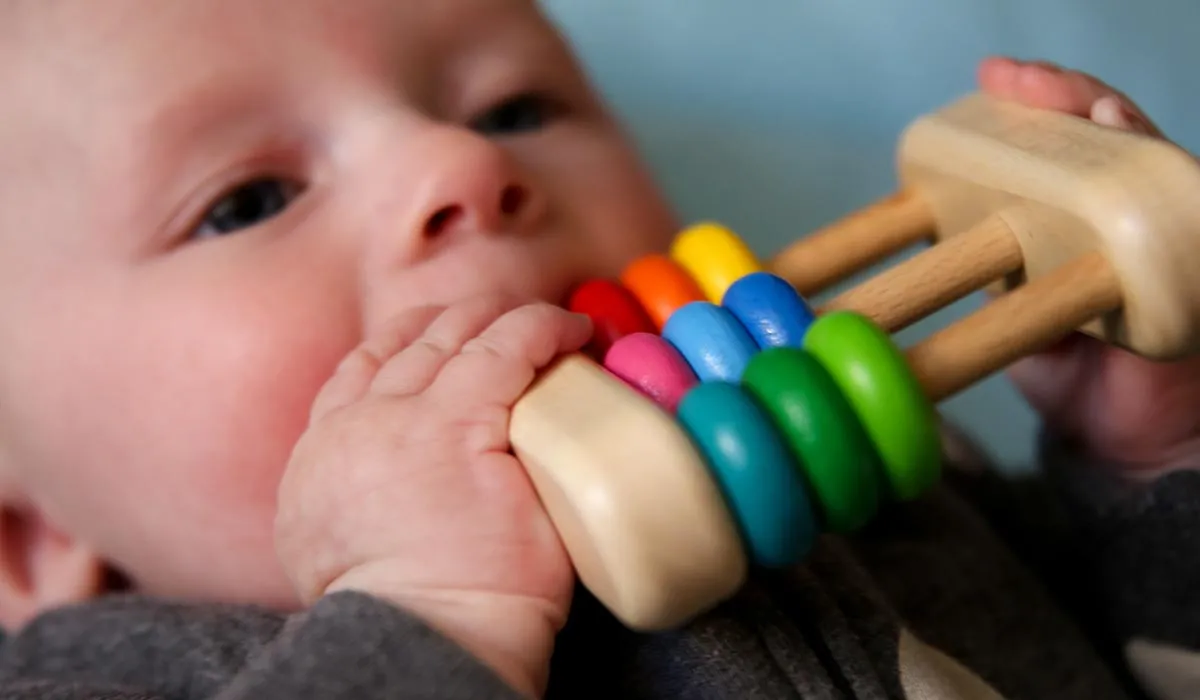
Parents are increasingly choosing natural materials over plastic—raising an important question: are wooden toys safe for babies, or just more aesthetic?
Here’s the truth: wooden toys are safe for babies when made from solid hardwood, finished with non-toxic paints or food-grade oils, free of small parts, and tested to standards like ASTM F963 or EN71.
But “wooden” alone doesn’t guarantee safety. The finish, construction, and design all matter.
This guide walks you through exactly what to check before buying—so you can choose with confidence, not just marketing claims.
What “Safe” Really Means for Baby Toys
When evaluating any baby toy, safety comes down to five key factors:
- Non-toxic materials
- Safe finishes
- Strong construction
- Age-appropriate sizing
- Verified safety compliance
Wood alone doesn’t guarantee safety—how it’s processed, finished, and assembled matters most. A beautifully crafted wooden rattle with lead-based paint? Not safe. A plastic toy that meets strict safety standards? Perfectly fine. The material is just one piece of the puzzle.
As parents, we need to look deeper than the surface.
Why Many Parents Prefer Wooden Toys
Fewer Synthetic Chemicals
High-quality solid wood doesn’t inherently contain BPA, PVC, or phthalates—substances sometimes found in certain plastics. This matters especially for babies, who explore everything with their mouths. When you choose wooden toys made from natural hardwoods like beech or maple, you’re starting with a material that’s already closer to nature.
That said, the finish applied to the wood is critical. An untreated piece of solid beech? Safe. That same beech coated in questionable varnish? Potentially problematic.
Surface Hygiene
Some hardwoods such as beech and maple show natural resistance to bacterial retention compared to plastic surfaces. Research from UC Davis found that wood surfaces bind and immobilize bacteria more effectively than plastic under certain conditions.”
Durability
Wood is less likely to shatter into sharp fragments if dropped. Plastic toys can crack, creating jagged edges. Electronic toys contain batteries and small components that may loosen over time. A well-made wooden block? It might get a dent, but it generally maintains structural integrity longer.
This durability also means wooden toys can be passed down, reducing waste and serving multiple children safely.
Sensory Regulation
Wood offers natural weight, texture, and subtle variation—supporting healthy sensory exploration without overstimulation from lights or electronics. The warmth of wood in your baby’s hand feels different from cold plastic. The subtle grain patterns provide visual interest without flashing LEDs.
For babies building their sensory awareness, the natural properties of wood — texture, weight, and acoustic quality — create a calmer, more grounded play experience than many synthetic alternatives.

The Ultimate Parent Safety Checklist
Before you bring any wooden toy into your home, run through this checklist. These are the non-negotiables.
Paint & Finish (Most Important)
Look for:
- Water-based, non-toxic paints
- Food-grade oils (beeswax or linseed oil)
- Saliva- and sweat-resistant finishes
Avoid:
- Vague “eco” claims without certification
- Old or vintage toys that may contain lead-based paint
- Toys with chipping or flaking finish
Your baby will put this toy in their mouth. The finish needs to be as safe as the food they eat. Don’t compromise here.
Solid Wood vs MDF or Plywood
Solid hardwood—such as beech, maple, or rubberwood—is generally more durable and stable than MDF or low-grade plywood, which may use formaldehyde-based adhesives — one reason we avoid MDF entirely in our toys. MDF can also break down more easily when exposed to moisture (like baby drool), potentially creating rough edges.
When shopping, ask: “Is this solid wood or composite?” Reputable brands will answer clearly.
Smoothness & Splinter Prevention
Check for:
- Rounded edges
- Fully sanded surfaces
- No cracks along grain lines
Parent tip: Run a soft cloth across the edges—if it snags, it’s not baby-safe. Your baby’s delicate skin is even more sensitive than that cloth.
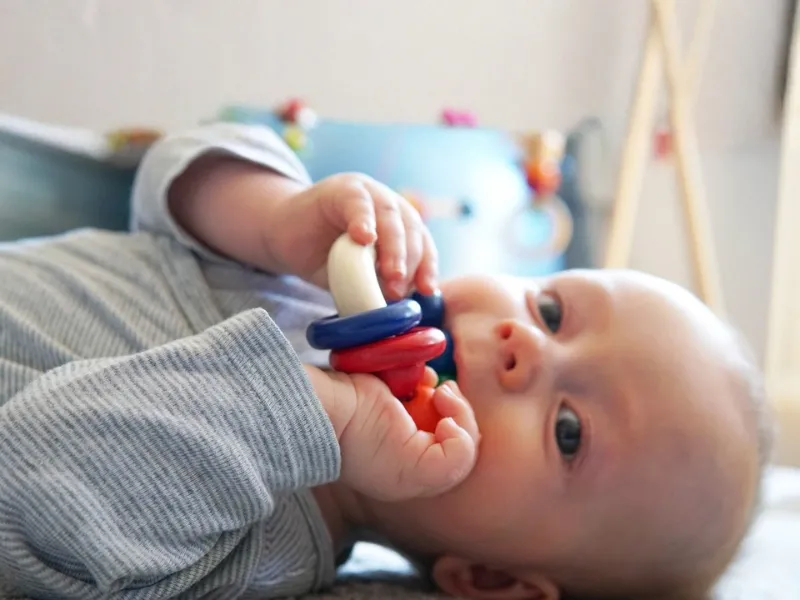
Choking Hazard Prevention
Babies explore with their mouths, so size matters enormously — which is why our toys for 0–12 months are designed specifically around this constraint, with no pieces below safe grasping size
Toilet Paper Roll Rule: If a toy part fits inside a standard toilet paper roll, it’s too small for children under three.
Also check for:
- Loose pegs
- Small magnets
- Detachable beads
- Removable wheels
Even if a toy is labeled for your baby’s age, verify it yourself. Hold it. Test it. Trust your judgment.
For more tips on choking hazards and how to keep kids safe, see the CPSC’s guide on choking hazards.
Construction Integrity
Inspect for:
- Tight joints
- No visible glue residue
- No decorative elements that could detach
Turn the toy over. Look at the underside. Shake it gently. Does anything rattle that shouldn’t? Are there gaps where pieces connect?
Quality construction means a manufacturer took time with assembly, not just aesthetics.
Strings & Attachments
Avoid:
- Long cords (strangulation risk)
- Loose elastic
- Unsecured hanging components
Any string longer than 7 inches poses a potential hazard for babies. If a toy has a ribbon or cord, measure it.
Safety Certifications Explained
Certifications aren’t just fancy logos—they represent testing and compliance.
United States:
- ASTM F963
- CPSIA compliance
Europe:
- EN71
- CE marking
United Kingdom:
- UKCA
Reputable brands clearly state compliance rather than simply displaying logos. Look for statements like “Tested to ASTM F963 standards” on the packaging or website. If you can’t find this information easily, that’s a red flag. Understanding how ASTM F963 and EN71 actually work — and what separates them — helps you evaluate those claims with more confidence.
Wooden vs Plastic vs Electronic Toys (Quick Comparison)

This isn’t about one material being “bad”—it’s about understanding trade-offs. Wooden toys excel in durability and sensory simplicity. Electronic toys may support specific learning goals but require battery safety checks. Plastic toys vary widely in quality.
The best toy collection often includes a thoughtful mix, chosen intentionally for safety and developmental purpose.
How to Clean Wooden Toys Safely
Proper cleaning extends the life of wooden toys while keeping them safe for your baby.
Don’ts:
- Do not soak in water
- Do not use dishwasher
- Avoid bleach or harsh chemicals
Do’s:
- Wipe with damp cloth and mild soap
- Use a diluted vinegar-water solution if needed
- Dry immediately
For frequency guidelines, post-illness sanitizing, and long-term maintenance, see our complete wooden toy cleaning guide.
Optional maintenance: Occasionally apply a light coat of food-grade beeswax or coconut oil. This restores the wood’s natural moisture and protective layer.
Why Montessori Prefers Wood
Montessori education values simplicity and intentional design—and wooden toys align naturally with this philosophy.
- Simple materials prevent overstimulation. A wooden cube doesn’t beep, flash, or sing. The child does the work—not the toy.
- Durable toys support long-term, purposeful play. A high-quality wooden toy can serve multiple children across years, becoming familiar and trusted rather than disposable.
- Natural materials ground learning in reality. Wood feels real because it is real. It has weight, texture, temperature. These sensory qualities help babies build accurate understanding of the physical world.
The Montessori approach isn’t about expensive materials—it’s about materials that serve the child’s development without distraction — which is also why pediatricians tend to recommend simpler, non-electronic toys for early childhood.
What Kukoo Montessori Prioritizes
At Kukoo Montessori, safety and purposeful play go hand in hand. We focus on:
- Non-toxic, baby-safe finishes
- Smooth, carefully sanded edges
- Age-appropriate designs
- Clear safety and care guidance
- Compliance with recognized global standards
Every toy we offer has been evaluated against the checklist in this guide. We understand that trust is earned through transparency, not just claims.
FAQ
- Are wooden toys safe for babies to chew on?
Yes—if they use non-toxic, saliva-safe finishes and are free from small detachable parts. Look for toys finished with food-grade oils like beeswax or linseed oil, or water-based paints specifically labeled as non-toxic. Always verify the finish type before purchase, especially if the manufacturer doesn’t clearly state it on the packaging. - How do I check if a toy is a choking hazard?
If it fits inside a toilet paper roll, it’s too small for children under three. Test any removable parts, not just the toy as a whole—wheels, pegs, and small knobs can detach during play. Even if a toy is labeled for your child’s age, always do this physical test yourself before handing it to your baby. - Are painted wooden toys safe?
They can be safe when finished with certified non-toxic, water-based paint that meets safety standards. The key is verification—ask the manufacturer for specifics about paint type and safety testing certifications. Avoid toys where the paint chips or flakes easily, as this indicates lower quality finish that could pose ingestion risks. - Can wooden toys grow mold?
Only if soaked or stored in damp conditions. Proper drying after cleaning prevents issues—wipe toys with a damp cloth and dry them immediately rather than letting them air-dry in humid areas. If a toy does develop mold, it’s safer to discard it than try to clean it, as mold can penetrate wood grain and return even after surface cleaning. - Is solid wood better than plywood?
Both solid hardwood and high-quality plywood can be safe for baby toys. Solid wood (like beech, maple, or rubberwood) is naturally free from adhesives and more durable, while quality plywood is fine if it uses formaldehyde-free glues. The main material to avoid is MDF, which often contains formaldehyde-based adhesives and breaks down easily when exposed to moisture.
Conclusion
Wooden toys can be exceptionally safe for babies—when you know what to look for. The material itself offers natural advantages: durability, sensory richness, and fewer synthetic chemicals. But safety ultimately comes down to craftsmanship, finish quality, and age-appropriate design.
Use the checklist in this guide. Ask questions. Trust your instincts.
Your baby deserves toys that support their development without compromising their safety. With the right knowledge, you can choose confidently—knowing that “wooden” isn’t just aesthetic, but genuinely safer when done right.