
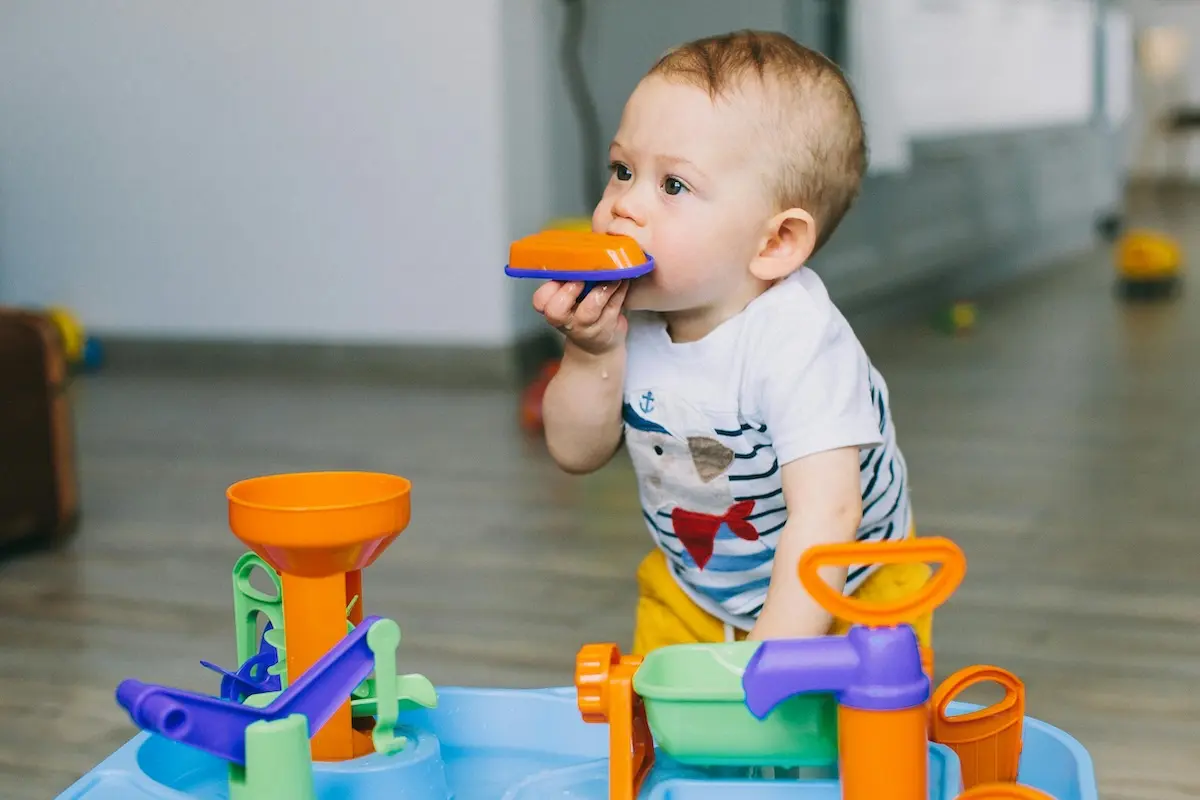
Plastic toys are not automatically unsafe, but certain types may carry hidden risks depending on their chemical composition, durability, and how they are used. Understanding materials, additives, and safety standards helps parents make informed decisions without unnecessary fear.
Your baby explores the world through touch, taste, and constant contact. That colorful plastic rattle? They’ll mouth it, drop it, chew on it, and possibly sleep next to it.
The Hidden Risks of Plastic Toys for Babies
Most modern plastic toys sold by established brands in the US and Europe are regulated, tested, and considered safe for normal use. The real risks are specific and manageable: certain chemical additives (phthalates, BPA) in low-quality or unregulated toys; microplastics from degraded surfaces; and physical hazards from cracked or worn materials. A toy carrying ASTM F963 or EN71 certification has been independently tested for these concerns. The risk is not plastic itself — it is poorly made, unregulated, or degraded plastic. This article explains exactly what to check for.
Understanding Plastic: Materials vs Additives
Common Plastics Used in Toys
Walk down any toy aisle and you’re looking at a variety of plastic types:
- PVC (Polyvinyl Chloride): Often used for soft, flexible toys. Requires plasticizers to remain pliable.
- ABS (Acrylonitrile Butadiene Styrene): Hard, durable plastic found in building blocks and sturdy toys.
- Polypropylene: Lightweight and heat-resistant. Common in baby bottles and food-safe toys.
- Polyethylene: Flexible and impact-resistant. Used in squeeze toys and soft plastic items.
Each of these polymers has different properties. Some are naturally rigid. Others need chemical additives to achieve the desired flexibility, color, or flame resistance.
Why Additives Matter More Than the Base Plastic
Here’s what many parents don’t realize: the concern often lies in additives rather than the plastic polymer itself.
- Plasticizers make rigid plastic soft and bendable. Some older plasticizers (like certain phthalates) raised health concerns.
- Flame retardants were added to meet fire safety standards but some types have since been restricted.
- Stabilizers prevent plastic from degrading under heat or UV light.
- Pigments provide color—and cheaper pigments sometimes contained heavy metals.
The base plastic might be fine. The additives? That’s where scrutiny matters.
Potential Chemical Exposure: What Research Suggests
BPA and Phthalates
These two chemical names have dominated parenting forums for years—and for good reason.
BPA (Bisphenol A) was historically common in hard plastics and can linings. Research linked it to hormonal disruption, leading to restrictions in baby products in many countries.
Phthalates were used to soften plastic, particularly PVC. The National Institute of Environmental Health Sciences classifies certain phthalates as endocrine-disrupting chemicals — substances that can interfere with hormonal systems even at low exposure levels. The U.S. Consumer Product Safety Commission and international bodies restricted specific phthalates in children’s toys after studies raised concerns about reproductive and developmental effects.
A March 2026 study published in Lancet eClinicalMedicine estimated that two common plastic phthalates — DEHP and DiNP — were associated with approximately 2 million preterm births and 74,000 newborn deaths globally in 2018 alone.
Now restricted in many countries, these chemicals are still relevant in low-regulation imports or older toys. If you’re buying from established brands that comply with ASTM F963 or EN71 standards, exposure risk is minimal. What ASTM F963 and EN71 actually test for — including which specific phthalates are restricted and how compliance is verified — helps you read those certification claims accurately. If you’re buying from unknown sellers or secondhand sources without verification? That’s where caution is warranted.
Flame Retardants and Heavy Metals
Flame retardants were added to meet fire safety standards, particularly in foam-filled toys and electronics. Some types — like PBDEs — were later found to accumulate in human tissue and breast milk and were subsequently restricted.
Heavy metals like lead were sometimes found in cheap pigments used for bright colors. Regulatory improvements have largely eliminated this from compliant products, but it remains a concern in unregulated imports.
Balanced framing: Regulatory improvements have reduced many of these risks in compliant products. The toys on shelves at major retailers in the U.S. and Europe are significantly safer than they were 20 years ago. A 2021 analysis by researchers at the Technical University of Denmark and the University of Michigan — published in Environment International — screened 419 chemicals found in hard, soft, and foam plastic toy materials and identified 126 substances with potential health concerns, including 31 plasticizers, 18 flame retardants, and 8 fragrances. The study noted that exposure from inhalation — not just mouthing — is often the primary pathway, since chemicals diffuse into the air from all toys in a room simultaneously.
Physical & Environmental Factors Parents Often Overlook
Microplastics From Wear and Tear
This is a newer area of research, and it’s worth understanding.
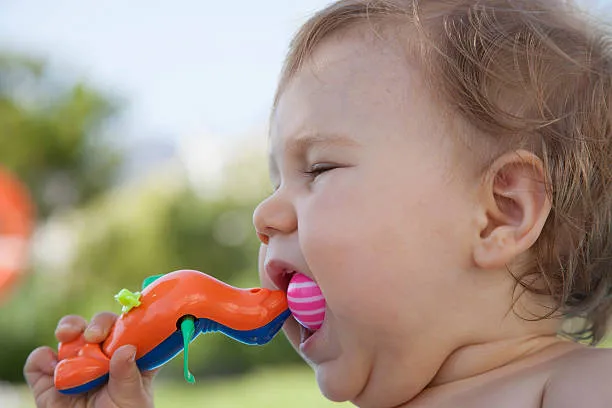
When babies chew on plastic toys, small particles can break off. Studies on microplastic release from consumer products have found that mechanical stress, UV exposure, and heat all accelerate surface degradation.
We’re still learning about the long-term impact of microplastic exposure. The World Health Organization has called for further research into human microplastic exposure, noting that current evidence is insufficient to draw firm conclusions — but acknowledging the question is important enough to investigate systematically.
It’s reasonable to consider wear patterns when choosing toys for heavy chewers. This is one reason why natural wood materials resist degradation better than many synthetic alternatives.
One pattern we see consistently with Kukoo families: parents who switch their heaviest chewers — typically 6–14 month olds — from plastic rattles and teethers to solid hardwood alternatives report that the surface shows no visible degradation after months of heavy mouthing. The wood may darken slightly where saliva contacts it, but the grain tightens rather than breaking down. With the plastic versions these same families had been using, they’d noticed chalky residue on the toy surface and whitening around bite marks within weeks. We can’t make claims about what that residue was — but the difference in surface behavior was visible enough that they didn’t want to find out.
Heat and Chemical Migration
Plastic chemistry can change under certain conditions:
- Hot cars: Leaving toys in a hot car can cause plasticizers to migrate to the surface.
- Dishwashers: High heat can break down plastic faster than hand washing.
- Direct sunlight: UV exposure degrades some plastics, making them brittle or releasing chemicals.
Most parents don’t think about this when they toss plastic toys into the dishwasher or leave them on the sunny porch. But heat accelerates degradation.
Cracking, Sharp Edges & Detachment
Brittle plastic breaks differently than wood. When a cheap plastic toy cracks, it can create sharp edges. Small decorative parts—eyes, wheels, buttons—may detach and become choking hazards.
These risks depend heavily on quality and usage conditions. A high-quality ABS building block? Extremely durable. A thin, poorly molded plastic rattle from an unknown manufacturer? More likely to crack or break.
Developmental Considerations Beyond Chemicals
Overstimulation From Electronic Features
This isn’t about toxicity—it’s about how certain plastic toys are designed.
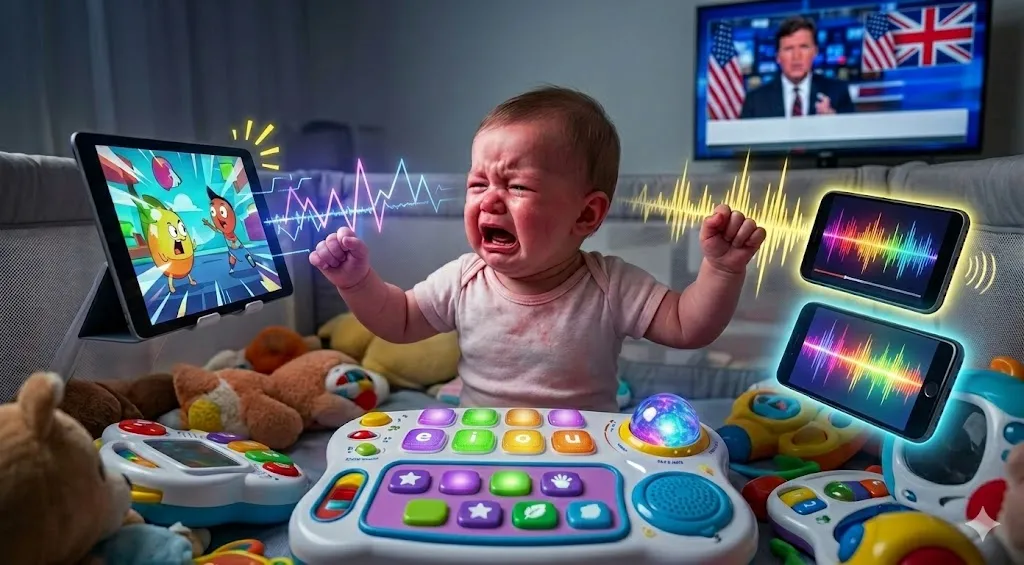
Many plastic toys feature lights that flash, songs that play automatically, and rapid feedback cycles. For some babies, especially those with sensory sensitivities, this creates an overwhelming play environment.
The concern isn’t that electronics are harmful. It’s that when every toy lights up and makes noise, babies don’t learn to create their own entertainment through exploration and imagination. The deeper question of how overstimulation affects young children — neurologically, not just behaviorally — is worth understanding before stocking a play space.
Passive vs Active Play Patterns
Button-press interaction teaches cause and effect, which is valuable. But when it becomes the primary mode of play, children may engage less actively with their environment.
Press button → toy responds → child waits for the next light.
This pattern, when overused, can reduce imaginative engagement. The toy does the work. The child watches.
The AAP’s clinical report on appropriate toy selection specifically notes that electronic features may reduce social engagement and imaginative play when used as the dominant play mode — particularly in infants and toddlers whose nervous systems are still developing.
Important: This is about usage patterns, not blanket condemnation. Electronic toys have their place. But a play environment dominated entirely by them misses opportunities for deeper cognitive engagement—the kind that pediatric guidelines specifically tie to simpler, open-ended toys.”
When Plastic Toys Are Safe — and When to Be Cautious
Signs of a Safer Plastic Toy
Dr. Sheela Sathyanarayana, a pediatric environmental health specialist at Seattle Children’s Hospital, puts the practical guidance clearly: “For little ones in an age group where they put things in their mouths, the number one takeaway would be to opt for wood toys and avoid plastics because of chemicals that disrupt normal development at a critical age. Not all plastic toys carry equal risk. Here’s what to look for:
- BPA-free / phthalate-free labeling: Reputable manufacturers state this clearly.
- ASTM F963 or EN71 compliant: These certifications mean the toy has been tested.
- No strong chemical odor: A new toy shouldn’t smell intensely of chemicals. A slight plastic smell is normal, but overpowering odors suggest poor-quality materials.
- Durable construction: Thick, well-molded plastic with tight joints indicates quality manufacturing.
- Clear statement: High-quality plastic toys that meet safety standards are widely considered safe for normal use. The plastic baby bottles, sippy cups, and toys from established brands in major retailers? They’ve been tested extensively. For parents seeking alternatives, understanding what safety features to look for in wooden toys can provide additional options.
Situations That Increase Risk
- Counterfeit or unregulated imports: Toys that bypass safety testing may contain restricted chemicals.
- Old, cracked toys: Vintage toys or hand-me-downs that show wear may have been made before current restrictions.
- Excessive heat exposure: Storing toys in hot environments accelerates degradation.
- Unknown manufacturers: If you can’t verify safety compliance, proceed with caution.
The risk isn’t plastic itself—it’s poorly made plastic, unregulated plastic, or degraded plastic.
A Practical Checklist for Parents
Before you buy or keep any plastic toy, run through these checks:
- Verify safety certifications: Look for ASTM F963, CPSIA compliance, or EN71 marking. If you can’t find this information on the packaging or manufacturer’s website, consider it a red flag.
- Avoid prolonged heat exposure: Don’t leave plastic toys in hot cars, direct sunlight, or near heating vents. Store them in cool, dry places.
- Inspect regularly for cracks: Check toys weekly, especially ones your baby mouths frequently. Dispose of anything that’s cracked, discolored, or has rough edges.
- Replace damaged toys: Don’t try to “make do” with a broken toy. The cost of replacement is worth the peace of mind.
- Choose simpler designs for infants: Babies under one year don’t need electronic features. Simple shapes, textures, and movements are developmentally appropriate—and often safer.
Frequently Asked Questions
- Are plastic toys safe for babies to chew on?
Certified plastic toys from established brands are safe for normal mouthing. Look for ASTM F963 (US) or EN71 (EU/UK) on the packaging — this means chemical migration during oral contact has been tested. Higher-risk scenarios: uncertified imports, vintage plastic, and toys showing surface degradation (chalky residue, whitening at bite points). For babies under 6 months, many parents choose natural materials to remove the chemical question entirely.
- Which plastic is safest for baby toys?
Polypropylene (PP) and high-density polyethylene (HDPE) are the safest options — rigid without plasticizer additives, widely used in certified baby bottles and food containers. ABS (hard building blocks) is also durable and stable. The higher-concern plastics are soft PVC, which requires phthalate plasticizers to stay flexible, and older polycarbonate that historically contained BPA. Practical signal: if a toy is soft and squeezable, it’s more likely to contain plasticizers than a rigid one.
- How do I know if a plastic toy contains BPA or phthalates?
Not reliably. Phthalate restrictions in US children’s toys took effect in 2009 (CPSIA); BPA restrictions came in phases from the mid-2000s. Toys you can’t date and verify may predate these. Any cracked or degraded plastic toy — regardless of age — also increases risk by exposing subsurface materials. Practical rule: if you can’t confirm it was made after 2009 and certified to current standards, don’t give it to a baby.
- Are old or vintage plastic toys safe?
Not reliably — and this is one of the clearer safety guidelines available. Phthalate restrictions in children’s toys became enforceable in the US from 2009 (CPSIA); BPA restrictions in baby products have been implemented in phases since the mid-2000s. Vintage plastic toys, hand-me-downs from the 1980s–early 2000s, or any toy you cannot date and verify may predate these restrictions. Cracked or degraded surfaces on any plastic toy — regardless of age — also increase risk by exposing subsurface materials and increasing particle shedding. The practical rule: if you can’t verify it was made after 2009 and certified to current standards, don’t give it to a baby who mouths objects.
- Do plastic toys cause cancer in babies?
No direct causal link between normal use of certified plastic toys and childhood cancer has been established. The concern is more specific: certain additives — particularly phthalates and some flame retardants — are classified as possible endocrine disruptors, and long-term cumulative exposure is an active area of research. A 2021 DTU/University of Michigan study identified 126 chemicals of potential concern in plastic toy materials; a March 2026 study in Lancet eClinicalMedicine linked phthalate DEHP to preterm birth outcomes at population level. These are population-level findings — certified toys have been tested to keep chemical migration within established safe limits.
Conclusion: Informed Decisions Matter More Than Fear
Plastic toys are not inherently dangerous—many are tested, safe, and developmentally appropriate. Understanding how materials, additives, and wear affect safety allows parents to reduce potential risks through simple practices: verify certifications, inspect for wear, avoid heat exposure, and replace damaged toys.
Thoughtful evaluation—rather than alarm—creates a safer environment for growing children. If you’re weighing plastic against other options, a full comparison of how wooden and plastic toys differ across development, safety, and durability can help you decide what balance makes sense for your child.