
Montessori Toys For 2 Year Olds
Our wooden Montessori toys for 2-year-olds are crafted from sustainable FSC-certified wood to support multi-step problem-solving and creative building. Finished with non-toxic, water-based paints, they meet strict ASTM F963/EN71 safety standards.
Showing 33–48 of 65 results
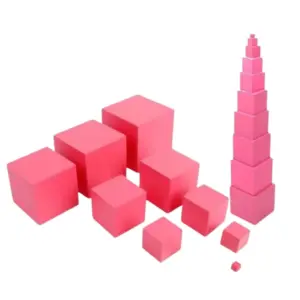
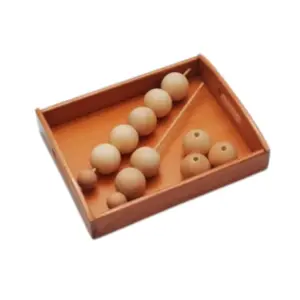
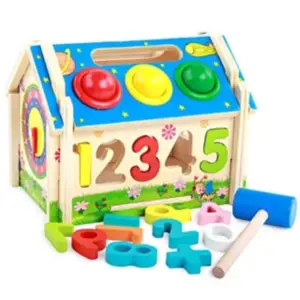
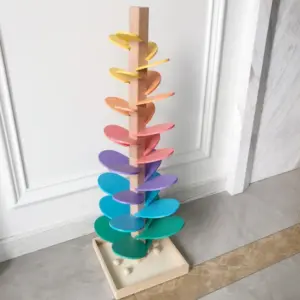
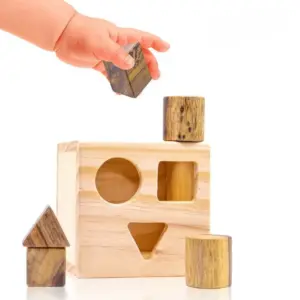
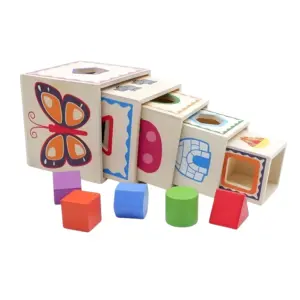
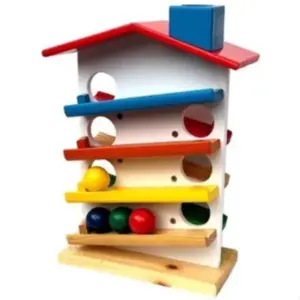
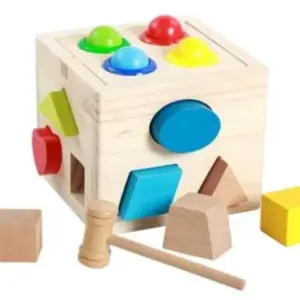


Showing 33–48 of 65 results
Recommended by 5,000+ Montessori families · Designed around toddler development research
Quick Buying Guide by Developmental Stage:
- 24–27 months — Multi-Step Sequences & Imitation Your toddler can now complete full action sequences — open, fill, close, repeat. Kitchen sets and busy boards are ideal: they mimic real tasks and reward completion. Frustration tolerance has improved, but challenges still need to be achievable within a few attempts.
- 27–30 months — Early Classification & Sorting Sorting by shape, color, and size simultaneously is now possible. Shape sorters, stacking sets, and simple puzzles with 6+ pieces match this cognitive leap. Your child is beginning to notice patterns and expects predictable outcomes.
- 30–33 months — Language, Letters & Symbolic Play Vocabulary is accelerating. Name puzzles shift from motor challenges to genuine literacy tools — your child starts connecting letters to sounds and recognizing their name as a meaningful symbol. Pretend play deepens alongside this language explosion.
- 33–36 months — Mastery, Persistence & Creative Thinking Your toddler wants to complete tasks independently and will repeat activities until perfected. Balance toys, emotion tools, and open-ended building sets match this drive for mastery. Already thinking ahead? See our Montessori toys for 3-6 year-olds to plan the next stage.
Always supervise play and check each product page for recommended age details.
🌿 Sustainable wood · 🎨 Water-based paint · ✅ Screen-free play · 🔄 30-day returns
What You’ll Find in This Collection
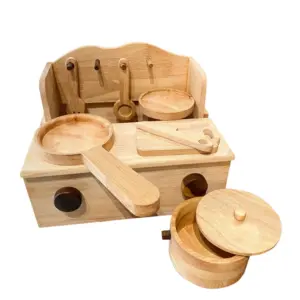
- Montessori kitchen toys — Chopping, stirring, serving, cleaning: kitchen play is not just imaginative, it’s functional. These sets directly develop practical life habits: sequencing real tasks, building independence, and practicing the purposeful hand movements that prepare children for genuine self-care. At 2, the drive to imitate adult work is at its peak — give it something real to work with.
- Montessori busy board — At 2, busy boards reach their full potential. Your toddler can now complete entire sequences — unbuckle, open, close, rebuckle — rather than just manipulating individual elements. Each activity targets a specific fine motor milestone: bilateral coordination, pincer precision, and sequential hand control built through genuine repetition.
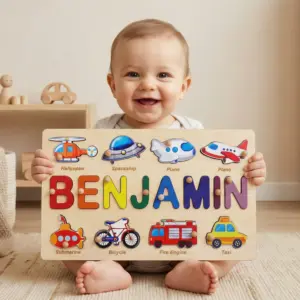
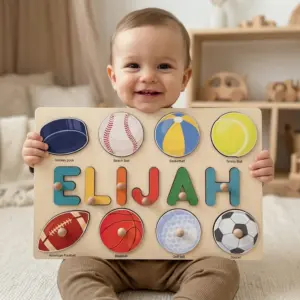
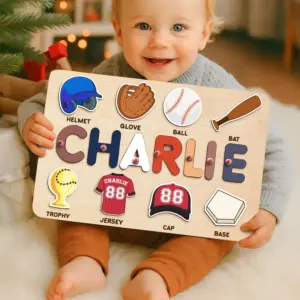
- Montessori name puzzle — Two-year-olds begin connecting letters to sounds and recognizing their name as a meaningful symbol — not just a shape. A personalized name puzzle bridges hands-on motor practice with the earliest stages of language development. Many families keep these in rotation through age 3 as letter recognition deepens.
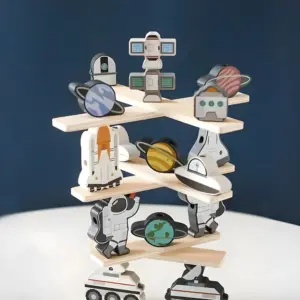
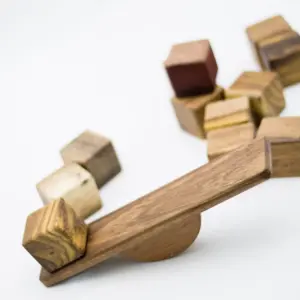
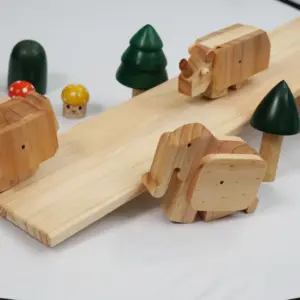
- Balance Toys & Stacking Toys — Gravity, weight distribution, spatial reasoning: balance toys introduce real physics concepts in a format a 2-year-old finds completely absorbing. Pair with stacking sets for sequencing challenges that grow in complexity as your child’s precision improves.
- Emotion & Math Toys — Emotion wheels help 2-year-olds build the vocabulary they need to name — and begin to regulate — big feelings. Math toys introduce number recognition and early counting through tangible, hands-on objects before abstract thinking is ready.
Why Parents Choose Kukoo Montessori
- Calibrated for the 2-year leap — every toy in this collection reflects the cognitive and motor milestones specific to 24–36 months, not a broad “toddler” catch-all
- Built for repetition — FSC-certified wood and water-based paint designed to hold up through daily practice sessions and hand-me-downs
- Personalization available — name puzzles and select busy boards customized with your child’s name
- No batteries, no shortcuts — your child does the work; the toy provides the challenge
- Expert-reviewed — every piece evaluated by Zoe Paul, AMI-certified Montessori educator
Browse our full Montessori toys by age guide to see the complete developmental arc.
FAQ
- What makes a toy right for a 2-year-old versus a 1-year-old?
Two-year-olds handle longer action sequences, sort by multiple criteria simultaneously, and engage in symbolic play. Where a 1-year-old explores through sensory repetition, a 2-year-old seeks mastery — they want to complete tasks independently and return until they’ve perfected them. The right toy offers progressive difficulty, not just novelty.
- Are busy boards still useful at 2, or have they outgrown them?
This is actually peak busy board age. At 1, toddlers manipulate individual elements. At 2, they complete full sequences — and that’s where the real developmental work happens. Look for boards with layered difficulty: simple latches alongside more complex buckles and zippers.
- When do name puzzles become literacy tools rather than just motor challenges?
Around 24–30 months. Before that, the value is primarily in shape-fitting and fine motor control. After 24 months, children begin connecting letters to sounds and recognizing their name as a symbol. The same toy is doing entirely different developmental work — and that’s exactly what good Montessori materials are designed to do.
- How many toys should be available at once for a 2-year-old?
Two to three at a time, rotated every one to two weeks. More choice produces less engagement. A toddler with a full shelf will flit between everything without settling into the deep, repetitive play that actually builds skills.
- My 2-year-old seems bored with everything quickly. What should I try?
Boredom usually signals a mismatch — either too easy (mastered) or too hard (frustrating). For a 2-year-old, multi-step challenges like kitchen sets or busy board sequences tend to hold attention longest because the completion loop is satisfying and the complexity scales naturally with practice.