
Montessori Toys For 3-6 Year Olds
Safe, sustainable, and educational: our wooden Montessori collection for ages 3-6 encourages early math, logic, and creative building. Made with non-toxic materials certified to ASTM F963/EN71 standards
Showing 17–32 of 60 results





Showing 17–32 of 60 results
Chosen by 5,000+ Montessori homes · Crafted for creative building and early logic skills
Quick Buying Guide by Developmental Stage:
Not sure where to start? Your child’s age narrows the field fast — a 3-year-old and a 5-year-old use the same car garage in completely different ways.
- 3 years — Symbolic thinking and cause-and-effect reasoning are just arriving. Look for toys that reward sustained attention over quick novelty: parking garages with ramps, emotion wheels for naming big feelings, and busy boards that practice real dressing skills. Our 7 best Montessori toys for 3-year-olds breaks down which materials match each new capacity.
- 4 years — The logical mind shows up — your child wants rules, steps, and to know why. Tripod grip is forming in the hands, so fine motor materials are doing writing preparation right now. The 7 best Montessori toys for 4-year-olds covers what works across seven developmental domains at this specific age.
- 5 years — Concentration deepens, play becomes genuinely collaborative, and STEM thinking moves from solo exploration to building with someone. The toys that work now are more complex, more social, and more open-ended — our 9 best Montessori toys for 5-year-olds explains why each pick earns its place at this stage.
- 6 years — Your child directs their own play with real intention — complex multi-piece sets, creative building, and emotion tools that support genuine self-awareness all belong here. Our best Montessori toys for 6-year-olds covers the materials that match this stage of mastery and independence.
Explore our full Montessori toys by age guide to see how this stage connects to the full developmental arc.
Always supervise play and check each product page for recommended age details.
🌿 Sustainable wood · 🎨 Water-based paint · ✅ Screen-free play · 🔄 30-day returns
What You’ll Find in This Collection
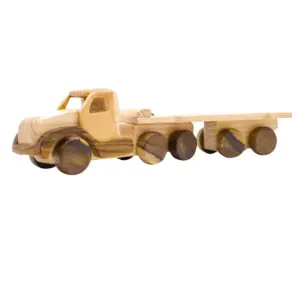
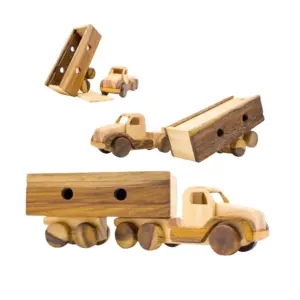
- Montessori car toys — Car garages are the standout product of the 3–6 range — and one of the most developmentally rich toys in the entire collection. Ramps, levels, parking sequences, and vehicle sorting all work together to build spatial reasoning, cause-and-effect understanding, and the kind of sustained, focused play that develops STEM thinking long before formal education begins. Available in multiple configurations from compact to full multi-level sets.
- Montessori math toys — Counting sets, abacus, arithmetic wheels, ten frames: these materials make numbers tangible before abstract thinking is ready. Handling real objects while counting is how children build genuine number sense, not just memorized sequences. Each piece directly supports math development in the way Dr. Montessori intended: concrete first, abstract later.
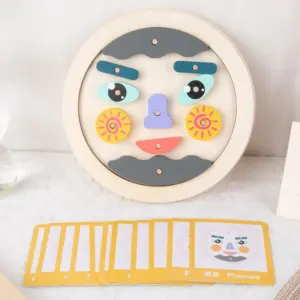
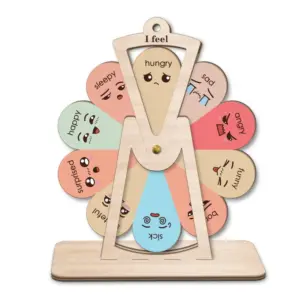
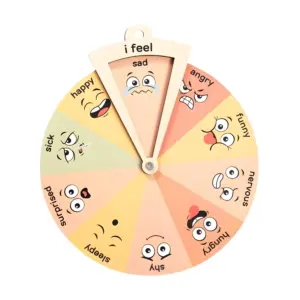
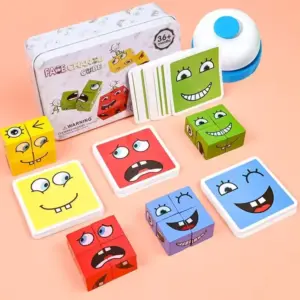
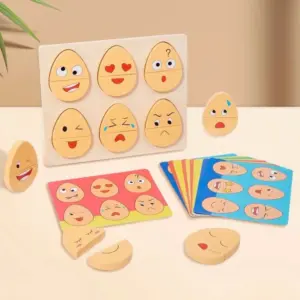
- Montessori emotion toys — Emotion wheels, feelings charts, and face-matching games give children the vocabulary to name what they’re experiencing — which is the foundation of self-regulation. At 3–6, children have big emotional lives but limited language to describe them. These tools bridge that gap and build the social and emotional skills that matter as much as any academic milestone.
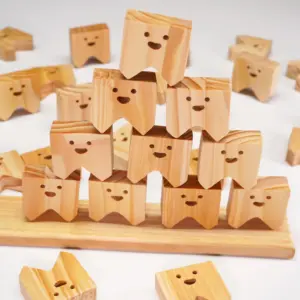
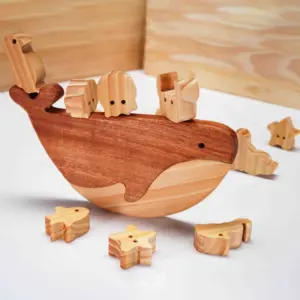
- Montessori balance toys — Stacking people, seesaw sets, and gravity challenges introduce real physics concepts — weight, distribution, center of mass — through completely intuitive play. Balance toys reward patience and careful observation, two qualities worth cultivating in the 3–6 window.
Why Parents Choose Kukoo Montessori
- Calibrated for the 3–6 leap — toys in this collection reflect the cognitive complexity children are ready for at this stage, not a generic “preschool” label
- Built for years, not months — FSC-certified wood and water-based finishes designed to hold up through years of daily use and pass down to younger siblings
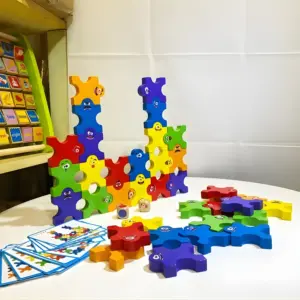
- Open-ended where it matters — garages, vehicle sets, and building materials grow with your child’s imagination rather than becoming obsolete once “solved”
- No batteries, no shortcuts — the thinking, building, and playing is entirely your child’s work
- Expert-reviewed — every piece evaluated by Katy Lenoir, AMI-certified Montessori educator
FAQ
- How is this stage different from the 2-year range?
Three-year-olds are ready for multi-step sequences, early abstract concepts like number and emotion, and sustained focus on a single activity. Where 2-year-olds seek mastery of physical tasks, 3–6 year olds are beginning to reason, plan, and create. The toys shift accordingly — more complexity, more open-endedness, more room for genuine thinking.
- Are car garages actually Montessori?
Yes — when the play they invite is purposeful and child-directed. A well-designed car garage presents real challenges: sequencing vehicles, navigating ramps, organizing by size or color. The child sets the rules, directs the narrative, and solves the problems. That’s Montessori in its most natural form for this age.
- How many toys should be available at once for a 3–6 year old
Three to four items, rotated every two to three weeks. Children this age can sustain deeper focus than toddlers, but they still benefit from a curated environment. A car garage and a counting set on the shelf will produce more genuine engagement than ten toys competing for attention.
- My child is almost 6 — will they outgrow this collection soon?
Much of this range, particularly the open-ended sets, continues to offer value well into the early school years. A car garage at 6 is a completely different kind of play than it was at 3 — more narrative, more rule-based, more collaborative. That longevity is by design.