
A Whole Farm World. One Board. Her Name Over All of It.
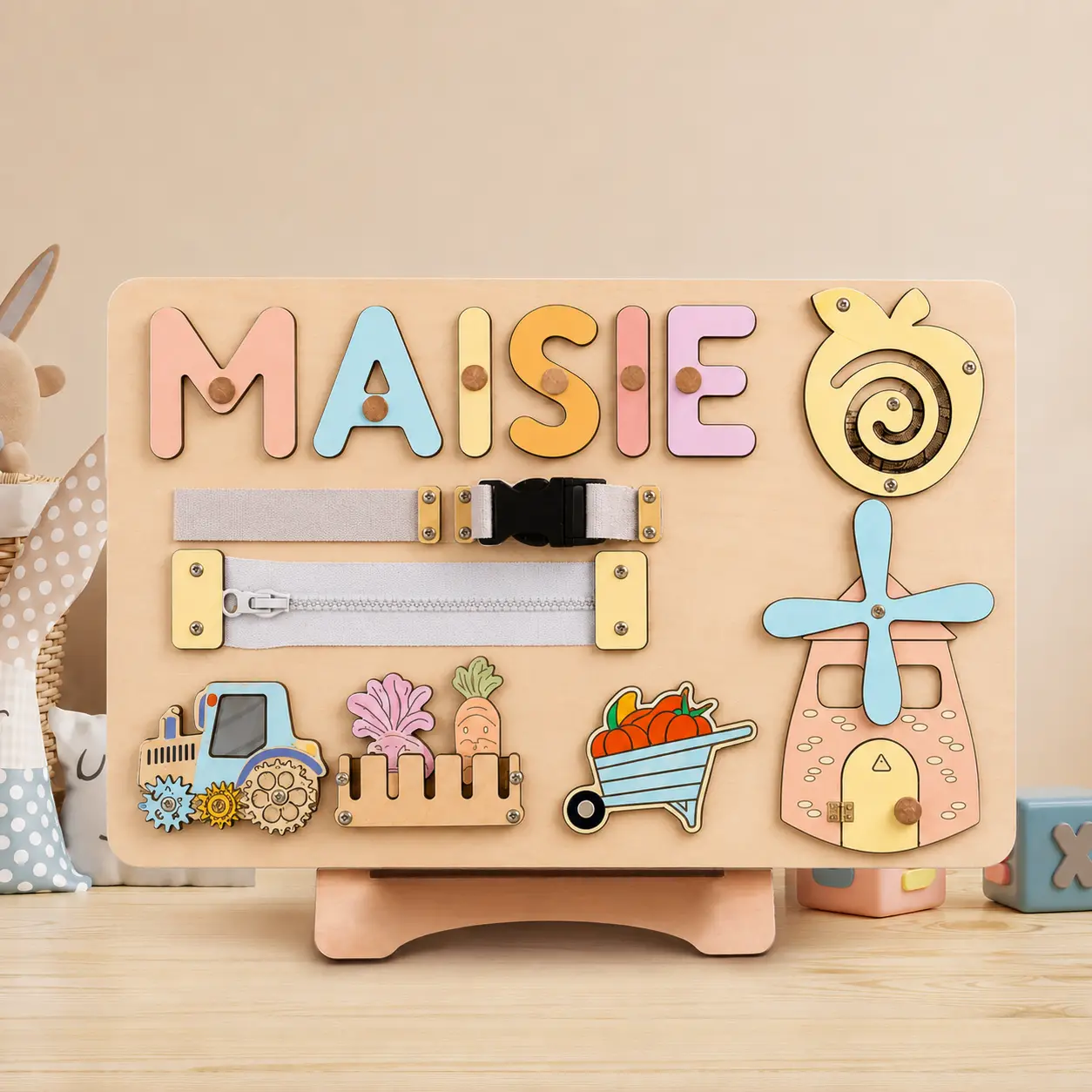
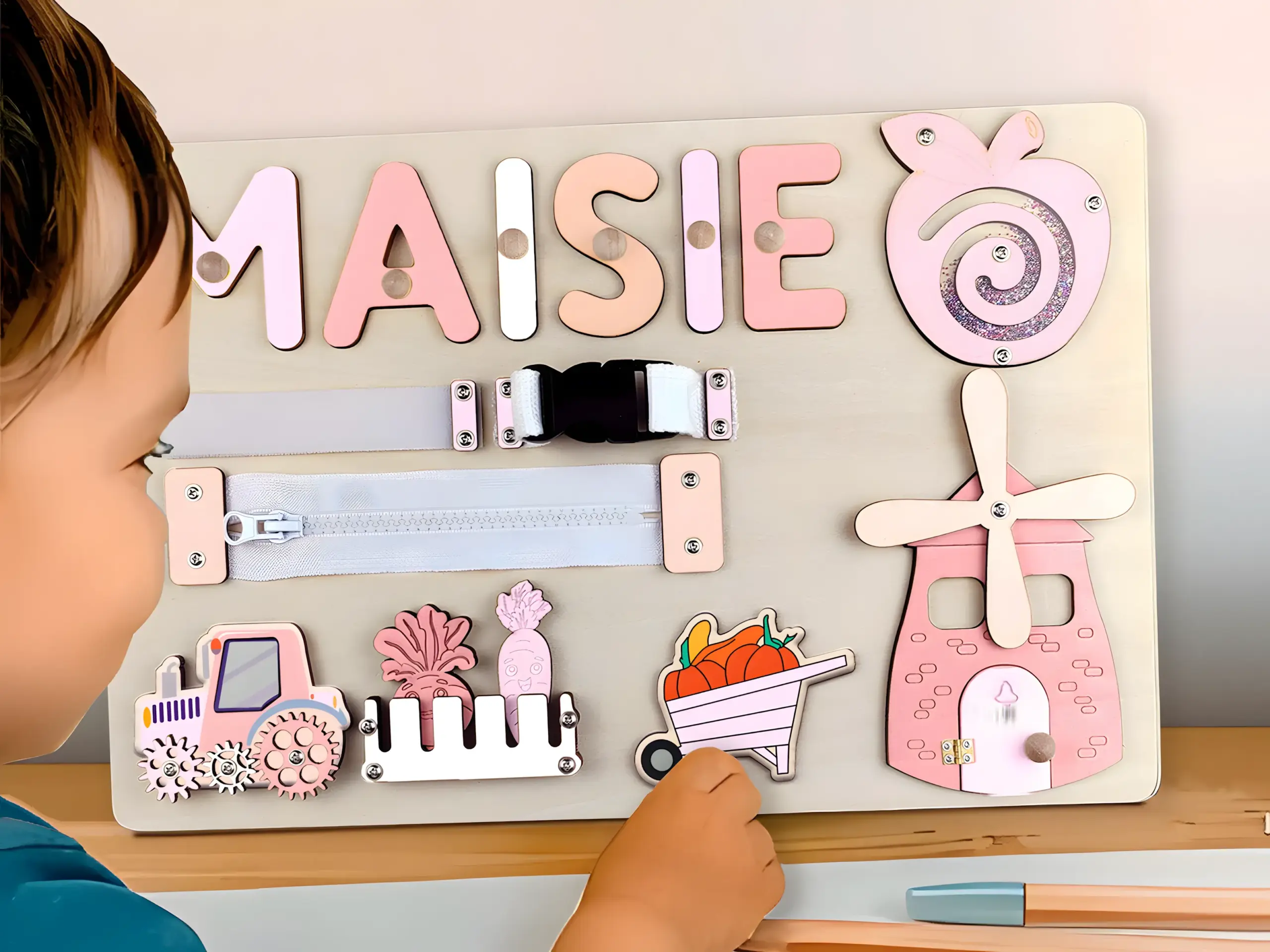
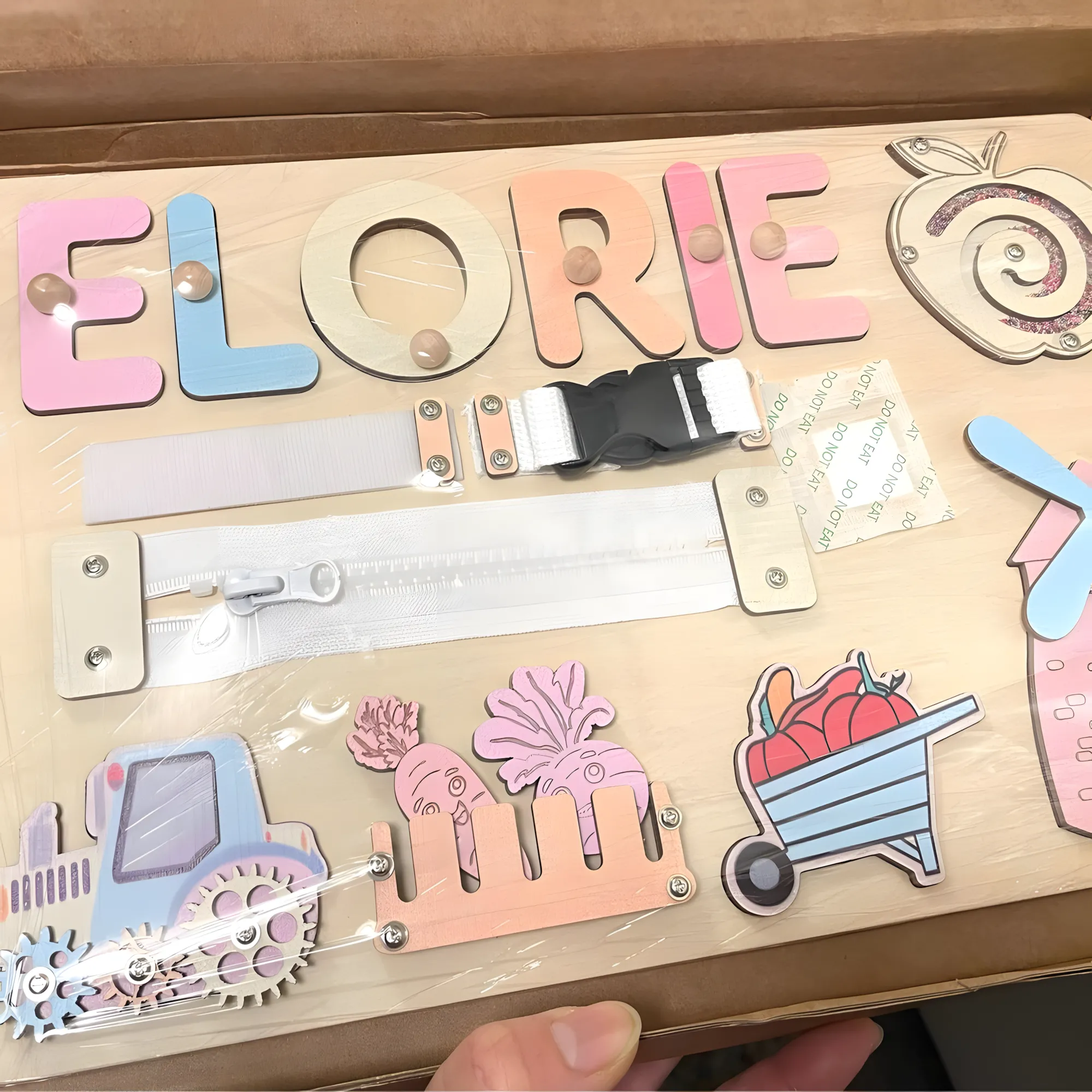
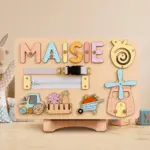
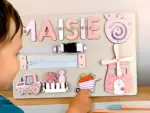
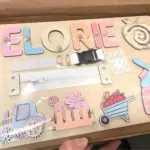
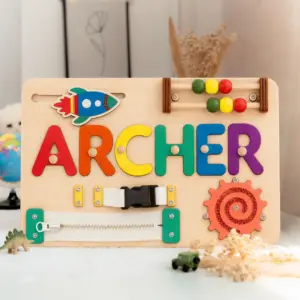
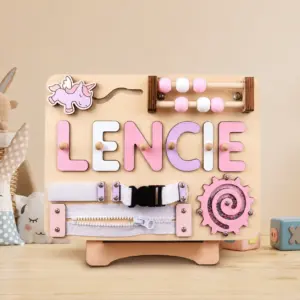
Some toys are a collection of things to do. This one is a place to be. The Kukoo™ Farm Wooden Montessori Busy Board builds an entire farm world onto a single handcrafted board — a tractor with spinning gears, a vegetable garden, a wheelbarrow piled with pumpkins, a turning windmill — with her name in the softest pastel letters across the top and two real-life skill activities woven through the middle.
Buckle clip. Zipper. Spinning windmill. Spiral tracker. Tractor with gears. Vegetable crate. Pumpkin wheelbarrow. Her name in peach, mint, and lavender letters she can lift and replace. Seven interactions, one farm, one child who just found somewhere she wants to spend her afternoon.
Order now — and hand her a world she can hold.
Anatomy of Quality
Why this is the most world-building busy board Kukoo makes:
- 🌾 A Complete Farm Story — Not Just Activities, a World: Every piece on this board belongs to the same story: the tractor drives across the field, the vegetable garden grows what it plants, the wheelbarrow carries the harvest, the windmill turns in the breeze. Most busy boards are a collection of unrelated skills. This one has a setting, a sequence, and a cast of characters. A child playing with this board isn’t just practicing fine motor skills — she’s living on a farm for twenty minutes, and every piece she touches is part of that world.
- 🌬️ Spinning Windmill — The Activity That Draws the Eye First: The windmill with its blue rotating propeller is the most architecturally distinctive element on the board — a full mill building with a propeller that spins freely when touched. Spin it slowly and watch it turn. Spin it fast and watch the blur. This cause-and-effect relationship — touch, force, spin, slow, stop — is early physics reasoning at the most accessible level possible. It’s also the first thing every child reaches for, which means it’s the activity that gets the most practice, which means the lesson lands the deepest.
- 🔩 Tractor With Gears — Engineering in the Field: The tractor piece features visible interlocking gear details that invite inspection and interaction. How does a tractor move? What makes the wheels turn? The gear visual invites these questions at an age when they’re most powerful — before the answers are expected to be correct, when wondering is the whole point. Pair it with the windmill and you have a board where mechanical understanding is built on two fronts, in the most natural way imaginable.
- 🔒 Buckle + Zipper — The Real-Life Pair, Farm-Side: A buckle clip and a horizontal zipper, mounted center-board. These are the fasteners she encounters every day — car seat, jacket, backpack, lunchbox — and every practice repetition here is a direct rehearsal for those real moments. Occupational therapists call this “daily life skill preparation.” In this context, it’s just what you do before you go out to check on the vegetables.
- 🌀 Spiral Tracker — Visual Focus, Quietly Built: The spiral lollipop spinner in the top-right corner is the board’s settling activity — the one that pulls a scattered toddler back into focus without demanding anything. Spin it and watch her eyes follow the spiral inward, then outward, then inward again. This visual tracking motion is a direct precursor to the smooth eye movement that reading requires. It looks like she’s just staring at a spinning thing. She is. That’s exactly right.
- 🎨 Ultra-Soft Pastel Palette — The Calmest Board in the Collection: Peach, mint, lavender, pale yellow, warm white, natural wood — a color palette so gentle it lowers the room’s energy just by being in it. This board was designed for children who are overwhelmed by loud color, for nurseries that value calm over stimulation, and for parents who want something beautiful enough to leave out permanently. It is all of those things.
Specifications
| Dimensions | Approx. 13.8in × 9.8in (35cm × 25cm) |
|---|---|
| Material | Sustainable Plywood + Metal hardware (zipper, buckle, spinner axles) |
| Age | 18 months+ (supervision required) |
| Safety Standard | ASTM F963 and EN 71 |
| Paint & Finish | Child-safe, water-based ink (certified non-toxic) |
- Windmill Propeller: Spins freely on a fixed axle — board-mounted, cannot be removed.
- Spiral Spinner: Board-mounted, rotates smoothly. Wood-toned finish, sealed surface.
- Buckle + Zipper: Real hardware, smooth action, sized for toddler hands. Supervision recommended under 2.
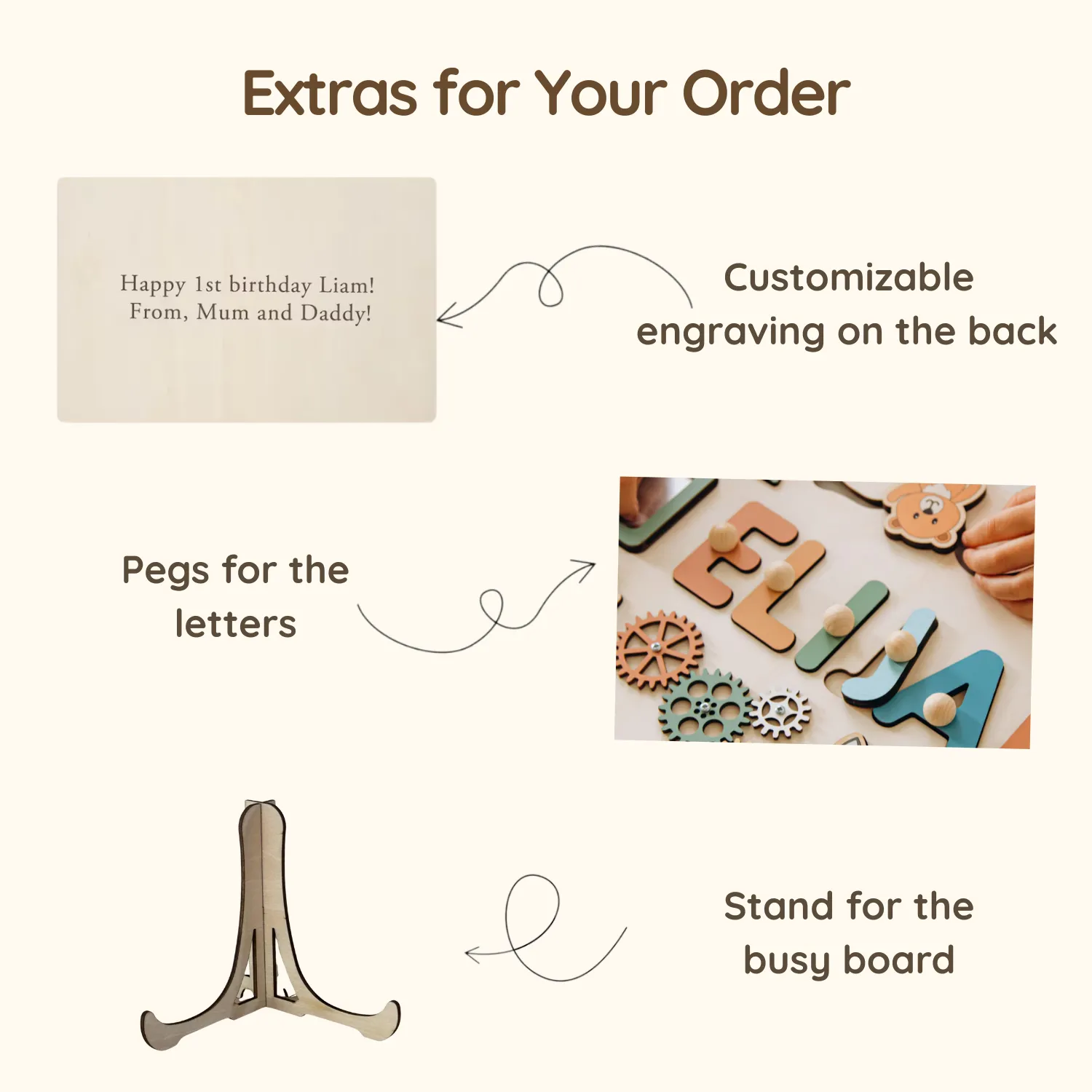
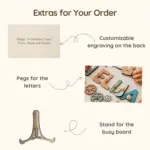
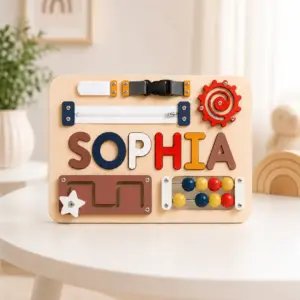
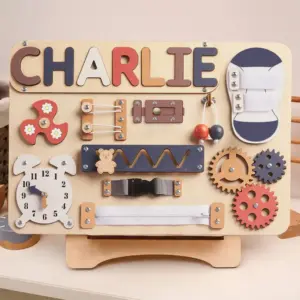
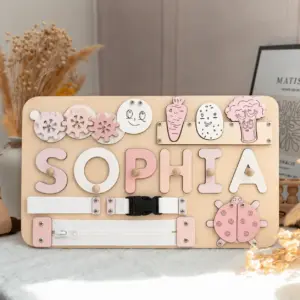
- Name Letters: Each letter has a smooth wooden peg for pincer grasp practice. Choose “No Pegs” for display use.
How to Play: A Day on the Farm, One Activity at a Time
Every session is a farm visit. Let her set the pace — the farm is always open:
- The Windmill — Start With the Wind: Point to the windmill propeller and give it a gentle spin. Say nothing. Watch what she does. Almost every child between 18 months and 3 years will reach out to spin it again immediately — and then again, faster, watching the blur, slowing it with one finger, spinning it again. This is not repetition without purpose. This is hypothesis testing: what happens if I push harder? What if I stop it mid-spin? Let every question play out before moving on. The windmill has no wrong answers.
- Tractor to Garden to Wheelbarrow — Tell the Farm Story: Pick up the tractor piece and drive it slowly across the board. “The tractor goes out to the field.” Point to the vegetable garden. “Look — carrots, and greens, all ready to pick.” Move to the wheelbarrow. “And we load it all up — pumpkins and everything — and carry it home.” This three-beat story sequence — drive, grow, carry — is the same narrative structure as every picture book she’ll ever read: beginning, middle, end. The farm teaches story before she opens a single book.
- Buckle and Zipper — Before We Head Back In: Practice the buckle and zipper together in the same order every session — buckle first, zip second — as if getting ready to come inside from the farm. The ritual framing matters: toddlers build skill faster when an activity has a context, not just a motion. “Time to buckle up before we go in.” Click. “Zip up the bag.” Zip. Three repetitions. Consistent order. Two months of this and the real car seat buckle stops being a struggle. It becomes something she does without being asked.
- The Spiral — The Quiet Moment: After the energy of the farm story and the focus of the buckle practice, hand her the board with the spiral facing up and let her find her own pace with it. No instruction needed. No narration required. The spiral is the board’s breath — the moment that settles everything that came before it and prepares her for whatever comes next. Some children spin it once and move on. Some spin it for four minutes straight. Both are correct. Both are working.
- Her Name — Close the Farm Day: End every session the same way: work through the name letters from first to last, calling each one out together, placing each one back in its spot. When the last letter clicks into place, the board is complete, the farm day is done, and the session has a clear, satisfying ending. Toddlers who have a predictable closing ritual for an activity transition away from it more easily and return to it more willingly. The name letters are the gate at the end of the farm path. Close it together, every time.


Reviews
There are no reviews yet.