
The Board That Teaches Them to Get Dressed, Tell Time, and Know Themselves.
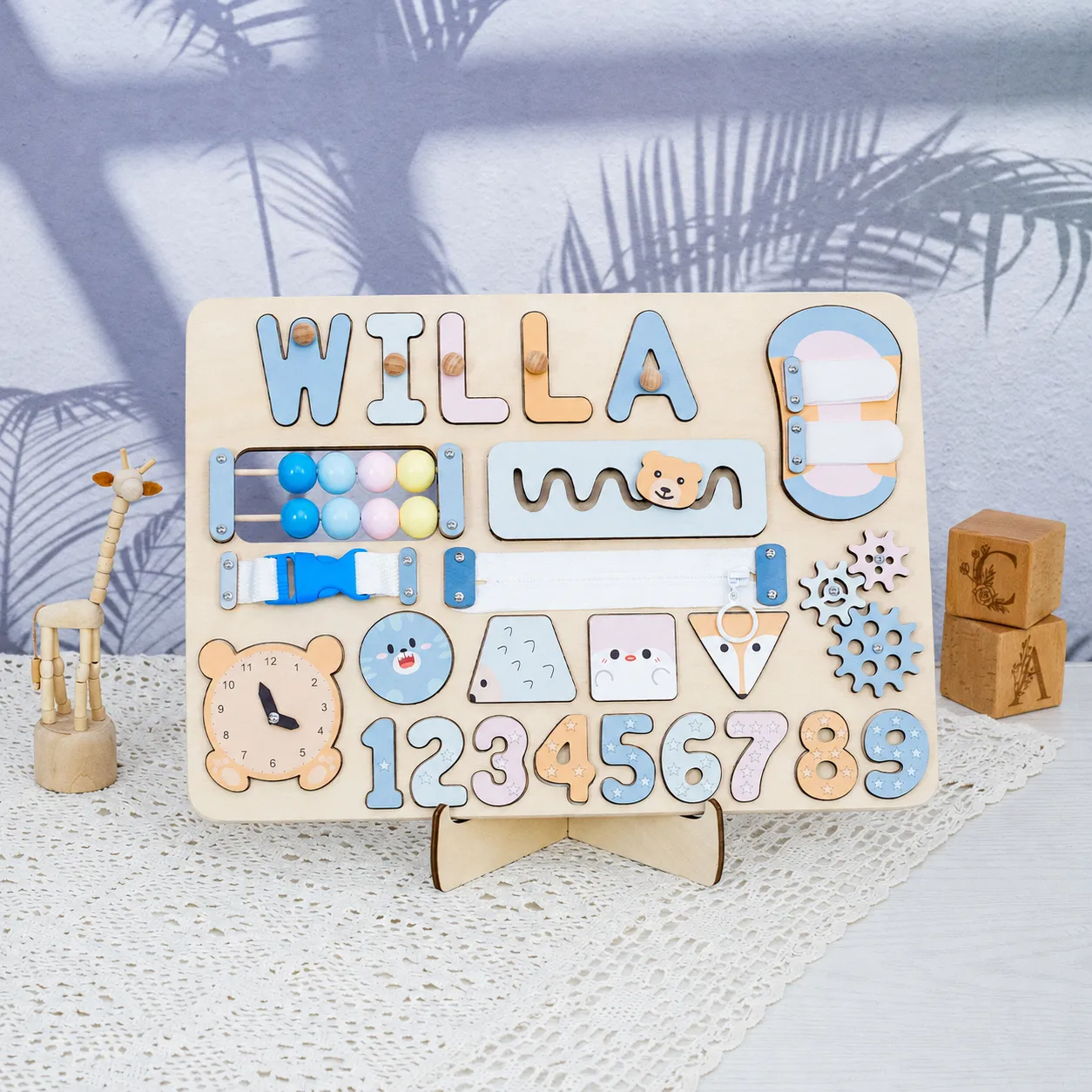
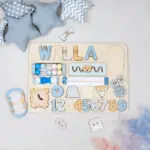
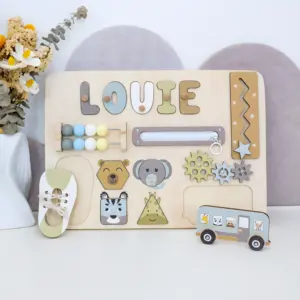
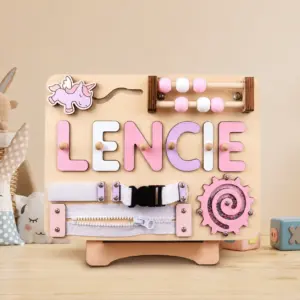
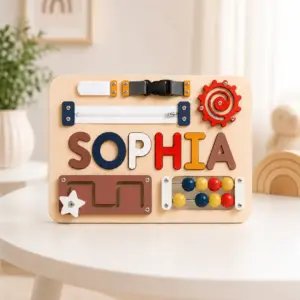
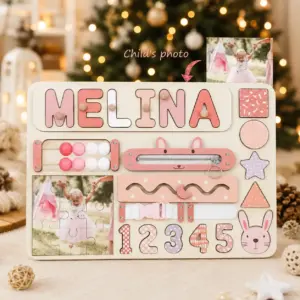
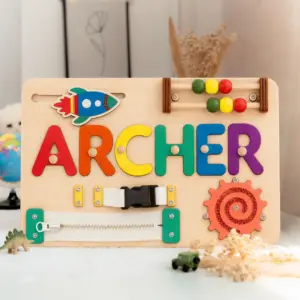
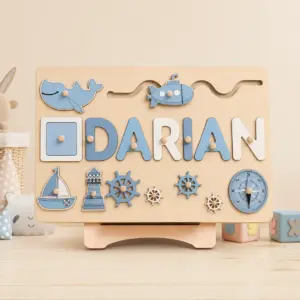
Most busy boards keep toddlers occupied. This one prepares them for real life — one buckle, one clock hand, one mirror moment at a time. The Kukoo™ Forest Animals Wooden Montessori Busy Board packs eight distinct activities onto a single handcrafted board, with the child’s name in soft blue and peach letters across the top and a wooden display stand that lets it live anywhere — on a shelf, on a desk, propped against the wall of the most beautiful nursery you’ve ever seen.
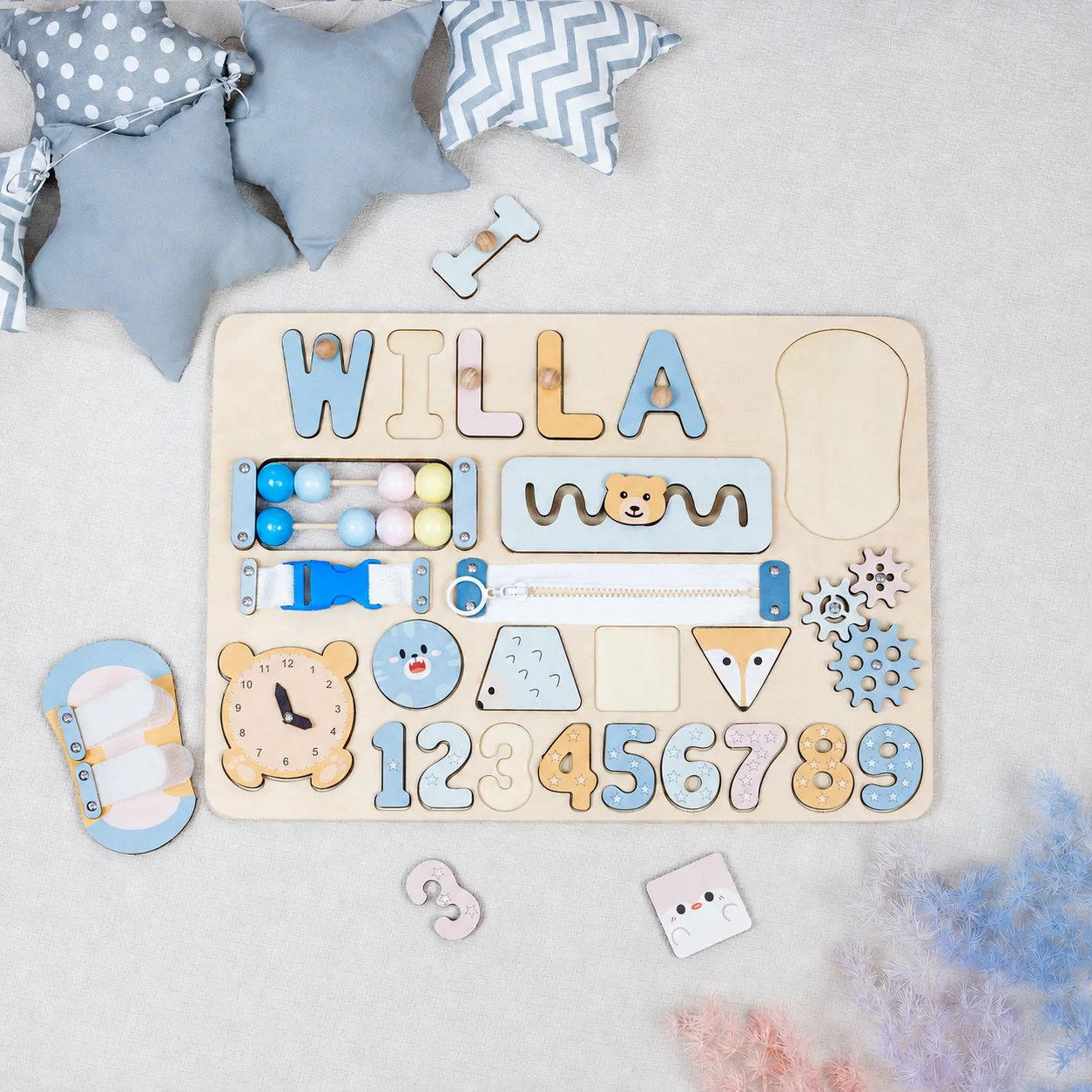
Counting beads. A bear trace track. A real buckle clip. An oval mirror. Spinning gears. An analog clock with moveable hands. Three forest animal shape pieces. Numbers 1 through 9. Eight activities, eight skills, one board — in a baby blue and natural wood palette so calm it looks like it belongs in a Scandinavian children’s catalogue.
Order now — and give them the one toy that grows with them all the way to school.
Anatomy of Quality
Why this is the most life-skills-focused busy board Kukoo makes:
- 🕐 Analog Clock — The Skill That Separates Early Learners: The bear-framed analog clock has real moveable hands and a full number face. Most children don’t formally learn to tell time until age 6 or 7 — but the children who arrive at that lesson already familiar with a clock face, already comfortable moving the hands, already knowing that the short hand means hours and the long hand means minutes, learn it in days instead of weeks. This clock doesn’t teach time. It builds the familiarity that makes teaching time easy.
- 🔒 The Buckle Clip — Independence Starts Here: The blue seatbelt-style buckle is the single most practical skill activity on this board. Click it closed. Pull it open. Click it again. This is the motion of every car seat, every backpack clasp, every safety harness a child will encounter in the first five years of life. Occupational therapists call this “fastener practice” — a foundational self-care skill that directly reduces the daily friction of getting a toddler dressed, buckled, and out the door. Practice here first. Everything else gets easier.
- 🪞 The Mirror — Because Knowing Yourself Is a Skill Too: The oval mirror panel on the right side of the board is the activity that surprises parents most — because toddlers are transfixed by it in a way that’s hard to predict until you see it. Self-recognition, facial expression awareness, and visual self-regulation all develop through mirror play. It’s not a decoration. It’s developmental psychology at work, mounted on a busy board, reflecting back the face of a child figuring out who they are.
- 🐻 Bear Trace Track — Writing Starts With a Wave: The wavy trace track with a bear face at the end guides a child’s finger through a smooth, controlled left-to-right curve — the foundational hand movement that underlies every letter in the alphabet. Long before they hold a pencil, this track is teaching their hand what writing feels like. The bear at the end is the reward. The path there is the lesson.
- ⚙️ Spinning Gears + Bead Maze — Concentration, Built In: Two interlocking spinning gears for cause-and-effect discovery. A colorful bead maze for counting and bilateral hand coordination. These two activities anchor the focus end of the board — the ones children return to when they need to settle, to process, to simply be absorbed in something that clicks and moves and makes sense.
- 🦊 Three Forest Animals, Three Hidden Shapes: Penguin in a circle. Mouse in a cheese-wedge trapezoid. Fox in a triangle. Each animal face is cut into a geometric shape — learn the animal, learn the shape, in one motion. The Fox triangle is the most complex silhouette on the board and consistently the last piece mastered. When it clicks into place cleanly, independently, without help — that’s the moment.
- 🎨 Baby Blue Palette + Display Stand — A Toy That Stands On Its Own: The dominant dusty blue, soft peach, and natural wood palette is the calmest in the Kukoo collection — designed to lower stimulation, not raise it. And the included wooden display stand means this board doesn’t have to live in a toy bin. It stands on a desk. It leans on a shelf. It sits on a side table. It’s a toy that looks like a decision.
Specifications
| Dimensions | Approx. 13.8in × 9.8in (35cm × 25cm) |
|---|---|
| Material | Sustainable Plywood + Metal hardware (buckle, gear axles, mirror) |
| Age | 18 months+ (supervision required) |
| Safety Standard | ASTM F963 and EN 71 |
| Paint & Finish | Child-safe, water-based ink (certified non-toxic) |
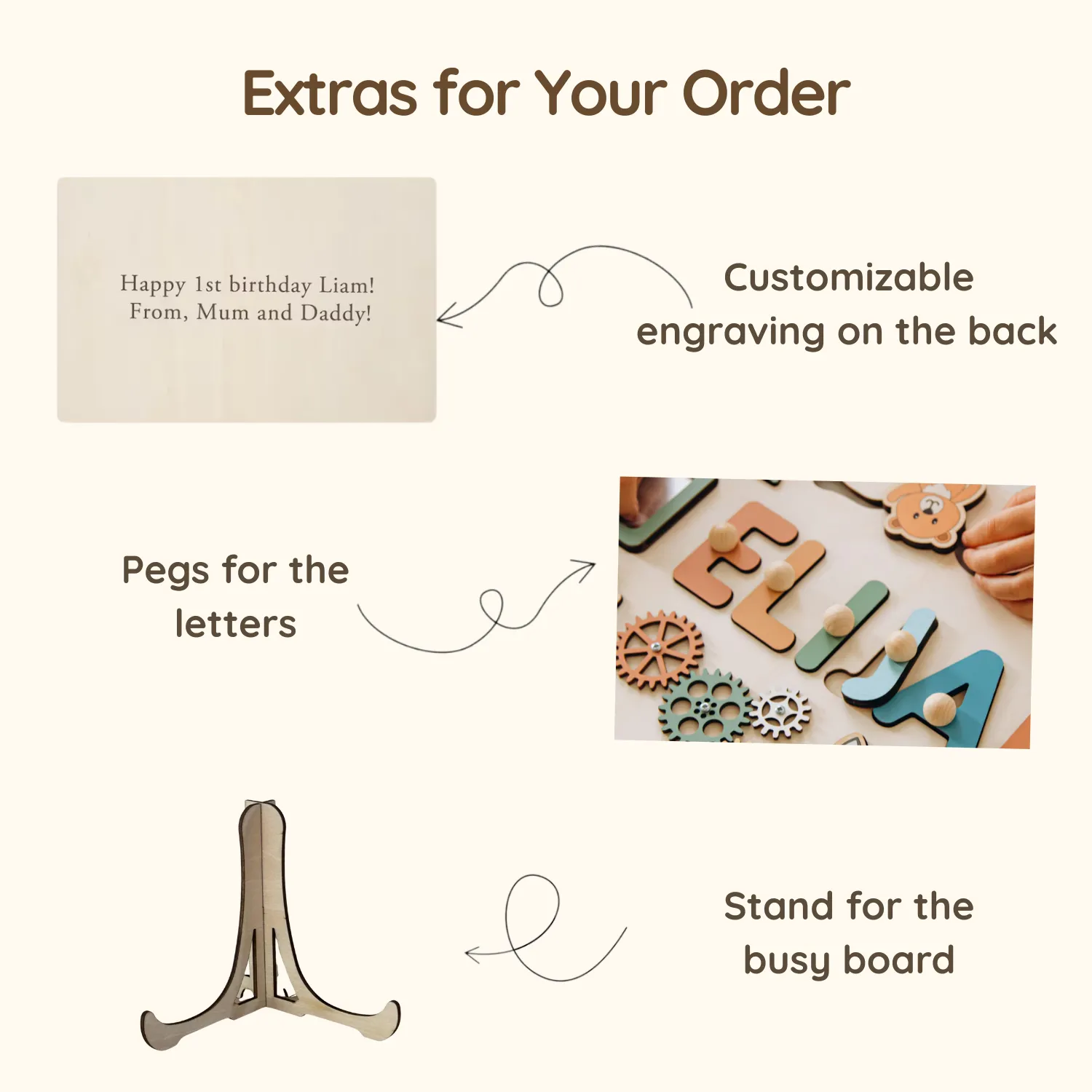
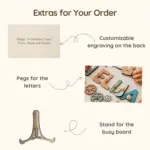
- Display Stand: Wooden easel stand included — board displays upright without wall mounting.
- Mirror: Acrylic safety mirror — shatter-resistant, child-safe.
- Buckle: Real plastic clip buckle — smooth action, sized for toddler hands.
- Name Letters: Each letter has a smooth wooden peg for pincer grasp practice. Choose “No Pegs” for display use.
How to Play: Eight Activities, One Very Focused Child
Every child finds their entry point. Follow theirs — and the board does the rest:
- The Buckle — First Thing, Every Time: Start with the buckle clip. Click it closed. Hand it to them. Show them the release motion — press the center, pull the strap. Click. Release. Click. Release. Do this until they can do it without looking at your hands. This is three minutes of practice that will save thirty minutes of frustration every morning for the next two years. It is the highest-return activity on the board. Start here.
- The Clock — Move the Hands, Learn the Face: Point to the 12 at the top of the clock. Move the long hand there. “When this hand is here, it’s the start of the hour.” Move the short hand to 7. “Seven o’clock.” Then let them move the hands freely — wherever they want, however they want. The goal at this age isn’t accuracy. It’s familiarity. A child who has moved a clock’s hands a hundred times in play will learn to tell time in a single afternoon when the formal lesson comes. Let them move the hands.
- Bear Track + Beads — The Settling Sequence: When energy is high and focus is scattered, go to these two activities in sequence — trace track first, beads second. The trace track demands just enough concentration to quiet the body. The bead maze sustains it. Together, they’re the best wind-down sequence on the board — better than most transitions parents try. Follow the bear. Count the beads. Breathe. It works.
- The Mirror — Just Watch: Hand them the board with the mirror facing toward them and say nothing. Watch what happens. Most toddlers between 18 months and 3 years will make a face, watch their own reaction, make another face, look away, look back. This is not goofing around. This is self-concept development — one of the most important cognitive milestones of early childhood — happening in real time. Your only job here is to not interrupt it.
- Animal Shapes + Numbers — The Learning Lap: Name each animal as the pieces come out — “Penguin. Mouse. Fox.” Then find their shapes. Then run the number row: “One, two, three—” all the way to nine, touching each piece as you count. Do this in the same order every time. Consistency is how toddler brains build the neural pathways that make recall automatic. The sequence becomes the lesson. The lesson becomes knowledge. Knowledge becomes the child who counts to nine in the car without being asked.


Reviews
There are no reviews yet.