
Six Skills. One Board. The Only Toy That Replaces a Dozen Others.
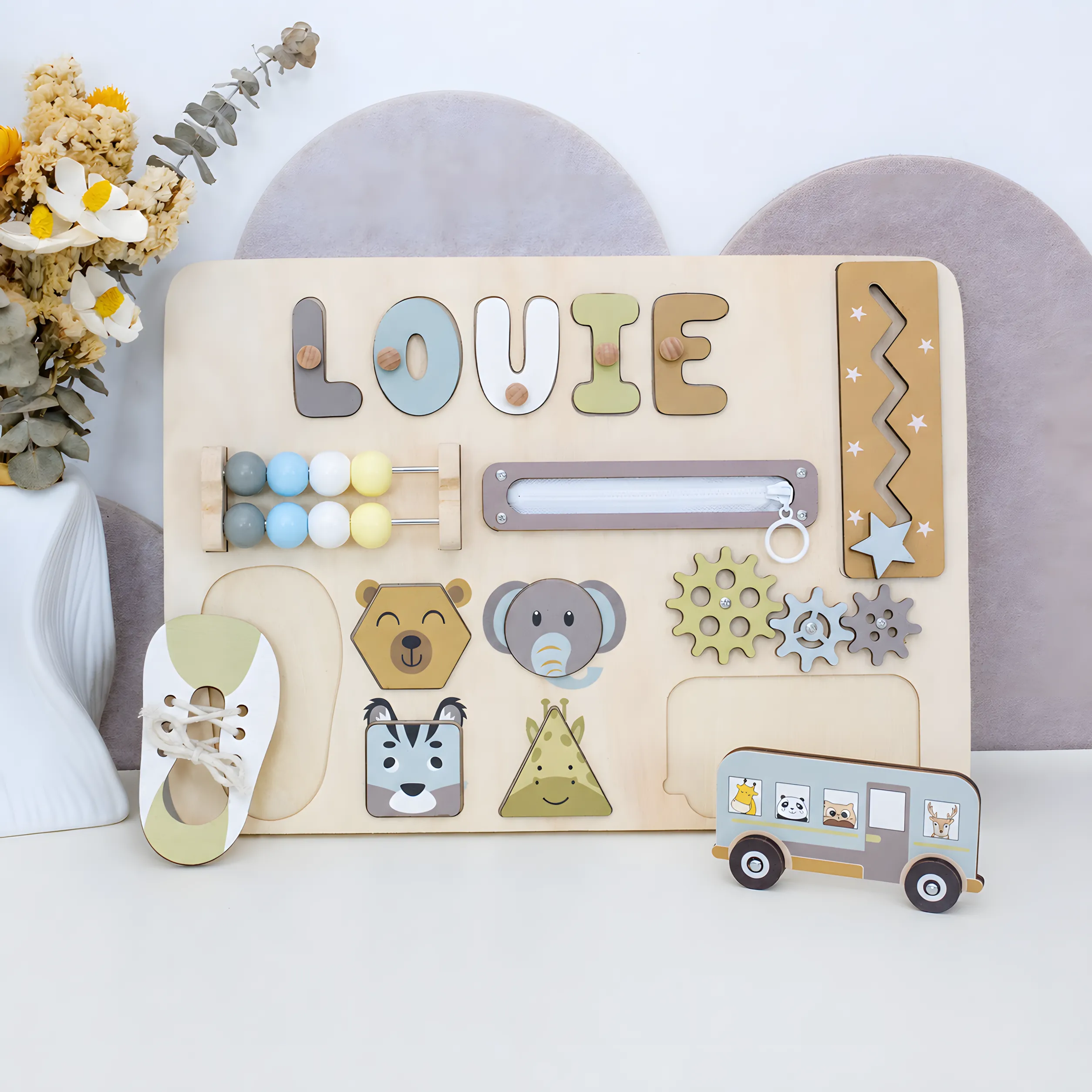
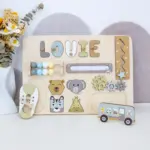
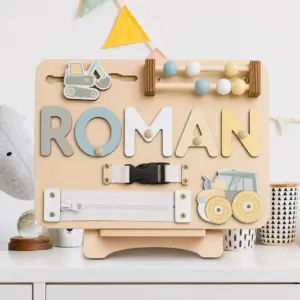
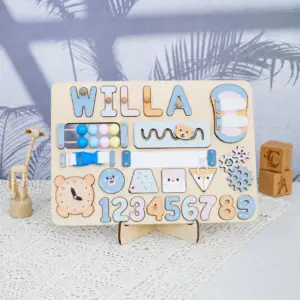
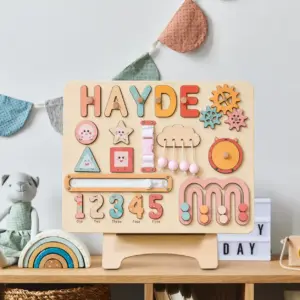
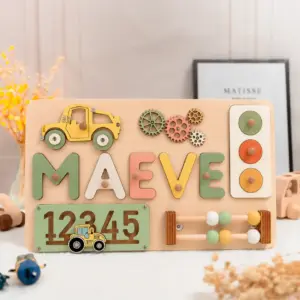
There’s a version of a toddler’s playroom with twelve different skill toys scattered across the floor — the bead maze over there, the shape sorter here, the lacing toy somewhere under the couch. And then there’s this. The Kukoo™ Safari Animal Busy Board fits six complete fine motor activities onto a single handcrafted board, anchored by the child’s name in warm Scandinavian neutrals that look like they were designed by the same person who designed the nursery.
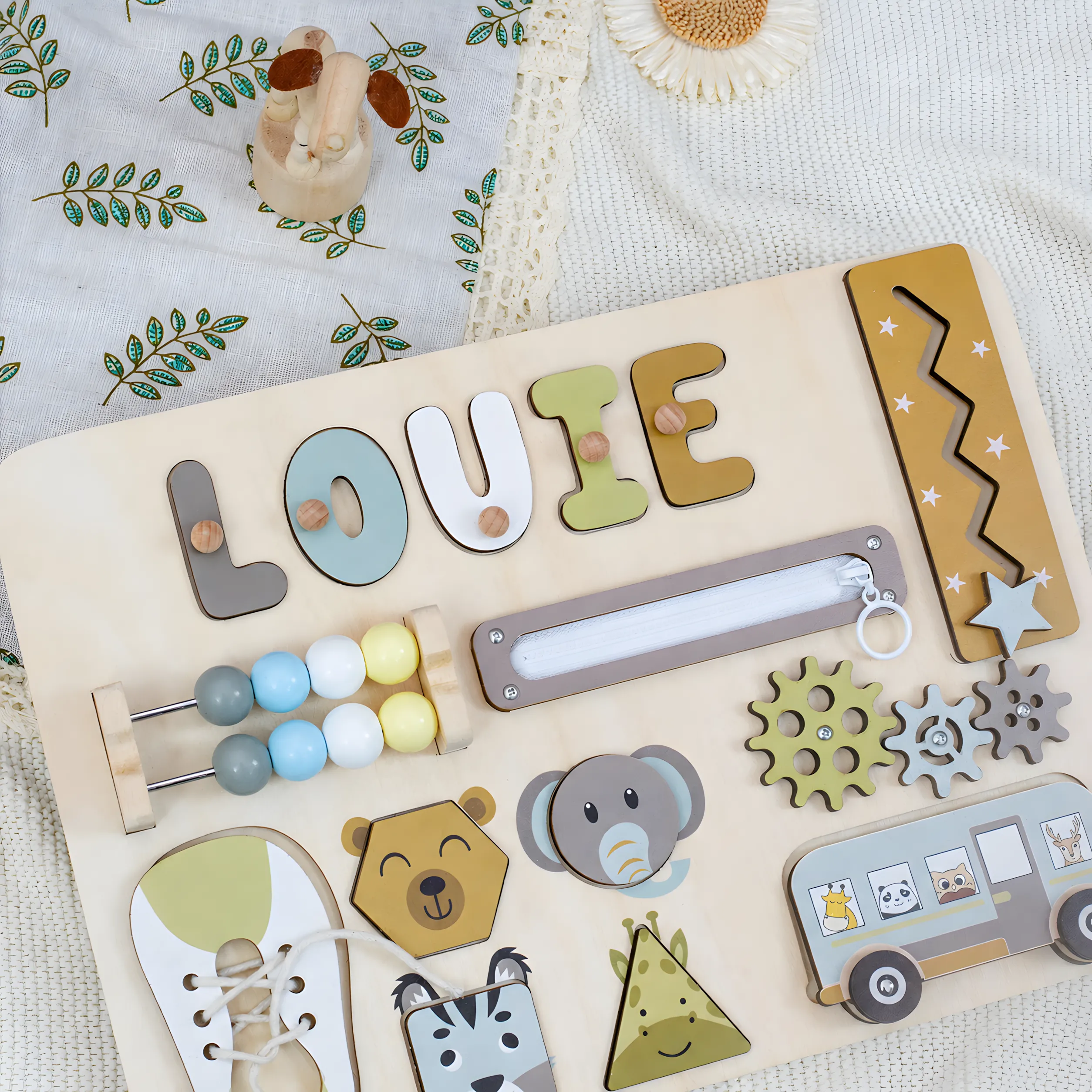
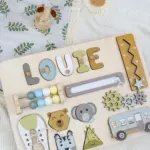
Counting beads. A real zipper. A zigzag star track. A lace-up shoe. Spinning interlocking gears. Four animal-shaped puzzle pieces. A rolling toy bus that detaches from the board. Seven interactions, one surface, their name at the top of all of it.
This isn’t a busy board that keeps toddlers occupied. It’s a busy board that teaches them — skill by skill, activity by activity — exactly what their hands need to know before they start school.
Order now — and replace the toy pile with one board that does it all.
Anatomy of Quality
Why this is the most complete fine motor busy board Kukoo makes:
- ⚙️ Six Activities, Six Developmental Skills — On One Board: Every activity was chosen because it targets a specific, named fine motor milestone: the bead maze for bilateral coordination, the zipper for pincer-to-pull sequencing, the zigzag track for directional hand control, the lacing shoe for bilateral threading, the spinning gears for cause-and-effect understanding, and the animal shape puzzle for spatial reasoning. This isn’t a random collection of things to touch. It’s a curriculum you can hold.
- 👟 The Lace-Up Shoe — The Skill Every Parent Wishes Was Easier: Tying shoes is one of the most complex fine motor tasks a young child learns — and most children aren’t ready to practice it on their actual shoes until they’re already frustrated and late for school. The detachable lace-up shoe on this board lets them practice the threading motion — over, under, through — in a calm moment, at a calm pace, before the pressure is real. Occupational therapists recommend exactly this kind of low-stakes pre-skill practice. Now it’s built into their favorite toy.
- 🔧 Spinning Gears — The Moment They Understand How Things Work: The three interlocking spinning gears are the activity that produces the longest pause on this board. Watch a toddler spin one gear, notice the second gear moves, spin it back, watch the third gear follow — and then do it again, and again, because they’ve just discovered something fundamental about the world. This is cause-and-effect reasoning, mechanical understanding, and sustained concentration happening simultaneously. It looks like playing. It is playing. It’s also early engineering.
- 🦒 Four Safari Animals, Four Hidden Shapes: The Bear, Elephant, Zebra, and Giraffe pieces aren’t just animal puzzles — each animal face is cut into a different geometric shape: hexagon, circle, square, triangle. They learn the animal and the shape in the same motion. The Giraffe is a triangle. The Bear lives in a hexagon. These pairings are memorable in a way that plain shape pieces never are — because the brain stores images better than abstractions.
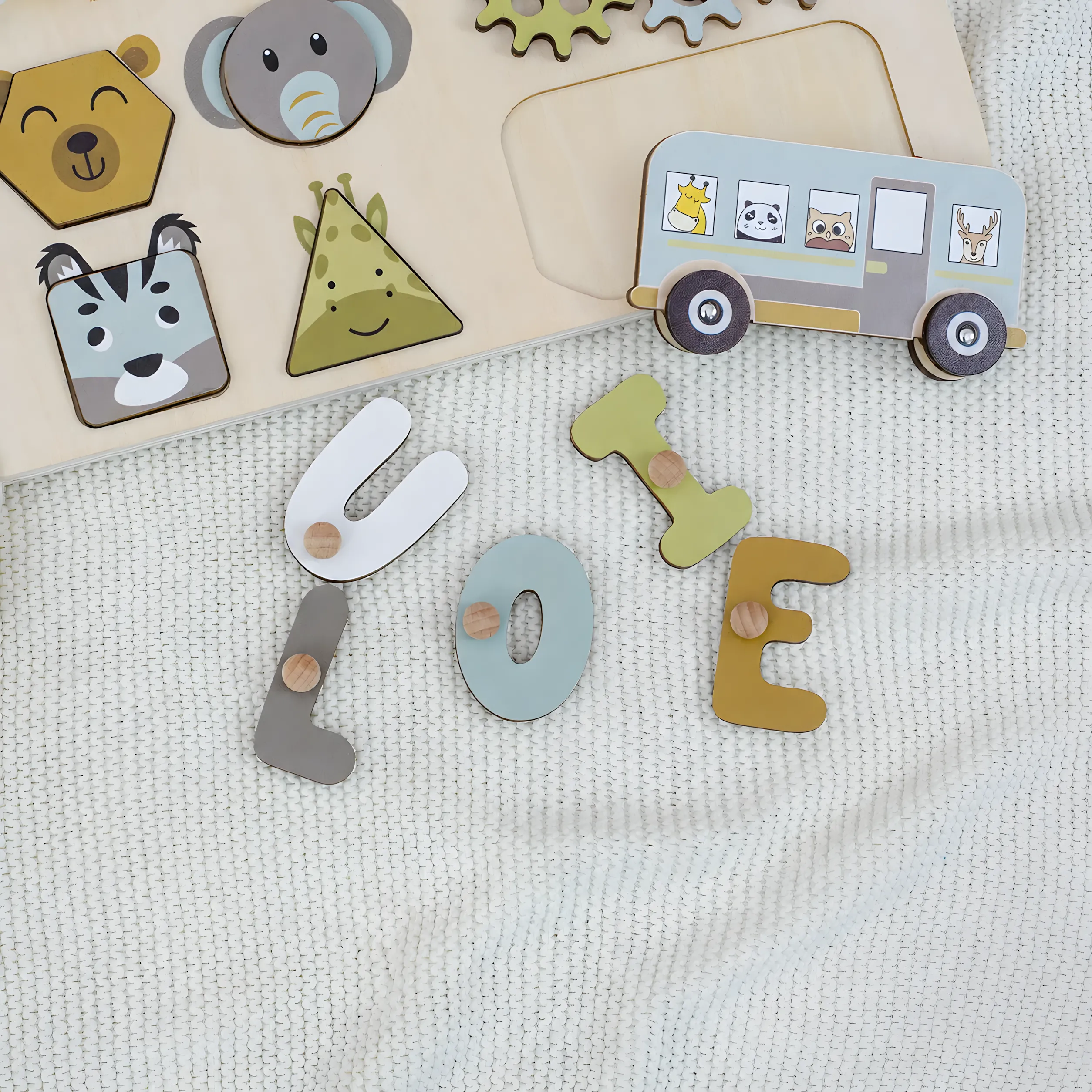
- 🚌 The Toy Bus — Because Sometimes You Just Need Wheels: The rolling toy bus detaches from its slot on the board and becomes a standalone toy — windows filled with animal passengers, wheels that actually roll. It’s the reward piece. The one they reach for when they need a break from concentration. The one that ends up on the dinner table, in the car, at the grandparents’ house. Every serious learning board needs a piece like this.
- 🎨 Scandinavian Neutral Palette — Designed for the Modern Nursery: Warm sand, sage green, dusty blue, warm grey, natural wood — a color palette so considered it works in any room, for any child, at any age. This board doesn’t shout. It belongs.
Specifications
| Dimensions | Approx. 13.8in × 9.8in (35cm × 25cm) |
|---|---|
| Material | Sustainable Plywood + Metal hardware (zipper, gear axles) |
| Age | 18 months+ (supervision required) |
| Safety Standard | ASTM F963 and EN 71 |
| Paint & Finish | Child-safe, water-based ink (certified non-toxic) |
- Detachable Pieces: Lace-up shoe and toy bus detach fully for standalone play. All other activities are board-mounted.
- Zipper: Real metal zipper with ring pull — safe, smooth, sized for toddler hands. Adult supervision recommended for children under 2.
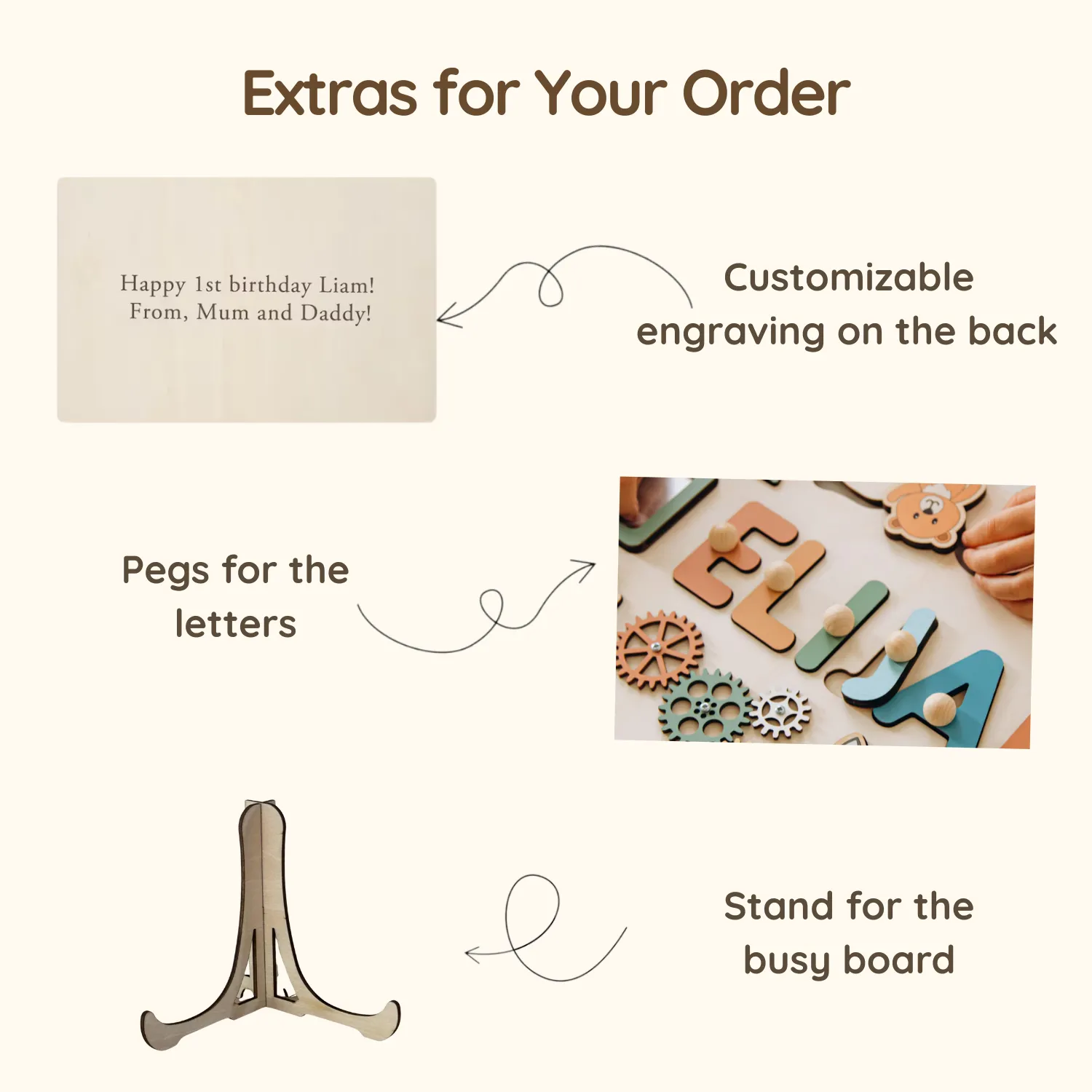
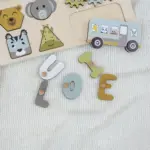
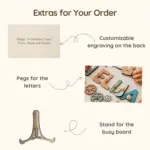
- Name Letters: Each letter has a smooth wooden peg for pincer grasp practice. Choose “No Pegs” for display use.
How to Play: Six Activities, Six Skills, One Very Engaged Toddler
There’s no wrong order. Let them lead — and follow wherever their hands take them:
- Beads First — Counting Starts Here: Guide their hand to the first bead on the abacus row and push it slowly to the other side — “One.” Then the second — “Two.” Work through all the beads together, color by color. The blue ones, the yellow ones, the grey ones. Count them. Group them. Push them back. This is the simplest activity on the board and often the last one they stop doing — because there’s something in the rhythm of sliding wooden beads that settles a toddler in a way almost nothing else does.
- The Zipper — Real Life in Their Hands: Show them the ring pull. Guide their pincer grip around it. Pull. The sound of a zipper opening — that smooth metallic zip — produces a reaction in toddlers that is difficult to overstate. “I did that.” Let them open it. Let them close it. Let them open it again. The pincer-to-pull motion of zipping is the same motion used in dozens of daily life tasks — jacket zippers, pencil cases, backpacks. Every time they practice here, they’re getting faster and more confident at all of them.
- Zigzag Track — Follow the Stars: Point to the star at the top of the vertical track and trace it slowly downward through every zigzag — left, right, left, right, all the way to the bottom. Then let them try. The controlled directional movement required to follow this track without losing the groove is a direct precursor to the hand control needed for writing. Do this every session, and in four to six weeks, watch the wobble disappear from their line.
- The Lacing Shoe — Slow Is the Right Speed: Remove the shoe from the board, sit together, and thread the lace through the first hole — slowly, deliberately, narrating each step. “Over. Under. Through.” Don’t rush toward a bow. The threading motion itself — in and out, in and out — is the skill being built. The bow can wait until they’re four. The muscle memory starts now.
- Gears and Animals — The Discovery Lap: Spin the largest gear and watch their eyes track to the second and third as they follow. Ask “Why did those move?” Don’t answer immediately. Let them figure it out — because the moment they do, independently, is worth more than any explanation. Then move to the animal shapes: “Which one is the Bear? Where does he live?” Hexagon. “Which one is the Giraffe?” Triangle. Name them. Place them. The board confirms every correct answer without saying a word.
- The Bus — Whenever They Need It: There is no rule for the bus. It comes off the board, it goes anywhere, it comes back when it’s ready. Some days it carries the animal pieces as passengers. Some days it drives across the entire floor before returning to its slot. The slot is always there. The board is always ready. That’s the thing about a well-made toy — it waits.


Reviews
There are no reviews yet.