
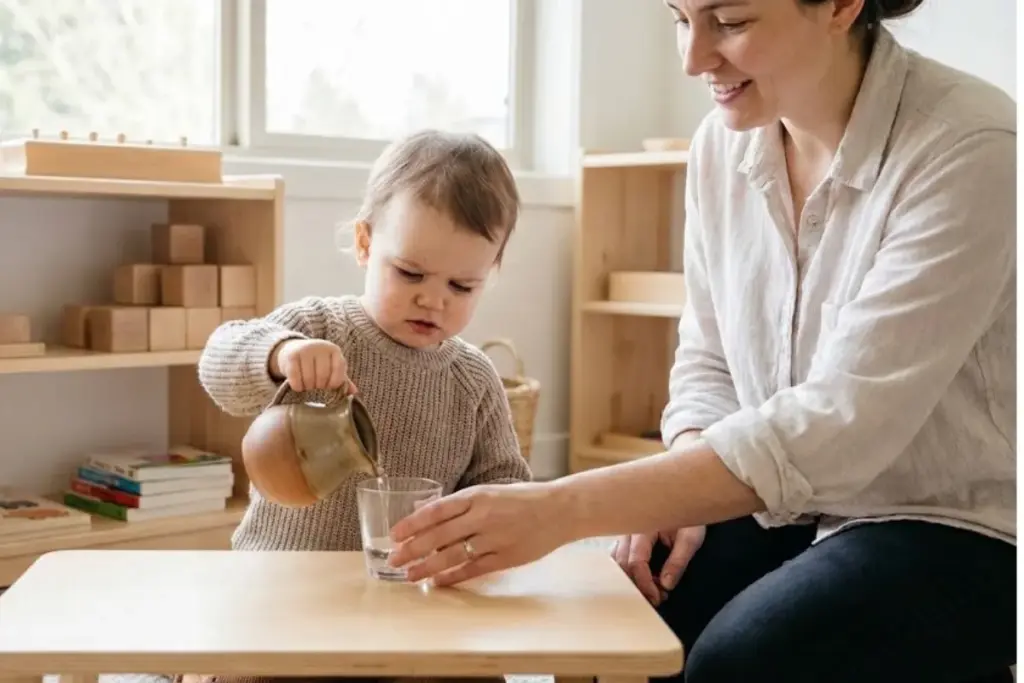
A 2-year-old insists on pouring their own water. Takes the pitcher with both hands, concentrates, spills half of it, looks at the puddle — then reaches for the cloth to wipe it up. No one told them to. They just knew that’s what comes next.
That sequence — attempt, spill, clean — is Montessori practical life at its most essential. Not a lesson. Not a structured activity. A real task, with real consequences, done independently. This is how children develop competence, confidence, and the deep understanding that they are capable members of their household.
Practical life skills are the most distinctively Montessori element of early childhood education — and the most frequently misunderstood by parents who encounter them for the first time. This guide explains what they actually are, why they matter more than they appear to, and how to build them systematically from 12 months through age 6.
What Are Montessori Practical Life Skills?
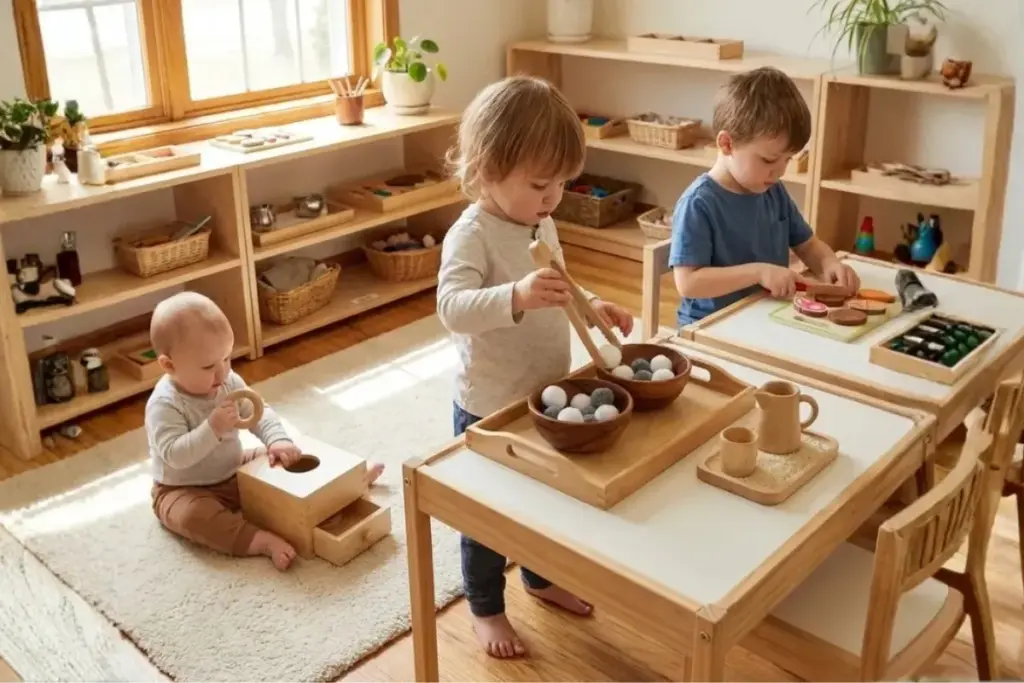
Practical life skills are the real, purposeful activities of daily living — caring for oneself, caring for the environment, moving with control, and participating in social life with grace. In Montessori philosophy, these are not “life skills” to be taught as a separate subject. They are the curriculum of early childhood: the activities through which children develop concentration, coordination, independence, and a sense of order.
Maria Montessori identified four distinct areas:
1. Care of Self — dressing, undressing, washing hands, brushing teeth, preparing food to eat, blowing the nose. Everything that allows a child to maintain their own body and presentation without adult assistance.
2. Care of the Environment — sweeping, wiping surfaces, watering plants, washing dishes, folding laundry, tidying objects. Everything that allows a child to maintain the space they live in.
3. Grace and Courtesy — greeting others, saying please and thank you, moving through a space without disturbing others, waiting, taking turns, interrupting politely. The social rituals that allow a child to function as a respectful member of a community.
4. Control of Movement — carrying objects carefully without spilling, walking slowly with intention, opening and closing doors quietly, sitting and rising without disrupting others. The physical discipline that underlies all precise Montessori work.
These four areas form the practical life curriculum. They are not supplementary to “real” learning — in Montessori, they are the foundation from which all other learning grows. A child who cannot concentrate on pouring without spilling cannot concentrate on reading. A child who cannot complete a self-care sequence independently cannot sustain the independent work cycles that define Montessori learning at age 4, 5, and 6.
Why Practical Life Skills Matter More Than They Appear To
- Independence is the outcome, not the method. Every practical life activity has one ultimate purpose: a child who can do this without needing an adult. This is not independence for its own sake — it is the psychological security that comes from genuine capability. A toddler who can dress themselves, prepare a snack, and tidy their own space has real competence in the world. That competence builds a kind of confidence that no amount of praise can manufacture.
- Concentration develops through purposeful activity. The longest concentration spans in young children don’t occur during play with toys — they occur during purposeful, real-world tasks. A 2-year-old who is truly engaged in washing vegetables will sustain focus for 15–20 minutes without prompting. The same child with an electronic toy loses interest in under 3 minutes. Practical life activities develop the capacity for sustained concentration that all later academic work depends on.
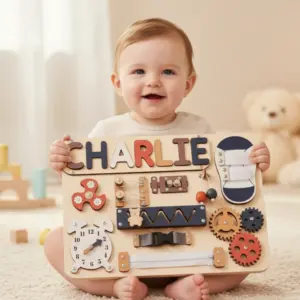
- Practical life and fine motor development are inseparable. Pouring water trains wrist rotation and grip force calibration. Buttoning a shirt trains pincer grasp and bilateral coordination. Cutting with safety scissors trains the tripod grip that writing requires. The relationship runs in both directions: practical life activities train fine motor skills, and developing fine motor skills makes practical life activities more accessible. A child who practices fastening mechanisms on a busy board is simultaneously training the hand coordination they need for independent dressing — and vice versa.
- Order and sequence build executive function. Every practical life task has a beginning, middle, and end. The child gets the cloth, wipes the spill, wrings out the cloth, hangs it back up. That multi-step sequence, practiced daily across dozens of tasks, builds the executive function that underlies planning, task completion, and impulse control in formal schooling.
The 4 Areas in Practice: Activities by Age
Care of Self
- 12–18 months — pulling socks off, pushing arms through sleeves when held open, bringing a cup to their mouth, attempting to use a spoon.
- 18–24 months — removing shoes, attempting to put on a hat, washing hands with soap and water with minimal help, wiping face with a cloth.
- 2–3 years — independently removing most clothing, putting on shoes (Velcro first), brushing teeth with adult finishing, using a spoon and fork reliably, blowing nose independently.
- 3–4 years — putting on most clothing independently, managing large buttons and zippers, washing and drying hands completely, preparing a simple snack.
The most targeted practical life tool for Care of Self across the 12m–3 year range is a well-designed dressing board. Each mechanism on the board isolates one fastening skill: zippers train wrist rotation and bilateral grip, buckles train thumb opposition and force calibration, buttons train pincer precision. This is why busy boards are among the most developmentally precise tools in the Montessori home — they bring real dressing mechanisms into a format children can practice repeatedly and independently.
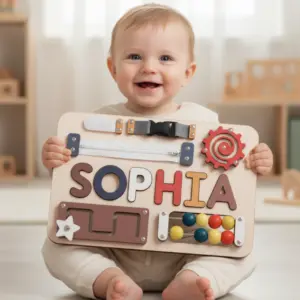
Good for toddlers from 1 year old once bilateral coordination begins to emerge. Most children remain genuinely challenged through age 3.
Care of the Environment
- 12–18 months — wiping a surface with a cloth, placing objects back where they were found, carrying small objects from one place to another.
- 18–24 months — sweeping with a small brush and dustpan, wiping up spills, placing dishes in the sink, helping to sort laundry.
- 2–3 years — independently wiping surfaces, sweeping visible crumbs, watering plants with a small can, folding simple cloths, loading and unloading a dishwasher rack with supervision.
- 3–4 years — scrubbing surfaces, polishing, washing and rinsing dishes, preparing a simple meal with supervision, independently maintaining their personal space.
Food preparation occupies a special place in Care of the Environment — it is the practical life activity with the highest concentration span, the most immediate sensory feedback, and the strongest connection to real household contribution. A child who helps prepare food engages all the senses simultaneously: the weight of a jug, the sound of water pouring, the texture of dough, the smell of ingredients. This multi-sensory engagement produces concentration and investment that no toy can match.
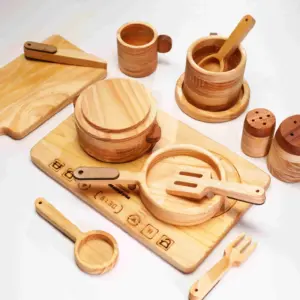
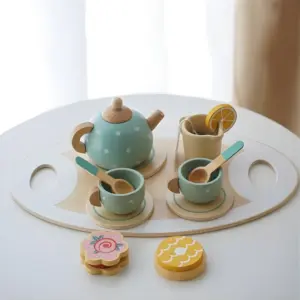
Pretend kitchen play is not “just pretend” — it is rehearsal that develops procedural understanding of sequences children will later perform for real. For children from 2 years old, a wooden kitchen set replicates the complete food preparation sequence — cutting, stirring, serving — in a format they can practice independently before they’re ready to work with real ingredients alongside an adult.
For the full range of kitchen and food preparation tools, visit our wooden kitchen toy collection.
Grace and Courtesy
Grace and Courtesy is the most overlooked area of practical life, and the one with the most direct connection to social development. It covers the behavioral rituals that allow children to function as respectful, considerate members of a household and community: greeting others when they arrive, saying please and thank you without prompting, waiting without interrupting, moving through a space without disturbing others’ work.
In Montessori, Grace and Courtesy is taught through role-play and practice — not correction. The adult demonstrates a greeting, invites the child to try, acknowledges the attempt. The same with interrupting politely: the adult demonstrates placing a hand on an adult’s arm to signal they want to speak, then waiting. The child practices this.
- 12–18 months — waving hello and goodbye, offering objects to others, saying the names of people in their household.
- 2–3 years — saying please and thank you with reminders, waiting briefly, helping to set the table, greeting familiar adults.
- 3–4 years — greeting independently, waiting without reminders, apologizing genuinely, taking turns in conversation.
Control of Movement
Control of Movement is the practical life area that looks most like “just playing.” Carrying a tray of water across a room without spilling. Walking slowly along a line taped on the floor. Carrying a full glass to the table. Opening and closing a door silently.
These activities are developing precisely what they appear to develop: the ability to control the body with intention, at slow speed, under self-directed concentration. This is the physical regulation that underlies all precise Montessori work — you cannot pour water into a small vessel if you cannot control the trajectory of the jug.
- Activities: Walking on a line (slow, intentional forward movement), carrying a full tray across a room, opening and closing doors silently, sitting down and rising from a chair without sound, transferring water between pitchers.
How to Set Up Practical Life at Home
- Child-height access is non-negotiable. If a child cannot reach the shelf, the hook, or the sink without help, the independence is compromised before it begins. A step stool at the sink, a low hook for their jacket, a shelf at their level with their materials — these are not luxuries; they are the structural requirements for practical life to work at home.
- Real tools, child-sized. A child’s broom that actually sweeps. A pitcher that actually pours. A spray bottle that actually works. Tools that look real but don’t function teach children nothing. Tools that function but are adult-sized are dangerous or physically impossible for children to use. The sweet spot is real function in a size that a 2-year-old can manage.
- Complete activities, not partial ones. A practical life activity is not complete until the workspace is restored. If the child pours water, the activity includes carrying the pitcher back, wiping up any spills, and putting the cloth away. If they sweep, it includes emptying the dustpan. This is not perfectionism — it is the distinction between a real task and a performance.
- Demonstration without words. Show the child the activity slowly, with minimal commentary. Then step back and let them try. The most common mistake parents make is narrating while demonstrating — “First we pick up the pitcher, now we pour it slowly, we need to go over the cup…” The child is listening to the words instead of watching the hands. Slow, silent demonstration followed by an invitation to try is far more effective.
The Montessori Practical Life Sequence
The key insight that separates Montessori practical life from “helping around the house” is the deliberate sequence: activities are introduced in order of difficulty, with each activity building skills needed for the next.
- For pouring: dry materials (rice or beans) → fine dry materials (salt or sand) → water from a full pitcher → water from a small jug → water into a small vessel → water into a glass. Each step adds one more demand — finer material, smaller vessel, more consequence for spilling — only after the previous step is mastered.
- For dressing: large toggles → large buttons → medium buttons → small buttons → snap fastenings → buckles → zippers → laces. Each fastening type is more demanding than the last. Introducing laces before large buttons is guaranteed frustration — not because the child is incapable, but because the prerequisite hand strength and pincer precision haven’t been built yet.
This sequencing principle applies to every practical life area. It is why the full Montessori skill framework treats practical life not as a collection of activities but as a structured developmental progression — each step preparing the child for the next.
Practical Life Activities by Area — Quick Reference
- Care of Self: Spooning, pouring, dressing mechanisms, washing hands, preparing a snack, brushing teeth, blowing nose, putting on and removing shoes.
- Care of Environment: Sweeping with brush and dustpan, wiping surfaces, watering plants, folding cloths, washing dishes, food preparation (cutting soft foods, stirring, mixing), tidying.
- Grace and Courtesy: Greeting and farewell, offering food or objects to others, interrupting politely, table manners, waiting, apologizing, thank-you letters.
- Control of Movement: Walking on a line, carrying a full tray, transferring between vessels, opening and closing doors quietly, sitting and rising silently, slow intentional walking.


Common Mistakes
- Doing it for them. The single most common mistake. A child who is struggling with a button is not failing — they are working. Stepping in before they’ve exhausted their own effort removes the whole developmental value of the activity. If they ask for help, offer the smallest possible support: hold the fabric still while they push the button through. Never take over.
- Correcting the process instead of demonstrating again. “No, not like that — do it this way” is a verbal correction that rarely improves performance. If the child is consistently doing something incorrectly, the solution is a new demonstration — not an instruction.
- Introducing too many activities at once. Introduce one new practical life activity at a time, alongside familiar ones. Each new activity needs enough repetition to become genuinely independent before the next is added.
- Skipping difficult steps. Zips and buckles are hard. Pouring water is hard. The temptation is to keep doing these things for children because it is faster and less messy. But these are precisely the activities children need most — because the difficulty is the development.
- Expecting adult-level results. A 2-year-old who sweeps will miss most of the crumbs. A 3-year-old who pours will spill sometimes. The standard is not cleanliness — it is genuine independent effort. A child sweeping imperfectly is developing far more than a child who watches an adult sweep perfectly.
Red Flags and When to Seek Support
- By ~18 months: Not attempting any self-care tasks (pulling off socks, bringing cup to mouth). Strong resistance to all practical life activities with significant distress.
- By ~2.5 years: Not managing any simple dressing tasks with support. Significant difficulty with spoon use after consistent practice.
- By ~4 years: Not independently managing basic self-care (washing hands, putting on shoes with Velcro) after sustained exposure. Persistent extreme frustration with practical life activities of all types.
A single area of difficulty is rarely cause for concern — children vary widely. A pattern across multiple practical life areas, combined with significant distress, is worth discussing with your pediatrician. Ask specifically about an occupational therapy referral if fine motor coordination is involved.
FAQ
- What are Montessori practical life skills?
The real activities of daily living — care of self, care of environment, grace and courtesy, and control of movement — practiced as a structured developmental sequence. In Montessori, these activities are not supplementary to learning; they are the primary curriculum of early childhood through which children develop concentration, coordination, independence, and order.
- Why does Montessori emphasize practical life so heavily?
Because genuine independence — the ability to care for oneself and one’s environment without adult assistance — is the foundation of psychological security and academic readiness. A child who is competent in their daily life brings a qualitatively different confidence to intellectual challenges than a child who is dependent on adults for basic self-care.
- At what age do Montessori practical life activities start?
From 12 months, with simple activities: wiping a surface, carrying an object, pushing arms through sleeves. The richest development happens between 18 months and 4 years, when children have both the physical capacity and the intense developmental drive toward independence that characterizes the toddler period.
- How are practical life skills different from chores?
Chores are tasks assigned to a child to contribute to household functioning. Practical life activities are developmental exercises designed to build specific skills — concentration, coordination, sequencing, independence — through purposeful, real work. The outcome of chores is a clean house. The outcome of practical life activities is a capable child. In practice, many activities serve both purposes.
- How do practical life activities connect to academic readiness?
Directly and significantly. The concentration span developed through practical life activities is the same span applied to reading and writing. The sequential thinking required to complete a multi-step practical life task is the same thinking required to follow multi-step instructions in school. The fine motor precision built through dressing and food preparation is the same precision required for writing. Practical life is not preparation for school — it is development that school readiness grows out of.
- Do play kitchens count as practical life?
A high-quality wooden kitchen toy serves as rehearsal for real practical life activities — children practice the sequences of food preparation, serving, and cleaning up before they’re capable of performing them in a real kitchen. This rehearsal has genuine developmental value. It becomes most valuable when paired with real kitchen participation appropriate to the child’s age and capability.