
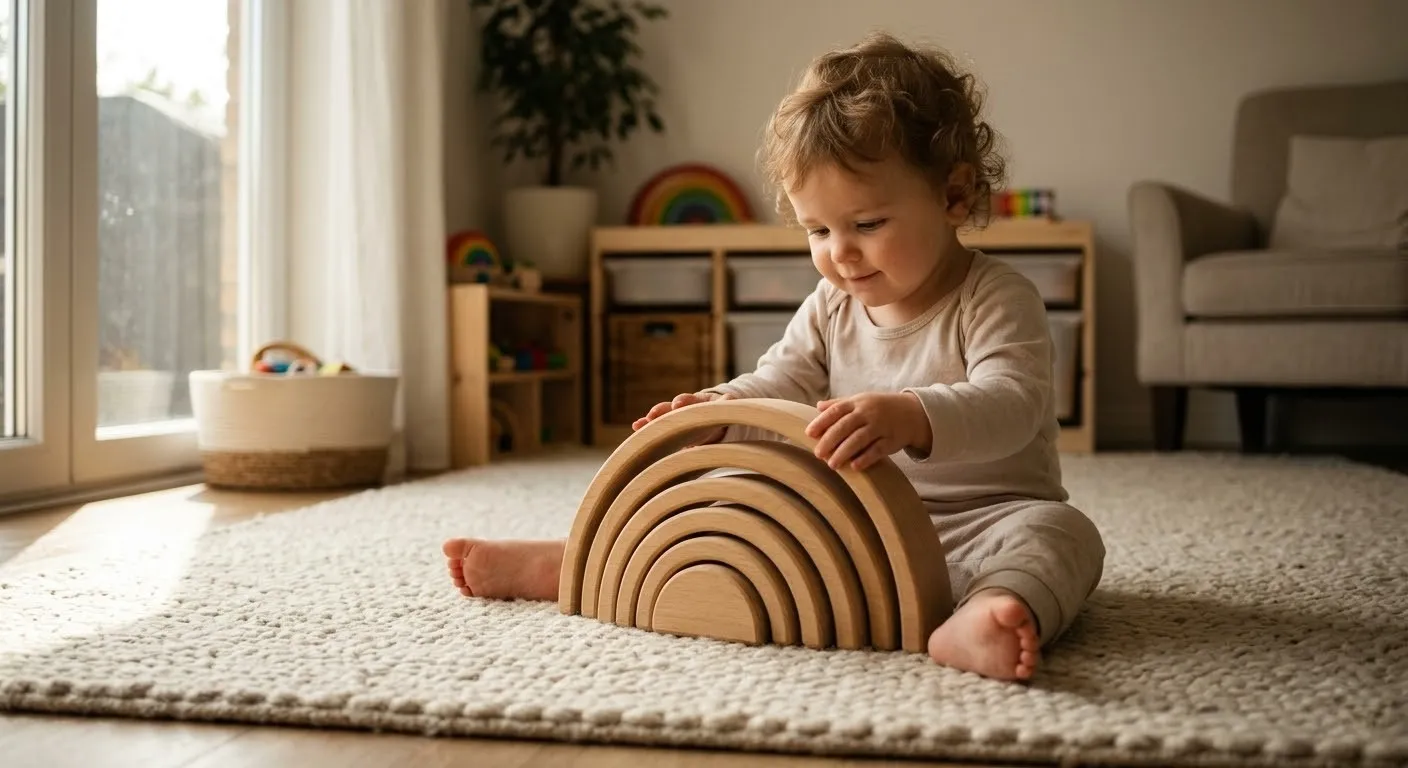
Many parents notice that wooden toys often cost two or three times more than plastic toys. This naturally raises an important question: Why are wooden toys more expensive than plastic?
Wooden toys cost more due to 6 compounding factors: premium solid hardwood (10–20× more expensive than plastic pellets per unit weight), hand-sanding and multi-step assembly, non-toxic water-based finishes (3–5× the cost of standard paint), FSC certification overhead, smaller production batches, and stricter third-party safety testing. A wooden toy manufactured for ~$12 and sold for $30 follows very different economics than a plastic toy manufactured for ~$1.50 and sold for $10 — but solid wood typically lasts 5–10 years vs. 12–18 months for plastic, which often makes the cost-per-year lower.
The gap isn’t arbitrary. It reflects fundamentally different manufacturing approaches—higher quality materials, slower production, and stricter safety standards.
In this article, we break down the real cost drivers: materials, manufacturing, durability, and environmental impact. By the end, you’ll understand exactly what you’re paying for.
What Determines the Price of a Toy?
Before we compare wooden and plastic specifically, let’s establish what drives toy pricing in general.
Main factors:
- Material costs – What the toy is made from
- Manufacturing method – How it’s produced
- Safety standards – Testing and compliance requirements
- Product lifespan – How long it lasts
- Brand philosophy – Values that influence production choices
Every toy manufacturer balances these factors differently. A company optimizing purely for lowest cost will make very different choices than one prioritizing longevity and sustainability.
Wooden toys differ from plastic toys in every single one of these areas. That’s not a criticism of plastic—it’s just reality. The production economics are fundamentally different.
The 6 Real Reasons Wooden Toys Cost More
1. Higher Cost of Natural Materials
Solid wood costs significantly more than plastic pellets—often 10 to 20 times more per unit weight.
Plastic toys use petroleum-based materials that are extremely cheap to mass produce. The raw material for a plastic toy car might cost pennies. The same toy carved from solid beech wood? The material alone could cost several dollars.
Wooden toys require:
- Sustainably harvested timber that meets environmental standards
- Higher quality hardwoods that are durable enough for children’s use
- Specific species chosen for their properties
Examples of commonly used woods:
- Beech – Dense, smooth, resists wear exceptionally well
- Maple – Even harder than beech, incredibly long-lasting
- Birch – Strong yet lightweight, beautiful grain
These aren’t cheap materials. Beech wood costs roughly $8–12 per board foot at wholesale. You need specialized suppliers. You manage inventory carefully because you can’t just order “more wood” instantly like you can with plastic pellets.
2. More Labor-Intensive Manufacturing
Here’s where the production difference becomes dramatic.
Plastic toys are made through injection molding, which produces thousands of identical items quickly. You heat plastic pellets, inject them into a mold, cool for seconds, eject the finished piece. One machine can produce hundreds of toys per hour with minimal human involvement.
Wooden toys often require:
- Cutting individual pieces from boards
- Sanding every surface smooth enough for baby hands
- Assembling components with proper joinery
- Finishing with multiple coats of safe paint or oil
Many wooden toys are partially or fully handcrafted. Even with CNC machines cutting the basic shapes, human hands still sand edges, apply finishes, inspect quality, and assemble pieces.
3. Stricter Safety Standards and Premium Finishes
All children’s toys must meet safety regulations. But the materials used to comply vary dramatically in cost.
Wooden toys often use:
- Non-toxic water-based paints that cost 3-5 times more than standard paints
- Food-grade oils like linseed or coconut oil for natural finishes
- Child-safe waxes for protective coatings
These materials are significantly more expensive than standard industrial paints used on plastic toys. A liter of toy-grade water-based paint might cost $40-60. Standard paint for plastic? $8-12 per liter.
The application process also takes longer. Water-based paints often require multiple thin coats rather than one thick coat. Each coat needs drying time. Quality control becomes more intensive.
4. Smaller Production Volumes
Economics of scale matter enormously.
Plastic toys are typically produced in runs of hundreds of thousands or millions of units. When you’re making a million units, the per-unit cost drops dramatically. You can negotiate better material prices. Your machinery runs constantly. Your overhead gets spread across massive volume.
Wooden toys are often made in batches of hundreds or low thousands. The per-unit cost stays higher because:
- Material purchasing happens in smaller quantities
- Setup time for machinery doesn’t get amortized across millions of units
- Warehouse and inventory costs remain proportionally higher
A small wooden toy manufacturer might produce 5,000 units of a particular toy annually. A major plastic toy company? Five million of one SKU isn’t unusual.
5. Higher Durability and Longevity
This is where price and value start to diverge.
Solid wood toys can last for years or even generations. Plastic toys tend to break faster. Hinges crack. Wheels pop off. Colors fade. Within a year or two, many plastic toys end up in the trash.
When measured over time, wooden toys may actually be more cost-effective. If a $30 wooden toy lasts 10 years and serves three children, while a $10 plastic toy lasts 18 months and you buy it three times, which was cheaper?
The math changes completely when you factor in lifespan.
6. Sustainable and Eco-Friendly Materials
Many wooden toy manufacturers use:
- FSC certified wood from responsibly managed forests
- Sustainable forestry practices that ensure forest regeneration
- Local or regional sourcing to reduce transportation impact
These responsible sourcing methods increase costs but support environmental protection and fair labor practices.
FSC certification isn’t free. The audit process costs money. Tracking wood through the supply chain requires documentation. Paying fair wages to forestry workers costs more than exploiting cheap labor.
But these costs reflect real value—ensuring forests remain healthy, communities benefit fairly, and the natural materials your child plays with come from ethical sources.
Wooden Toys vs Plastic Toys: Cost Comparison
| Factor | Wooden Toys | Plastic Toys |
|---|---|---|
| Material cost | High | Low |
| Production scale | Small batches | Mass production |
| Durability | Very high | Lower |
| Environmental impact | Lower | Higher |
| Lifespan | Years to generations | Often months to few years |
| Cost per year of use | Often lower | Often higher |
Beyond cost, if you’re weighing which is actually better for your child’s development, the differences go deeper than price alone.
The initial price doesn’t equal lifetime value. A toy that costs twice as much but lasts five times longer is actually cheaper. A toy that serves multiple children? Even better value.
This isn’t about justifying high prices—it’s about understanding what the price actually represents.
Why Montessori Toys Are Often More Expensive
Montessori toys follow specific design principles that influence production decisions.
These include:
- Natural materials rather than synthetic alternatives
- Precise educational design where every element serves a developmental purpose
- Exceptional durability since materials are meant to last through years of classroom use
- Simplicity that eliminates unnecessary features but requires thoughtful design
Many Montessori toys use solid wood rather than engineered materials like MDF. This choice—which we’ve explored in detail in our article on why we don’t use MDF—contributes significantly to higher costs but also to safety and longevity.
Authentic Montessori materials are designed to support long-term learning and development, not disposable play. When Dr. Maria Montessori developed her materials over a century ago, she designed them to withstand constant use by dozens of children across years. That standard persists in quality Montessori materials today.
Are Wooden Toys Worth the Price?
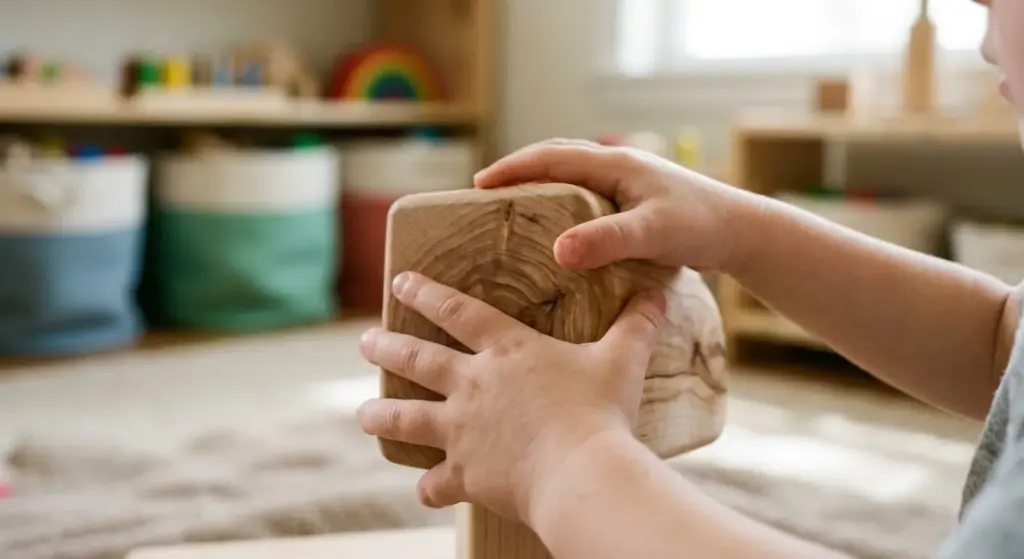
This is the question that matters most to parents making real purchasing decisions with real budgets.
Let’s be honest: not every family can afford premium wooden toys for everything. And that’s okay. Value isn’t universal—it depends on your priorities, budget, and circumstances.
Wooden toys offer a longer lifespan that can serve multiple children — though this only holds if you know how to clean and maintain them properly through daily drool and wear. They provide richer sensory feedback through natural weight, grain texture, and warmth — properties that vary meaningfully by toy type and the specific developmental skill each toy targets. They’re produced from more sustainable materials, and they hold resale value when you’re ready to pass them on.
For many families, this makes wooden toys a long-term investment rather than a short-term purchase. You buy once. Your child—and possibly their siblings or cousins—play with it for years.
But “worth it” is personal. A family prioritizing sustainability might value wooden toys highly. A family needing 20 toys on a tight budget might reasonably choose a mix. A family whose toddler loses interest in toys quickly might prefer lower-cost options.
The key is making an informed choice. Now you know what drives the price difference. Whether that value proposition works for your family? That’s your call to make.
“We bought a $14 plastic shape sorter when my daughter was 10 months old. It cracked by 14 months. We replaced it — and that one didn’t last either.
Then we switched to Kukoo’s solid beech sorter. She’s now 3.5, and it’s still in daily use. No cracks — and she even uses it for her own made-up games.
$28 on plastic in 8 months. $32 on wood — still going.”
— Juana M. Hicks, Kukoo Montessori customer
How to Choose High-Quality Wooden Toys
If you decide wooden toys fit your priorities and budget, here’s how to ensure you’re getting genuine quality.
Check the Material
Look for:
- Solid wood (specified as such)
- Hardwood species (beech, maple, birch)
- FSC certification or similar sustainability standards
Avoid vague terms like:
- “Engineered wood” (often MDF or particleboard)
- “Composite wood”
- “Wooden” without clarifying solid vs. engineered
If the listing doesn’t specify “solid wood,” it probably isn’t. Reputable manufacturers state this clearly because it’s a selling point.
Check the Finish
Ensure paints and finishes are:
- Non-toxic and clearly labeled as such
- Water-based (for paints)
- Food-grade (for oils and waxes)
- Compliant with safety standards — ASTM F963 and EN71 are the two benchmarks to look for
The finish is what your child will touch and potentially mouth. This cannot be compromised.
Look for Simple, Durable Design
High-quality toys often prioritize:
- Durability through solid construction and quality joinery
- Simplicity without unnecessary moving parts that break
- Educational value that supports specific developmental skills
A $40 wooden toy that’s beautifully made but too complex for your child’s age? Not worth it. A $25 toy that’s simple, durable, and perfectly matched to their development? Excellent value.
If you want a filtered starting point, our best sellers reflect the toys that hold up longest under daily use and parent scrutiny.
Why Kukoo Montessori Focuses on Solid Wood Toys
At Kukoo Montessori, we’re transparent about our material choices and their cost implications.
We focus on:
- Natural materials that provide authentic sensory experiences
- Durable craftsmanship built to last through years of active play
- Child-safe finishes using water-based paints and food-grade oils
- Developmental appropriateness where each toy serves a specific learning purpose
Wooden toys align closely with Montessori principles that emphasize hands-on learning and sensory exploration. When a child holds a solid wooden object, they’re experiencing real weight, real texture, real material properties.
This isn’t about being premium for the sake of premium. It’s about material choices that genuinely support the developmental goals Montessori prioritizes.
Yes, this makes our toys more expensive than plastic alternatives. We understand that creates barriers for some families. But we’ve chosen to focus on quality and longevity rather than competing purely on price—because we believe that serves children’s development better in the long run.
Frequently Asked Questions
- Why are wooden toys more expensive than plastic toys?
Wooden toys cost more because they use higher-quality materials (solid hardwood vs. plastic pellets), require more labor-intensive manufacturing, use premium non-toxic finishes, and are typically produced in smaller batches. These factors combine to increase production costs significantly.
- Do wooden toys last longer?
Yes. Solid wood toys often last many years or even generations when properly cared for. Plastic toys tend to crack, fade, or break within months to a few years. When measured by cost per year of use, wooden toys often provide better value despite higher initial price.
- Are wooden toys safer for children?
High-quality wooden toys with non-toxic finishes are generally considered very safe. They don’t contain the chemical additives sometimes found in plastics — an important consideration for babies who mouth their toys and solid wood doesn’t shatter into sharp pieces if broken. However, safety depends more on manufacturing standards than material alone—always verify safety certifications.
- Why do Montessori toys use wood?
Montessori education emphasizes natural materials that provide authentic sensory learning experiences. Wood offers natural weight, varied texture, and organic warmth that supports children’s sensory development. The durability of wood also aligns with Montessori’s principle of materials that last through years of repeated use.
- Are expensive wooden toys worth it?
This depends on your priorities and budget. Wooden toys offer longer lifespan, better sensory experiences, and more sustainable materials. For families who can afford the initial investment and value these qualities, wooden toys often provide excellent long-term value. However, well-chosen plastic toys can also support healthy development.
Conclusion
Wooden toys cost more because they use higher quality materials, more labor-intensive manufacturing, safer finishes, and sustainable sourcing. These aren’t arbitrary markups—they reflect fundamentally different production economics.
A plastic toy manufactured for $1.50 and sold for $10 has different margins than a wooden toy manufactured for $12 and sold for $30. But that wooden toy will likely last five times longer, can be passed to other children, and provides richer sensory experiences throughout its life.
While the initial price may be higher, wooden toys often provide greater durability, safety, and educational value over time. They’re not right for every family or every situation. But now you understand exactly what drives the price difference.
The question isn’t whether wooden toys are “worth it” universally—it’s whether their specific benefits align with your family’s values, needs, and budget. That’s a decision only you can make.