
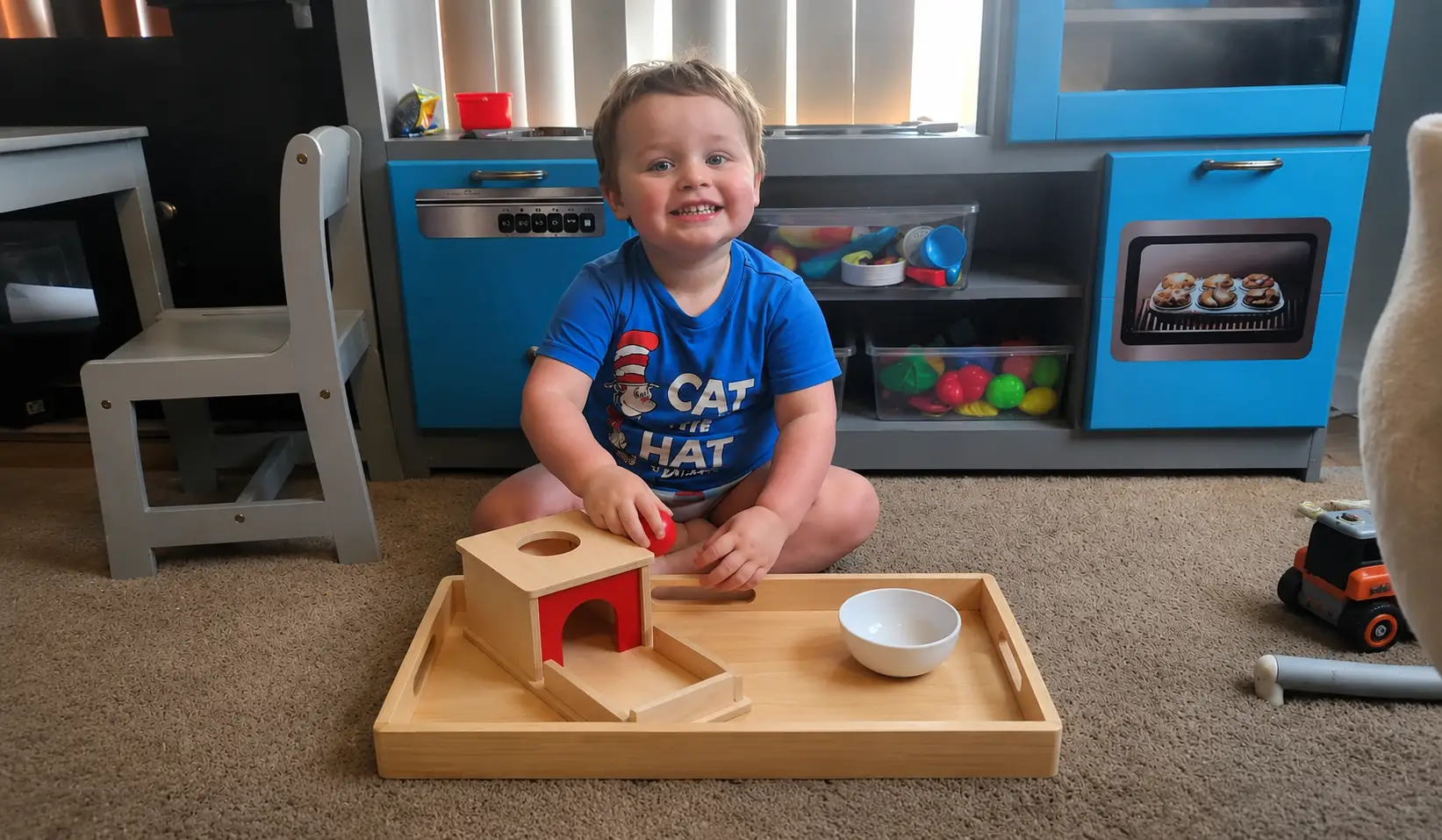
Your child just turned one. You’ve seen the Montessori shelf photos on Instagram — everything calm, minimal, perfectly arranged. Your house looks nothing like that.
That’s fine. The most powerful Montessori activities for 1-year-olds require almost no setup, no special equipment, and — once started — almost no adult involvement. That last part is actually the hardest for most parents to accept.
One thing most activity guides get wrong: they treat 12 months and 23 months the same. They’re not even close. Somewhere in that year, your child goes through the naming explosion, develops a strong need for order and routine, and gains the coordination for real independent work. The activities that delight a 12-month-old will bore a 22-month-old — and vice versa.
This guide breaks the full 12–24 month range into three developmental brackets. Find your child’s bracket and start there.
| Montessori activities for 1-year-olds are simple, hands-on tasks — pouring, transferring, stacking, naming objects, and participating in practical life — that follow the child’s active sensitive periods for movement, order, and language across the 12–24 month window. The most effective activities are chosen by specific sub-bracket — 12–15, 15–18, or 18–24 months — rather than the broad “1-year-old” category. |
How to Know If Your 1-Year-Old Is Ready for a Montessori Activity
Before introducing any activity, three minutes of observation will tell you whether your child is ready — or whether you’re two months ahead of their development.
Green Light Signals — Your Child Is Ready
Sustained focus on a single object for 30+ seconds without adult prompting. Deliberate object placement — putting things somewhere specific, not just anywhere. Watches an adult demonstration to completion without grabbing the object mid-demo. Handles objects without immediately mouthing or throwing — both are normal but indicate the sensorimotor exploration phase, not the purposeful activity phase.
Red Light Signals — Too Early
Duration under 10 seconds before abandonment, consistently over 3 days. Throws or drops objects without watching where they land — no placement intention yet. Never returns to the activity independently — either too early, incorrectly presented, or wrong for this child’s current interest.
The Mastery Signal — Time to Progress
Child completes the activity without looking up for approval. Completes the full work cycle (begin → do → finish → put away) without being asked. Repeats the activity more than three times in one session. When all three are happening, introduce the next level.
| The most common reason Montessori activities “don’t work” at this age is timing — either the activity was introduced two months too early, or the adult stayed too close and did too much. Both are fixable. – From Zoe Paul, AMI Teacher Trainer (0–3) |
The 1-Year-Old’s Development — Why Timing Matters More Than the Activity
The CDC’s developmental milestones for 12-month-olds give the clearest baseline for what your child is neurologically ready to do — and the range is wider than most parents expect. A child at 12 months and a child at 23 months are both “1-year-olds” on paper, but they’re at completely different stages of motor control, language, and independent thinking — a gap that runs through every developmental window from birth to age 6.
12–15 Months — Movement and Discovery
First independent steps. Object permanence fully established. Cause-and-effect deepening. Fine motor at three-jaw chuck beginning. Language: 5–20 words receptive, 1–5 expressive. Activities that fit: object posting, simple stacking, treasure baskets, push-along activities. Not yet: water pouring (wrist control insufficient), spooning (bilateral coordination not established), vocabulary matching cards (abstract representation too advanced).
15–18 Months — Order and Naming
The sensitive period for order peaks around 15–18 months — your child isn’t being difficult when routines shift; they’re experiencing genuine distress when the world doesn’t match their internal map. Naming explosion imminent (50-word threshold). Three-jaw chuck consolidating. Activities that fit: sorting by one attribute, vocabulary baskets with figurines, dry transfer (spooning), wiping cloth, peg puzzles. Not yet: dressing frames (fastener complexity too high), water pouring (still highly messy without wrist control).
18–24 Months — Practical Life and Language Peak
Naming explosion fully active. “Me do it” drive at maximum. Bilateral coordination established. Concentration extending to 10–15 minutes. Activities that fit: water pouring, dressing boards, food preparation, object-to-picture matching, name puzzle. The defining characteristic: this child will attempt everything themselves — the adult’s only job is a correctly set-up environment and the discipline to stay out of it. These are the core practical life activities taking root.
Montessori Activities — 12–15 Months

Object Permanence Box (HowTo — Rich Snippet Eligible)
- What it develops: Object permanence, cause-and-effect, controlled release, hand-eye coordination. Dropping a ball into a hole and watching it disappear looks simple. But the repeated cause-and-effect loop it creates — action, result, action, result — is exactly how executive function develops in the first years of life. Your child isn’t playing. They’re building the attention and self-regulation skills that researchers consistently link to school readiness. Setup time: 30 seconds.
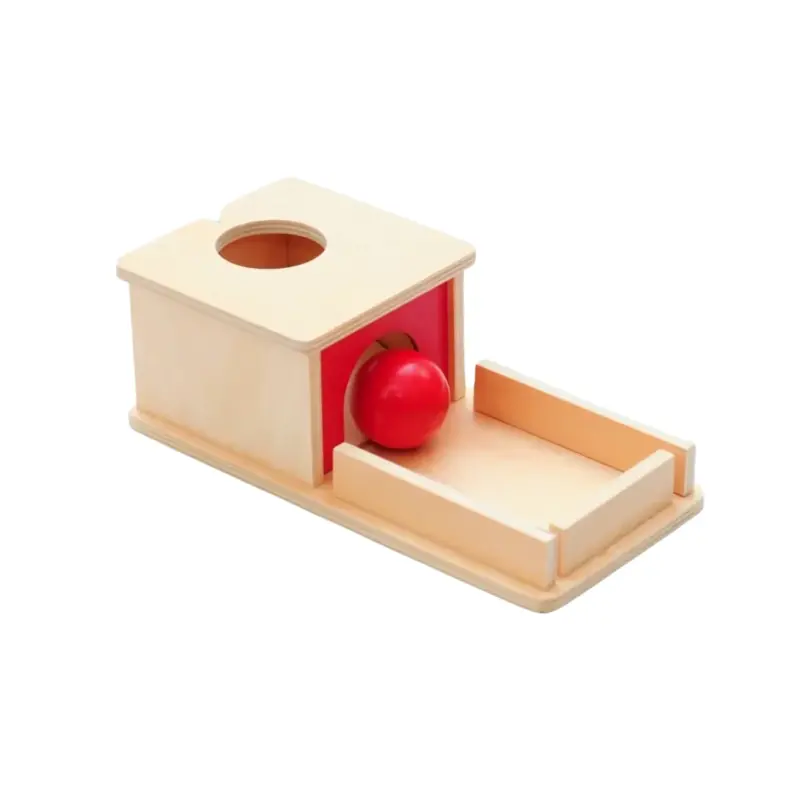
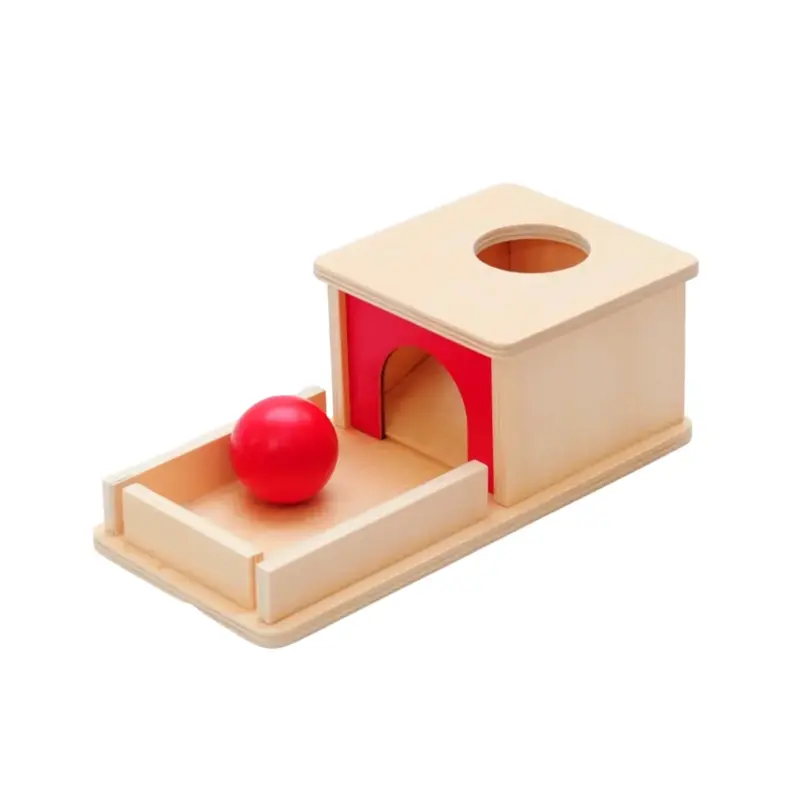
- Materials: Wooden box with circular hole on top, ball or disc, low shelf at child height.
- How to present:
1. Place tray with box at child’s height on low shelf.
2. Sit beside child at their level — not behind, not above.
3. Pick up ball slowly; hold near hole; lower it in. Say “in” once, quietly.
4. Watch ball emerge from front opening. Say “out” once.
5. Repeat the full cycle one more time without speaking.
6. Slide tray gently toward child and step back 3 feet.
7. Observe without intervening — imperfect attempts are the learning.
- Mastery signal: Child inserts ball without watching it — they know where it goes. Progress to coin-slot variant (smaller opening, higher precision).
Treasure Basket — Multi-Sense Exploration
- What it develops: Tactile discrimination, vocabulary, sensory-motor integration. Setup: 5 minutes — gather 6–8 real objects from around the home (wooden spoon, small cloth, metal spoon, pinecone, smooth stone, wooden ring, small brush). Sit nearby. Do not name objects unless child explicitly invites it — let the hands lead. Rotate 2–3 objects weekly.
Stacking and Knocking Down
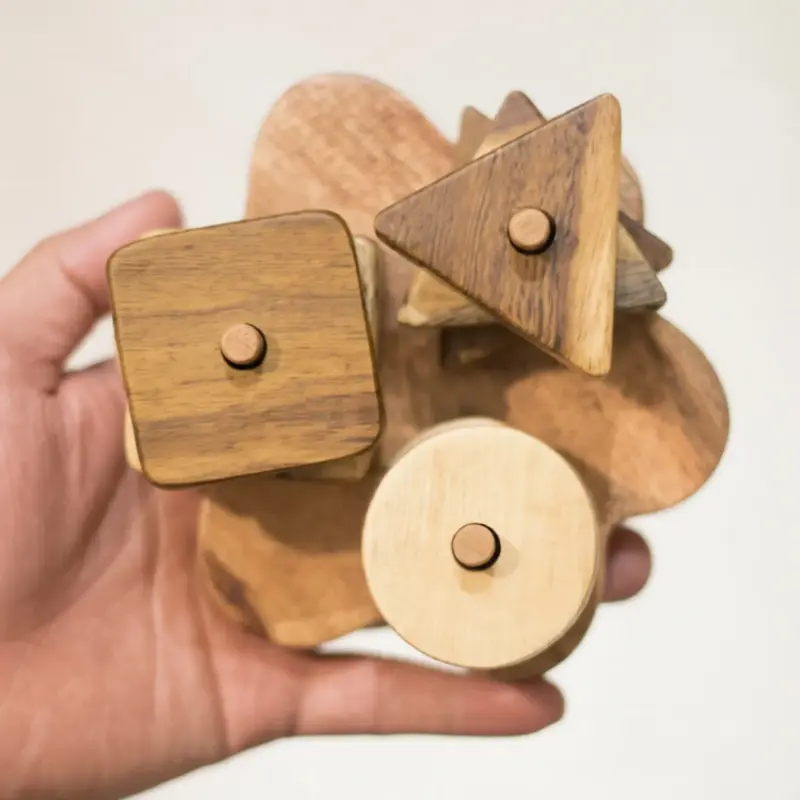
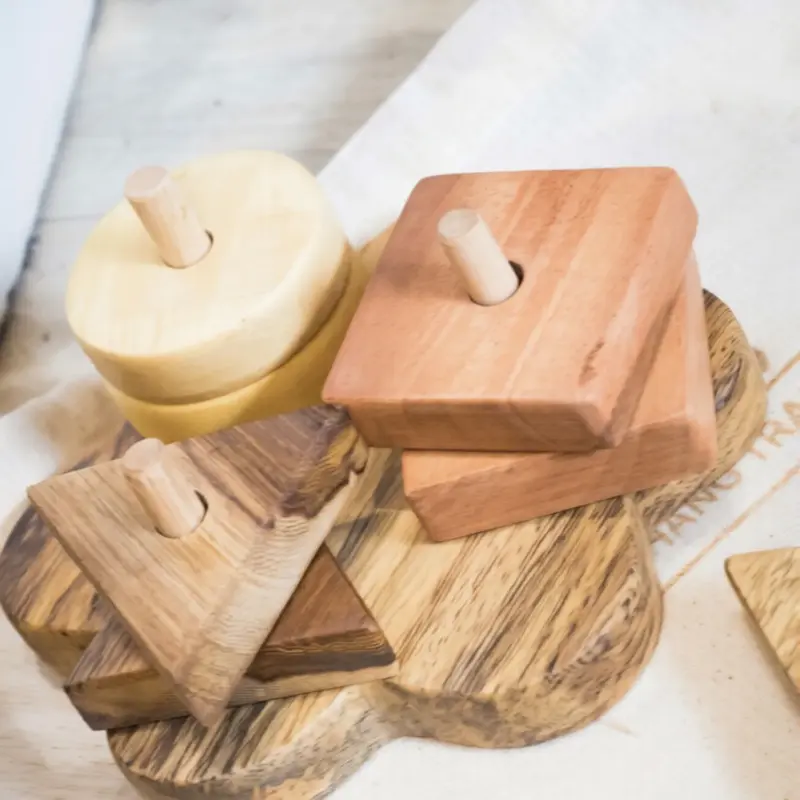
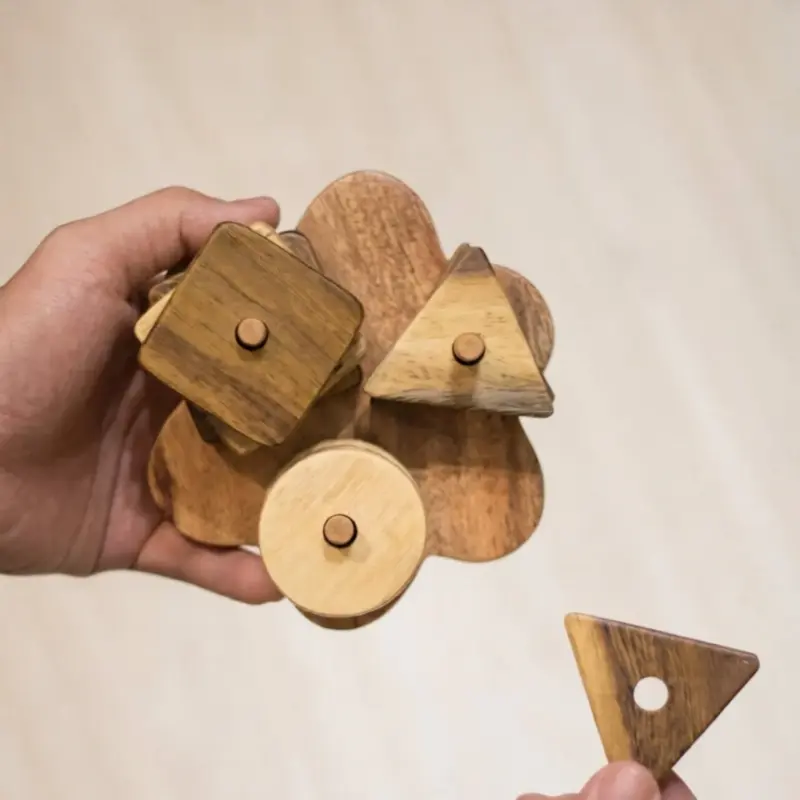
- What it develops: Cause-and-effect, spatial reasoning, emotional regulation (delight in collapse). Knocking down is as developmentally valid as stacking — the collapse IS the cause-effect lesson. Stack once slowly. Offer to child to knock down. Don’t direct what to build.
Push-Along Trolley (Load-Bearing)
- What it develops: Gross motor, vestibular integration, proprioception, spatial navigation. Load it with 3–4 wooden blocks inside — the weight makes it developmental for proprioception. Too-light trolleys have minimal value.
Simple Sorting — 1 Attribute (Color Only)
- What it develops: Visual discrimination, classification (same/different), order. Only introduce when child is deliberately placing objects — not throwing randomly. Setup: 6–8 objects in exactly 2 colors, 2 matching containers.
Montessori Activities — 15–18 Months

Dry Transfer Tray / Spooning (HowTo — Rich Snippet Eligible)
- What it develops: The three-jaw chuck grip — the same hand position used to hold a pencil — making this puzzle a direct precursor to early writing
- Materials: Two small identical bowls, wooden spoon, wooden tray, lentils or rice.
- How to present:
1. Place tray on low table at child’s height, sit beside them.
2. Pick up spoon with dominant hand; stabilize left bowl with non-dominant hand.
3. Scoop one spoon of lentils from left bowl; transfer to right bowl — slowly, deliberately.
4. Continue until left bowl is empty.
5. Tilt right bowl back into left bowl to reset — this is part of the work cycle.
6. Place spoon down on tray; slide tray toward child; step back.
7. Say nothing. If they spill: point to cloth on tray. Do not clean up for them.
- Progression: Large items first (pompoms, large pasta) → smaller (lentils, rice) → tongs → tweezers.
Vocabulary Basket — 3-Object Theme
- What it develops: Receptive vocabulary, Three-Period Lesson foundation, naming explosion fuel. Setup: 3 minutes — 3 realistic figurines in a small basket. Hand child first object, say name once: “horse.” Let them handle it. Then second. Then third. Do not quiz. Period 2 (recognition: “show me the horse”) begins in a later session — only when you can see they already know it.
Peg Puzzle (3–5 Pieces, Large Knob)
- What it develops: Three-jaw chuck (knob = pencil precursor), visual-spatial matching, concentration, vocabulary, control of error. Remove pieces one at a time, name each. Return together. Offer to child.
Wiping the Table — First Practical Life
- What it develops: Care of environment, circular wrist motion, bilateral coordination, work cycle completion. Dip cloth, wring slightly, wipe table in slow circular motions, hang to dry. No narration — action only.
Book Basket — Independent “Reading”
- What it develops: Page-turning (fine motor), visual-symbol connection, narrative language foundation. 3–4 board books at child height, rotate 2 books every 1–2 weeks.
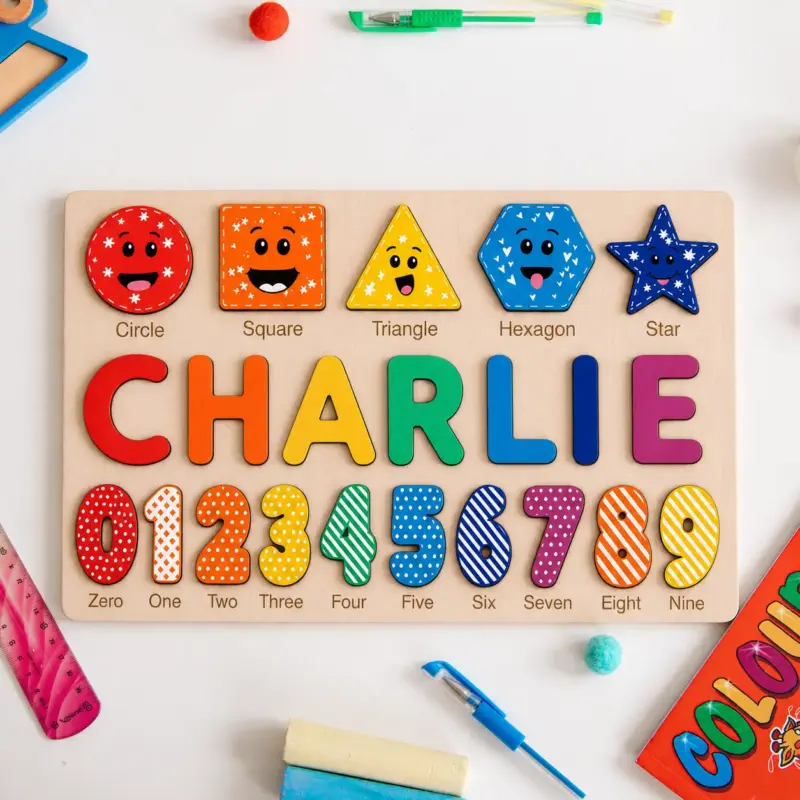
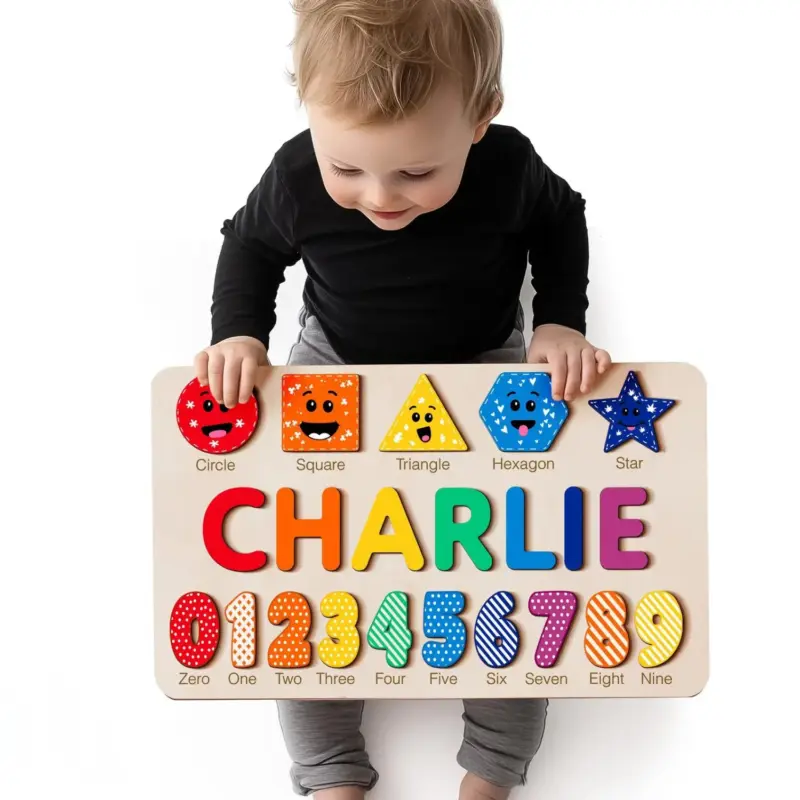
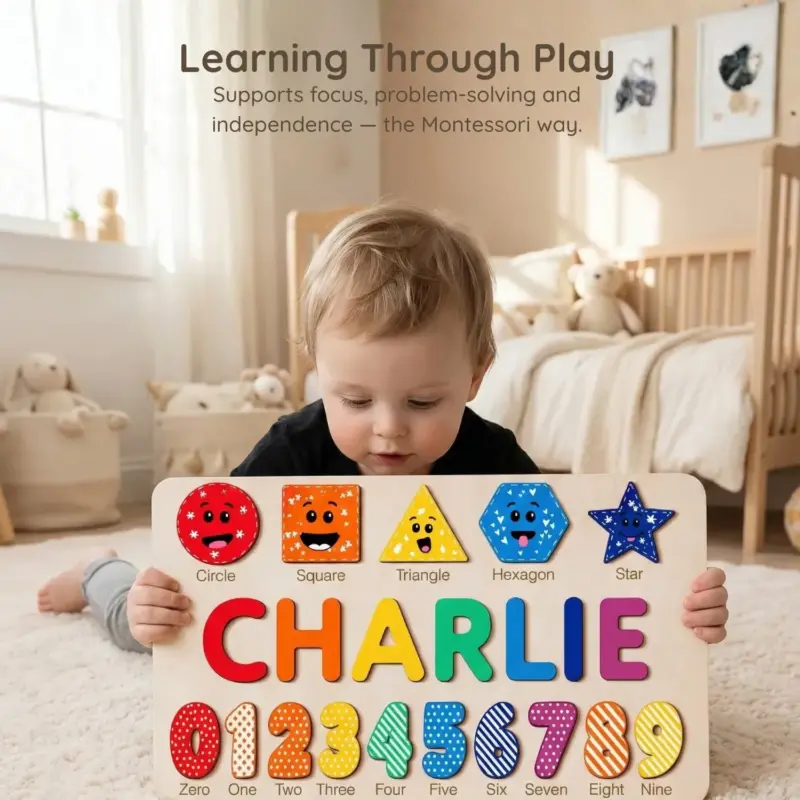
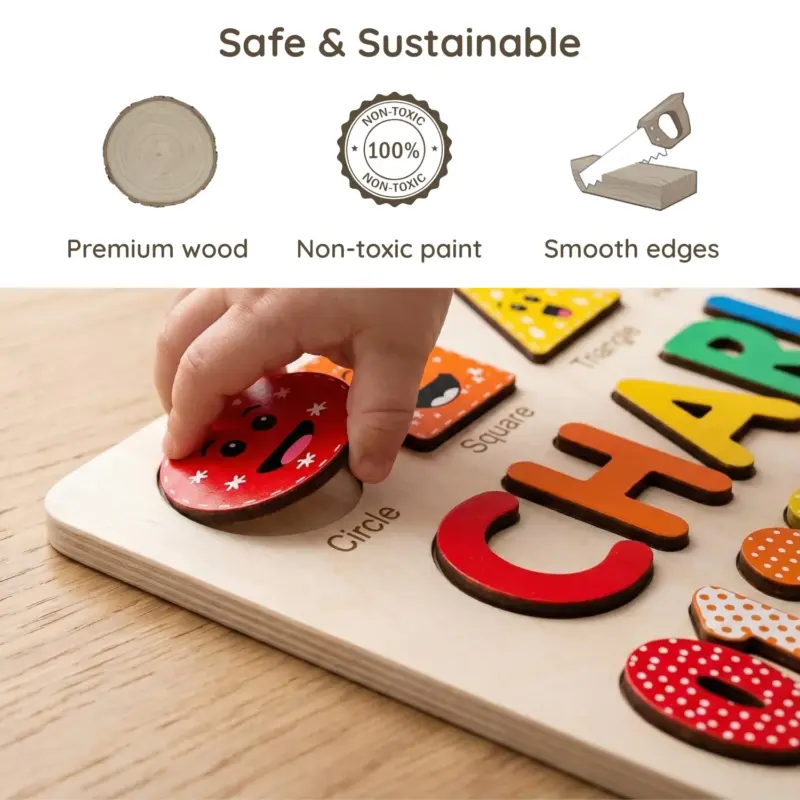
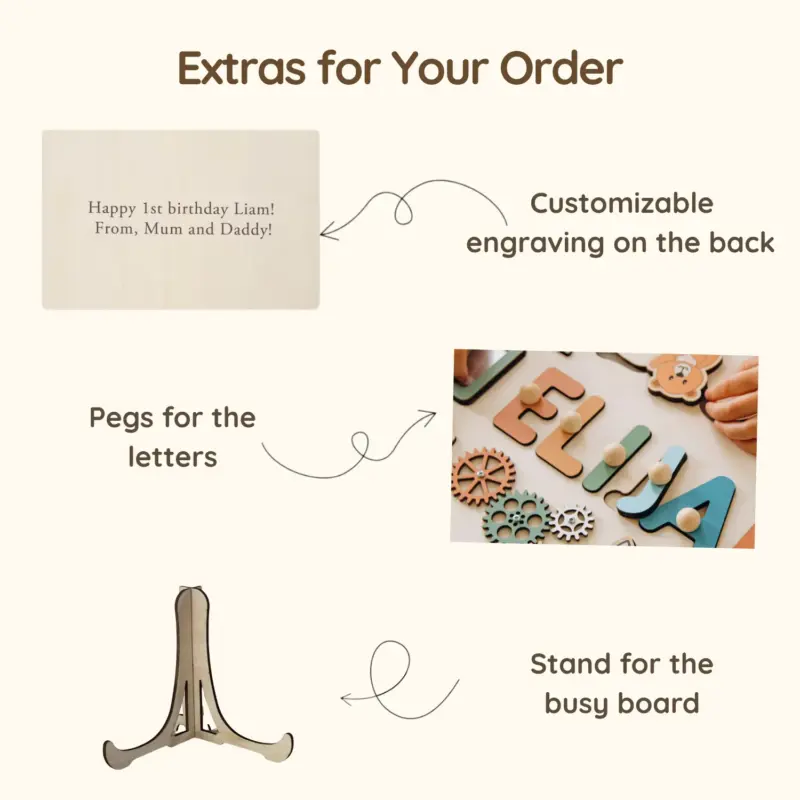
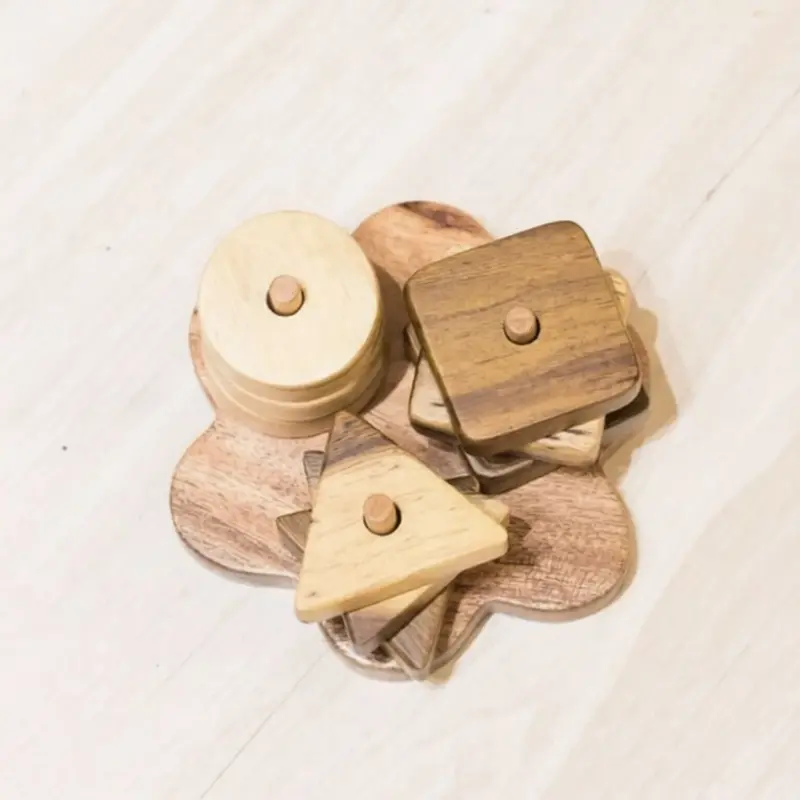
Colorful Shape – Wooden Montessori Name Puzzle
Montessori Activities — 18–24 Months

Water Pouring (HowTo — Rich Snippet Eligible)
- What it develops: Wrist rotation, bilateral coordination, concentration, control of error (spills), independence. Setup: 2 minutes.
- Materials: Two identical small pitchers (1/3 filled), wooden tray, small cloth.
- How to present:
1. Fill one pitcher 1/3 only — not more. Place both pitchers and cloth on tray.
2. Sit beside child at their level.
3. Pick up filled pitcher with dominant hand; place receiving pitcher nearby.
4. Pour slowly, watching the stream — hold until last drop.
5. Set down empty pitcher; pick up full one; repeat.
6. Point to cloth; show how to wipe any spill — place cloth back on tray.
7. Slide tray toward child; step back to 3 feet; leave the room if possible.
8. Do not return to correct unless safety requires it.
| The first time a child wipes up their own spill without being asked, they look at that cloth like they’ve done something important. Because they have. — Zoe Paul, AMI Teacher Trainer (0-3) |
Dressing Activity Board / Busy Board
- What it develops: Care of self, bilateral coordination, fine motor precision, work cycle. A Busy Board at this age works best with one fastener at a time — zipper first, then snaps and buckles once each becomes automatic. Demonstrate the full cycle (close → open) once, slowly. Do not guide hands.
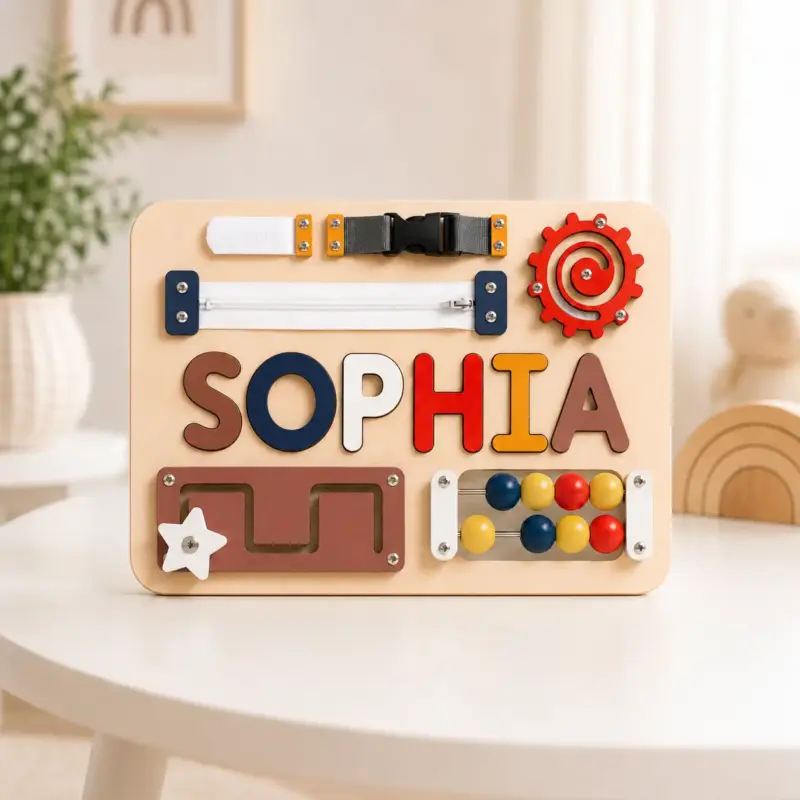
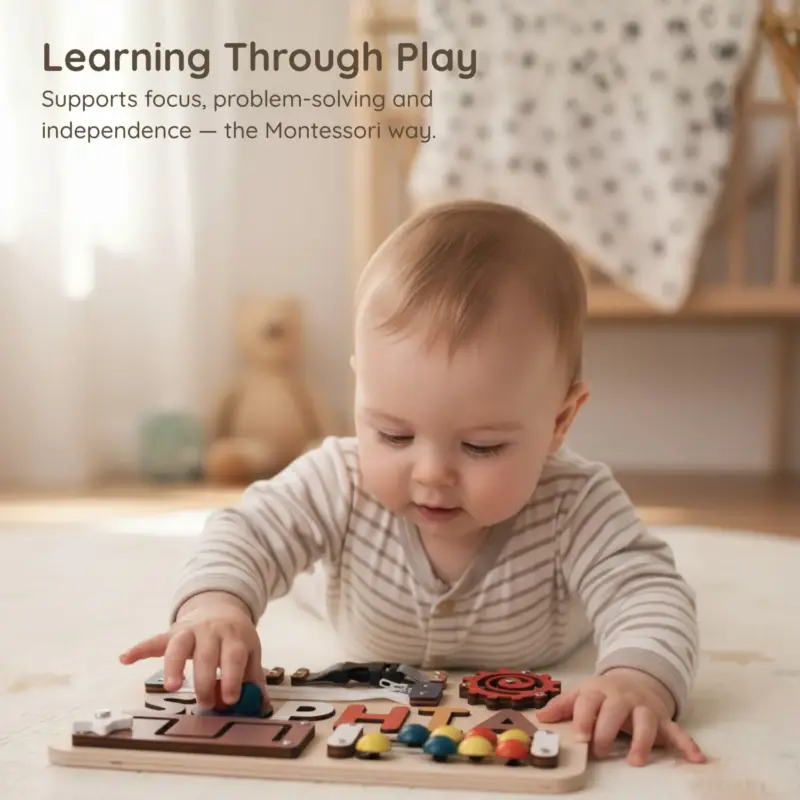
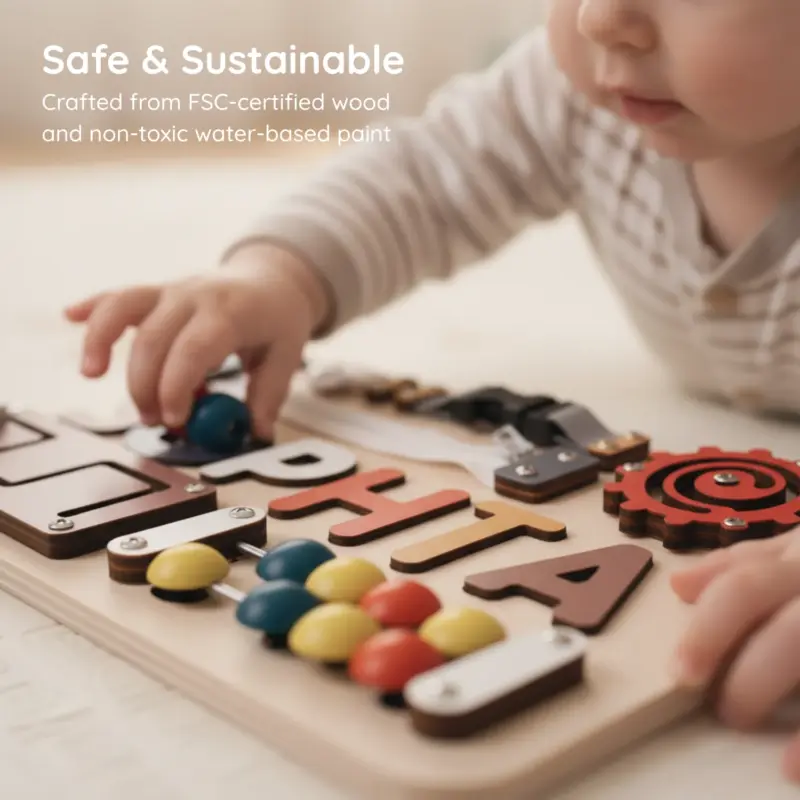

Zips & Buckles – Wooden Montessori Busy Board
Object-to-Picture Matching
- What it develops: Symbolic representation (photo = object), visual discrimination, pre-literacy abstraction. 3 real objects + 3 photo cards. Progress to photo-to-photo, then photo-to-name card.
Simple Food Preparation — Banana
- What it develops: Practical life, bilateral coordination, concentration, real-outcome work cycle. Child-safe crinkle cutter, banana (pre-peeled), small board, bowl. Demonstrate one slow cut. Step back.
Name Puzzle
- What it develops: Pre-literacy, identity vocabulary, fine motor, Three-Period Lesson for letters. Place each letter slowly, say its name: “This is M. M is the first letter in your name.” At this age, a child’s own name is the most motivating word in their vocabulary — which is why a personalized name puzzle builds letter recognition faster than any generic alphabet toy.
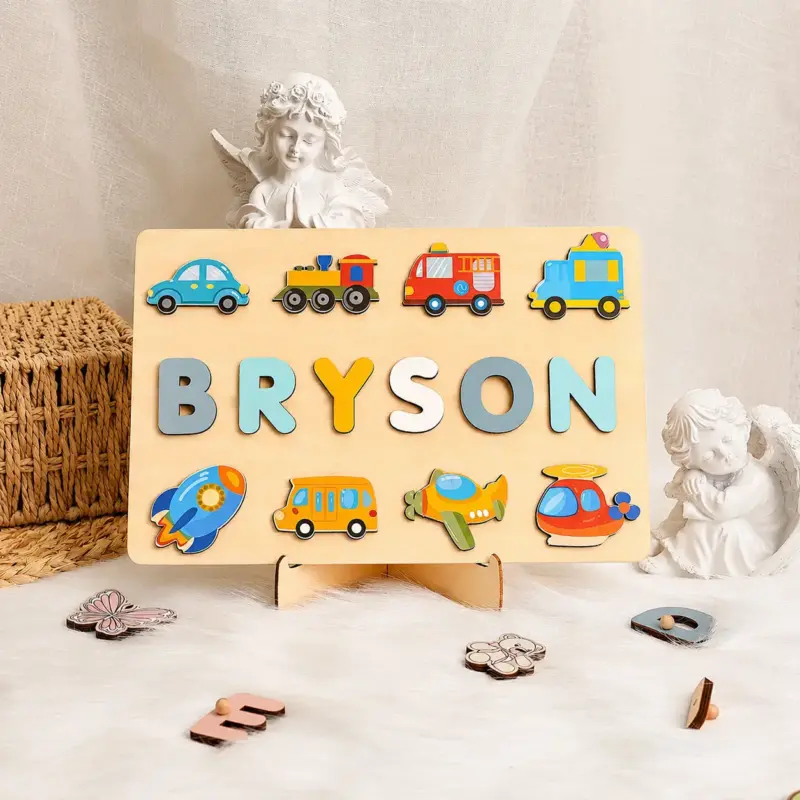
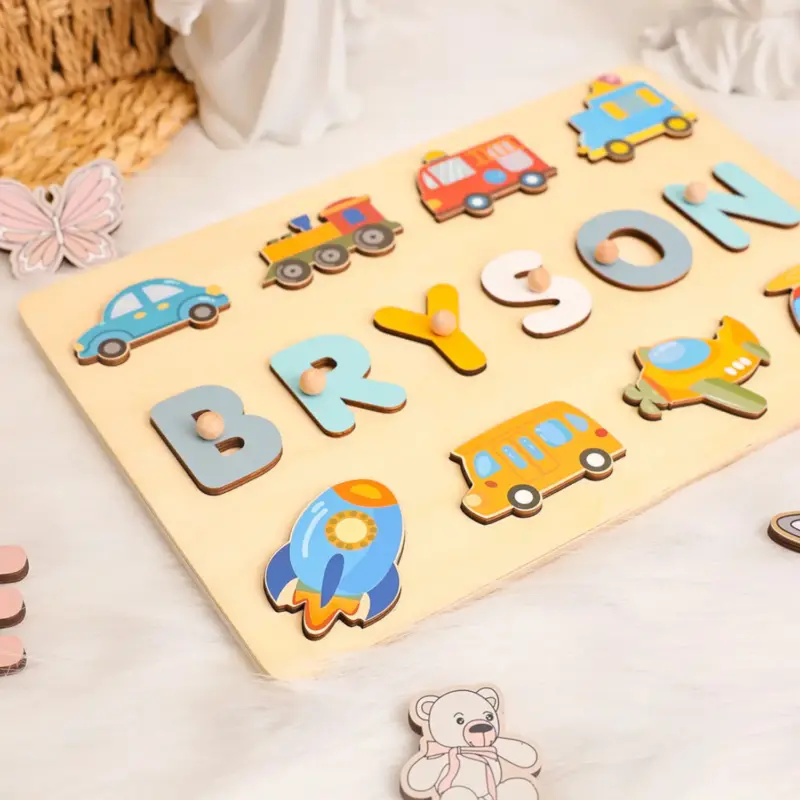
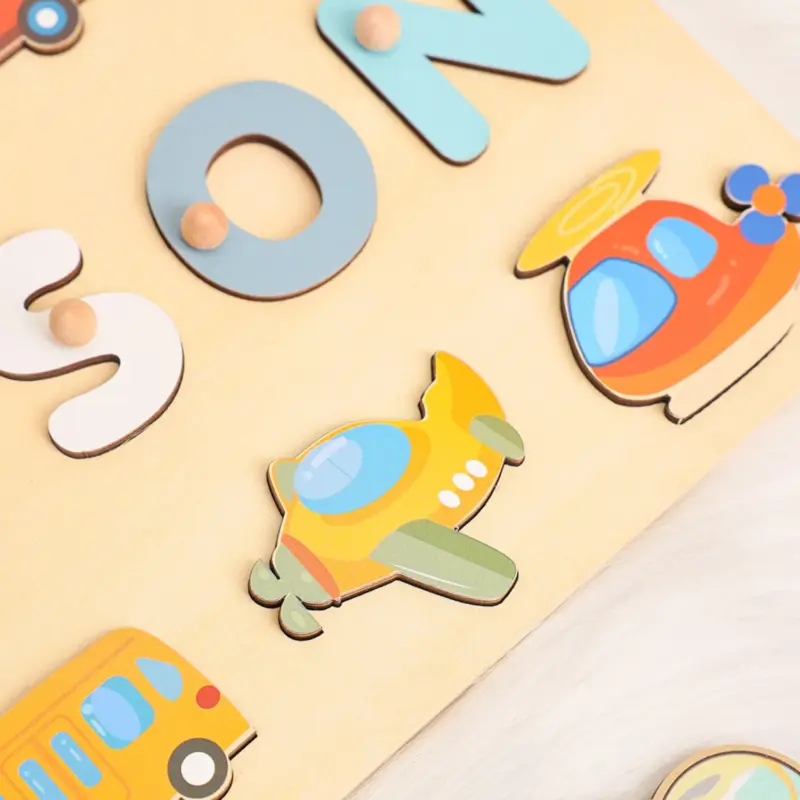
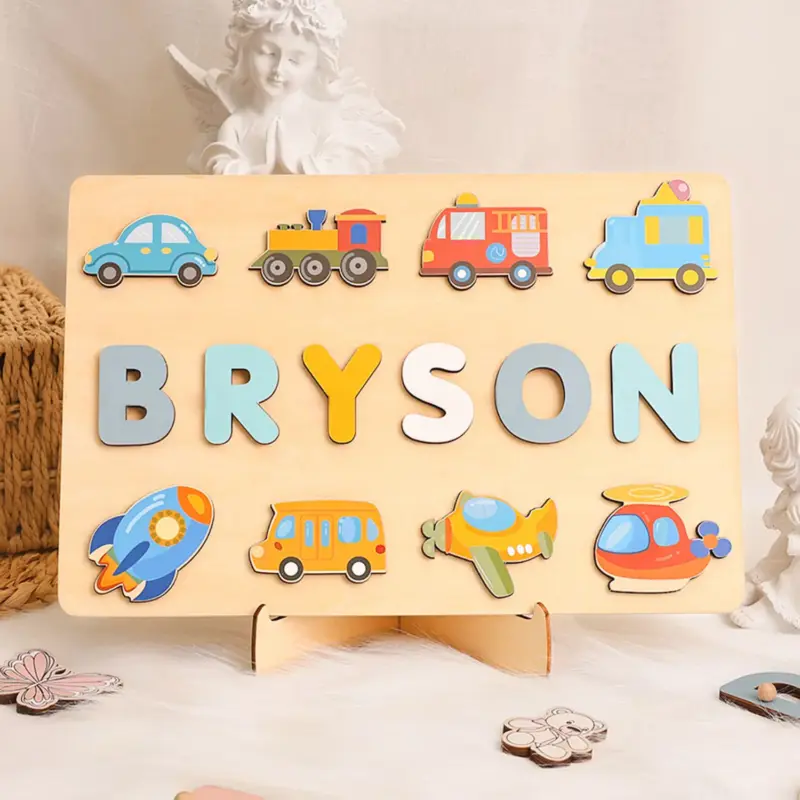
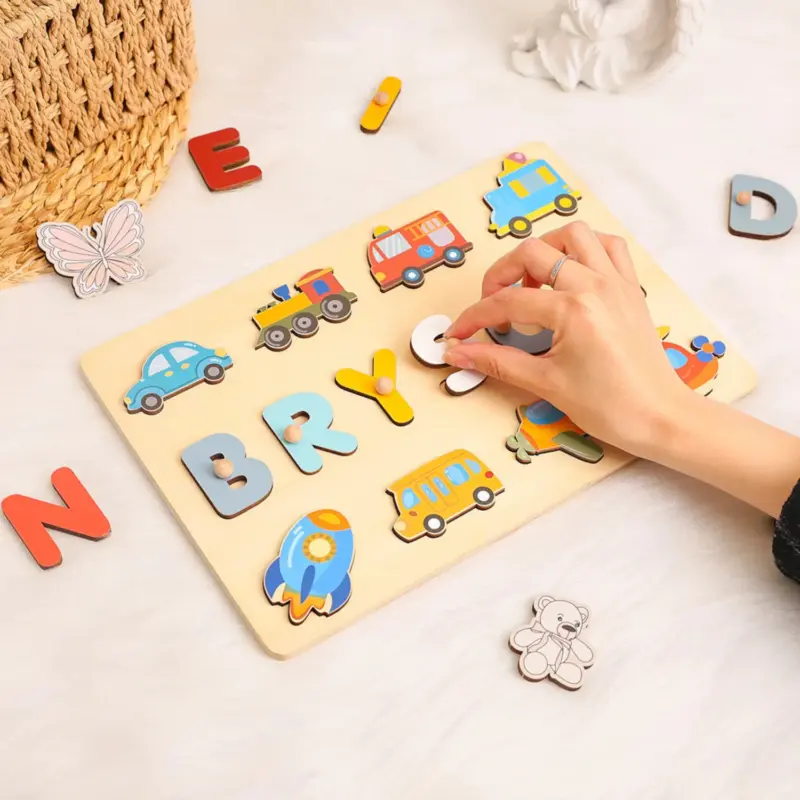
Vehicle Theme – Wooden Montessori Name Puzzle
Gross Motor Obstacle Course (5-Minute Setup)
- What it develops: Vestibular integration, proprioception, and gross motor coordination. 3 cushions + low stool + blanket tunnel. Build it — let them discover it without direction.
These are the core practical life activities taking root — and the same drive that makes them work at 22 months intensifies further into the activities that define the 2-year-old window.
The 5 Most Common Montessori Mistakes With 1-Year-Olds
Montessori activities for 1-year-olds fail almost never because of the activity. They fail because of what the adult does while the child is doing it.
- Mistake 1 — Staying inside the activity. Guiding hands, narrating actions, asking questions every 30 seconds. The child focuses on you instead of the task. Fix: present once, step back 3 feet, pick up a book, look away.
- Mistake 2 — Too many activities on the shelf creates the same overwhelm as a cluttered toy room — your child samples everything and commits to nothing. This isn’t a theory — research from the University of Toledo found that toddlers with fewer toys available showed significantly longer, more focused engagement per activity. Less choice, more depth. When 16 toys were available instead of 4, children spent less time with each and explored them less thoroughly. For a Montessori shelf, that translates directly: 5–7 activities maximum, rotated every 10–14 days. Fix: maximum 4–6 activities. Rotate when mastery is evident, not on a timer.
- Mistake 3 — Introducing activities too early. Signs: consistent frustration, throws materials, never returns. Fix: use the developmental brackets. If frustration appears consistently, the activity is 4–6 weeks early. Shelve and return.
- Mistake 4 — Correcting instead of resetting. If the activity has built-in control of error (puzzle piece doesn’t fit when wrong), say nothing. The material is the teacher. If no built-in correction, quietly reset and step back — no commentary.
- Mistake 5 — Praise during the work cycle. “Good job!” after every transfer makes it about pleasing you — not the satisfaction of the work. Fix: replace evaluative praise with observation (“you did it”) or warm presence without verbal evaluation.
The Minimum Viable Montessori Setup for a 1-Year-Old
Everything in this setup reflects what AMI describes as the prepared environment for the first plane of development: materials sized for small hands, activities accessible without adult help, and enough space between items that your child’s eye — and attention — can land on one thing at a time. You don’t need a dedicated playroom. You need one low surface, a small tray, and a clear floor. You don’t need a dedicated playroom, a custom shelf, or $500 of materials. Here’s the actual minimum.
1. One low surface at child height — a wooden board on risers, a low shelf, or a low coffee table. The child must see and reach all activities independently.
2. 4–6 activities maximum — across areas: 1 fine motor, 1 practical life, 1 language/vocabulary, 1 gross motor. No more.
3. Activities on trays — any tray defines the workspace, contains materials, signals “this is one complete activity,” and makes cleanup self-evident. The tray is the most important Montessori tool that costs almost nothing.
4. Clear floor space for movement — 6×6 feet minimum. At this age, gross motor freedom is not a break from Montessori — it IS Montessori.
Rotation every 10–14 days tends to work better than weekly — and the room-by-room approach that makes practical life activities sustainable at home is simpler to implement than most guides suggest.
Your Questions Answered
Is 1 year old too young for Montessori activities?
Not at all — 12 months is an excellent time to begin. The key is matching activities to the specific sub-stage. A 12-month-old engages meaningfully with object permanence boxes, treasure baskets, and simple sorting — but water pouring and dressing frames will frustrate them because the bilateral coordination required hasn’t developed yet. Use the 12–15 month bracket as your starting point.
How long should a Montessori activity take for a 1-year-old?
At 12 months, 3–5 minutes of focused engagement is typical and appropriate. By 18 months, a well-matched activity can hold concentrated attention for 10–15 minutes. The adult’s job is not to extend the activity — it’s to make the work cycle completable within the child’s natural window. When the child moves away, that’s completion, not failure.
What Montessori materials do I actually need for a 1-year-old?
Very few. The essentials: an object permanence box (from 12 months), a wooden peg puzzle with large knobs (from 15 months), a spooning transfer tray (from 15 months), a vocabulary basket with realistic figurines (from 15 months), and a dressing activity board (from 18 months). Everything else can be assembled from household objects.
My 1-year-old won’t engage with Montessori activities. What’s wrong?
Three most common causes: the activity was introduced too early for their stage; the adult is too present during the activity (child focuses on adult instead of task); or too many activities accessible at once. Check against the bracket, step back further, and reduce the shelf to 3–4 items. If abandonment happens consistently over 3 days, the activity is likely 4–6 weeks ahead of readiness.
What’s the difference between Montessori activities and regular toddler activities?
Three key differences. First, Montessori activities target one specific developmental skill rather than general entertainment. Second, they’re designed for the full work cycle — begin, do, finish, put away — independently. Third, they contain built-in control of error: the activity tells the child when something is wrong, without adult correction.
One Activity. One Tray. One Step Back.
Montessori at home with a 1-year-old is not a curriculum to implement. It’s a way of seeing your child — noticing what they’re ready for, offering it once, and stepping back to let them discover it. The activity is the vehicle. The concentration, independence, and quiet competence your child builds are the destination.
Start with one activity from your child’s current bracket. Set it up on a tray. Present it once, slowly. Then leave the room if you can. Come back to find your child fully absorbed in something that looks, from the outside, like play — and is, from the inside, serious work.
Ready to add something to the shelf? Wooden toys for the 12–24 month window — activity boards, stacking sets, name puzzles — are built around exactly the skills this guide covers. One tray. One activity. That’s all you need to start.