
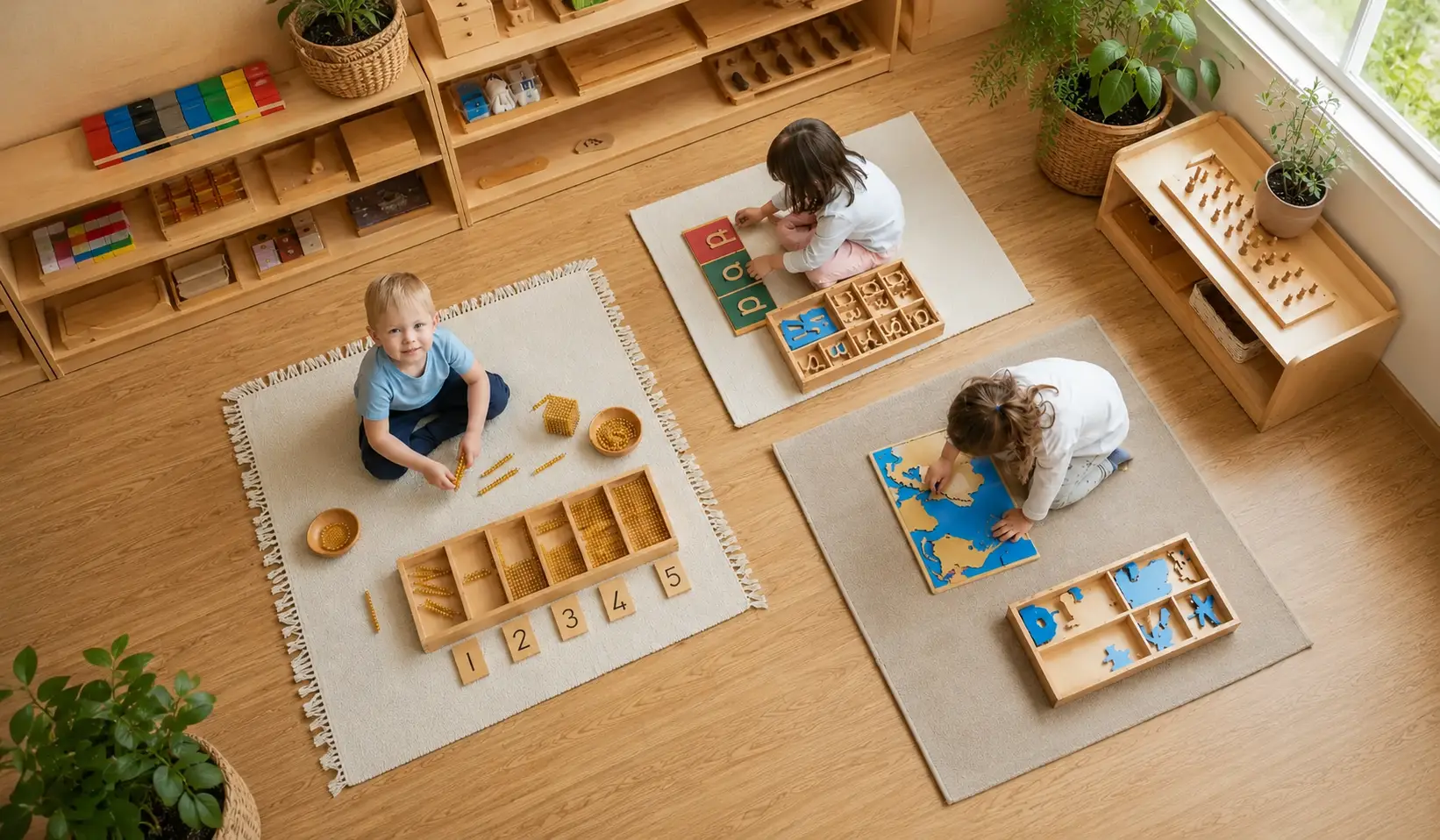
Walk into a Montessori classroom for the first time and you might see children moving freely, choosing their own materials, working at their own pace — while the teacher sits quietly to one side. Your first reaction might be: is anyone actually in charge here?
That reaction is completely understandable. It’s also where most Montessori misconceptions begin. Montessori looks unfamiliar because it IS different — not less rigorous, but structured differently: the order is embedded in the environment rather than imposed by an adult schedule. Some Montessori misconceptions are simple misreadings of that difference. Others have a genuine grain of truth that deserves honest engagement. This guide addresses all 10. Each misconception dissolves when measured against the actual method Montessori built from clinical observation — not the version content marketing has created. That’s the standard this guide uses.
| Montessori misconceptions are persistent misunderstandings about the Montessori philosophy — ranging from the belief that classrooms are unstructured to the assumption that the Montessori label guarantees a specific quality. Many arise from the genuine difference between how Montessori environments look compared to traditional schooling, making unfamiliar structure appear to be absent structure. |
| The misconceptions that do the most damage are not the dramatic ones. They’re the quiet ones that make parents choose not to try Montessori — or lead families into a school that calls itself Montessori without actually being one. Both outcomes are avoidable with the right information. – Katy Lenoir, Preschool & Elementary Expert (3–12) |
Misconception 1 — “Montessori Is Unstructured”
- The misconception: “Children wander around doing whatever they want. No lessons, no schedule, no teacher in charge. It’s basically organized chaos.”
- The fuller picture: Montessori classrooms are highly structured — but the structure lives in the prepared environment rather than a teacher-directed schedule. Every material has a specific place, purpose, and presentation sequence. The child chooses from a curated set of materials — not an infinite free-for-all. The Montessori guide observes continuously, tracks progress, and determines which presentations are needed next. The structure isn’t visible because it isn’t imposed. An adult-directed classroom structures behavior from outside. Montessori structures the environment itself so the child’s own choices move them through a developmental sequence.
- The grain of truth: A poorly implemented Montessori classroom — untrained teacher, insufficient materials — CAN look chaotic. That’s a fidelity problem, not a philosophy problem. Authentic, high-fidelity environments are among the most thoughtfully structured spaces in early education.
Misconception 2 — “Montessori Doesn’t Teach Reading, Writing, or Math”
- The misconception: “Montessori is all play and practical life. My child needs phonics, arithmetic, and writing — and Montessori won’t teach them.”
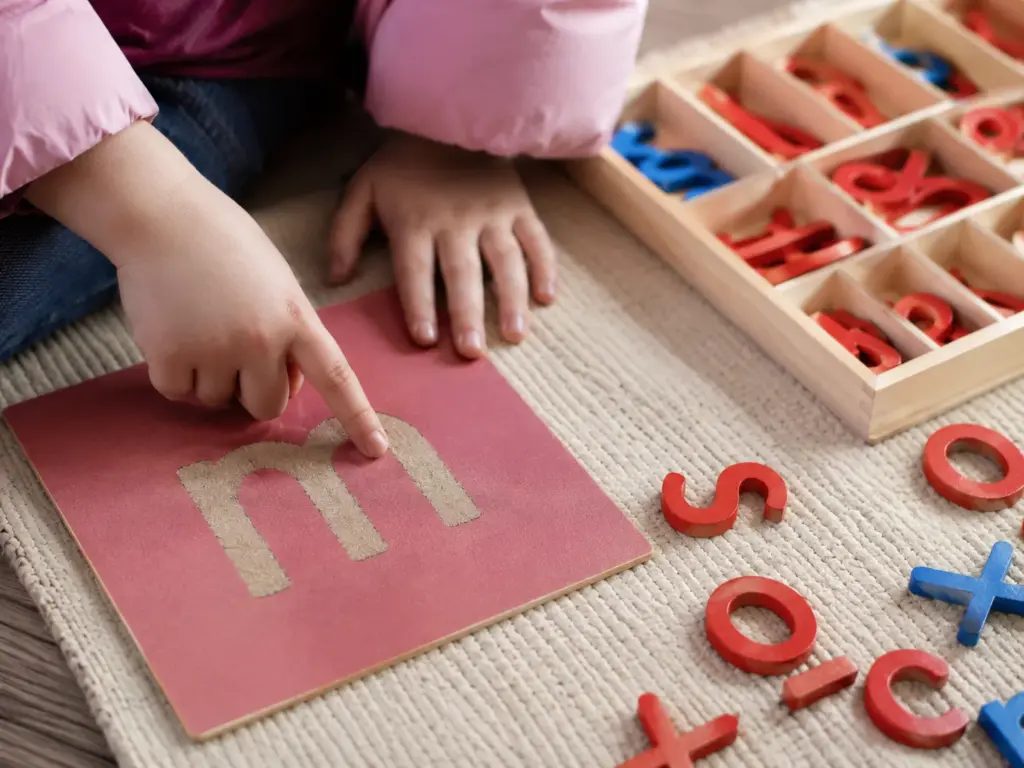
- The fuller picture: Montessori teaches all of these — through a concrete-to-abstract sequence that research suggests produces stronger long-term understanding than symbol-first instruction. Sandpaper letters build phoneme-grapheme connections before pencil touches paper. The moveable alphabet enables composition before fine motor mechanics are mature. The golden bead material makes place value something a child can hold in both hands.
Among the most-cited peer-reviewed studies on Montessori academic outcomes is Lillard and Else-Quest’s 2006 research published in Science, which found advantages in literacy, mathematics, and executive function for children attending higher-fidelity Montessori programs — with the strongest effects observed in schools operating with full certification and authentic methodology. The research was conducted in Milwaukee and assessed children at ages 5 and 12; findings were strongest where program fidelity was highest.
- The grain of truth: Montessori does not follow the traditional scope-and-sequence. A child might read chapter books at 4.5 and not have done formal handwriting until 5. The sequence is different — not absent.
Misconception 3 — “Montessori Is Only for Young Children”
- The misconception: “Lovely preschool approach, but after age 6, children need structured academics.”
- The fuller picture: Maria Montessori designed a full developmental span: Nido (birth–18mo), Infant/Toddler (18mo–3yr), Primary (3–6yr), Elementary (6–12yr), Adolescent (12–18yr). Each plane has distinct philosophy, materials, and approach. Elementary Montessori is built around the child’s new capacity for reason, imagination, and moral thinking — what Montessori called the second plane of development. The materials change completely. Academic rigor deepens. Katy’s experience spanning both the 3–6 and 6–12 age groups confirms: children who arrive in elementary with authentic primary Montessori work demonstrate readiness that takes years to build in traditional settings.
Misconception 4 — “Montessori Is Only for Wealthy Families”
- The misconception: “Montessori schools cost $20,000 a year. It’s not accessible to regular families.”
- The fuller picture: Maria Montessori established her first Children’s House in 1907 in San Lorenzo, Rome — one of the poorest urban districts in Italy, serving children of working families with no childcare. The method was built for accessibility, not exclusivity. Today, over 500 publicly funded Montessori schools operate in the United States — charter, magnet, and district schools, entirely tuition-free. Additionally, Montessori principles can be practiced at home through the prepared environment, practical life participation, freedom within limits, and following the child — everything a Montessori home environment is built on.
- The grain of truth: High-quality, properly certified private Montessori schools are genuinely expensive. But the philosophy and many of its practices are not.
Misconception 5 — “Montessori Only Works for Independent Children”
- The misconception: “Montessori sounds great for naturally independent children. My child needs more direction — they’d be lost.”
- The fuller picture: Montessori is designed to BUILD independence — not select for it. The child who arrives clingy and adult-dependent is exactly the child the prepared environment is designed to gradually release into confidence. Every material is self-correcting. Every successful work cycle builds self-efficacy quietly, without comparison or praise. Children with varying learning profiles — including those who find traditional instruction overwhelming — often thrive specifically because Montessori offers individual pacing, multisensory materials, and freedom from group-performance pressure.
| The children I’ve seen transformed most dramatically in Montessori settings are often the ones parents worried about bringing in. Not the independent kids. The ones who needed to learn what it felt like to trust themselves. – Katy Lenoir, Preschool & Elementary Expert (3–12) |
Misconception 6 — “Montessori Children Struggle in Traditional School”
- The misconception: “Montessori children are used to total freedom. When they enter a structured classroom, they’ll struggle to sit still and follow rules.”
- The fuller picture: Research does not support this concern. Among the most-cited evidence is Lillard and Else-Quest’s 2006 study in Science, which found that Montessori children in higher-fidelity programs demonstrated stronger executive function, literacy, and social skills at both age 5 and age 12 — suggesting the skills Montessori builds tend to transfer well, rather than create dependence on a Montessori environment. Subsequent research has generally found that Montessori alumni perform comparably or better in traditional settings, with the caveat that program fidelity matters: outcomes are strongest where the original program was authentic.
- The genuine nuance: The adjustment is learning to follow external transitions (bells, group pacing) rather than internal ones. In well-normalized children, this typically takes weeks, not months. A child from a low-fidelity program may genuinely struggle — but that’s a fidelity problem, not a Montessori problem.
Misconception 7 — “Montessori Suppresses Imagination and Play”
- The misconception: “Montessori uses only ‘real’ materials and discourages fantasy play. My child won’t be allowed to pretend.”
- The fuller picture — the honest version: This misconception has a genuine root. Maria Montessori did observe that young children (under 6) are better served by reality-based materials than fantasy ones — that realistic figurines serve language development better than cartoon equivalents, and that practical life materials serve development better than toy replicas. However, Montessori classrooms include art, music, storytelling, dramatic play, and open-ended creative work. The elementary curriculum is built around children’s exploding imaginative capacity — cosmic education stories, creative writing, historical narratives.
- The real position: Montessori distinguishes between teacher-directed fantasy (adults leading pretend scenarios) and child-initiated imagination (children creating their own). The second is not just permitted — it is the natural expression of the normalized child’s inner freedom. Misconceptions 1 and 7 both trace back to the same misreading — and the full philosophy on freedom within limits and reality in early childhood clarifies why the two are connected.
Misconception 8 — “You Need a Montessori School to Practice Montessori”
- The misconception: “Montessori is for schools. Unless my child attends a certified program, I can’t really do this at home.”
- The fuller picture: The Montessori philosophy is a framework for understanding how children develop — not a proprietary program requiring institutional delivery. The core principles translate entirely to the home: the prepared environment (low shelves, accessible materials), practical life participation (cooking, cleaning, self-care from the earliest age), freedom within limits (meaningful choices within safe boundaries), and following the child (observing what they’re drawn to and deepening it). A step stool at the kitchen counter is Montessori. A low shelf with 4–5 materials is Montessori. Stepping back when a child is struggling rather than immediately helping — that is very much Montessori.
- What a school adds: trained guides, the complete material set, multi-age community, and the 3-hour uninterrupted work cycle. All meaningful. None strictly required to begin.
Misconception 9 — “Montessori Toys = Montessori Education”
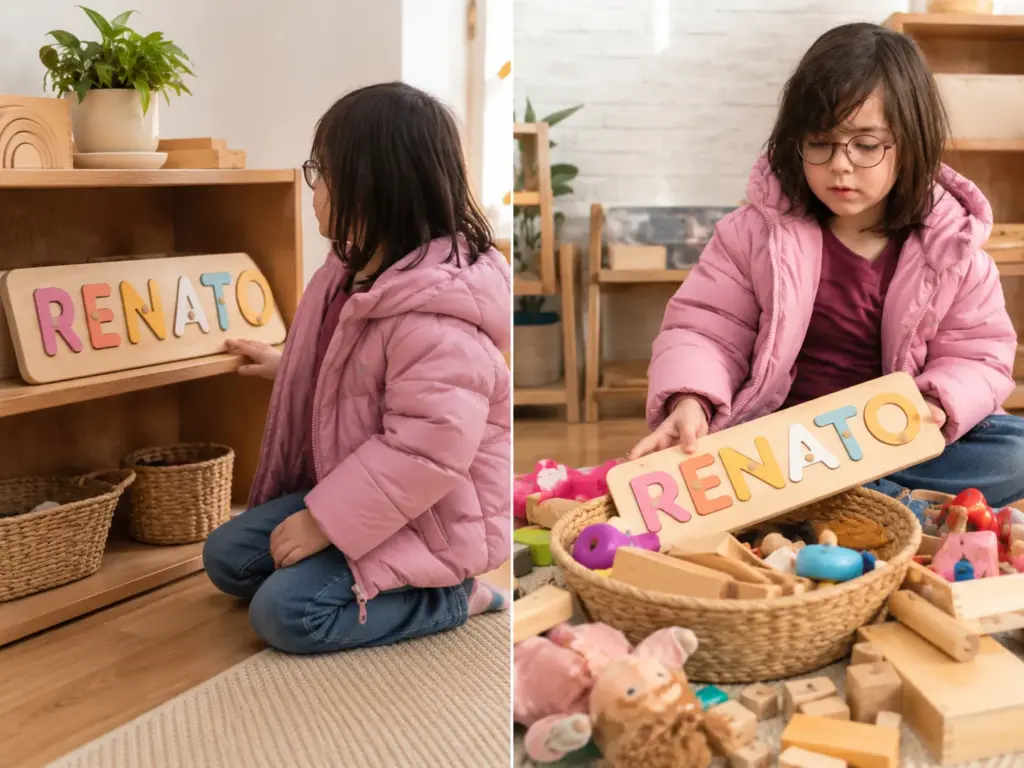
- The misconception: “I’ve been buying all the Montessori toys from Amazon. My child is getting Montessori.”
- The fuller picture: High-quality wooden toys — realistic figurines, natural materials, open-ended tools — are genuinely valuable. They provide richer sensory data than plastic alternatives, support fine motor development, and align with the Montessori principle that materials should be beautiful, purposeful, and real. But a toy is not a curriculum. What transforms a wooden peg puzzle from a fine toy into a Montessori material is the presentation sequence — how it’s introduced, what work cycle it sits within, how the control of error operates, and what the adult does (and doesn’t do) while the child works.
- The practical distinction: A name puzzle on a shelf with no presentation → a nice toy. A name puzzle presented following the Three-Period Lesson, placed at child height, returned to independently → a Montessori language activity. The good news: you don’t need to choose between the two. High-quality Montessori-aligned toys are the right foundation — they simply work best when paired with the Montessori adult behaviors that activate their developmental potential.
Misconception 10 — “All Montessori Schools Are the Same Quality”
- The misconception: “If the school’s sign says Montessori, it must be Montessori.”
- The fuller picture: “Montessori” is not a trademarked or legally protected term. Any school, teacher, or toy manufacturer can use it without certification, accreditation, or any adherence to Montessori principles. In the United States, this means the landscape ranges from rigorously certified programs with AMI– or AMS-trained teachers to daycare centers with the word “Montessori” in their name and no trained staff. This is the most practically important misconception for parents choosing a school.
| Quality Indicator | What It Signals |
| AMI or AMS teacher certification | Teacher completed a recognized training program (typically 1 year intensive) |
| 3-hour uninterrupted work cycle | The fundamental structure of authentic Montessori — not 45-minute rotations |
| Multi-age classroom (3-year span) | Children of different ages in the same space — essential to the method |
| Complete material set | Sensorial, practical life, language, and math materials all present |
| No external rewards/grades | Stars, stickers, and graded worksheets signal a non-Montessori approach |
| MACTE accreditation | External quality review by the Montessori Accreditation Council |
| The single conversation I have most often with families who say “we tried Montessori and it didn’t work” is this: when I ask which school they attended, and we look at whether it had certified teachers and a genuine 3-hour work cycle — the answer is almost always no. What didn’t work wasn’t Montessori. It was a school using the label without the substance. – Katy Lenoir, Preschool & Elementary Expert (3–12) |
Your Questions Answered
Is there research showing Montessori actually works?
Yes — peer-reviewed research exists. Among the most widely cited is a 2006 study published in Science by Angeline Lillard and Nicole Else-Quest, which examined Montessori children in Milwaukee at ages 5 and 12 and found advantages in literacy, mathematics, social cognition, and executive function for children attending higher-fidelity programs. The strongest findings were in schools where Montessori methodology was implemented authentically — with certified teachers, the full material sequence, and the uninterrupted work cycle. Subsequent research has generally pointed in the same direction: program fidelity is the critical variable.
Can I practice Montessori at home without a school?
Yes — many principles translate directly. The prepared environment (low shelves, accessible materials), practical life participation (cooking, cleaning, self-care), precise vocabulary during exploration, and the discipline of presenting once and stepping back are all home-accessible. What a school provides that’s harder to replicate: trained guides, the multi-age community, and the complete formal material set. Both approaches are valid. What a school provides that’s harder to replicate: trained guides, the multi-age community, and the complete formal material set. The practical life activities that form the home foundation are the natural starting point.
How do I know if a school calling itself Montessori is authentic?
Four core indicators: AMI or AMS teacher certification, a genuine 3-hour uninterrupted work cycle (not 45-minute rotations), a multi-age classroom spanning a 3-year range, and a complete set of Montessori materials. MACTE accreditation (Montessori Accreditation Council for Teacher Education) means external quality review. A school using worksheets, external rewards, or ability-grouped instruction is not operating authentically regardless of its name.
Does Montessori work for all children, including those with different learning needs?
Research and classroom experience both suggest Montessori’s individualized, multi-sensory, self-paced approach benefits a wide range of learners. The method was originally developed through Montessori’s work with children dismissed by the traditional system — it later proved equally effective for neurotypical children. Children who are highly independent and those who need more initial support both tend to progress well, because the curriculum meets each child at their actual developmental level rather than their age-grade expectation. The curriculum meets each child at their actual developmental level rather than their age-grade expectation — a capacity rooted in the absorbent mind framework that defines Montessori’s approach to the first six years.
The Two Montessori Misconceptions That Matter Most
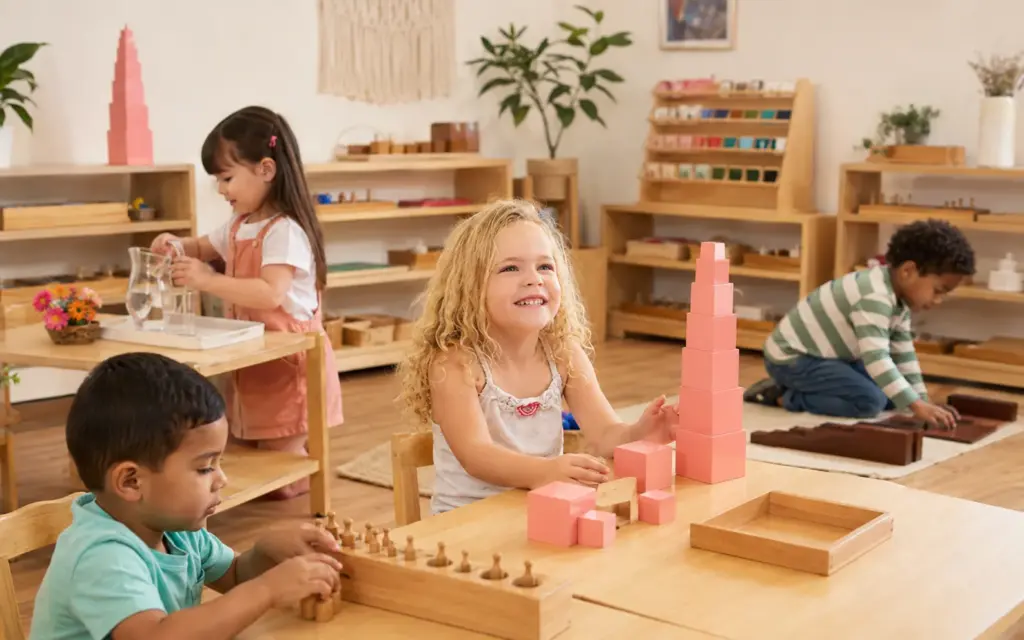
Montessori is not a mystery — but it does require a different frame than the schooling most adults experienced. Once you see that the structure is in the environment rather than the schedule, that the sequence is developmental rather than age-based, and that the adult role is observation rather than direction — most of the misconceptions resolve on their own.
The two that matter most practically: know that “Montessori” on a school sign means nothing without certified teachers and a genuine work cycle. And know that a beautiful wooden toy is the beginning of a Montessori home environment — not the end of one.
Parents who’ve worked through the misconceptions typically ask next about genuine trade-offs — and the research-based pros and cons gives the honest version, including what the 2025 PNAS data actually shows.
Curious where to start at home? Our age-by-age guides break down exactly what your child is ready for right now — or browse Kukoo’s materials by developmental stage if you’d like somewhere concrete to begin.