

Six is not five-with-more-vocabulary. It is a developmental transition — the close of the First Plane and the opening of the Second. The Montessori activities for 6-year-olds in this guide respond to that shift specifically: not harder versions of what worked at 5, but activities calibrated to the reasoning mind that has just arrived.
Your 6-year-old just told you their butterfly puzzle is for babies. Last year they worked it three times a week. This year, one look and they moved on. They’re not being difficult — their brain just crossed one of the most significant developmental thresholds of the first twelve years. The activity was right for a 5-year-old. It’s genuinely too simple now.
This guide explains what changed and what to do about it. Every activity here is chosen because it meets the capacity that has just arrived — the reasoning mind that wants to know why, how many, and how it all connects.
| Montessori activities for 6-year-olds respond to the Second Plane of Development — the shift from sensory-concrete learning (0–6 years) to reasoning-abstract learning (6–12 years) — by offering activities that require logical thinking, systems investigation, collaborative inquiry, and early abstraction rather than purely sensory or practical repetition. The most developmentally appropriate Montessori activities for 6-year-olds are those that give the reasoning mind something genuinely complex to work on: multi-step practical life sequences, concrete arithmetic leading to abstract operations, classification and taxonomy, storytelling and writing, and collaborative projects with real-world outcomes. |
Quick reference by developmental domain:
| Domain | What a 6-year-old is working on | Activity type |
| Practical life | Multi-step independence; real contribution to household | Cooking sequences, sewing, plant care, organizing |
| Language | Reading emerging; writing beginning; narrative vocabulary | Word building, writing stories, reading aloud, copywork |
| Math | Concrete-to-abstract transition; number operations | Arithmetic with materials, domino logic, measuring |
| Science/Cultural | Classification; taxonomy; cause-effect investigation | Nature study, botany, zoology, history timeline |
| Creative | Deliberate expression; narrative art; collaborative creation | Watercolor, clay, music, drawing with intention |
| Social/emotional | Collaborative rule-following; empathy; negotiation | Group games, collaborative construction, conflict resolution |
What Changes at 6 — The Developmental Portrait Nobody Describes
At 6, the First Plane of Development — the sensory, absorptive, hand-building phase of 0–6 — closes. The Second Plane opens. This transition marks the final stage of the developmental arc from birth through age 6 — and the activities that served each previous stage are the foundation the Second Plane reasoning mind now builds on. This is not a gradual change; it is a qualitative developmental shift, and the activities that respond to it look genuinely different from anything on a 0–6 Montessori shelf.
As AMI documents, the First Plane child absorbs the world through direct sensory experience and physical manipulation. The Second Plane child — starting around 6 — begins to reason about it. Four specific capacities emerge that were not reliably present at 5:
- Logical causation. Your 6-year-old can now hold a causal chain with multiple steps: “If I change this, then that will change, which will cause this.” This opens the door to scientific investigation, arithmetic reasoning, and systems thinking that were genuinely inaccessible before. It’s why domino sequences and simple machines suddenly produce sustained concentration — not because they’re new, but because your child’s mind can now follow the logic.
- Rule-following as social pleasure. The 5-year-old tolerated rules. The 6-year-old enjoys them — because rules create the predictability that the developing logical mind finds satisfying. This is why board games, project structures, and sequential procedures suddenly become engaging rather than frustrating.
- Abstract symbol handling (with concrete support). The number “7” carries real meaning now — not because it was taught, but because your child has sufficient concrete quantity experience that the symbol has a referent. This is the transition window for concrete arithmetic materials: the bridge between physical manipulation and abstract notation.
- Collaborative inquiry. Your 6-year-old can now work with another person toward a genuine shared goal — negotiating, dividing tasks, tolerating someone else’s method. Collaborative activities are developmentally appropriate for the first time, not just socially tolerated.
Research from Harvard’s Center on the Developing Child confirms that the executive function capacities making sustained reasoning and collaborative work possible — working memory, cognitive flexibility, inhibitory control — are in a critical development window through ages 6–8. The Montessori Second Plane environment is designed precisely for this window.
Every activity in this guide is designed to meet at least one of these four capacities. An activity that doesn’t require logical reasoning, rule engagement, emerging abstraction, or collaborative capacity is not well-matched to 6-year-old development — regardless of how well it worked at 5.
| Six is my favorite transition to observe in the prepared environment — because it’s the most visible. The child who was concentrating on sensory cylinder blocks at 5 is now asking why the cylinders graduate by a constant increment. The ‘what’ has shifted to ‘why’ and ‘how many’ and ‘what if.’ Every activity I offer a 6-year-old is designed to meet that specific question — and disappoint it as little as possible.”— Katy Lenoir, AMI-certified Preschool & Elementary Expert (3–12) |
What Your 6-Year-Old Has Outgrown — Updating the Shelf
Before adding new activities, it’s worth identifying what should come off the shelf — because a 6-year-old offered only 4–5-year-old materials will disengage entirely. Not because Montessori doesn’t work for them, but because the developmental mismatch is real.
Activities your 6-year-old has typically outgrown:
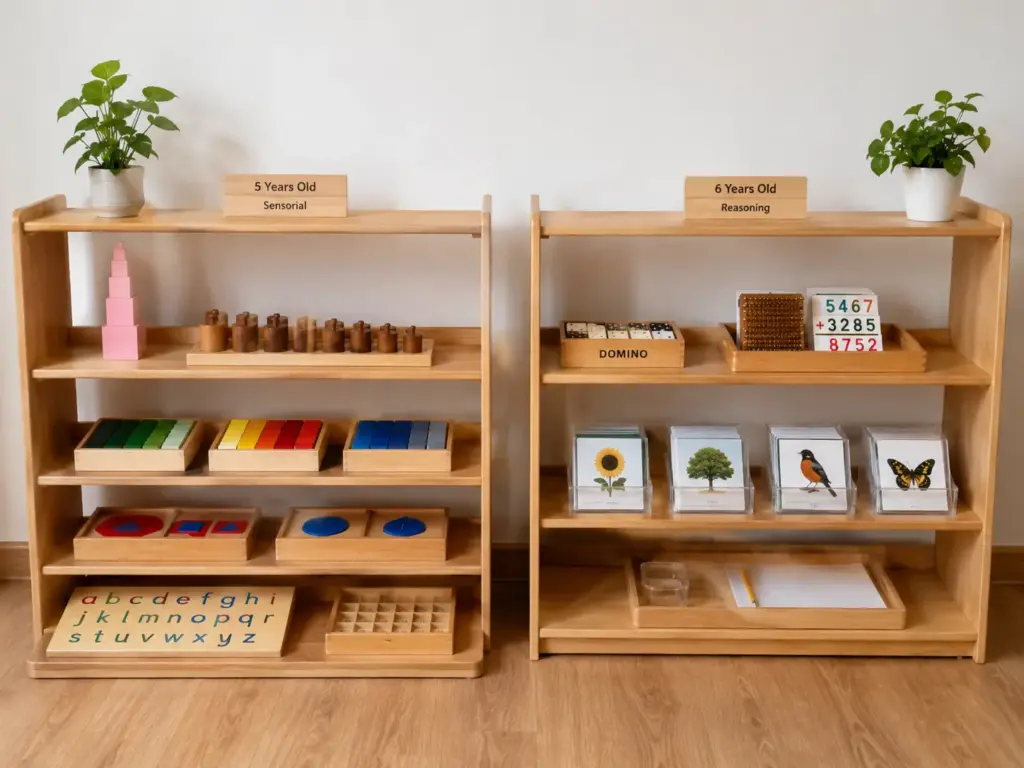
- Single-step sensorial materials in their primary function (pink tower, brown stair, color tablets used for basic sorting). The sensorial work is complete; these can be repurposed for extension work — measured, compared, used as data for math — but not for their original function.
- Simple shape-sorting and basic stacking — one-step spatial challenges your child completes in seconds without visible concentration.
- Knobbed cylinder blocks (primary sensorial function) — grip training is complete. The three-jaw chuck has been built. The material has done its work.
- Basic name puzzle — unless actively used for independent letter study, typically mastered by 5–5.5 years.
The materials that produced 20-minute work cycles during the consolidation year at 5 — phonetic books, stamp game, basic nomenclature — are the most common candidates for rotation at 6, precisely because they were mastered so thoroughly.
The signal: when your child completes a shelf activity in under 60 seconds without any visible concentration, that activity is ready to rotate to storage. A correctly matched shelf for a 6-year-old reliably produces 15–30 minute work cycles. If it doesn’t, the materials are behind your child’s current developmental level. The 5 toys chosen for the 6-year-old’s reasoning mind translate these developmental principles into concrete materials — each one selected because it meets a specific Second Plane capacity.
Practical Life — Real Contribution at the Right Level
At 6, practical life moves from skill-building to genuine contribution. The 3-year-old who swept was practicing. The 6-year-old who sweeps is maintaining the shared environment — and the difference in motivation is significant.
Multi-step food preparation (full sequences, real outcomes).
Your 6-year-old can manage a complete recipe with a beginning, middle, and end — washing, cutting with an appropriate knife, assembling, and serving. This is not pouring practice; it is actual food production. The intellectual dimension — reading a pictorial recipe card, measuring, sequencing — engages the logical mind while the physical sequence builds fine motor endurance. The real outcome (a meal the family eats) is the most powerful motivator Montessori practical life offers — and Montessori kitchen tools sized for real work make the full sequence completable without an adult in the way.
Sewing and repair work.
Basic sewing on burlap, then fabric — running stitch, then more complex stitches. This is practical life that also develops the dynamic tripod grip and fine motor endurance that sustained writing requires. The real-world outcome — a completed item your child uses — is the motivator.
Organizational systems.
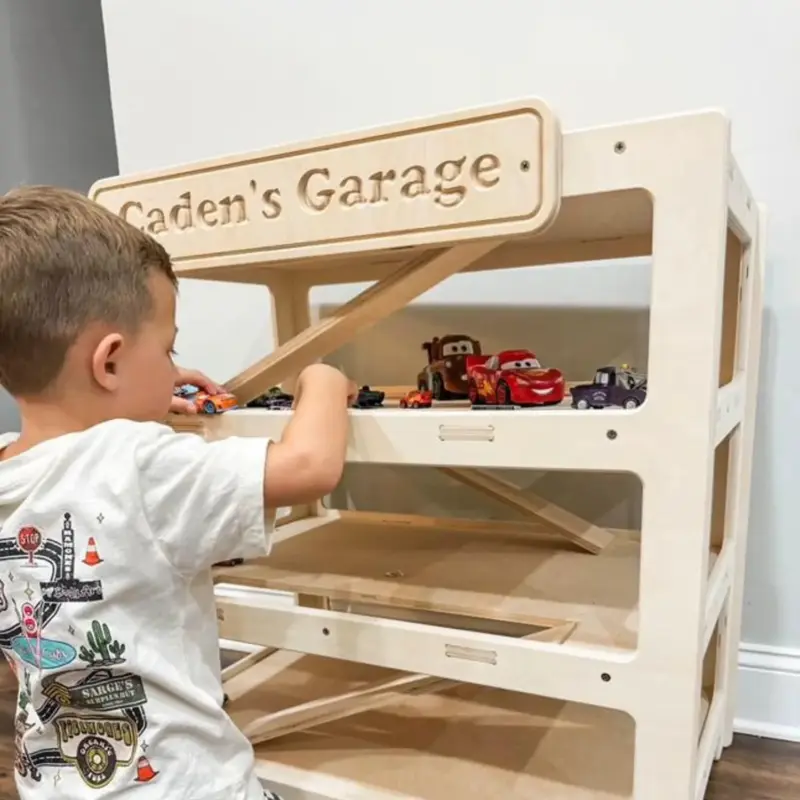
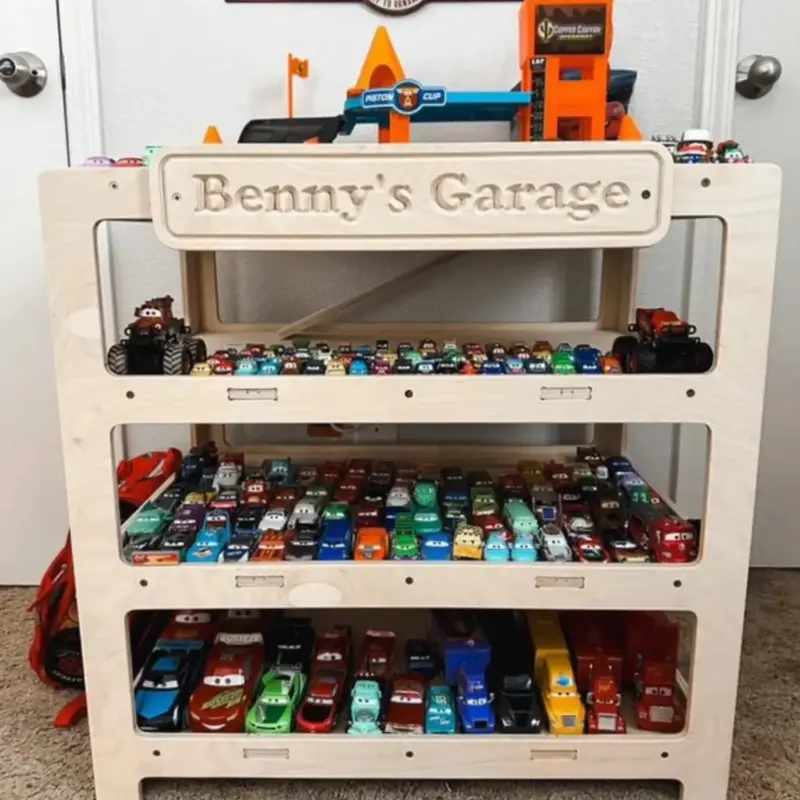
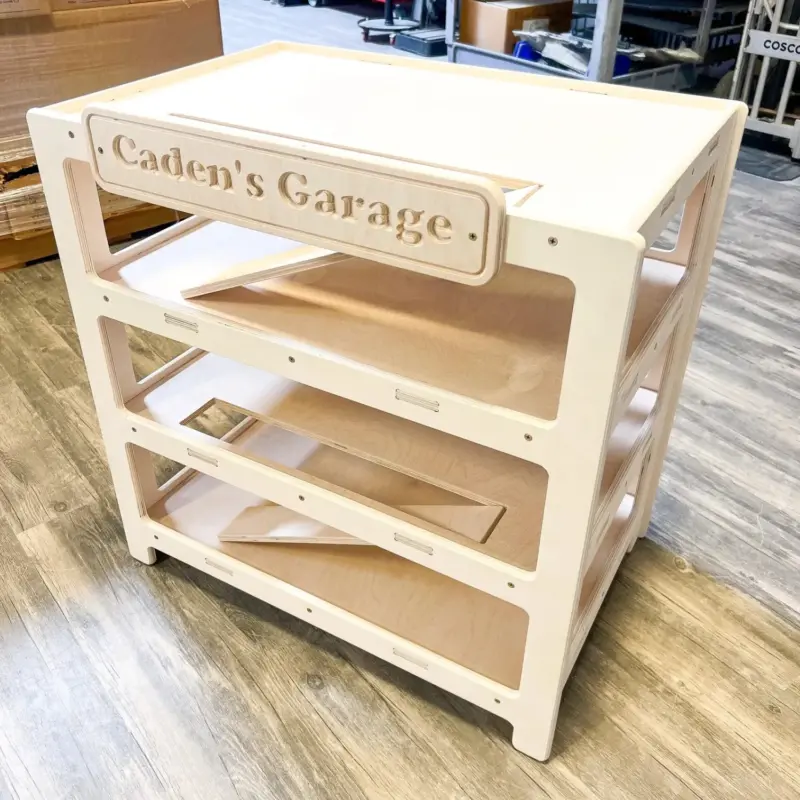
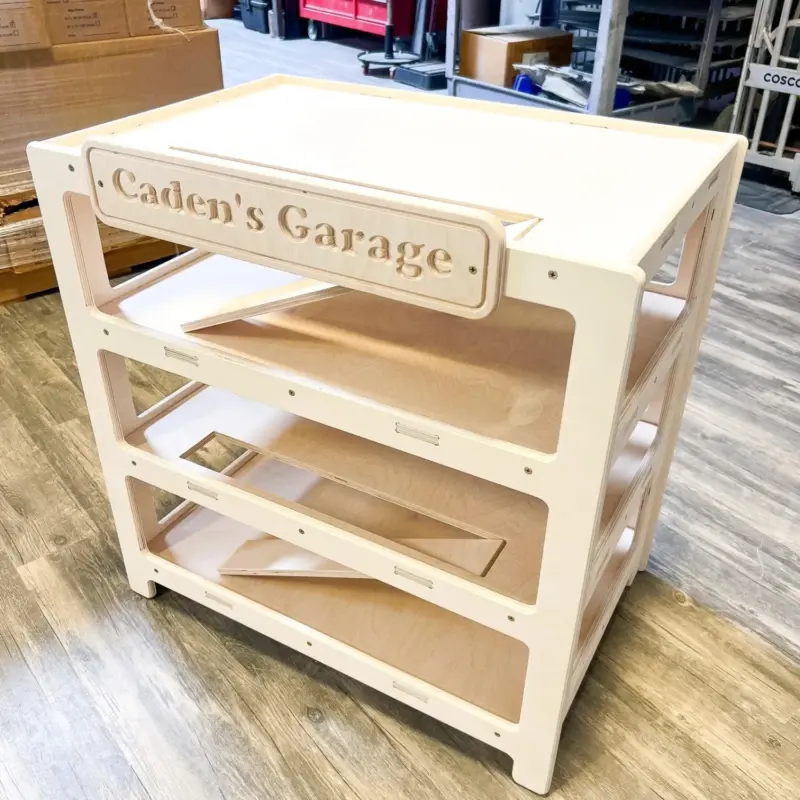
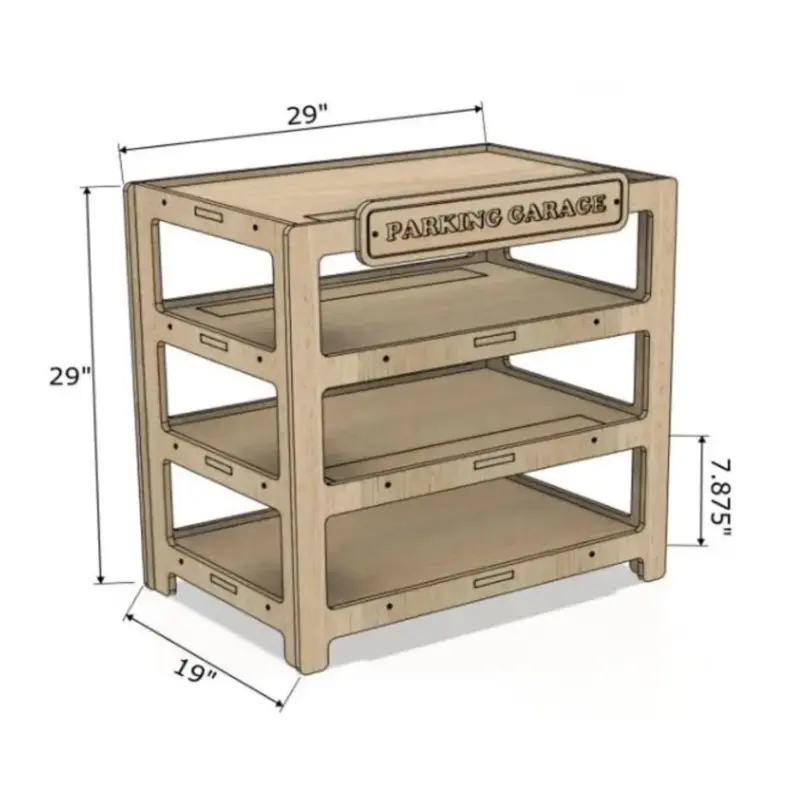
Your 6-year-old can design their own organizational system for their room, their materials, or their shelf — categorizing by type, by frequency of use, by domain. This is the taxonomic mind expressing itself through practical life. Kukoo’s Garage Toy Car Display is a natural vehicle for this: your child creates and maintains their own classification system for their vehicle collection, assigns placement logic, and keeps it independently. Organizational STEM and practical life simultaneously.
Plant and garden care (full cycle).
Planting from seed, watering on schedule, observing growth, noting changes, harvesting. Your 6-year-old can maintain this independently over weeks and months — which is where the real Montessori practical life payoff lives: sustained responsibility, not a single-session activity.
Language — From Vocabulary to Written Expression
At 6, the language sensitive period is transitioning: the unconscious absorption of the first six years is giving way to conscious exploration of language — how it’s built, what it means, and how to use it in writing.
Word building and spelling (concrete materials).
Using wooden letter tiles or the moveable alphabet to build words — not just your child’s name, but words from the world they’re investigating. A child studying dinosaurs builds dinosaur vocabulary words. The same letter-handling that began with the name puzzle now extends into the child’s domain of current interest.
Copywork (deliberate handwriting practice).
Your 6-year-old develops writing precision through copying passages from books they love — not worksheets. The content matters: copying a passage from a nature book they’ve been studying produces concentration that a random copywork sheet does not. Two to three sentences per session, focused on letter formation and spacing.
Storytelling and oral narration.
After reading aloud or exploring a topic, your 6-year-old narrates what they know — verbally first, then in dictation, then in their own writing. This oral-to-written sequence is how Montessori builds narrative writing capacity: the story exists in spoken form before the hand is asked to produce it.
Three-part nomenclature cards (advanced vocabulary — botany, zoology, geography).
At 6, nomenclature cards extend into scientific vocabulary: the parts of a flower, the parts of a fish, the continents and their features. Each card session is a Three-Period Lesson for precision vocabulary that the logical mind finds genuinely satisfying.
Math — The Concrete-to-Abstract Bridge
Math at 6 is the most important developmental transition in this guide — because it is the year when concrete quantity experience can first meaningfully connect to abstract symbolic operations. The 6-year-old who has handled beads, tiles, and counters for three years now has the concrete foundation that makes symbolic arithmetic meaningful rather than arbitrary.
Arithmetic wheels (operations through concrete rotation).
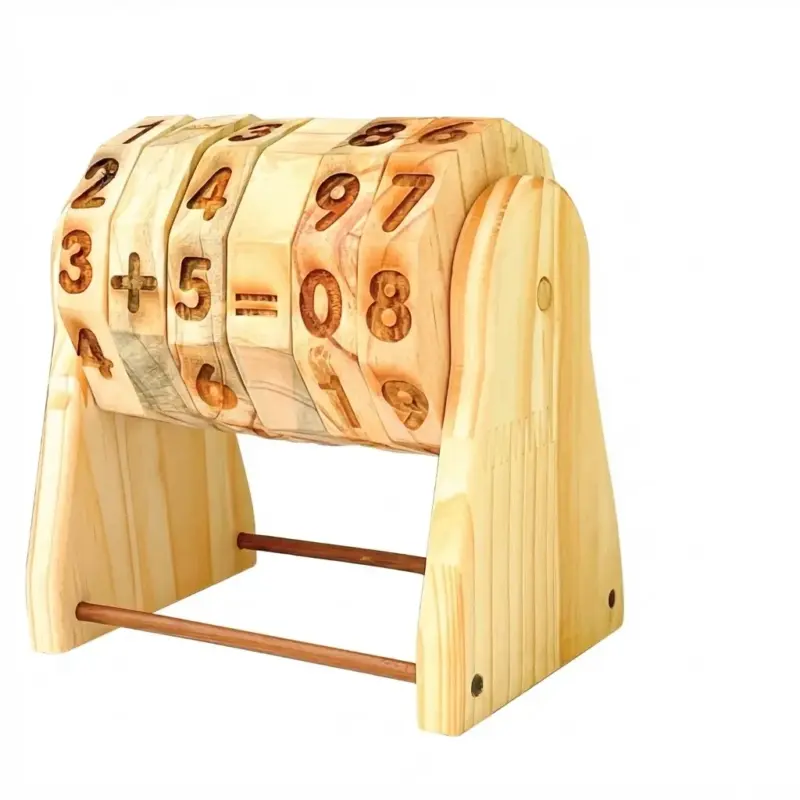
Your child rotates the arithmetic wheel to see addition, subtraction, multiplication, and division relationships emerge from physical movement — not from flashcards. The discovery that 5+3 and 2+6 and 4+4 are all “8” is experienced physically before it’s stated abstractly. This is the concrete-to-abstract progression at its most critical application for 6-year-olds. Kukoo’s Montessori Arithmetic Wheels are specifically designed for this transition: your child rotates to discover number relationships concretely, building the operational intuition that abstract arithmetic builds on.
Domino arithmetic.
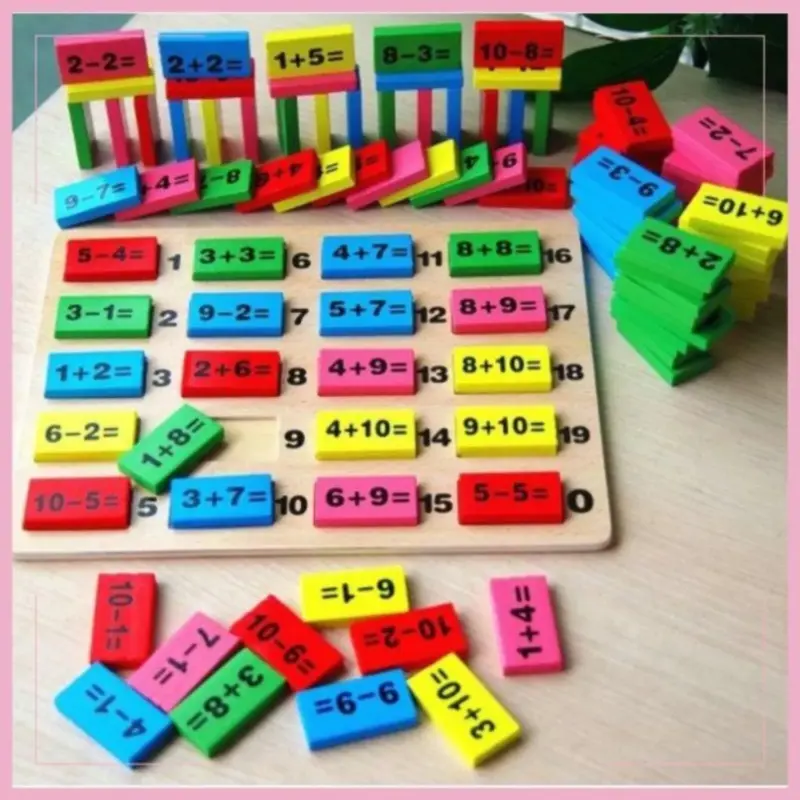
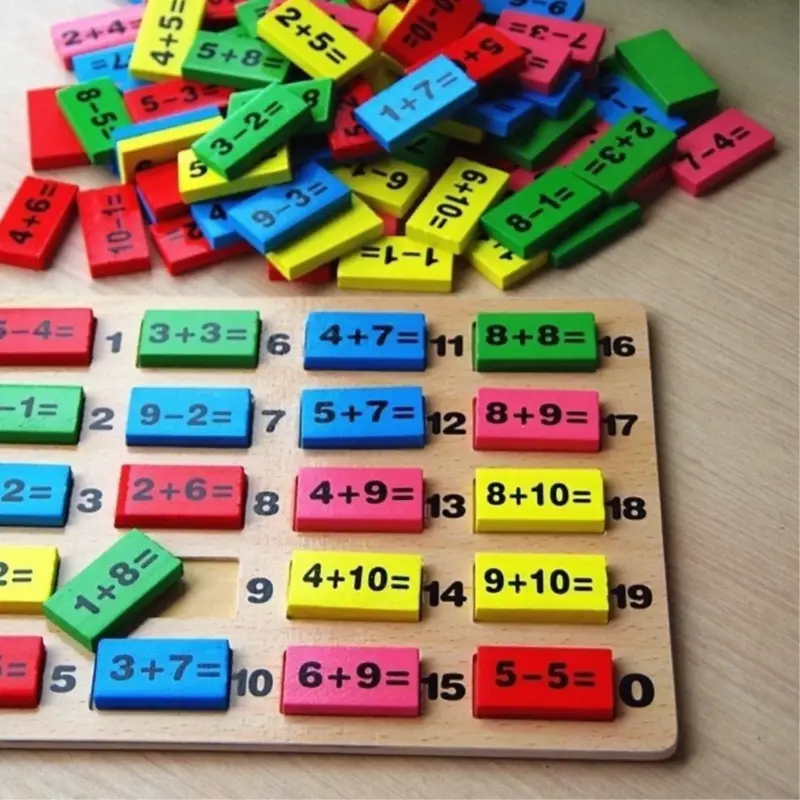
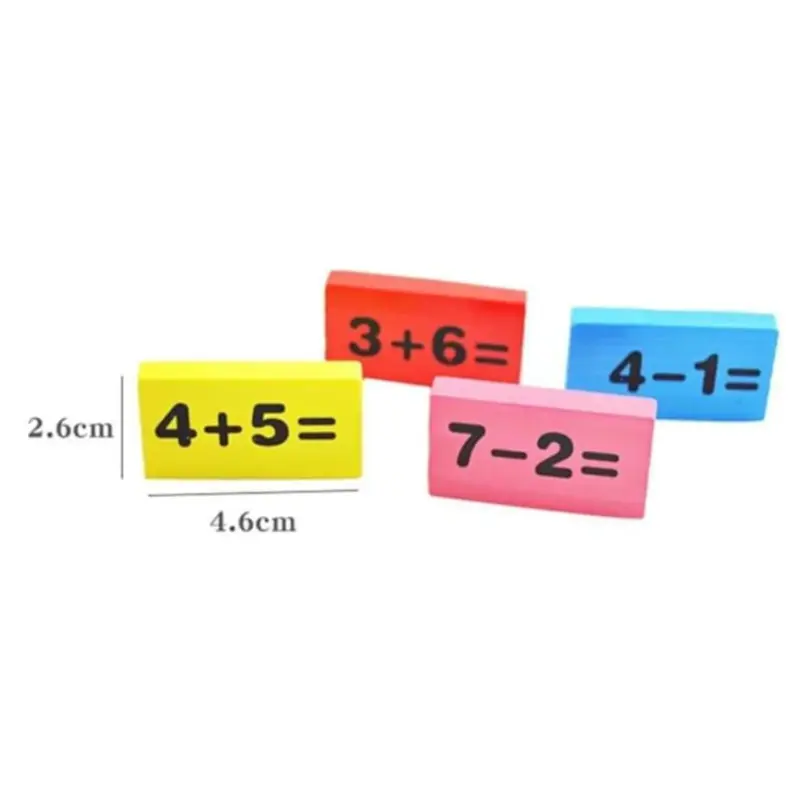
A full domino set used as a mathematics manipulative — not just for chain reaction play, but for quantity matching, addition (sum of dots on both halves), and pattern recognition. The 100-Piece Wooden Domino Set gives the logical mind 100 concrete objects to reason with — sorted, ordered, counted, added, and sequenced in ways that plastic counting tiles cannot replicate.
Measurement activities.
Measuring real objects in the environment — your child’s height, the room’s width, the volume of containers — with real measuring tools. Measurement is the application of number sense to spatial reality, and it produces the most sustained mathematical engagement for 6-year-olds because every measurement has a real answer that can be verified.
Story problems with concrete materials.
“You have 14 acorns. You want to share them equally between 3 baskets. How many go in each basket, and how many are left over?” This is division through physical manipulation — the concept arrives through the hands before the symbol is introduced. The problem format matters: real objects, real questions, real answers.
Science and Cultural Studies — The World as Curriculum
The 6-year-old’s “why” questions are not random. They are the beginning of what Montessori called the Cosmic Curriculum — the child’s drive to understand their place in the universe and how everything connects. Science and cultural activities at this age feed that drive directly.
Taxonomy and classification (animals, plants, rocks).
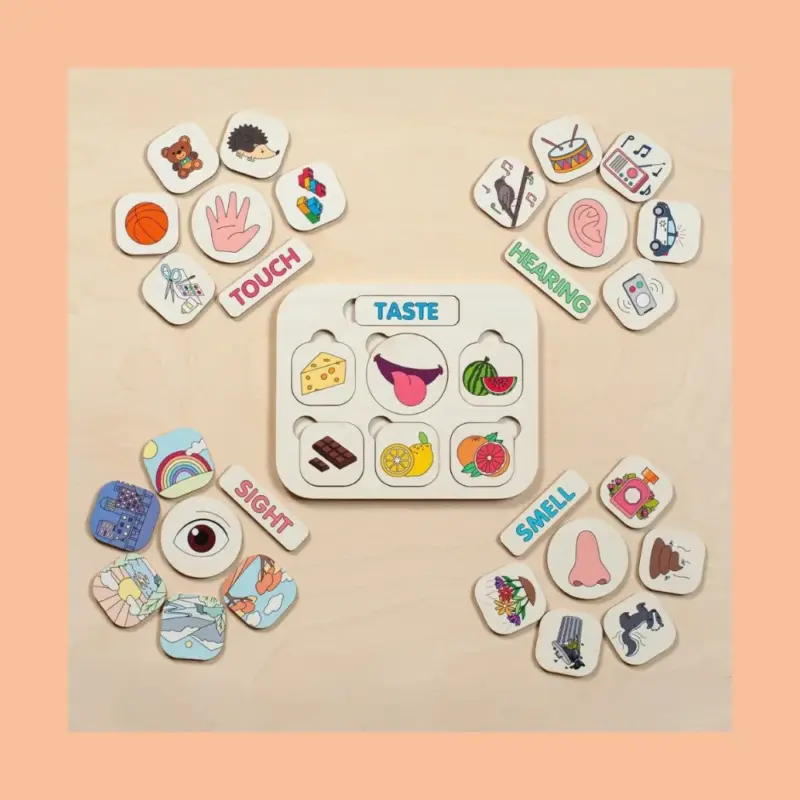
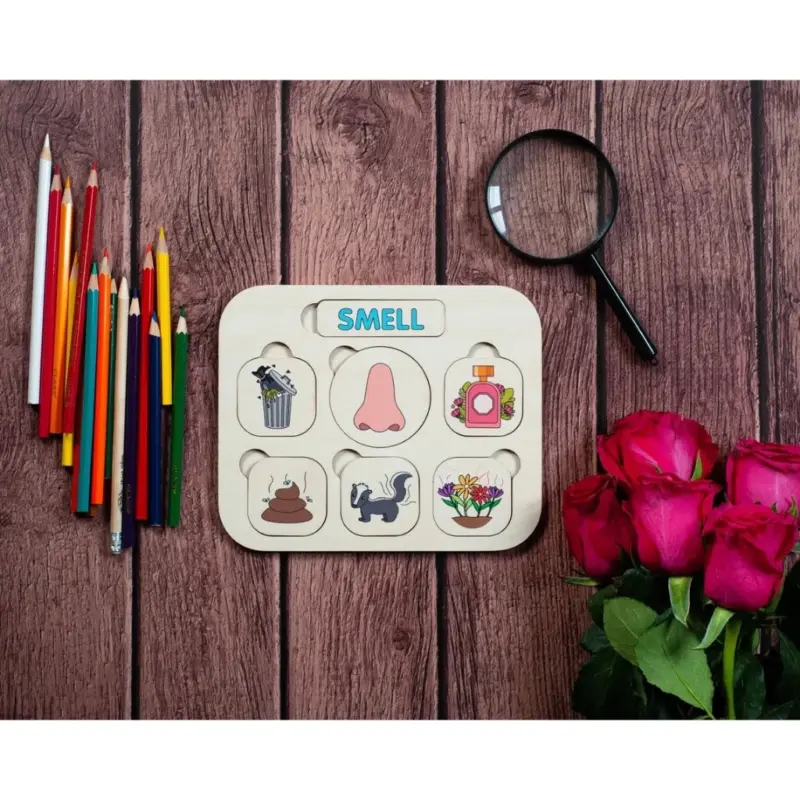
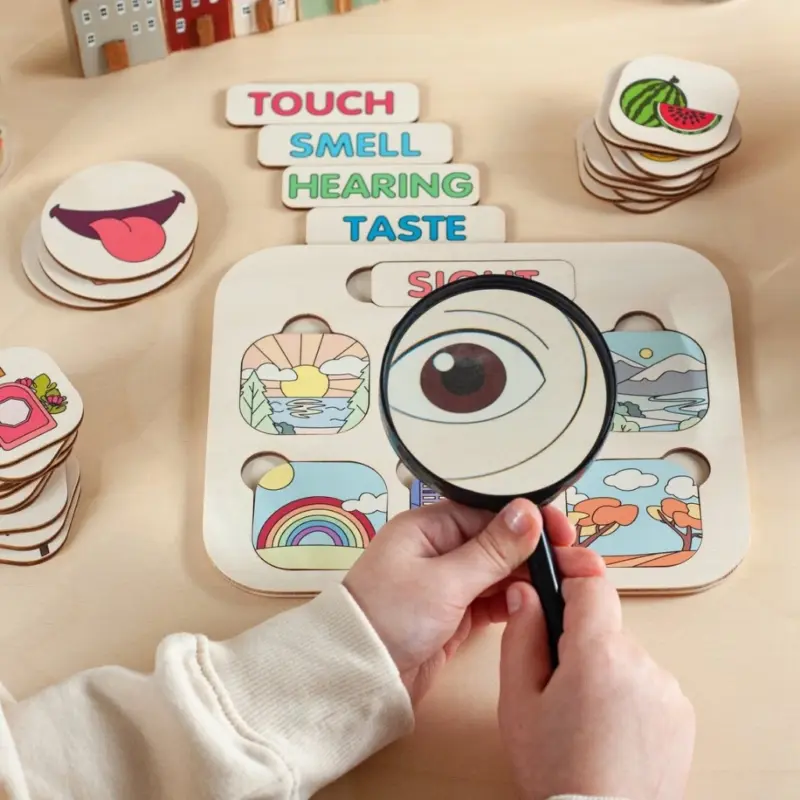
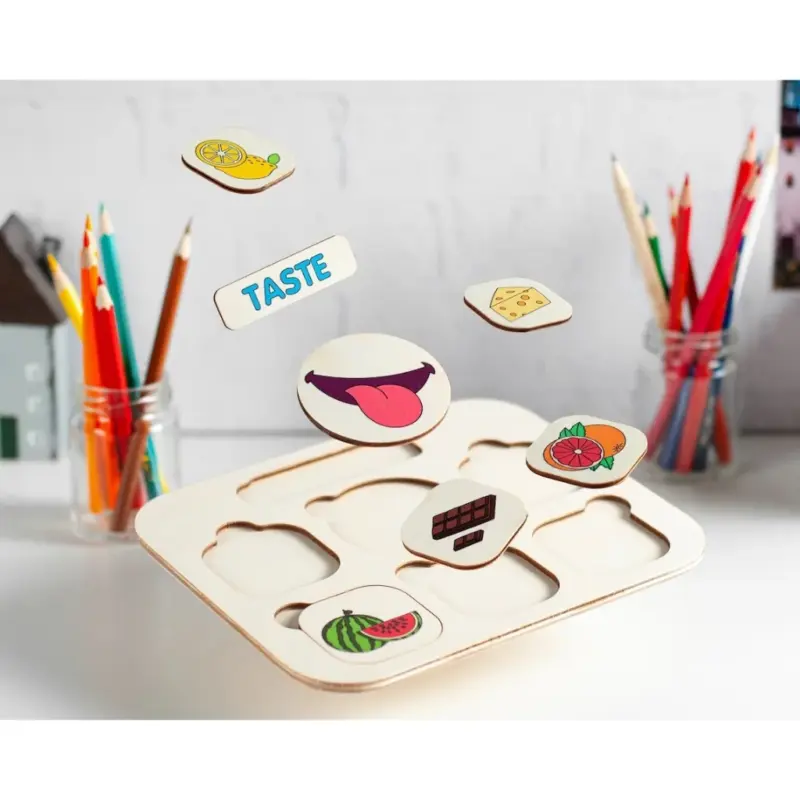
Your 6-year-old can manage genuine biological classification: vertebrates vs. invertebrates, the five classes of vertebrates, plant vs. animal, living vs. non-living. Three-part card work for zoology and botany gives this classification drive an organized material to work with. Kukoo’s Wooden Five Senses Learning Board introduces the systematic classification thinking that taxonomy extends — the 6-year-old who classified by sense at 4 is ready to classify by biological category at 6.
Timeline of life and personal history.
A physical timeline your child builds — placing their own birth, family events, historical events, and geological time periods in sequence. Your 6-year-old can manage a timeline of their own life in detail; extend to the family, then the community, then history. The concept of time as a sequence that can be measured and mapped engages the logical mind directly.
Simple science investigations (observation + hypothesis + result).
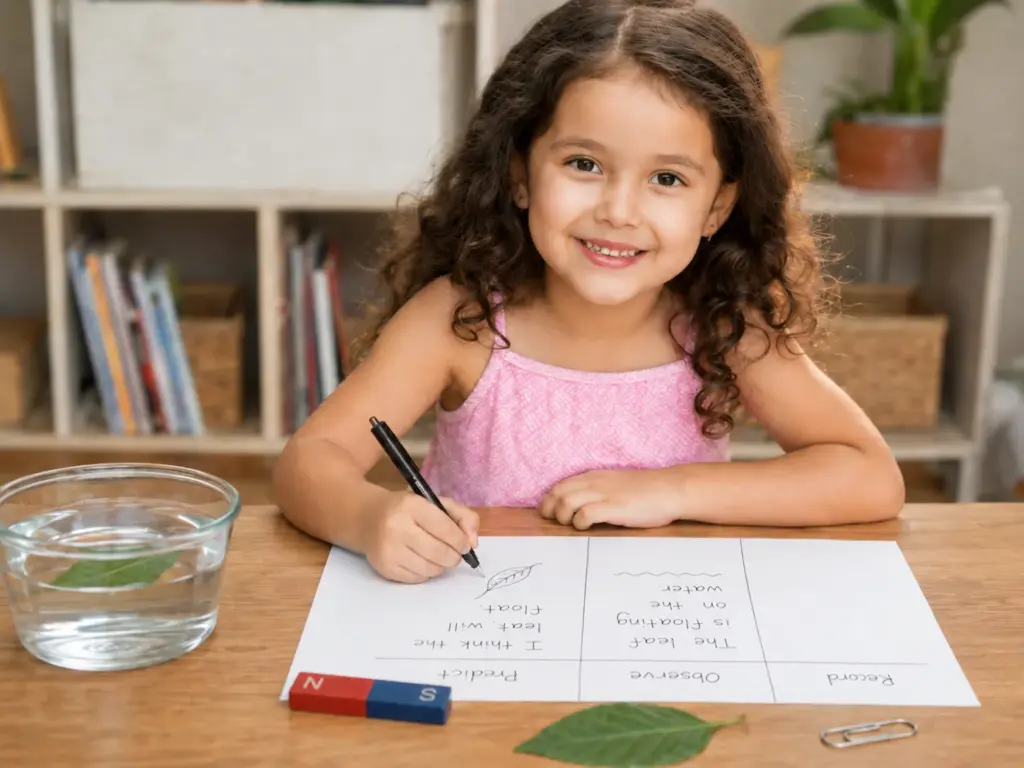
Not science kits with predetermined outcomes, but genuine investigations: “What happens if I put this leaf in water for three days?” “Does the magnet attract through the wood?” Your 6-year-old can manage a three-step scientific process: predict, observe, record. The prediction is what makes it Montessori — your child commits to a hypothesis before seeing the result.
Geography with physical models.
A puzzle map that your child can handle, a globe at child height, a land-and-water globe. At 6, your child can begin learning continent names, ocean names, and the relationship between land and water — not through memorization but through physical handling of models they return to repeatedly.
Creative Expression — Deliberate Art at the Second Plane
At 6, art stops being sensory exploration and becomes deliberate expression. Your 6-year-old has an intention for their art — a story to tell, a thing to represent, an emotion to externalize — and activities that honor that intention produce deeper engagement than open-ended sensory play.
- Watercolor with specific subject matter. “Paint what you observed in the garden today” or “Draw the domino sequence you built” — art as documentation of investigation. The subject matter provides the concentration that purely open-ended “paint whatever” cannot sustain for a 6-year-old’s logical mind.
- Clay with functional intent. Making a bowl that will actually hold something, or a figurine of an animal they’ve been studying. The functional intention — this has a use, this represents something real — is what sustains concentration in clay work at this age.
- Music with notation introduction. The Montessori bells and the beginning of music notation — placing the bell in pitch order, understanding that each bell has a name, beginning to read simple note sequences. Music at 6 becomes mathematical as well as expressive: patterns, sequences, relationships between notes.
- Collaborative artwork. Two or three children creating a mural, a diorama, or a scene together — negotiating roles, dividing tasks, maintaining a shared vision. Collaborative art at 6 is social development practice as much as creative expression.
Social and Emotional — Collaborative Capacity at the Second Plane
At 6, the social development priority shifts from emotional recognition — which was 3–5 year work — to collaborative rule-following, negotiation, and the social equity that formal games provide.
- Rule-based games with genuine strategy. Chess, checkers, dominoes, card games — games where the same rules apply to all players, strategic thinking matters, and winning is not guaranteed. The logical mind finds deep satisfaction in a game with consistent rules. The social lesson embedded in every move: everyone plays under the same conditions.
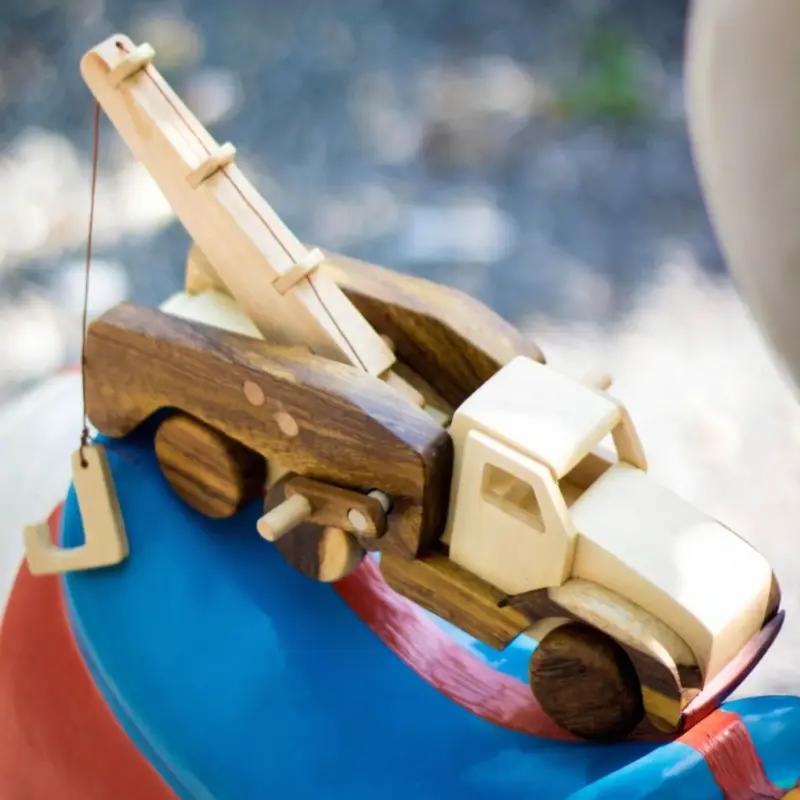
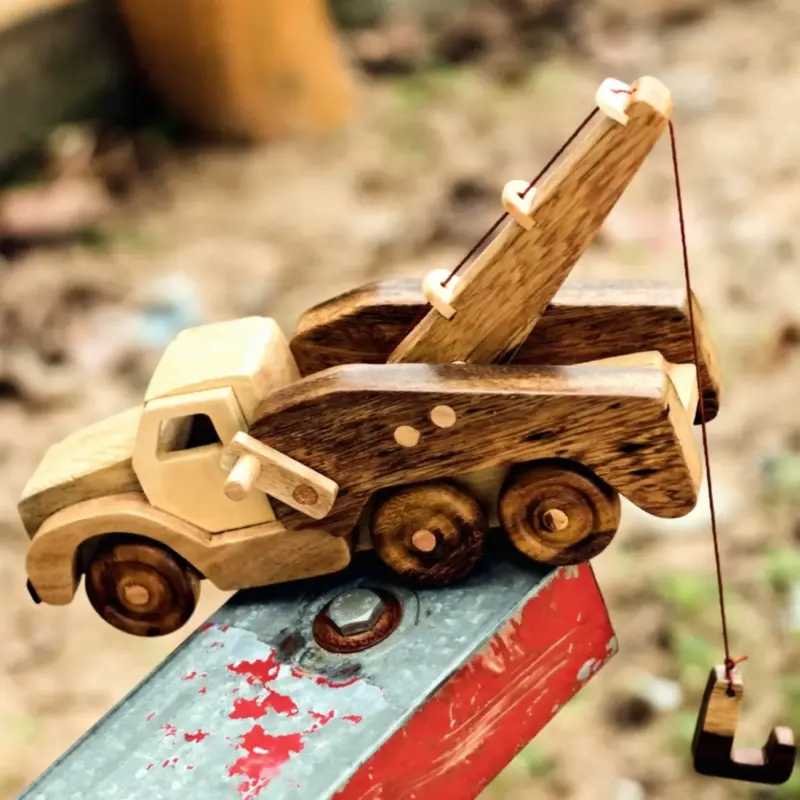
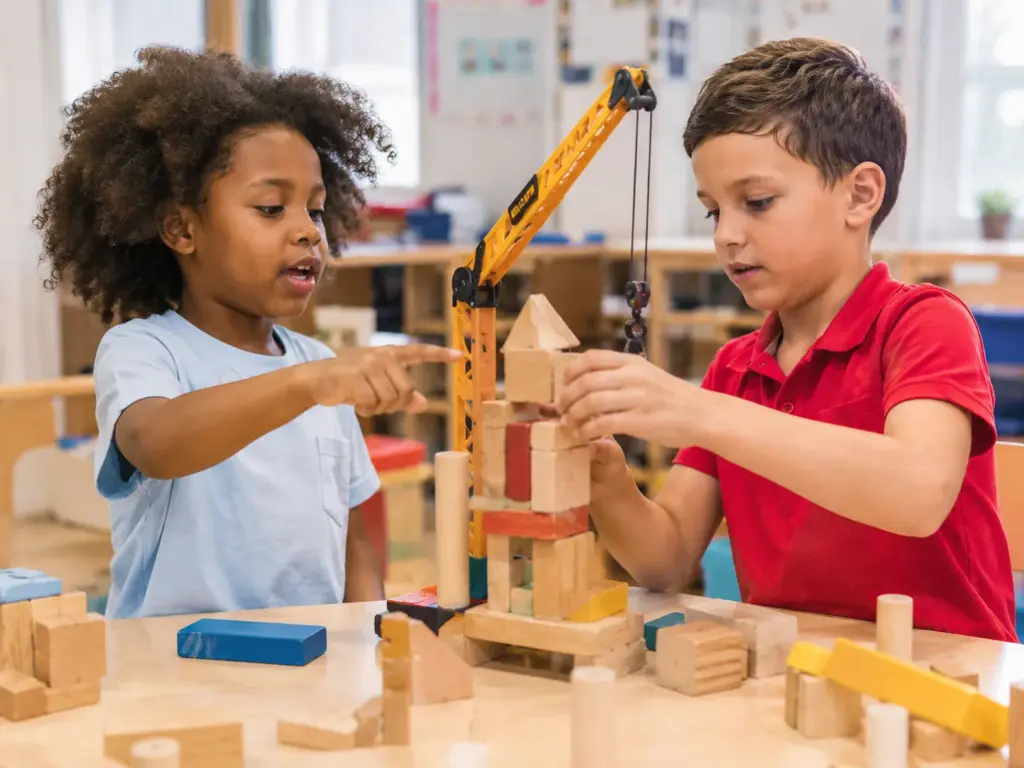
- Collaborative construction projects. Building a structure, designing a layout, creating something together where two children must negotiate roles. “You’re in charge of the bridge; I’m in charge of the road” — role assignment and task division are new social capacities at 6. Kukoo’s Wooden Crane Truck Toy lends itself naturally to this: in collaborative construction play, your 6-year-old investigates how the crane mechanism works as a system while negotiating roles with a sibling or friend.


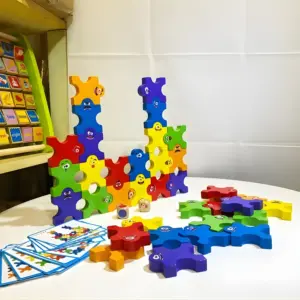
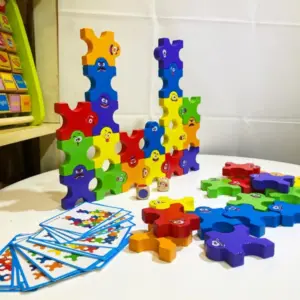
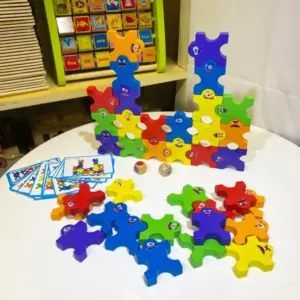
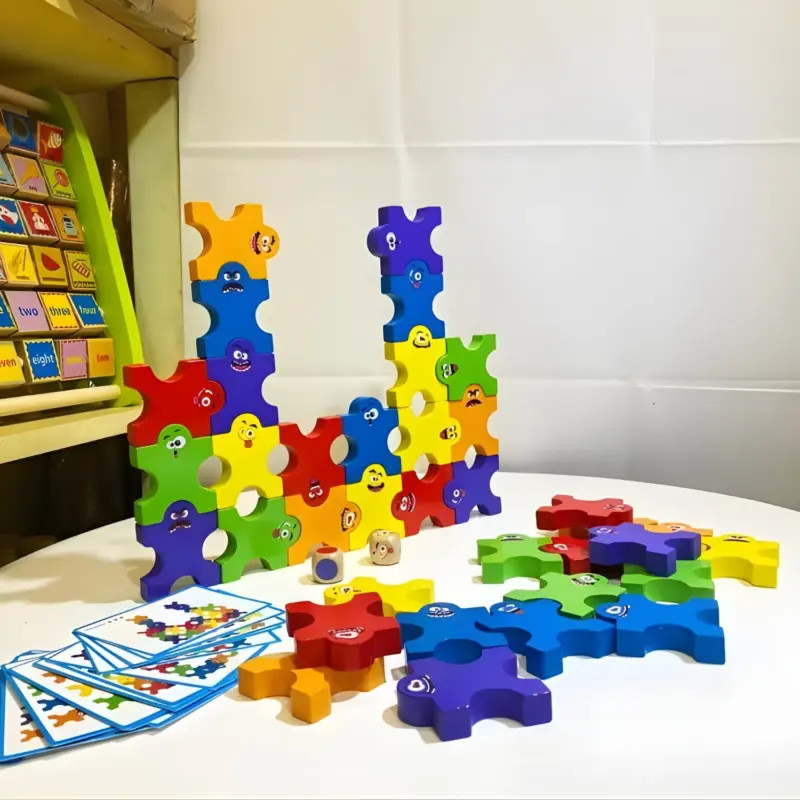
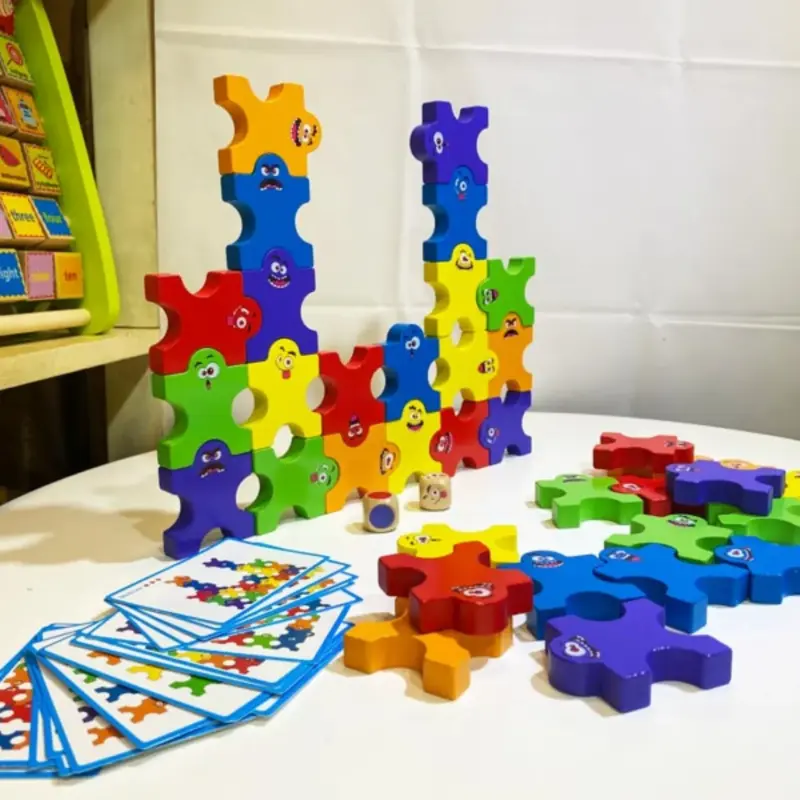
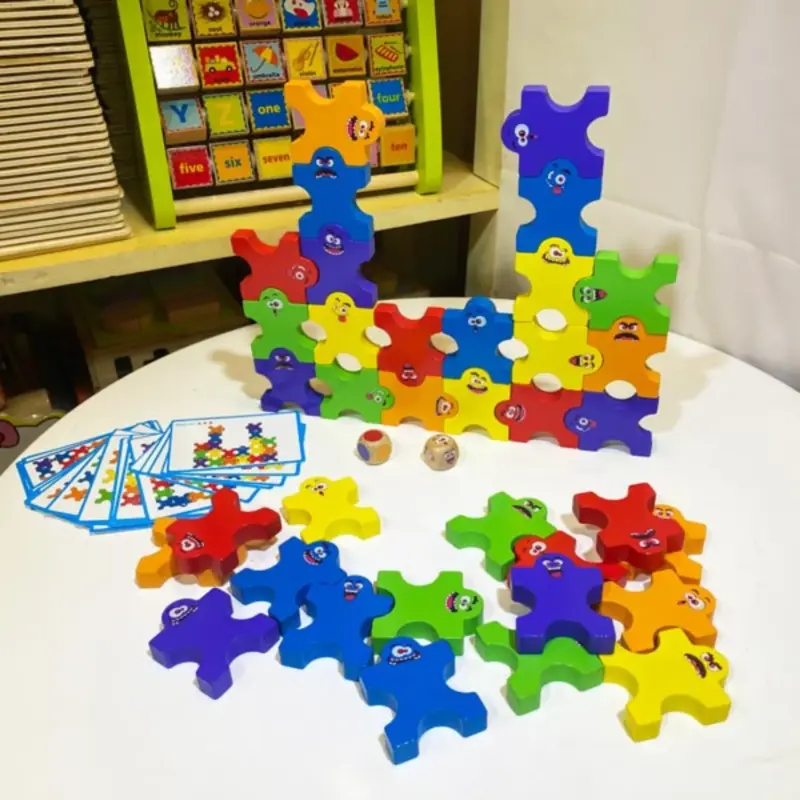
- Emotion narrative activities. Using emotion blocks to build scenes, assign emotional causes, and narrate resolutions — this is narrative social cognition, not just emotion recognition. “This character is frustrated because their plan didn’t work — what could they try instead?” The Emotion Faces Wooden Puzzle Blocks support exactly this at 6: your child creates and resolves emotional narratives, not just identifies faces.
- Hosting and service. Setting a table for guests, preparing a snack for a family member, serving water — Grace and Courtesy activities where your child is genuinely contributing to the social experience of others.
Integrating Montessori Activities With School — The Home-School Bridge
Most 6-year-olds are in kindergarten or first grade. The question isn’t whether to do Montessori activities instead of school — it’s how to make the home environment complement what school does and address what it doesn’t.
A national study published in PNAS found that children from Montessori programs showed significantly better outcomes in reading, executive function, and social understanding by the end of kindergarten — evidence that the concrete foundations Montessori builds translate directly into formal academic settings.
- What school typically does well: Structured social learning, formal reading and writing instruction, peer exposure, academic benchmarking.
- What school typically doesn’t address: Self-directed deep work, intrinsic motivation development, executive function practice, concrete-to-abstract math foundation, genuine contribution to the household.
- After school: self-directed decompression time with a chosen shelf activity. Your 6-year-old has spent a school day following external direction — twenty minutes with chosen shelf materials rebuilds the intrinsic motivation that external-direction-heavy school days can deplete.
- Evenings: practical life as real contribution. Helping make dinner, setting the table, caring for plants — real work with real outcomes that school cannot provide.
- Weekends: extended project work. The longer unstructured weekend time is where collaborative projects, science investigations, and geography explorations can develop fully. A single afternoon for a focused investigation produces concentration that a 45-minute school lesson cannot.
- Don’t recreate school at home. Worksheets, scheduled lessons, and timed activities at home duplicate what school already provides. The Montessori home environment’s value is precisely its difference from school — self-direction, real materials, real outcomes.
The goal is not to recreate school at home but to complement its strengths and address its gaps — which is exactly what a Montessori home environment is designed to do
Setting Up the Activity Shelf for a 6-Year-Old
A 6-year-old’s shelf looks different from a toddler’s — not just in content, but in organization and how many items are visible.
- More vertical space. Your 6-year-old is taller and can access higher shelf levels. Activities can be organized on 2–3 levels with the most-used and most-current-interest items at eye level.
- More items visible. A toddler’s shelf holds 5–7 items. A 6-year-old can manage 8–12 items organized by domain — their selection capacity is more developed and they can navigate a slightly larger choice set without overwhelm.
- Trays remain essential. Each activity is still presented on its own tray or in a clear container — complete, in problem state, returning to the same position.
- Interest-driven rotation. At 6, follow your child’s current inquiry when rotating. A child interested in dinosaurs this month gets botany cards, timeline activities, and taxonomy work focused on paleontology. The domain structure stays constant; the subject matter rotates with genuine interest.
Your Questions Answered
What Montessori activities are appropriate for a 6-year-old?
Montessori activities for 6-year-olds respond to the Second Plane of Development — the shift to reasoning, logical thinking, and early abstraction that occurs around age 6. The most developmentally appropriate activities are: multi-step practical life with real outcomes (cooking sequences, sewing, plant care); language work bridging oral narration to writing (copywork, word building, storytelling); concrete arithmetic leading to abstract operations (arithmetic wheels, domino math, measurement); science investigation with prediction and observation; taxonomy and classification; and collaborative projects with genuine shared goals. Activities designed for 3–5-year-olds will typically feel too simple — the materials need to match the reasoning mind that has arrived.
How is Montessori different at 6 versus 5?
The difference is the arrival of the Second Plane of Development — a qualitative developmental shift, not a gradual one. The 5-year-old’s learning is primarily sensory and concrete: they absorb through handling materials. The 6-year-old’s learning begins to include logical reasoning and emerging abstraction: they want to understand why, how many, and what the relationship between things is. A pink tower used for size ordering is a First Plane activity; using the same tower to measure, compare ratios, or build as part of a larger construction is a Second Plane activity.
How long should a Montessori work session be for a 6-year-old?
A correctly matched Montessori activity should produce an independent work session of 15–30 minutes. If the session regularly runs under 10 minutes, the activity is below your child’s current developmental level — or above it. The concentration window at 6 is longer than at any earlier age: on open-ended days, a 6-year-old working with a well-matched shelf can sustain concentrated activity for 45–90 minutes across 2–3 activities. Extended concentration is the signal that the environment and materials are correctly matched.
Can I do Montessori activities at home if my child goes to a traditional school?
Yes — and the home environment has unique value precisely because it offers what school typically does not: self-directed time, real practical life contribution, concrete math materials before or alongside abstract instruction, and extended project inquiry. After a school day of external direction, 20–30 minutes of self-directed shelf work rebuilds the intrinsic motivation that formal instruction can deplete over time. Weekend project time provides the depth of inquiry that a 45-minute school lesson cannot. The goal is not to recreate school at home but to complement its strengths and address its gaps.
What Montessori materials does a 6-year-old still need?
Materials a 6-year-old actively benefits from: concrete arithmetic manipulatives (arithmetic wheels, domino sets) for the concrete-to-abstract math transition; three-part nomenclature cards for scientific vocabulary; timeline materials; writing and copywork materials; classification materials for botany and zoology; practical life tools at full complexity (real food preparation, sewing, measurement). Materials typically outgrown: primary sensorial materials in their original function, basic shape sorters, single-step posting activities, and simple puzzles. The test: if your child finishes an activity in under 60 seconds without visible concentration, it’s ready to rotate to storage.
The Reasoning Mind Has Arrived
Six is not a bigger version of 5. It’s a different kind of learner — one whose mind now reaches past the surface of things toward their logic, their system, their why. The butterfly puzzle wasn’t abandoned because your child lost interest in learning. It was abandoned because a reasoning mind arrived, and it found the puzzle — correctly — beneath it.
The activities in this guide meet that reasoning mind where it is. Offer them one domain at a time. Start with practical life, because your child already knows that territory and the confidence transfers. Add math materials as the concrete foundations build. Let science inquiry follow the questions your child is actually asking. Trust the shelf to do what it’s designed to do: disappoint boredom, not curiosity.
For the full developmental story of what built this year, the Montessori activities for 5-year-olds explains the consolidation that makes the reasoning mind’s arrival possible. When you’re ready to build the shelf, wooden materials designed for the 3–6 window cover every domain in this guide — from organizational play to concrete math to collaborative construction.