
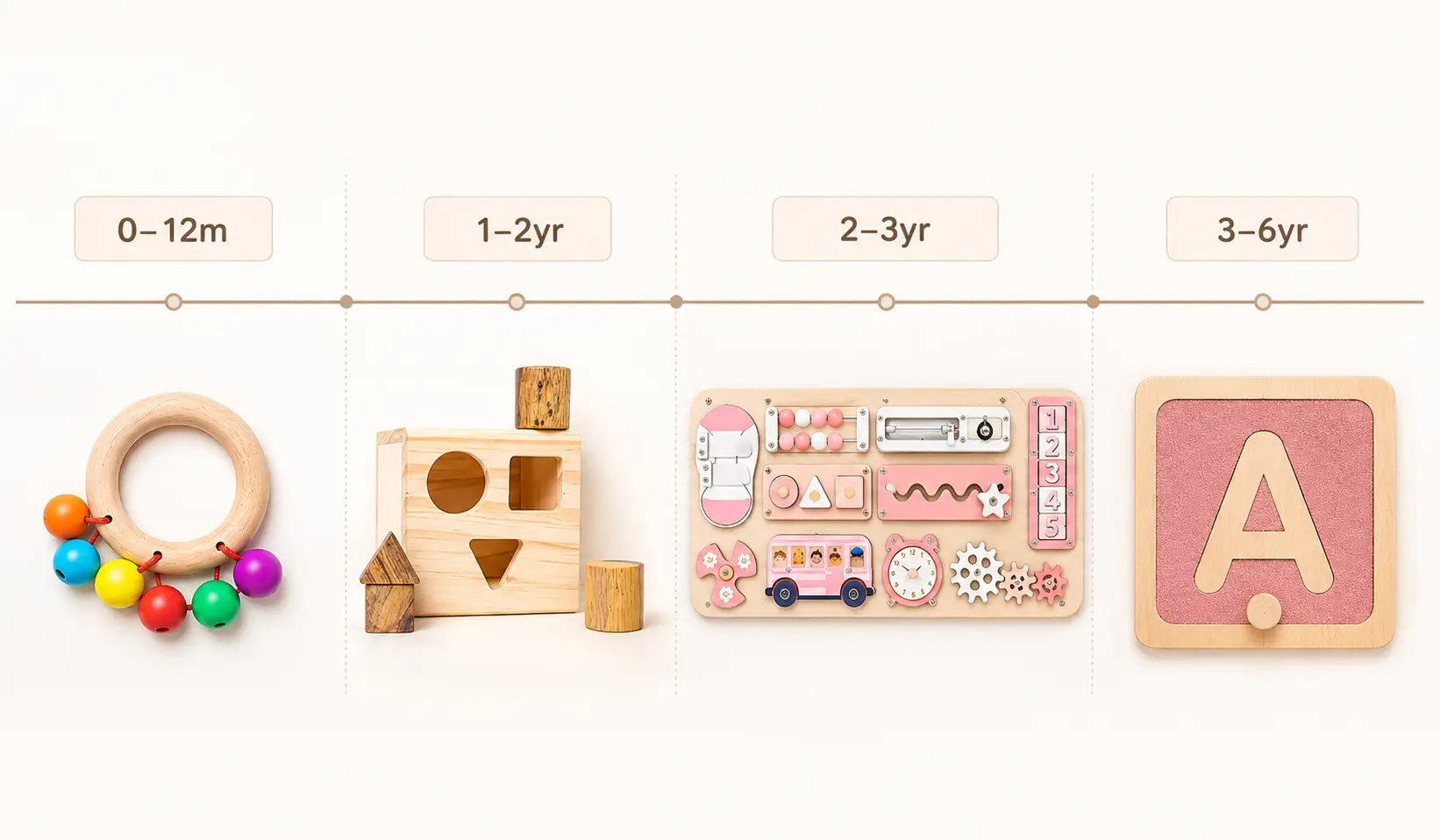
Montessori activities are not a playlist you shuffle randomly. They follow a developmental arc — each stage builds on the previous one, and skipping stages doesn’t accelerate development, it creates gaps. This guide is the map.
| Montessori activities by age follow a developmental arc from sensory exploration (0–6 months) through practical life mastery (6 months–3 years) to reasoning and abstraction (3–6 years). Each stage builds on the previous one. The most effective approach is to match activities to the child’s current developmental window based on behavioral signals, not calendar age. A child working above their window frustrates and shuts down; below it, they check out within minutes. The match is everything. |
You searched for Montessori activities and got a list of toys. What you actually needed was a map — something that shows where your child is right now, what they’re ready for next, and how the developmental journey from birth to 6 connects into one coherent arc.
Montessori activities by age are not interchangeable. A spooning activity at 15 months and the same activity at 3 years are building completely different skills. This guide covers the full 0–6 year span: a developmental arc overview, a 3-question diagnostic to find your starting point, transition signals for every stage, and links to the complete age guides in this series.
The Developmental Arc — Why Age Matters More Than Activity Lists
Montessori activities follow a developmental arc because child development itself follows one. The hand that can only grasp at 6 months cannot do what the hand at 18 months can do — not because of practice, but because neural development hasn’t arrived yet. Offering the right activity too early doesn’t speed the process. It creates frustration where concentration should be.
| Window | Developmental drive | Activity type that matches | What the child is building |
| 0–12m | Sensory orientation + first movement | Caregiving interactions, mobiles, grasping, floor movement | Trust, body awareness, visual-motor foundations |
| 12–24m | Independence explosion + language | Practical life, posting, naming, busy board, first puzzles | Fine motor precision, vocabulary, “I can do it” |
| 2–3yr | Order + mastery + imagination beginning | Shelf rotation, graduated challenges, art, conversation | Concentration, sequential thinking, self-correction |
| 3–6yr | Reasoning + abstraction + social | Curriculum areas (math, language, science, cultural), collaborative projects | Reading/writing readiness, mathematical mind, social skills |
The key insight: A 2-year-old doing 4-year-old activities isn’t advanced — they’re missing the foundational stage their hands and brain need. A 4-year-old doing 2-year-old activities isn’t behind — they’re bored. Matching the activity to the developmental window is the single most important decision you make.
As AMI documents, the First Plane of development (0–6 years) is divided into two distinct sub-planes with genuinely different drives: sensory absorption and movement in the first three years, then the emerging logical and social mind in the second three. The activities that work are those meeting the current drive.
Research from Harvard’s Center on the Developing Child confirms that executive function — the neural foundation for concentration, self-regulation, and learning — develops most rapidly between birth and age 6. Montessori activities are designed around exactly this window. A landmark study published in Science found that children in a well-implemented Montessori program showed stronger literacy, math, executive function, and social skills than lottery-control peers by the end of kindergarten.
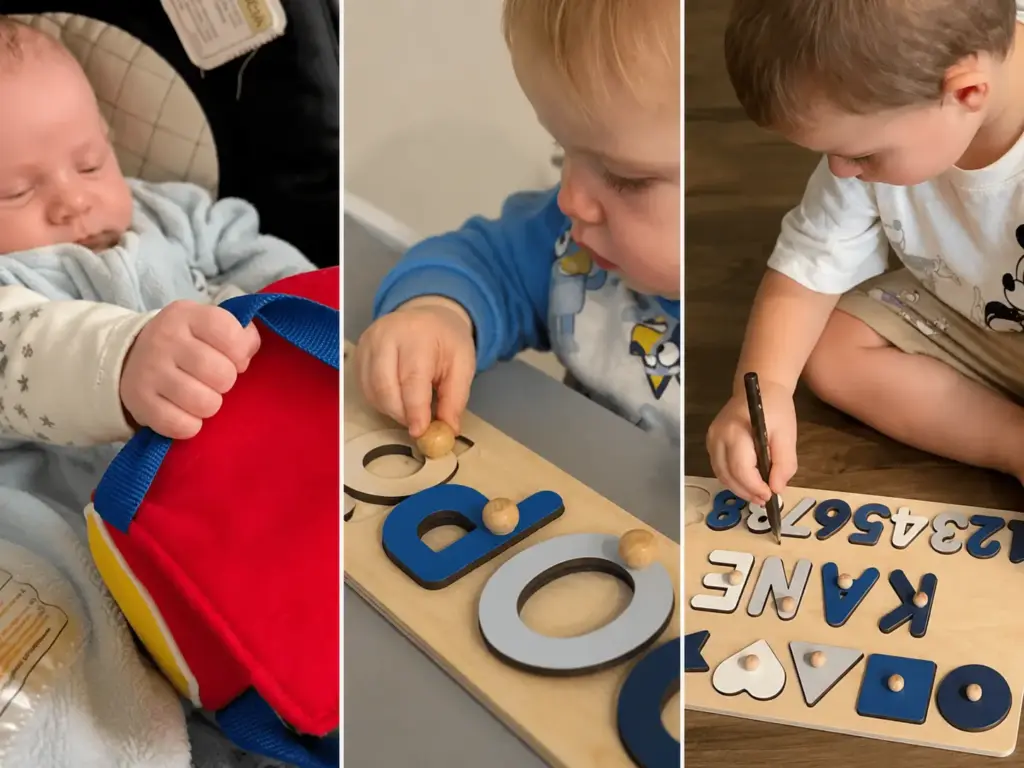
Where Is Your Child Right Now? — The 3-Question Diagnostic
Your child’s calendar age is a starting point, not a diagnosis. These 3 questions will point you to the right guide.
Q1 — What are their hands doing?
- Whole-hand grasp, mouthing everything → Start with the 0–12 month guide
- Pincer grip emerging, posting and stacking → Start with the 1-year or 18-month guide
- Three-finger precision, tool use beginning → Start with the 2-year or 3-year guide
- Dynamic tripod, writing-adjacent grip → Start with the 4-year+ guides
Q2 — What is their language doing?
- Babbling, first words (under 20) → 0–12 month or 1-year guide
- Vocabulary explosion (5–10 new words/week) → 18-month guide
- Sentences, “why” questions → 2-year or 3-year guide
- Reading interest, writing attempts → 4-year+ guides
Q3 — What is their independence demand?
- Content being carried or held → 0–6 month guide
- “I do it!” emerging → 18-month guide
- Full independence demand, resists help → 2-year guide
- Self-manages routines, collaborative play → 3-year+ guides
Your answers probably point to one or two guides. Start with the earlier one — if everything feels too easy within a week, move forward.
| “The single most common mistake I see across both the 0–3 and 3–6 windows: parents introduce activities calibrated to the age on the box, not the child in front of them. The 3-question check takes two minutes and prevents weeks of frustration on both sides.” — Katy Lenoir, AMI-certified Preschool & Elementary Expert (3–12) |
Montessori Activities by Age — The Complete Index
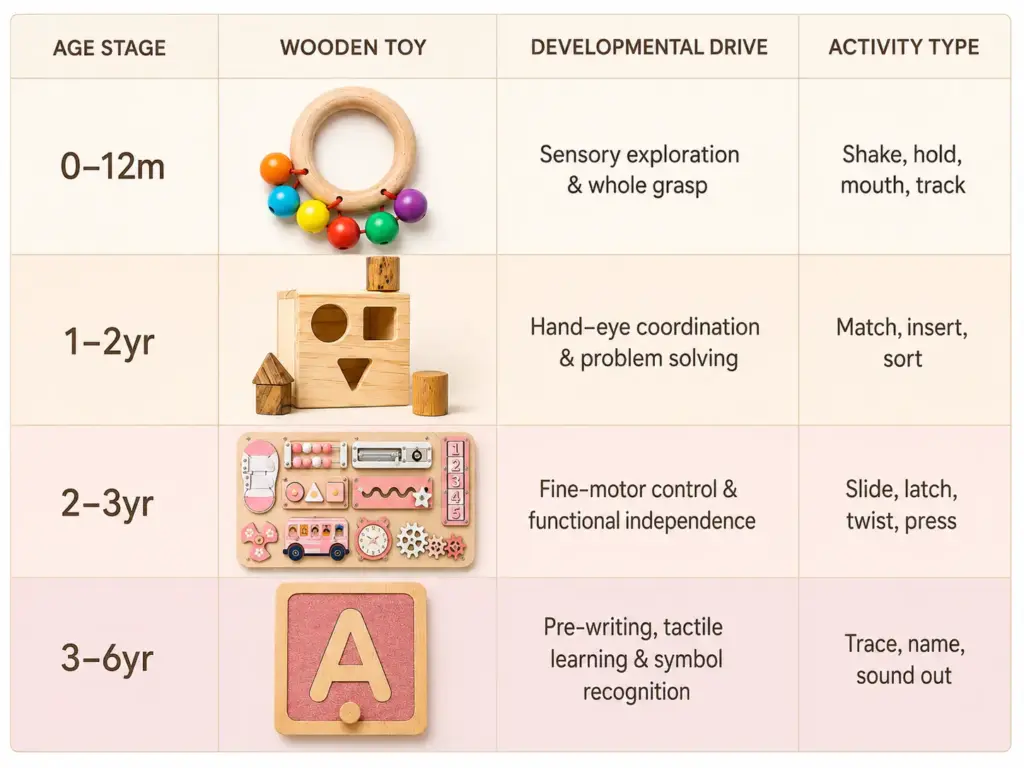
Each stage below includes a developmental portrait, the three most important activities, the signal to move to the next stage, and a link to the complete guide.
0–3 Months — The Symbiotic Period
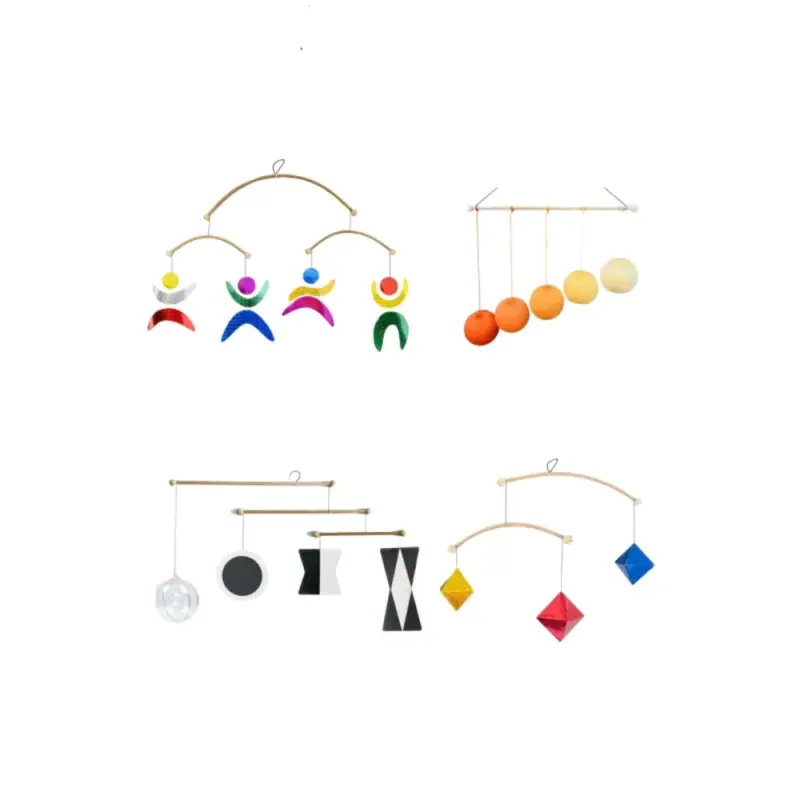
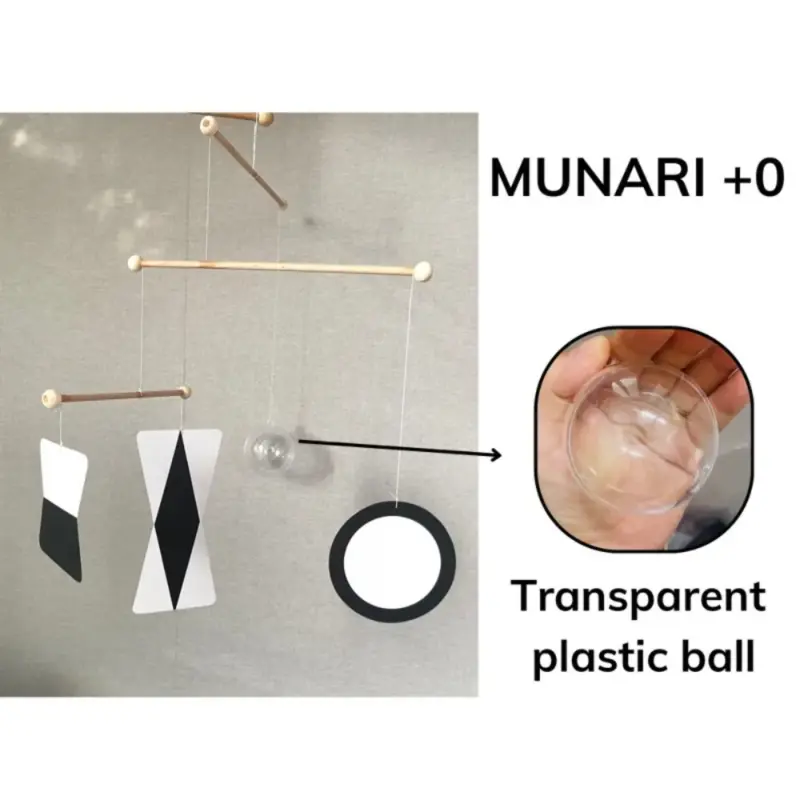
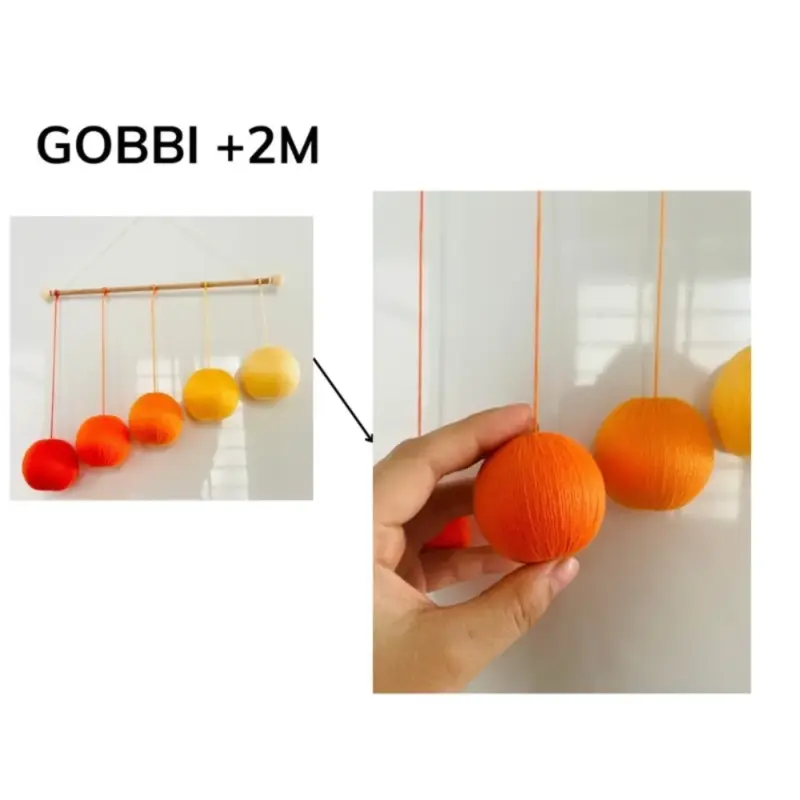
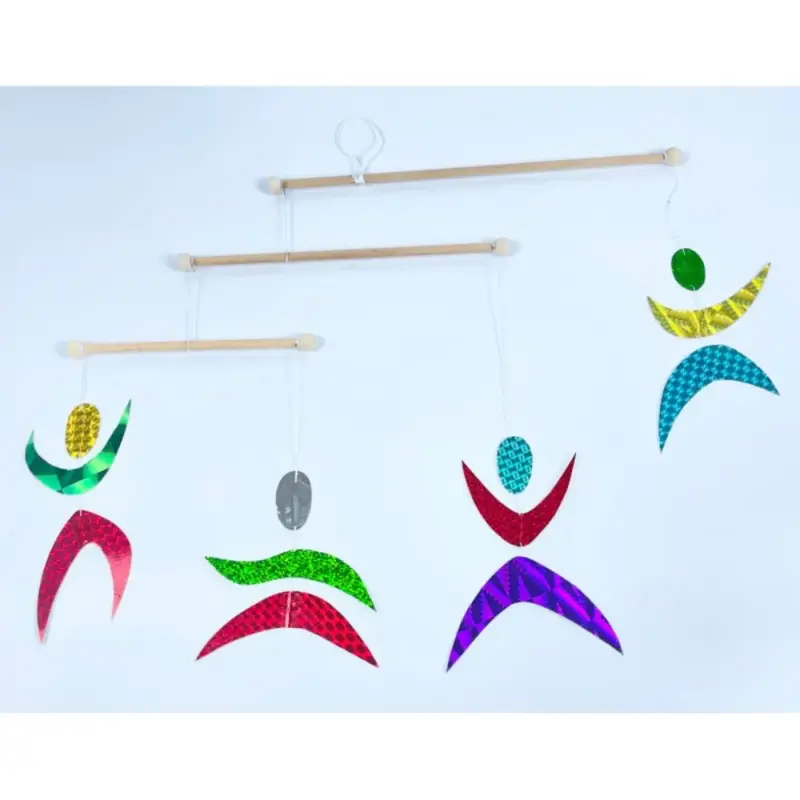
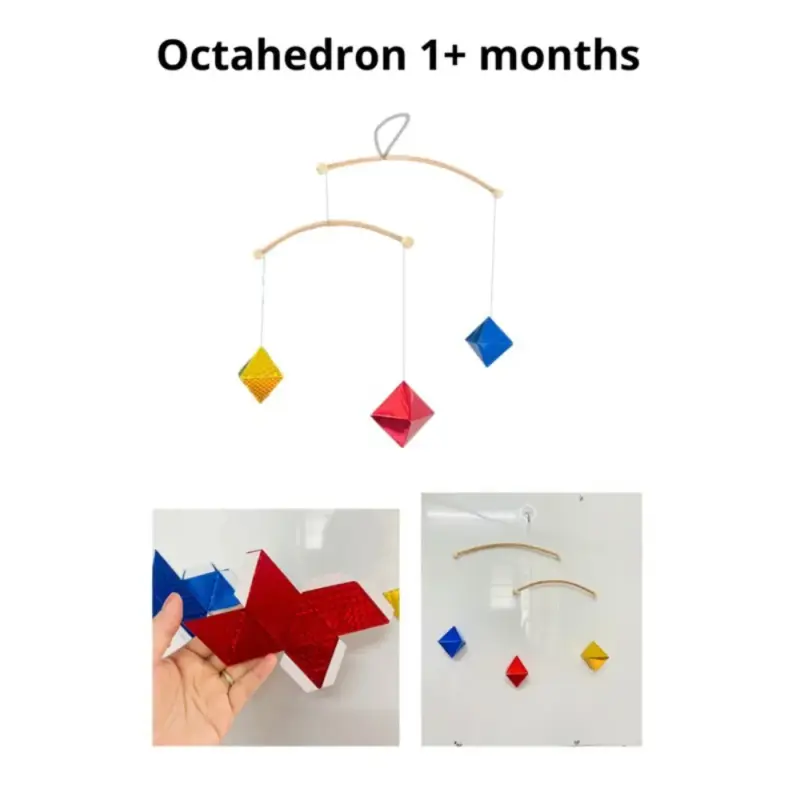
The Montessori activities for 0–3 months require no toys: narrated caregiving, eye contact during feeding, skin-to-skin. The environment is the curriculum. Sensory input should be simple — one element at a time. The Munari mobile is the most developmentally appropriate visual material for this window.
- Munari mobile progression (high-contrast visual tracking)
- Floor mirror (self-recognition foundations, ~8–9 weeks)
- Narrated diaper changes (language input + body awareness)
→ Move to the 3–6m guide when: baby begins reaching for objects voluntarily + alert windows extend beyond 30 minutes
3–6 Months — Voluntary Grasp Emerging
The hand transitions from reflex to intention. Every activity at this stage answers one question: can my hand make this happen? This is where the treasure basket and grasping ring enter the environment.
- Treasure basket (varied textures + materials)
- Textured grasping ring (lateral transfer, bilateral coordination)
- Supervised tummy time (core strength + visual field expansion)
→ Move to the 6–12m activities guide when: sits unsupported + begins deliberate object manipulation
6–12 Months — Four Phases of Movement
Sitting → crawling → pulling up → first steps. Each phase needs different floor materials. The object permanence box arrives at 8–10 months and changes everything: this is where cause-and-effect becomes a problem to actively solve, not just observe.
- Object permanence box (8–10m, cause-and-effect schema)
- Stacking rings (spatial reasoning, fine motor grading)
- Ball drop toy (trajectory, anticipation, persistence)
→ Move to the 1-year activities guide when: walking independently + pincer grasp functional.
1 Year Old — Walking Changes Everything
Hands are freed from locomotion. The vocabulary explosion begins. The shelf becomes the daily work center. This is where practical life and fine motor activities start producing the deep, returning engagement Montessori environments are built around. Within this single year, development moves through three distinct brackets — 12–15, 15–18, and 18–24 months — each with its own motor and language ceiling.
- Posting activities (cause-and-effect + fine motor precision)
- Stacking tower (spatial reasoning + motor grading)
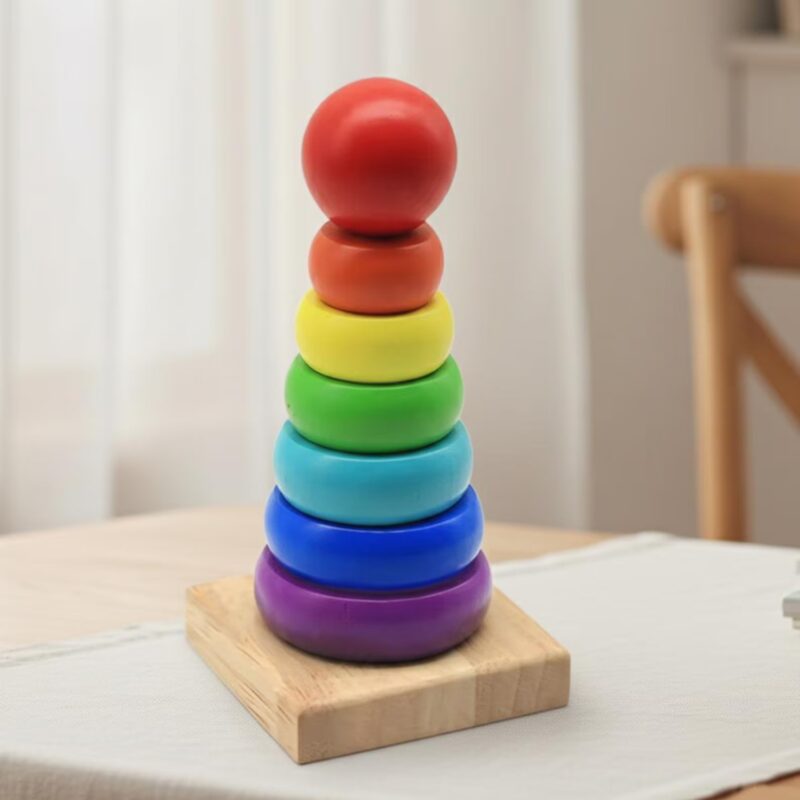
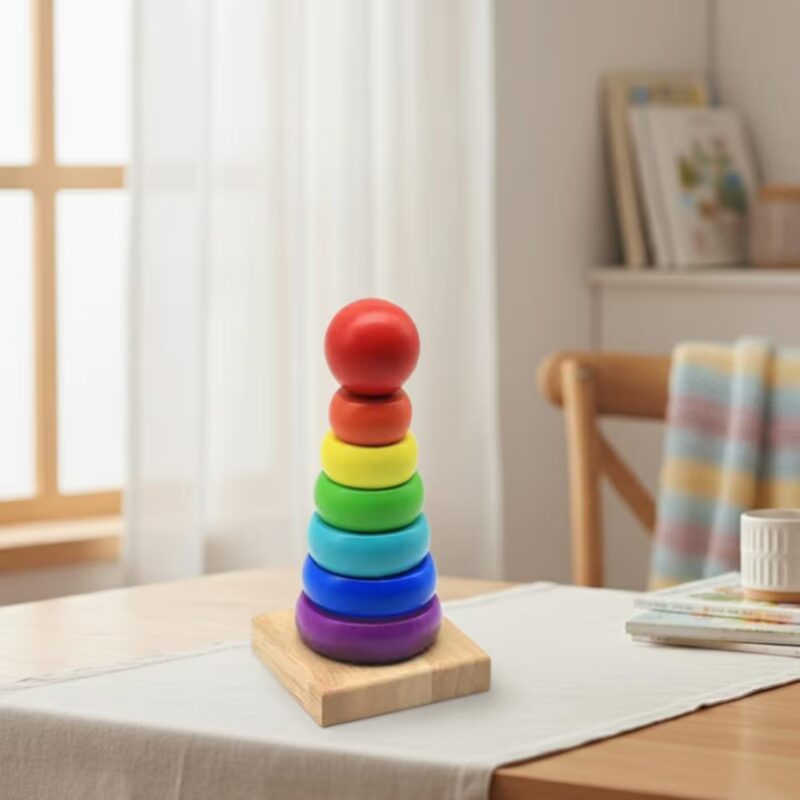
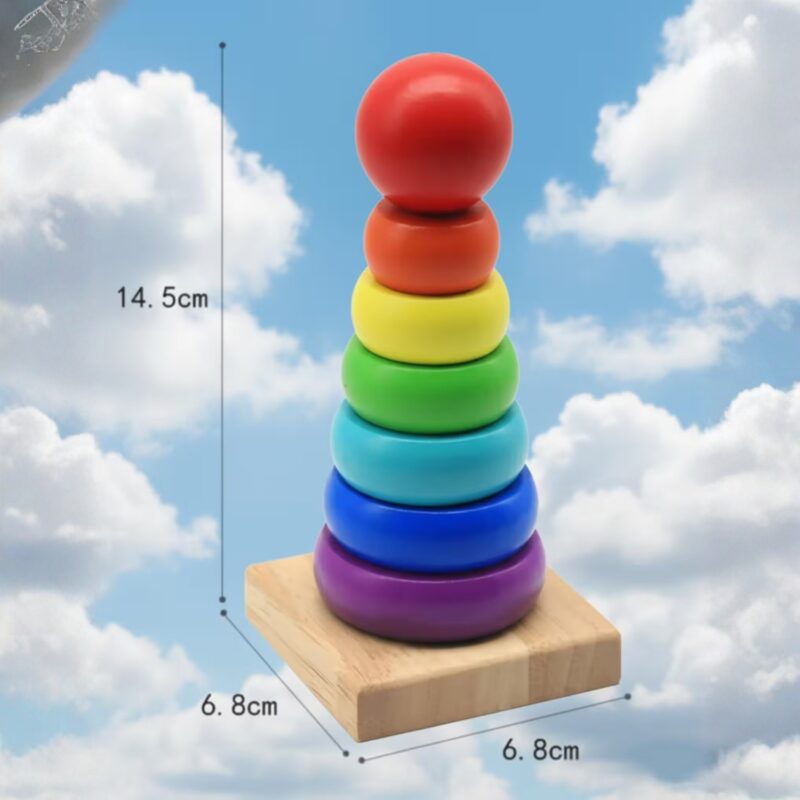
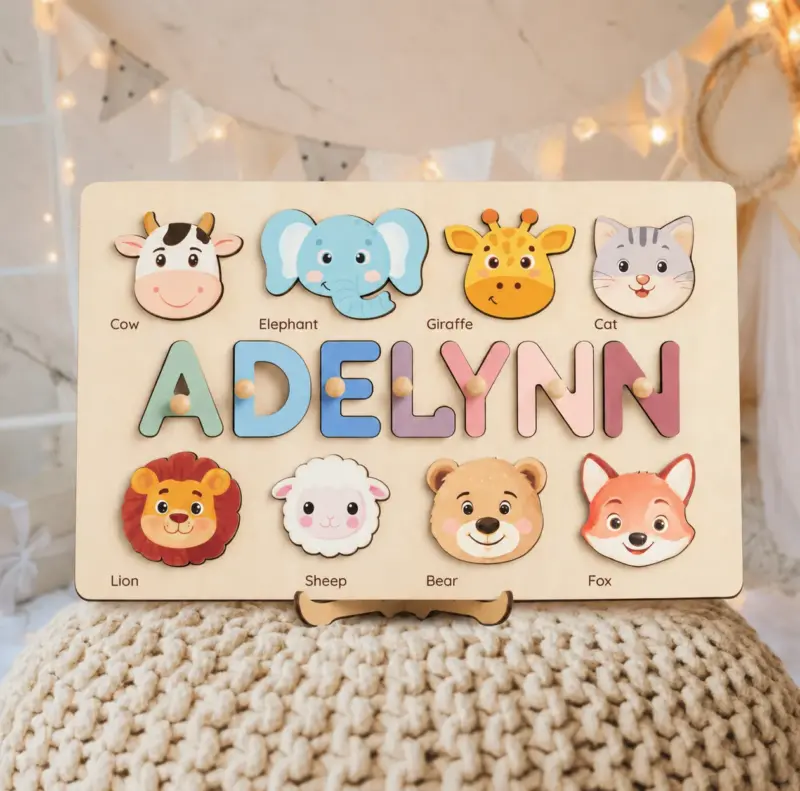
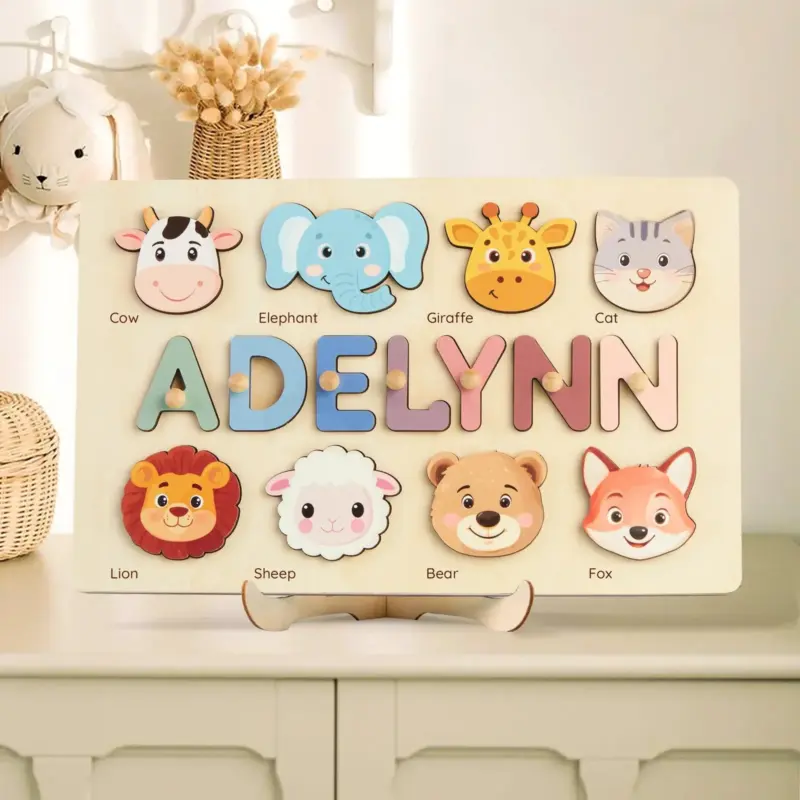
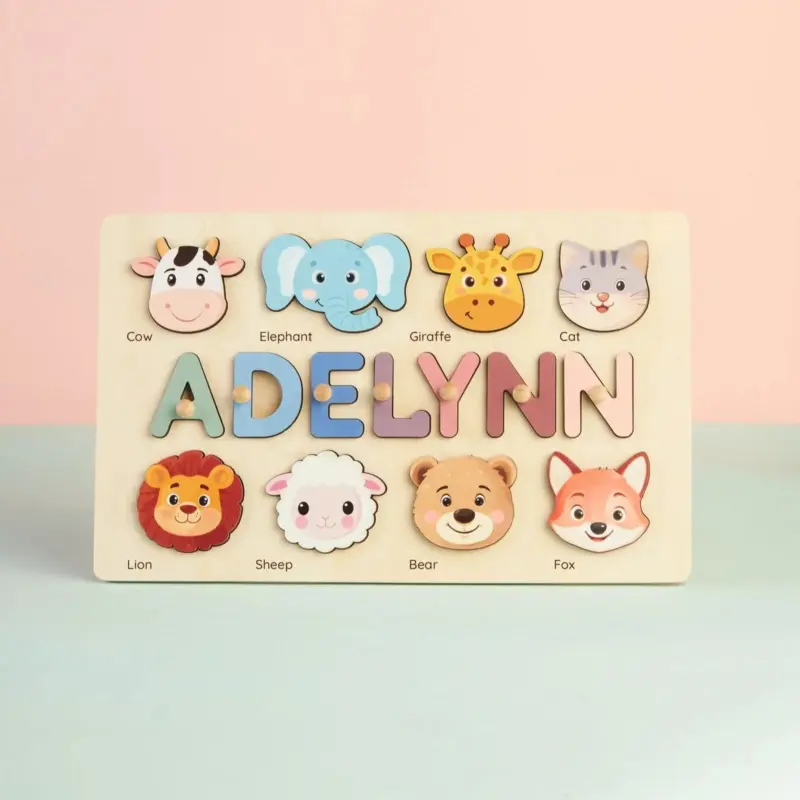
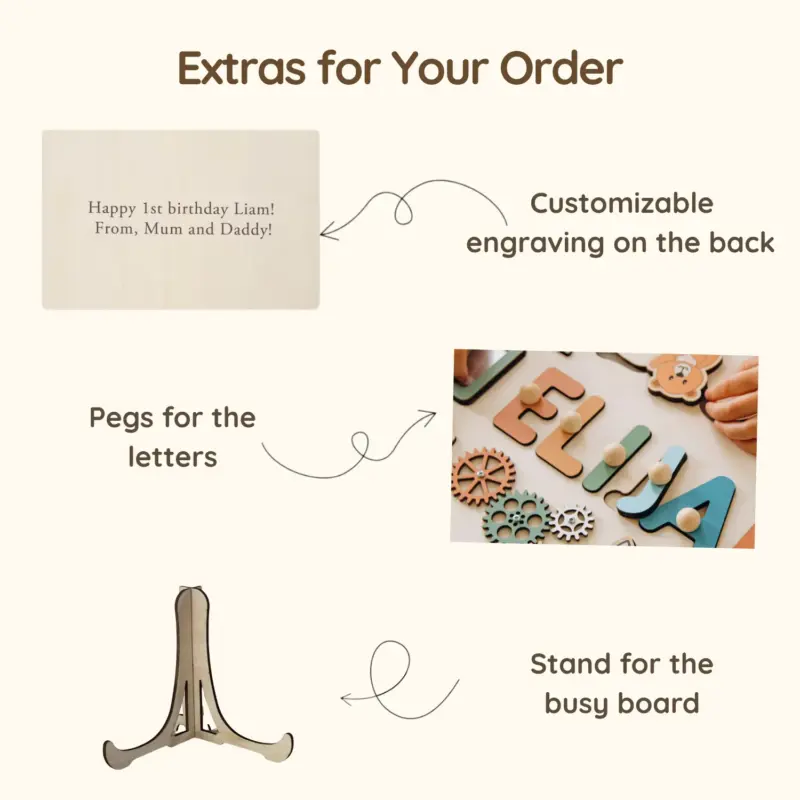
- Name puzzle introduction (letter form + fine motor)
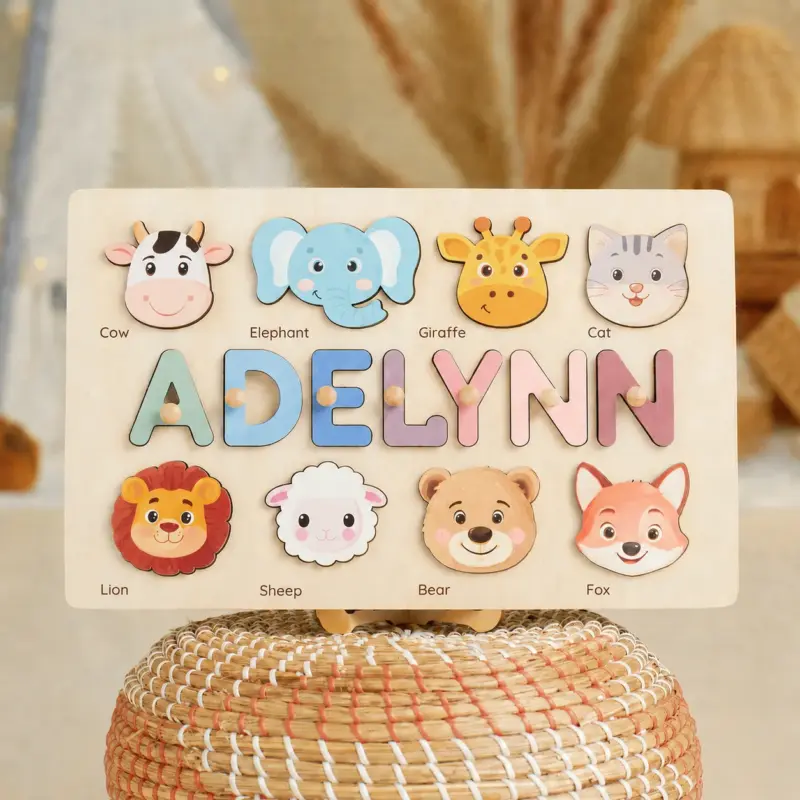
→ Move to the 2yr guide when: “I do it!” demand peaks + vocabulary reaches 50+ words + 2-word combinations appear
2 Year Olds — The Year of Independence
“No!” and “I do it myself!” are developmental signals, not defiance. Practical life becomes the primary curriculum — every activity should produce a real, visible outcome. The autonomy drive at this age is Montessori’s greatest ally when the environment is correctly prepared. The 24–36 month window spans three distinct developmental brackets, and what works at 24 months can feel stale by 30.
- Full cooking sequences (real outcome, sequencing, bilateral coordination)
- Dressing practice and busy board work (fine motor + practical life independence)
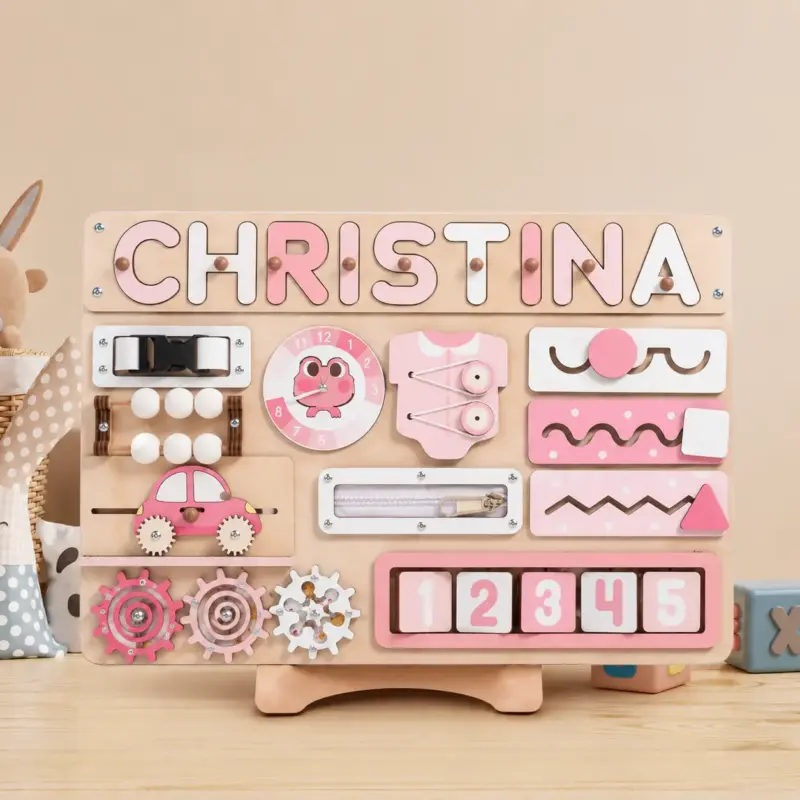
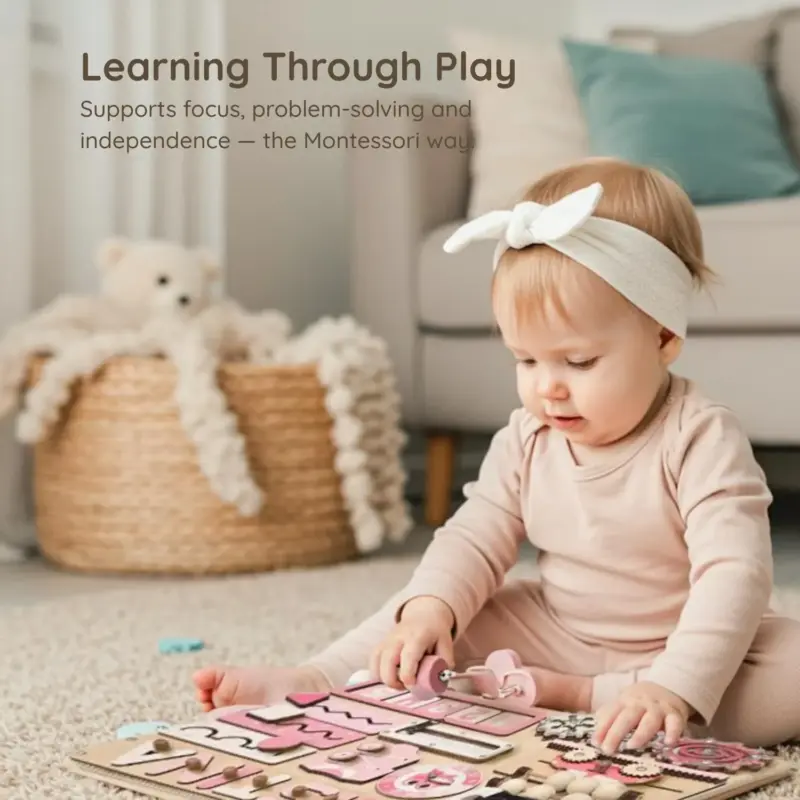
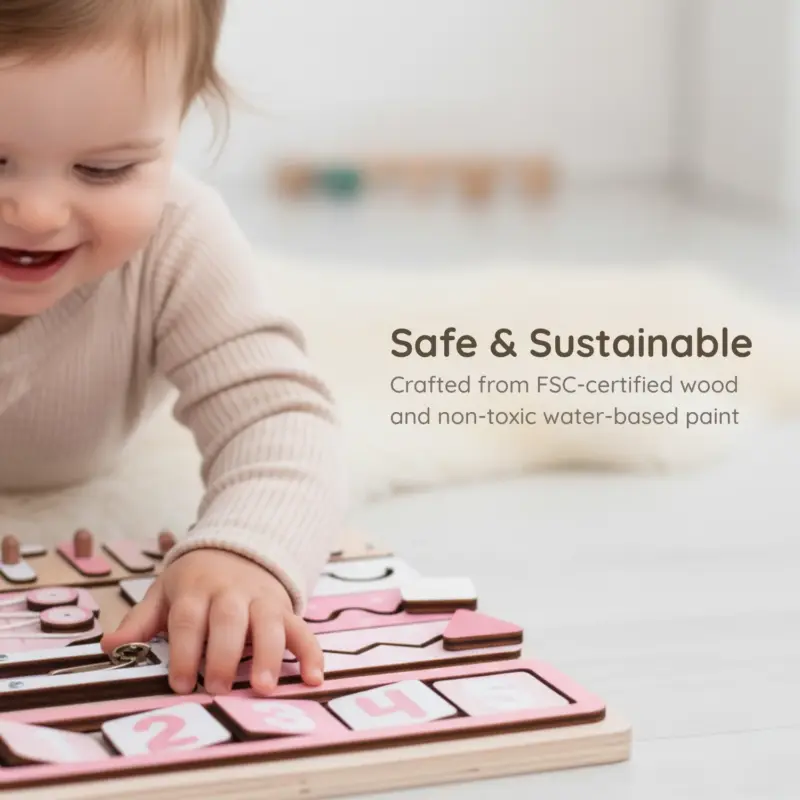

Dress Up Day – Wooden Montessori Busy Board
- Art with intention (deliberate mark-making, care of materials)
→ Move to the 3yr guide when: sentences appear + rule-following becomes pleasurable + first interest in letters and numbers
3 Year Olds — The Reasoning Mind Begins
The “why” questions arrive. Math materials become meaningful. Social play becomes genuinely collaborative for the first time. The 3-year-old guide is organized by the five Montessori curriculum areas — Practical Life, Sensorial, Language, Math, and Cultural — because that’s how development unfolds at this age.
- Concrete math materials (sandpaper numbers, cards and counters)
- Sandpaper letters (phoneme-grapheme connection, pre-reading preparation)
- Science investigation: predict, observe, record
→ Move to the 4yr guide when: abstract symbol handling emerging + sustained 20+ minute concentration + writing interest appears
4 Year Olds — The Writing Window and Classification
The child who sorted by color at 3 now sorts by category. Science becomes investigation. The sensitive period for writing peaks between 3.5 and 4.5 years — and children who have completed the preparation often begin writing spontaneously.
- Metal insets + moveable alphabet (writing readiness, phonetic encoding)
- Botany and zoology nomenclature cards (classification, scientific vocabulary)
- Advanced practical life: sewing, full recipe cooking, organizational systems
→ Move to the 5yr guide when: reading interest active + writing attempts begin + abstract symbol handling consolidated
5 Year Olds — Consolidation and the Reading Explosion
Reading and writing crystallize here — often without formal instruction, because the hands-on preparation from 3 to 5 builds toward this moment. Mathematical operations become meaningful. The child is preparing for the Second Plane of Development.
- First phonetic reading books (decoding, reading fluency)
- Stamp game (four operations, concrete-to-abstract transition)
- Cosmic education: Story of the Universe (scientific wonder, timeline of life)
→ Move to the 6yr guide when: “why?” shifts to “how does the system work?” + seeks peer collaboration + reasoning replaces sensory absorption
6 Year Olds — Welcome to the Second Plane
The First Plane closes. Reasoning replaces absorption. At 6, the butterfly puzzle that held attention for twenty minutes at 5 will bore your child in three — because the mind has crossed into the Second Plane, where logic and systems replace sensory absorption. Activities need logic, systems, and real-world complexity to hold this mind.
- Collaborative projects (negotiation, role division, shared goals)
- Abstract math + domino logic (concrete-to-abstract bridge)
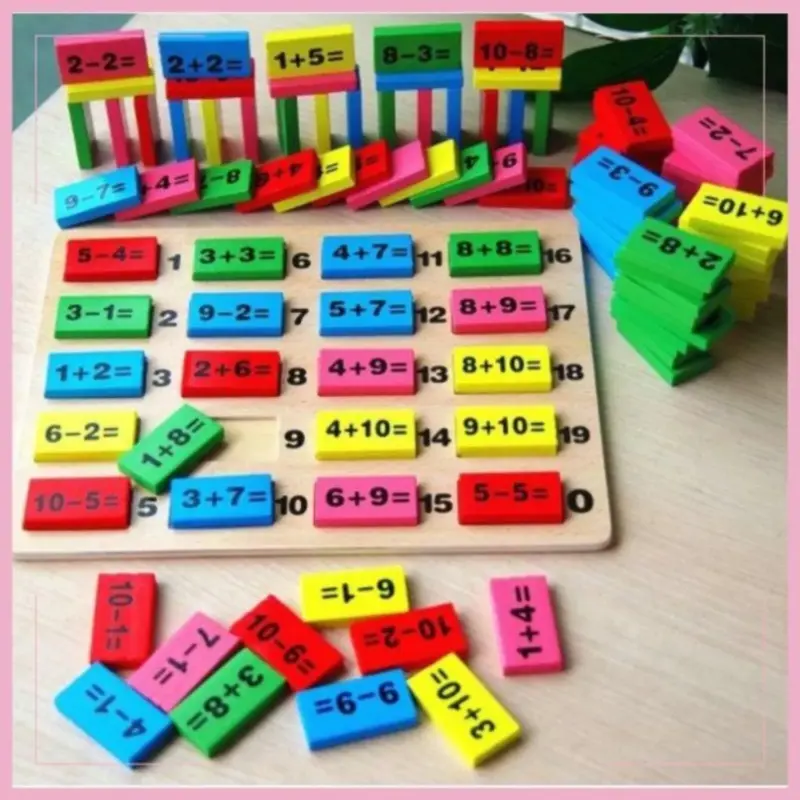
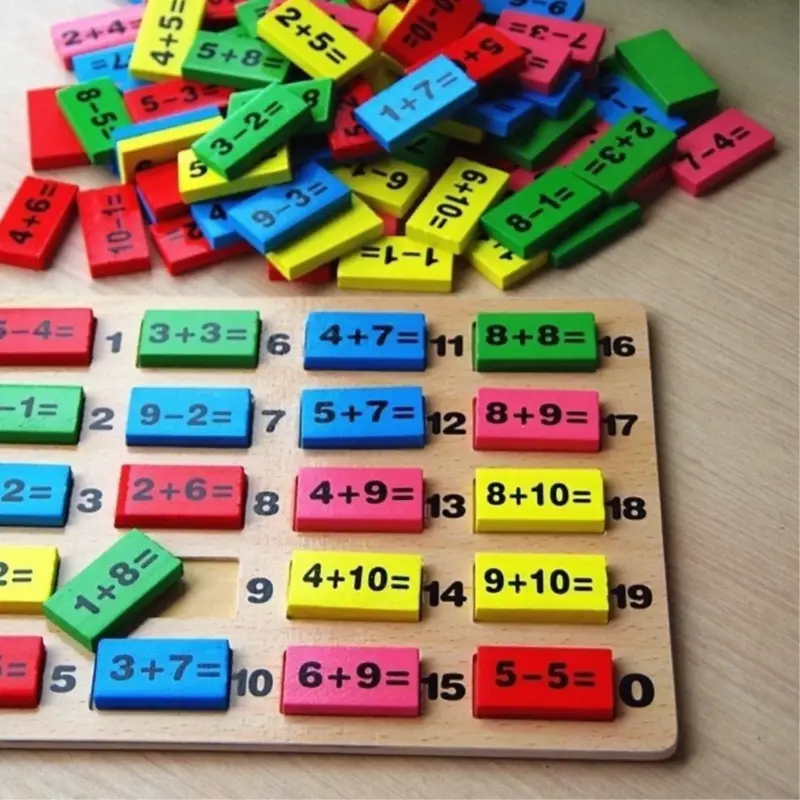
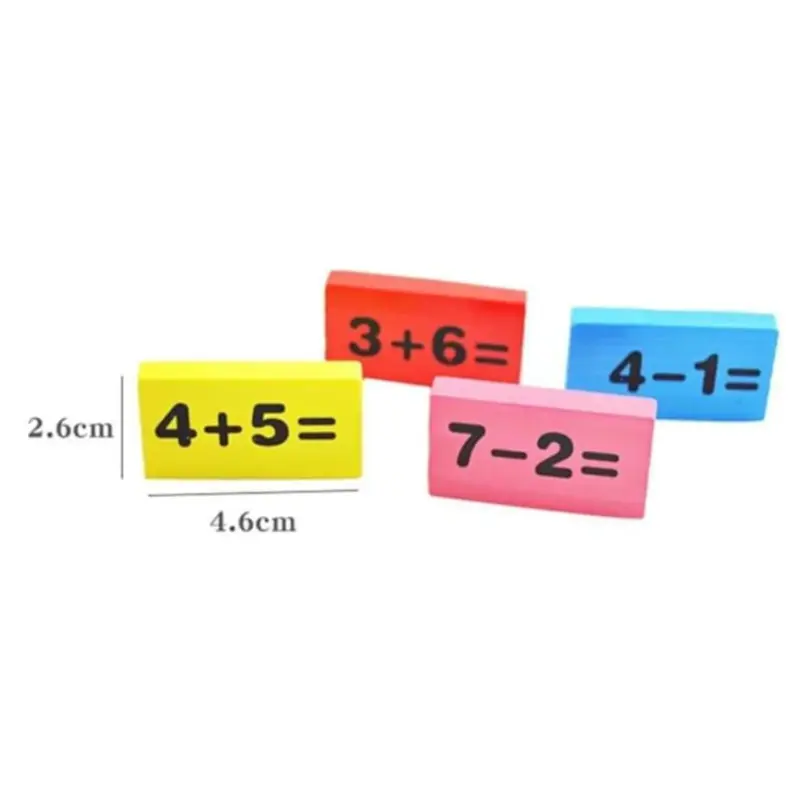
- Deliberate creative expression (watercolor with intent, clay with function)
The 5 Principles That Apply at Every Age
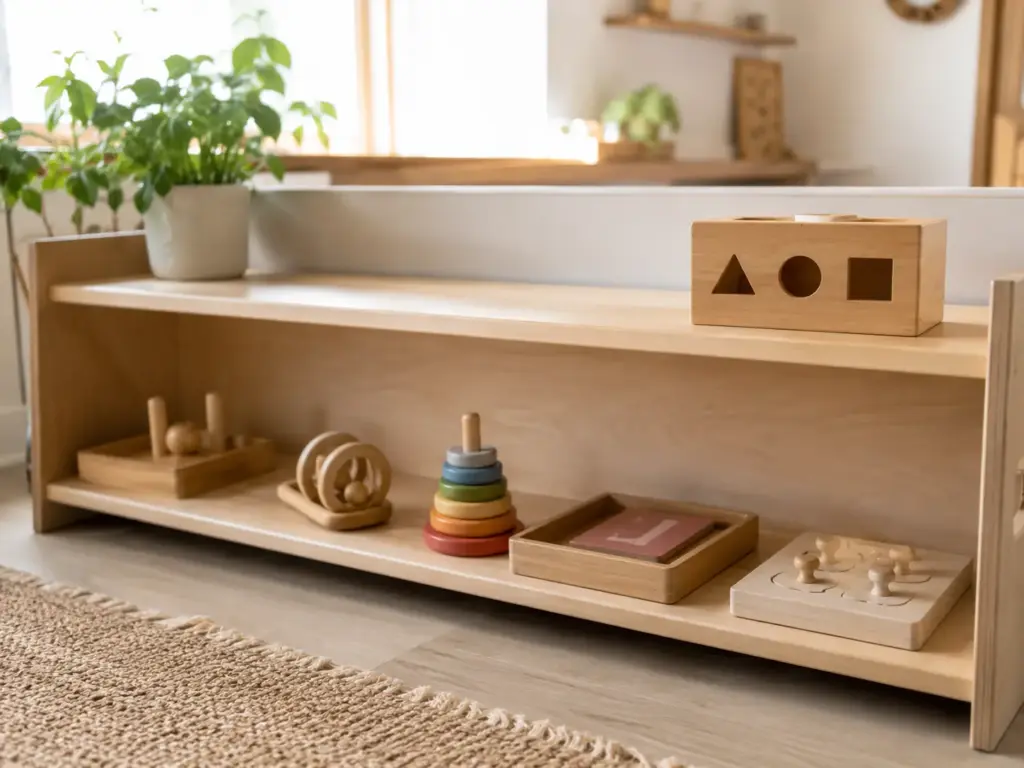
These principles are the constants. The activities change. The principles don’t.
1. Prepare the environment before the child enters. At every age, the adult’s work happens before the child arrives. At 3 months, that’s a carefully positioned mobile. At 5 years, it’s a shelf with five well-matched activities. The preparation is the practice.
2. Present once, step back. The same principle applies at 3 months (mobile presentation) and at 5 years (math material introduction). Show it once, slowly, and clearly. Then leave. Repetition is the child’s work, not yours.
3. Follow the child’s concentration. Deep, returning engagement means the material is matched. Interrupting a child in concentrated work is the most common mistake at every age — from the infant absorbed in reaching for a rattle to the 5-year-old in the reading explosion.
4. Rotate based on observation, not calendar. The mastery signal is the same at every age: activity completed quickly, no return, no sustained focus. When you see it, rotate. The behavioral signal always matters more than the birthday or the schedule.
5. Real materials, real outcomes. From real mobiles (not light projectors) at 0 months to real cooking (not toy kitchens) at 4 years. The child at every age can detect the difference between simulation and reality — and only reality satisfies.
| “These 5 principles don’t change. The activities change. The principles are the constants. Every age guide in this series applies them — if you internalize these 5, you’ll know how to implement any activity at any age.” — Katy Lenoir, AMI-certified Preschool & Elementary Expert (3–12) |
Your Questions Answered
What Montessori activities are best for each age?
The most effective activities at each age respond to the current developmental drive. For 0–12 months: sensory exploration and movement (mobiles, grasping toys, floor time). For 1–2 years: practical life and fine motor (busy boards, posting, stacking, first puzzles). For 2–3 years: independence-building sequences and language (cooking, dressing, name puzzles). For 3–6 years: academic bridge materials (sandpaper letters, math manipulatives) and collaborative work. The age index above maps the top activities and the transition signals for every window.
How do I know when to move to the next age’s activities?
Watch for the mastery signal: your child completes every activity on the shelf in under 60 seconds without sustained concentration and stops returning to it. The transition signal at each stage is listed in the index above. Behavioral readiness always matters more than the calendar — if the guide for the next age feels right, start there.
Do I need special materials for Montessori activities at home?
Not for most of it. The most powerful Montessori activities across every age use simple, real objects: a bowl and spoon for spooning practice, a basket of household objects for treasure basket work, real food for food preparation. Specialized materials — wooden puzzles, sandpaper letters, math manipulatives — add depth but aren’t required to begin. Start with what you have. Match the material to the developmental window, not the other way around.
Can I do Montessori activities at home without a Montessori school?
Yes. The core principles — prepared environment, following the child, presenting once and stepping back — are home-accessible at every age. What a school adds: trained guides, the complete material set, the multi-age community, and the uninterrupted 3-hour work cycle. These matter. None of them are required to begin. The age guides in this series are organized around exactly what’s home-accessible at each stage.
How many activities should I offer at each age?
Less than you think. 4–6 items on the shelf at any age produces deeper engagement than 12–15. The number increases slightly with age: 3–5 for infants, 5–7 for toddlers, 7–10 for 3–6 year olds. The rotation signal matters more than the count: when everything is completed quickly without sustained focus, the shelf is behind your child’s current readiness. Rotate based on what you observe, not on a schedule.
The Map Is the Starting Point
The developmental arc from birth to 6 is the most productive learning window a human being will ever have. Every age in this series represents a different kind of mind — not a better or worse one, just different. The tools that match that mind produce the concentration, confidence, and competence that Montessori at its best reliably delivers.
Start where your child is. Use the 3-question diagnostic above if you’re unsure. Follow the transition signals, not the box. And when you’re ready to build the shelf, Kukoo’s materials organized by developmental stage follow the same age-by-age logic this guide maps — each collection matched to the window it serves.